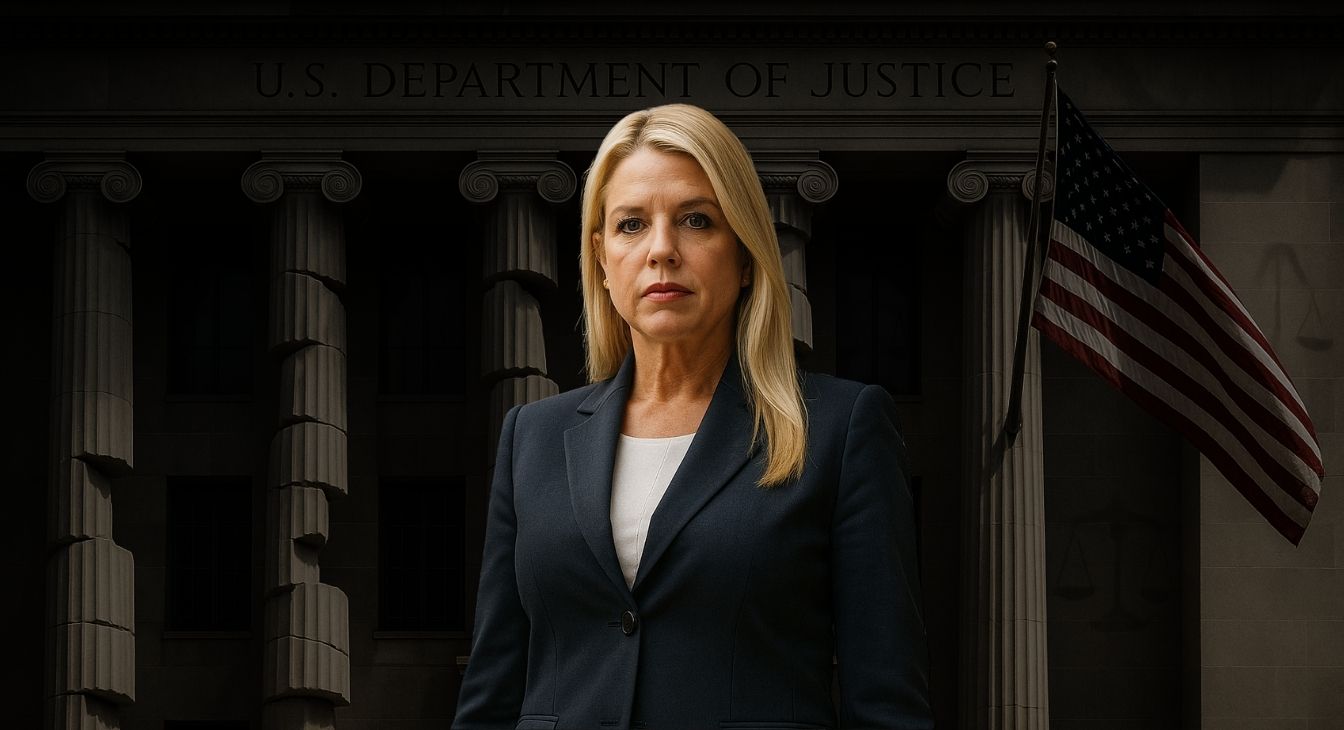
Pam Bondi: Architect of Conservative Justice

Pam Bondi’s ascent from Florida’s Attorney General to the nation’s top law enforcement officer under Donald Trump was no fluke. It was the meticulous work of a career prosecutor with an ironclad alignment to conservative legalism and a knack for political theater. Bondi’s resume is a blueprint for the modern Republican legal warrior: a career prosecutor in Hillsborough County, two-term Attorney General of Florida, and finally, Trump’s pick to lead the Justice Department as U.S. Attorney General.

From her earliest days, Bondi learned politics from the inside out. Her father, Joseph Bondi, was the mayor of Temple Terrace, a small Tampa suburb. Growing up in that environment, Bondi saw firsthand the mechanics of local power—how influence is leveraged, how narratives are crafted, and how political loyalty is rewarded. That education didn’t end at home; it carried through her time at the University of Florida, where she earned her degree in Criminal Justice, and later at Stetson University College of Law. By the time she graduated in 1990, she was primed for the prosecutorial world.

For nearly two decades, Bondi made a name for herself as a prosecutor in Hillsborough County, handling everything from narcotics cases to violent crimes. But it wasn’t just her courtroom work that raised her profile—it was her telegenic presence and savvy media appearances. Bondi wasn’t just any prosecutor; she was one who understood the value of the camera. Regularly appearing on Fox News and CNN, she became the go-to voice for legal commentary during major trials. That comfort in front of the camera would serve her well when she decided to run for Attorney General in 2010, armed with an endorsement from Sarah Palin and riding the wave of the Tea Party movement.

Her tenure as Florida AG was marked by a series of high-profile battles, many of which foreshadowed her role in the Trump administration. She spearheaded the multi-state lawsuit against the Affordable Care Act, framing it as federal overreach and a violation of state rights. Bondi’s aggressive stance against Obamacare wasn’t just about law—it was ideological warfare, and it set the tone for her political identity. She also took on human trafficking and the opioid epidemic with a prosecutor’s zeal, shuttering “pill mills” and launching the Statewide Council on Human Trafficking. But beneath the surface, her tenure was not without controversy.

The Trump University scandal still lingers like a stubborn stain. In 2013, Bondi’s office decided not to join a multi-state lawsuit against Trump University for fraud, just weeks after her campaign received a $25,000 donation from the Trump Foundation—a transaction that violated IRS rules and led to a fine. Bondi’s explanation was that there wasn’t sufficient evidence to proceed, but the optics were damning. It was the first real taste of the transactional politics that would come to define her ascent to the federal stage.

Bondi’s tenure as U.S. Attorney General has been nothing short of transformative—and polarizing. Within months of taking office, she dismantled the DOJ’s Public Integrity Section, shifting corruption cases back to U.S. Attorneys’ offices—a move critics argue gives political appointees more sway over corruption investigations. She framed it as a decentralization of power; her detractors called it a gutting of federal oversight. Bondi also realigned DOJ priorities, halting investigations into state election laws while ramping up prosecutions of voter fraud—a move that conveniently aligned with Trump’s narrative of a “stolen” 2020 election. Her DOJ’s focus on sanctuary cities, bolstered immigration enforcement, and withdrawal of federal suits against state voter suppression laws reflect a Justice Department retooled to serve a political agenda rather than an impartial arbiter of law.

Her critics say she’s weaponized the DOJ; her supporters call it a restoration of law and order. But let’s be honest—it’s not restoration; it’s a refashioning. Bondi’s DOJ is built in the image of Trumpism: loyal, punitive, and unapologetically partisan. Her actions are not about the even hand of justice; they’re about cementing power, reinforcing conservative dominance, and laying the groundwork for a federal apparatus that operates in lockstep with executive will.

Pam Bondi is not just a political player—she’s the architect of a new conservative justice. One that bends to power, roots out dissent, and serves as a tool for ideological enforcement. And if you’re paying attention, it’s clear: the changes she’s making won’t be easy to undo.
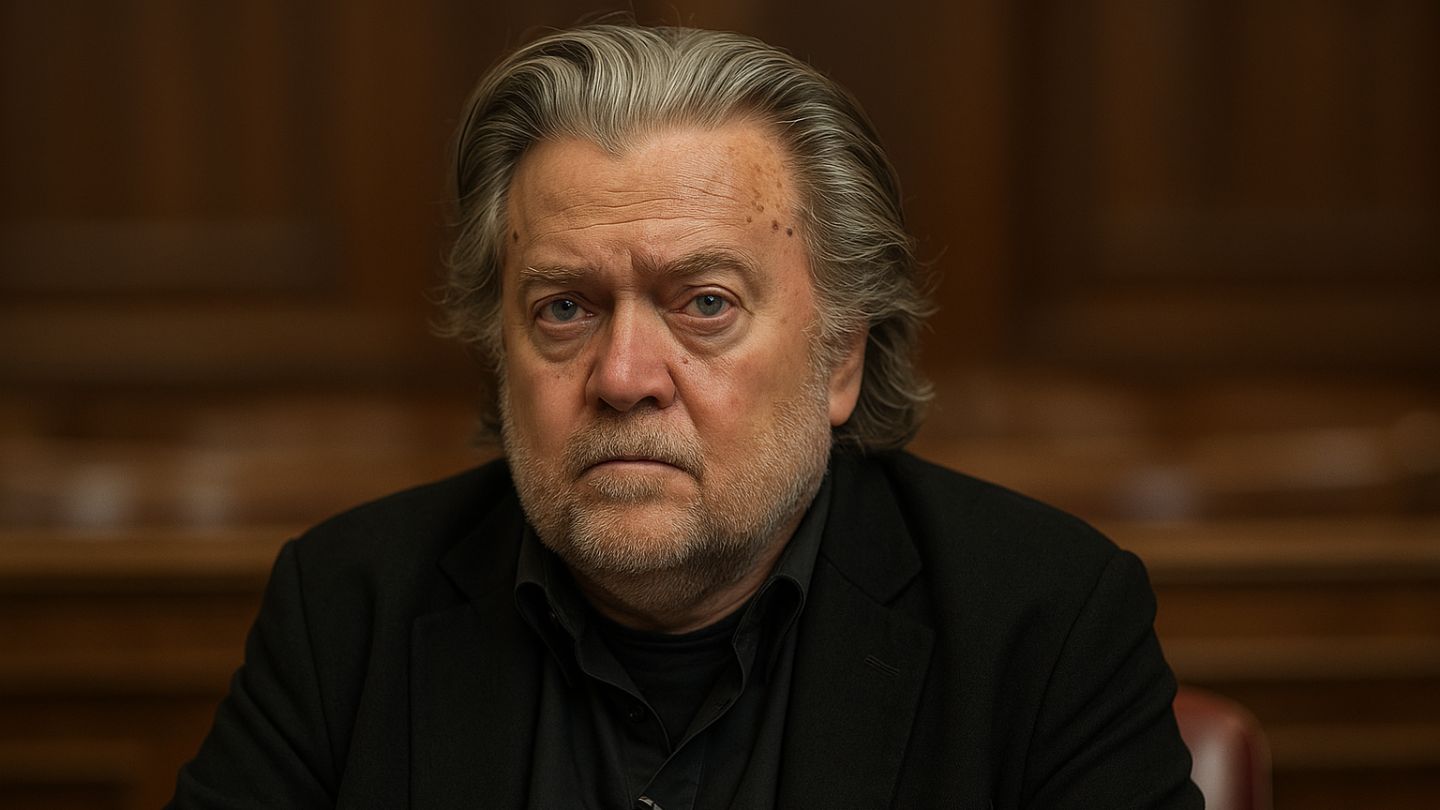
The Rise of a Populist Architect

Steve Bannon’s path to political prominence wasn’t conventional, but it was meticulously calculated. He transformed from a naval officer to an investment banker and then to the executive chairman of Breitbart News, where his mastery of political media took root. Breitbart wasn’t just a publication—it was a weapon. Bannon sharpened its tone to cut through political norms, spitting venom at the establishment and mainstream media alike. His unapologetic embrace of far-right populism set the stage for what came next.

In 2016, Bannon joined the Trump campaign, where his “flood the zone” strategy—overwhelming the media with chaos and controversy—helped shift the narrative. It wasn’t about winning clean; it was about winning ugly and making it stick. Bannon thrived on conflict, viewing compromise as weakness. This hard-nosed strategy mirrored his tenure at Breitbart, where outrage wasn’t just a side effect; it was the product.

Ideological Battles and Power Plays

Bannon wasn’t content to simply ride Trump’s coattails; he aimed to shape the ideology of Trumpism from within. His push for economic nationalism, trade wars, and an iron grip on immigration policy wasn’t just about America First—it was about Bannon First. In the White House, his alliances with Stephen Miller and others forged a hardline policy approach that clashed violently with more centrist voices. He made enemies fast: Jared Kushner, Gary Cohn, and even Chief of Staff Reince Priebus couldn’t mask their disdain.

This power grab extended to the National Security Council, where Bannon’s presence alarmed even seasoned political operatives. His ambition to “deconstruct the administrative state” wasn’t just rhetoric; it was a blueprint. Bannon’s agenda was clear—bulldoze the establishment, dismantle the norms, and rebuild a government where his brand of nationalist populism ruled unchallenged.

The Fall and the Aftermath

Bannon’s tenure in the White House was as short as it was explosive. By August 2017, just seven months into Trump’s term, he was out. Officially, it was a mutual decision. Unofficially, it was the culmination of a bloody power struggle and a series of media missteps. Bannon’s unfiltered mouth and thirst for the spotlight became liabilities, and Trump’s ego couldn’t tolerate the perception that Bannon was the brains behind the operation.

But Bannon didn’t slink away quietly. He retreated to familiar territory—Breitbart and the newly minted War Room podcast. War Room wasn’t just a show; it was a political engine, a megaphone for conspiracy and grievance. It fueled Trump’s base with tales of deep-state corruption, election fraud, and cultural decay. In essence, Bannon built a propaganda machine that outlasted his time in the West Wing.

Legal Troubles: From Contempt to Fraud

Bannon’s swagger hasn’t been without consequence. His first high-profile legal battle was over contempt of Congress after he refused to comply with a subpoena from the January 6th Committee. He claimed executive privilege—a bold move considering he wasn’t even a White House official at the time of the insurrection. It didn’t work. Bannon was charged, convicted, and eventually imprisoned after exhausting every legal appeal he could muster. His response? A grin and a sneer, like he wore the contempt conviction as a badge of honor, a symbol of defiance against a government he claims is corrupt to its core.

The fraud charges were more brazen. His involvement in the We Build The Wall campaign was nothing short of a grift, siphoning money from Trump’s base under the guise of building that infamous border wall. While Trump pardoned him on federal charges, the state of New York didn’t let him off so easily. Bannon eventually caved and accepted a plea deal—no jail time, but barred from running nonprofit fundraisers in New York for three years. It was a slap on the wrist for anyone else; for Bannon, it was just another headline, another chance to play the martyr.

The War Room and the Megaphone of Populism

For Bannon, media is both sword and shield. War Room is his political warpath, a daily broadcast that vomits out conspiracies and grievances to a ready audience. It’s not just political commentary; it’s strategic disinformation. Bannon understands that the game is about volume and velocity—flood the space with so much noise that truth gets drowned in the static. War Room is a hub for election denialism, anti-vaccine rhetoric, and borderline insurrectionist propaganda. This is where he molds the narrative, uncensored and unchecked.

Bannon isn’t just a broadcaster; he’s an architect of political dissent. He calls it mobilizing the base; critics call it inciting division. Either way, it’s effective. His reach extends far beyond his screen, into local precincts, state legislatures, and school boards. War Room is the heartbeat of his political strategy—a platform for grievance politics and a launching pad for the next generation of Trumpist hardliners.

Eyes on 2028: The Precinct Strategy

Bannon’s game isn’t just about amplifying rage; it’s about seizing power from the ground up. His “precinct strategy” is a full-scale assault on local politics. He’s actively encouraging his War Room listeners to flood precinct meetings, take up GOP committee seats, and exert influence over election boards. It’s not just mobilization—it’s hostile takeover. His endgame? To have loyalists in key positions across the country ahead of Trump’s 2028 run, ready to challenge electoral outcomes if they don’t go his way.

Bannon is betting on chaos as a political weapon, turning grassroots organizing into a blunt instrument to batter democratic norms. It’s not subtle, and it’s not clean—but for Bannon, it’s the perfect strategy. He’s building an army of foot soldiers, primed to discredit elections and push back against any hint of federal oversight.

The Real Threat

Bannon’s strategy is more than just populist rage—it’s a blueprint for controlled chaos. If left unchecked, his War Room and precinct takeovers could shift local politics to mirror the worst of his nationalist vision: exclusionary, hostile, and anti-democratic. It’s not about winning votes; it’s about controlling the count. If you think this is just political theater, think again. Bannon isn’t interested in playing nice. He’s building a revolution, one precinct at a time.

And he’s just getting started.

The Crumbling Shield: Trump’s Inner Circle Faces Legal Peril

The 2025 Supreme Court decision granting Donald Trump broad immunity from criminal prosecution for official acts has reshaped the legal landscape. While Trump himself now enjoys an unprecedented level of protection against accountability for his actions as President, those who stood alongside him may not be so fortunate. Advisors, cabinet members, and private operatives who operated in his orbit are now more exposed, facing potential legal consequences that may surface long after the headlines fade.

The Myth of Trickled-Down Immunity

The ruling in Trump v. United States was explicit: the president, and only the president, holds this unique level of protection. Cabinet members, senior advisors, and even private individuals who acted on his behalf do not share this luxury. The high court’s decision left no room for ambiguity—qualified immunity for aides and advisors remains, but absolute immunity is out of the question. This sets the stage for legal scrutiny that could unfold gradually over the coming years.

History offers a glimpse of what may lie ahead. Nixon’s Attorney General John Mitchell, along with senior aides H.R. Haldeman and John Ehrlichman, were prosecuted and sentenced for their roles in Watergate—years after the scandal initially broke. Their defense? They were carrying out orders from the White House. It didn’t matter. The courts drew a bright line: presidential orders do not confer legal invulnerability. The same principle still applies, regardless of who sits in the Oval Office.

Gradual Legal Pressure

With Trump’s immunity firmly established, state and federal prosecutors may turn their focus to the lieutenants and operatives who helped execute his directives. Mark Meadows, Trump’s former Chief of Staff, is already facing state charges in Georgia and Arizona for his role in the attempts to overturn the 2020 election. He argued his actions were part of his federal duties—a defense the courts rejected, ruling his involvement was political, not official. The outcome of his case may set a precedent for others in Trump’s orbit.

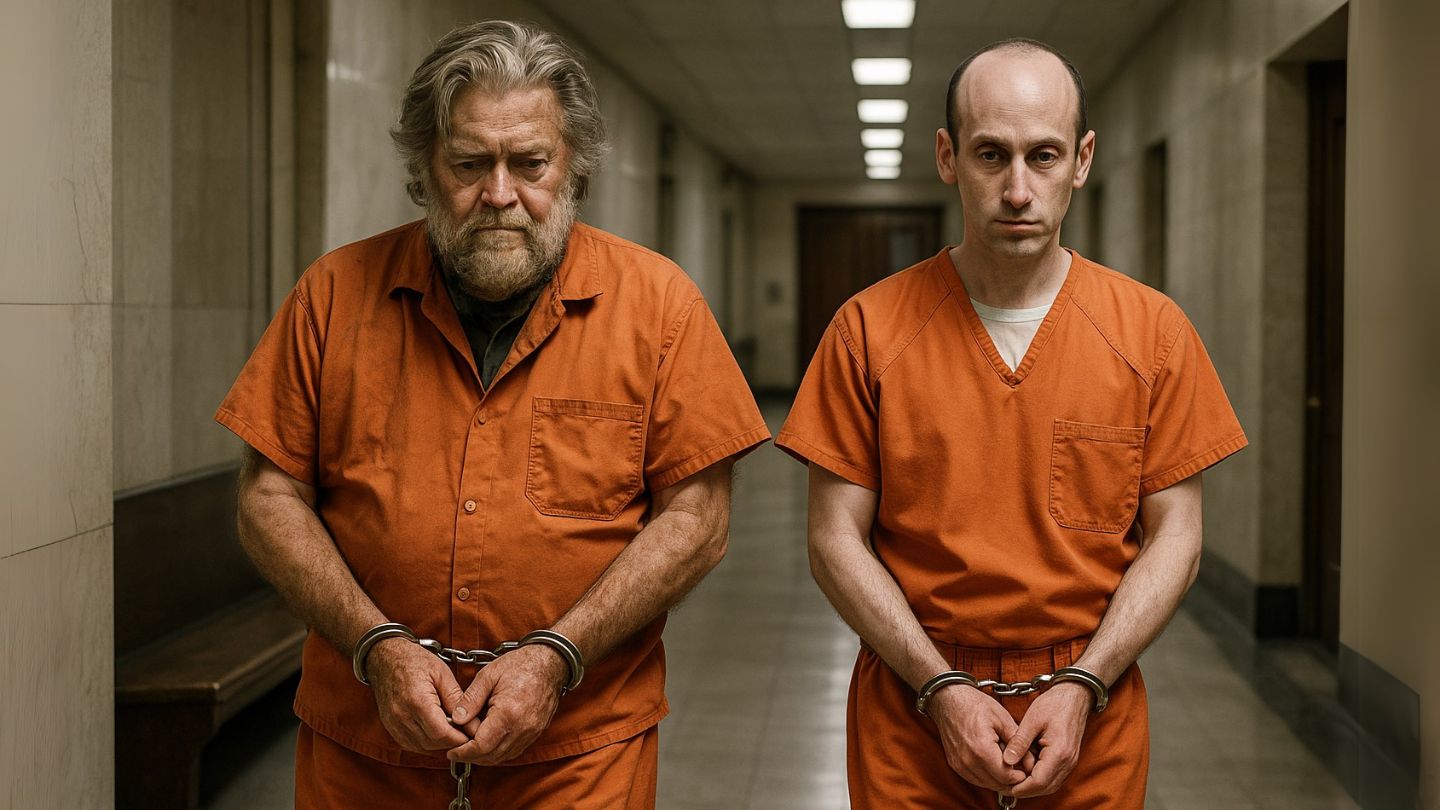
Steve Bannon and Stephen Miller, long-time architects of Trump’s policy agenda, are also under increasing scrutiny. Bannon’s contempt of Congress conviction in 2022 for defying a subpoena highlighted that executive privilege has its limits. Miller, the ideological force behind Trump’s immigration policies, may still face questions regarding his involvement in enforcement strategies that bordered on legal gray areas. Whether this scrutiny will lead to legal action remains to be seen, but the possibility is far from remote.

A Slow-Burning Reckoning?

Trump’s advisors, operatives, and cabinet members now occupy a precarious space. The president’s immunity may be impenetrable, but those who carried out his bidding remain vulnerable to the long arm of the law. Legal action may not be swift, but history has shown that accountability sometimes takes years to manifest. Prosecutors and civil suits may still follow the trail of actions taken during his administration, even if the fallout is delayed.

The myth of trickle-down immunity has been exposed. For Trump’s inner circle, the legal clock may be ticking—slowly, but inevitably.

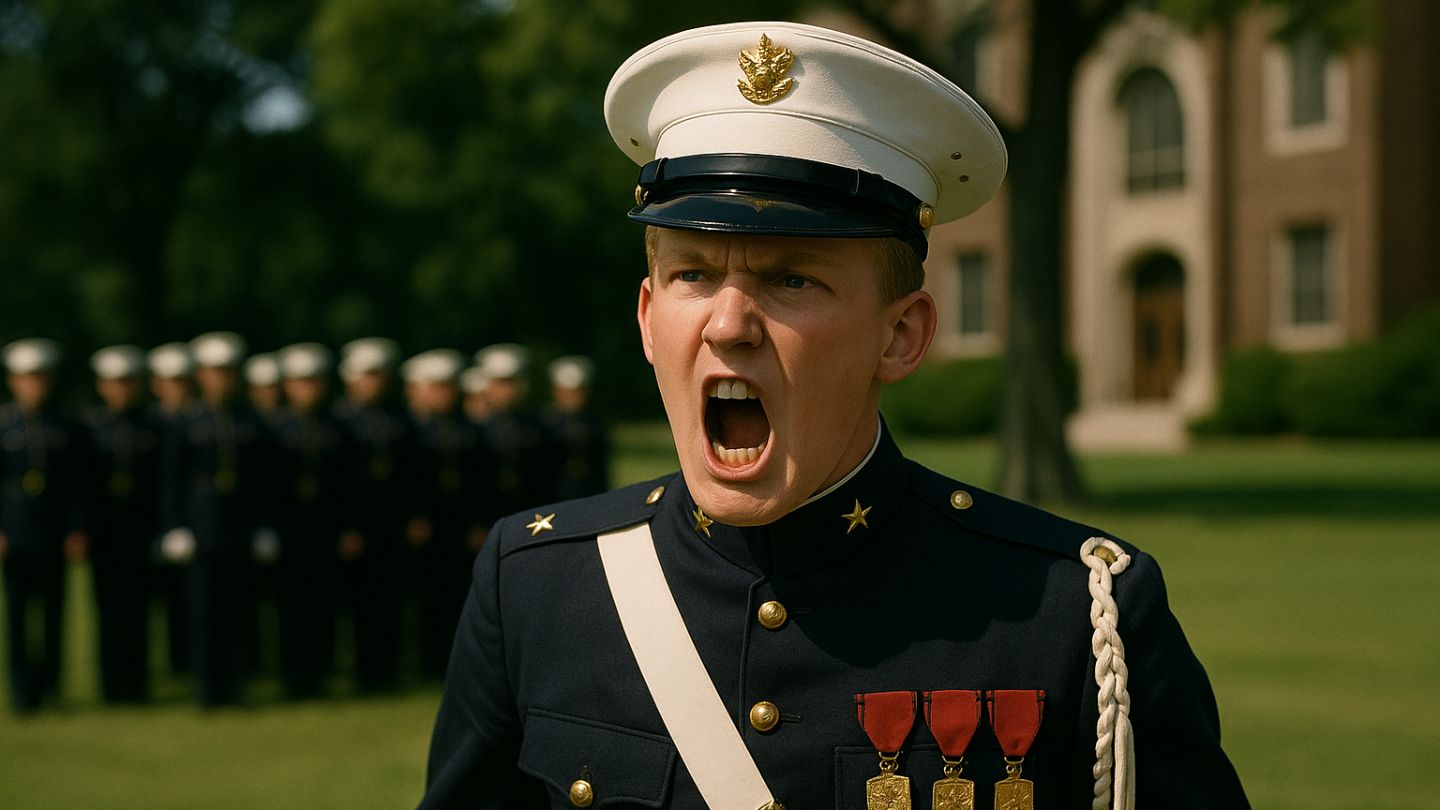
The Untouchable Cadet: Donald Trump at NYMA

Introduction

Donald John Trump was born on June 14, 1946, in Queens, New York, into a life shaped by privilege and influence. His father, Fred Trump, a powerful real estate developer, instilled in him the importance of dominance and leverage from a young age. This early exposure to wealth and power would set the stage for Donald’s tenure at the New York Military Academy (NYMA), where his rise to captain was marked by authoritarian command, strategic alliances, and the protective hand of his father.

Trump’s Rise to Captain: Command and Control

Trump entered NYMA at the age of 13, sent there to instill discipline and structure. The academy’s strict hierarchy and rigid discipline suited Trump, who thrived in its authoritarian environment. By the time he ascended to the rank of captain, his leadership style was already marked by strict enforcement and unyielding dominance. Former cadets described Trump’s command as relentless—punishments for infractions were severe and public. Push-ups in the mud, laps to exhaustion, and public shaming were commonplace under his authority. His cadre of loyalists, handpicked and protected from inspections, acted as enforcers, carrying out his commands with military precision.

Cadets who crossed Trump or questioned his methods faced swift retribution. Unauthorized dormitory searches led by Trump and his cadre became routine, with violations punished harshly. Those who attempted to report these actions often found their complaints mysteriously disappear or were reassigned to less desirable posts. Trump’s control over his cadre was absolute, creating an atmosphere where dissent was dangerous and loyalty was rewarded with immunity from inspections and grueling drills.

Fred Trump’s Influence and Faculty Complicity

Fred Trump’s involvement at NYMA was far from passive. His regular visits included private meetings with administrators, during which disciplinary actions against Donald often softened or vanished entirely. Cadets whispered about these meetings, noting that renovations to the academy often coincided with Donald’s ascension through the ranks. Faculty members, aware of Fred’s influence, rarely interfered with Donald’s unorthodox command style. One instructor recounted being told to “stand down” after attempting to report Trump’s unauthorized punishments. Disciplinary reports involving Trump were frequently rewritten as “leadership exercises” or disappeared altogether.

Fred’s reach was visible not only in the lack of repercussions for Donald’s behavior but also in the material changes at NYMA. New fencing around the drill grounds, dormitory upgrades, and other renovations seemed to align with Donald’s tenure as captain, cementing the belief among cadets that Trump’s authority was insulated from consequence.

Cadet Experiences: Fear and Loyalty

Trump’s command style fostered an environment of fear and unspoken compliance. Cadets who aligned themselves with Trump’s cadre enjoyed protection from inspections and punishment, while dissenters found themselves targeted during surprise dormitory searches and inspection laps. Unauthorized inspections often led to personal belongings being rifled through, with infractions punished swiftly and publicly. Trump’s cadre acted with impunity, understanding that their loyalty shielded them from consequences.

Those who attempted to resist often faced isolation, reassignment, or public humiliation. Instructors who witnessed Trump’s overreach were either reassigned or chose to remain silent, aware that challenging Trump could mean professional consequences. One former instructor noted, “We couldn’t touch him. His father’s shadow loomed over everything.”

Administrative Complicity and the ‘Trump Rule’

As Trump’s grip on NYMA solidified, cadets and faculty alike came to understand the “Trump Rule”—an unspoken policy where Trump’s word carried more weight than standard regulations. Surprise inspections, unauthorized punishments, and social ostracization became tools of command, with administrative staff turning a blind eye. Efforts to challenge Trump’s authority were met with swift retaliation, often in the form of reassignment or increased disciplinary scrutiny. One cadet, who attempted to file a formal grievance against Trump’s methods, found himself transferred out of Donald’s company, his complaint erased without explanation.

Conclusion: The Blueprint for Command

Donald Trump’s time at NYMA served as a proving ground for his command style—one defined by dominance, loyalty, and the insulation from consequences. His father’s influence shielded him from repercussions, while his cadre enforced his will with unflinching loyalty. This environment not only nurtured Trump’s belief in the power of influence and control but set the stage for the methods he would carry into his business ventures and political life.

At NYMA, Trump learned that power, when wielded with confidence and backed by influence, could override regulation and silence dissent—a lesson that would define his approach to leadership for decades to come.

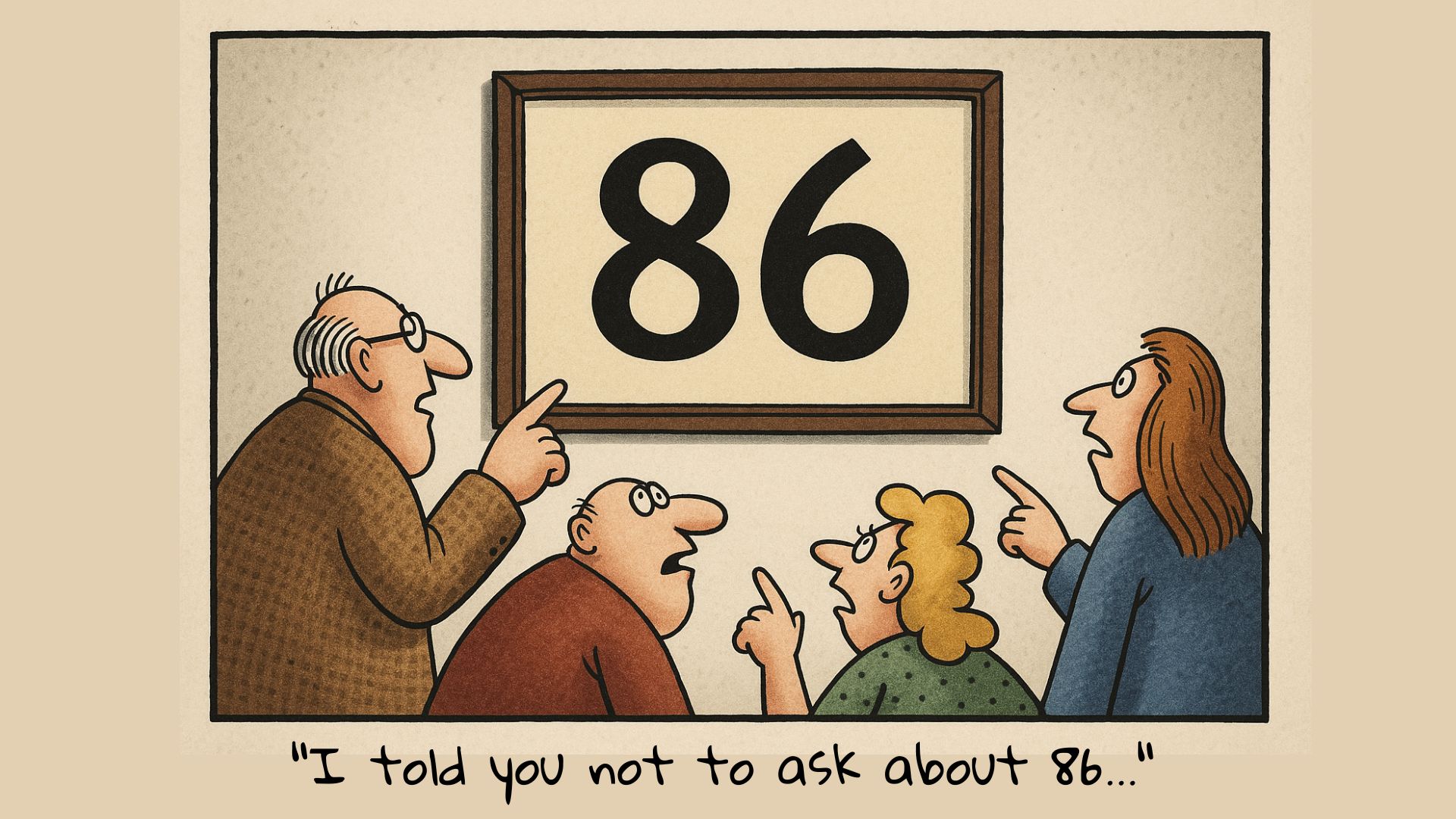
The Slang Term “86”: Origins, Theories, and Usage Evolution

“Eighty-six” (or “86”) is an American English slang term widely used in restaurants, bars, and beyond to mean to refuse service, get rid of, or cancel something or someone. In diner and bartender lingo, “86” originally indicated an item was sold out or a customer should be ejected. Over the decades, it has entered general use with the broader sense of “throw out” or “eliminate”. Despite its popularity, the exact origin of “86” remains a subject of debate, spawning numerous folk etymologies. This report investigates the earliest documented uses of “86,” traces its emergence, examines all major origin theories (from soda-fountain codes to Prohibition-era lore, rhyming slang, military jargon, and more), and evaluates the credibility of each. It also provides historical and contemporary examples of “86” in use and discusses how its meaning has evolved, including modern extensions in politics and pop culture. Finally, the term’s spread (or lack thereof) outside the United States is addressed. The goal is a clear, evidence-based account of what we know (and don’t know) about this enigmatic number.

Earliest Documented Uses and Timeline of Emergence

The slang “86” began appearing in American usage in the early 1930s, particularly in the context of lunch counters and soda fountains. The first known print appearance was in columnist Walter Winchell’s “On Broadway” column on May 24, 1933. Winchell published a glossary of Hollywood soda-fountain slang contributed by a soda jerk, including the entry: “‘Eighty-six’ means all out of it.” In the same column, other numeric codes were listed (for example, “81” meant a glass of water, and “13” warned that the boss was around). This suggests “86” was part of a pre-existing numeric code system among service staff by 1933.

Year Development
1933 First known print appearance in Walter Winchell’s column as soda-fountain slang for “all out of it.”
1936 Documented in American Speech as diner slang for an item not available.
1942 Washington Post crime story confirms “86” as slang for throwing someone out or canceling something.
1950s–60s “86” becomes common in American slang, shifting from diners to mainstream usage.
1970s Acquires the meaning “to kill or destroy” in some contexts.
1980s–1990s Broadens into general idiomatic use: “86 that idea” or “86 the customer.”
2000s–2020s Remains common slang in restaurants, bars, and broader American English.

[continue reading…]

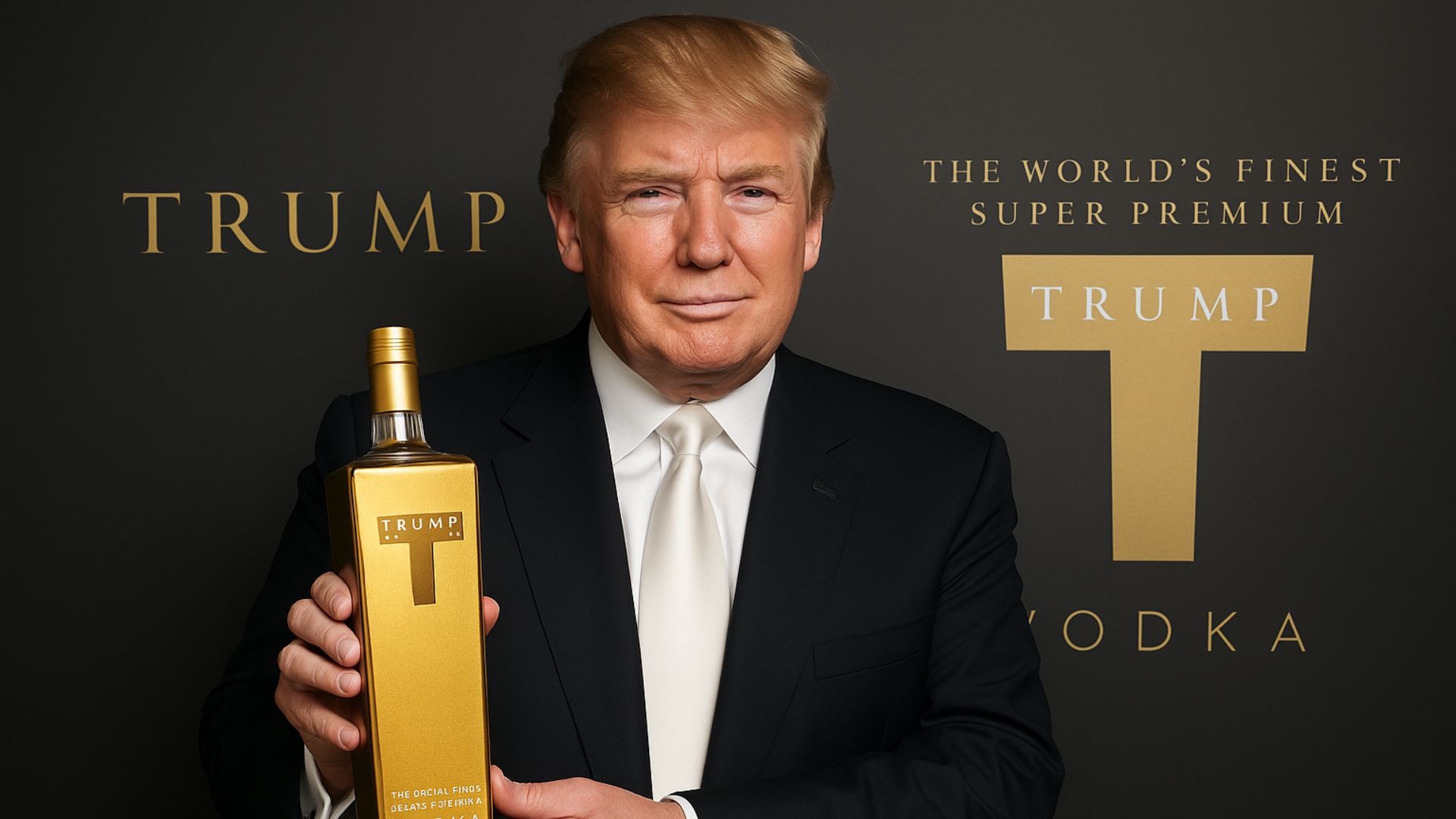
Trump’s Sobriety and the Trump Vodka Contradiction

Donald Trump has never had a drink in his life, or so he says. He’s been very vocal about it, tying his sobriety directly to the alcoholism and death of his older brother, Fred Trump Jr. It’s one of those rare personal principles he’s managed to keep consistent, a testament to the grim lesson he learned watching Fred struggle with alcoholism before his death in 1981. Trump was 35 when his brother died—not exactly an impressionable kid, but apparently enough for it to stick. His choice to abstain from alcohol, even during his party-laden days in the ’80s, is a point of personal discipline—maybe even one of the few areas where his actions match his rhetoric.

But the influence didn’t just come from Fred. Donald’s father, Fred Trump Sr., was famously strict and disciplined, drilling into his children the importance of self-control and image. Alcohol was seen as a sign of weakness—something unworthy of the Trump name. That legacy of control, mixed with the grim example of his brother’s struggle, likely reinforced Donald’s public abstinence. Sobriety, for Trump, wasn’t just a choice; it was a brand.

But here’s where the narrative gets murky. Trump has always marketed himself as the disciplined businessman who steered clear of the excesses that ensnared so many of his contemporaries. Yet, accounts from the late 1980s and 1990s paint a picture of a man regularly on the nightlife circuit, rubbing shoulders with models, actors, and Wall Street hotshots. Spy Bar, Wax, and Chaos—small, exclusive nightclubs in SoHo—were favorite haunts for Trump and his pal John Casablancas, founder of Elite Model Management. Trump was no recluse; he was right there in the middle of Manhattan’s nightlife, spinning stories for gossip columns while supposedly staying stone-cold sober. It’s the sort of cognitive dissonance that’s vintage Trump: party like a rockstar but claim the high ground of sobriety.

And then there’s Trump Vodka. In 2006, Trump launched his own vodka brand, marketed as “Success Distilled.” Trump Vodka was pitched as the premier luxury spirit, designed to sit on the top shelf next to Grey Goose and Belvedere. This wasn’t just some half-hearted licensing deal either; Trump promoted it like he was hawking real estate, boasting that it would be the most successful vodka in the world. The irony was thick—how does a man who’s never touched a drop of alcohol know anything about what makes a good vodka? His pitch was pure Trump: all bravado, no basis. Predictably, Trump Vodka fizzled out, disappearing from U.S. shelves by 2011.

The contradiction is staggering. Trump cites Fred’s death as the reason he’s never touched alcohol, claiming his brother’s struggle profoundly shaped his life. Yet that same tragedy didn’t stop him from cashing in on the very substance that killed his brother. Maybe it was just business, a cynical cash grab on the back of a global spirits market. Or maybe it’s another example of Trump’s unique ability to compartmentalize principle and profit. After all, the same man who promised to “drain the swamp” ended up neck-deep in it.

Trump Vodka’s failure is just a footnote in his business career, but it’s a telling one. It’s emblematic of the broader hypocrisy that defines so much of his brand. He’s a man who knows the cost of alcohol firsthand yet sold it without hesitation. It’s just business, right? Principles are for press conferences. Profits are forever.

Trump’s Forgotten Tax Proposal—A One-time Wealth Tax

In 1999, Donald Trump, long before his rise to the presidency, floated an idea that now seems almost unfathomable given his political trajectory—a one-time, 14.25% wealth tax on individuals and trusts worth more than $10 million. The proposal, part of his flirtation with running for president under the Reform Party banner, was intended to wipe out the national debt in one bold swoop.

Trump’s rationale was simple, if not audacious. He argued that the wealthiest Americans, many of whom he undoubtedly rubbed shoulders with, could afford this one-time hit, and the country as a whole would benefit enormously. By his calculations, the tax would generate around $5.7 trillion—more than enough to eliminate the national debt at the time. Trump pitched it as a patriotic gesture, one where the nation’s billionaires and millionaires would step up for the greater good.

The plan was sweeping, populist, and completely at odds with the tax policies he would later champion. As president, Trump’s administration passed one of the most significant tax overhauls in decades—the Tax Cuts and Jobs Act of 2017. But instead of billionaires footing the bill, the legislation slashed corporate taxes from 35% to 21%, extended generous breaks for high-income earners, and ballooned the deficit by nearly $2 trillion.

It’s a curious pivot. In 1999, Trump framed himself as a man who would make the wealthy pay their fair share. His 2017 policy, however, did the opposite—creating a windfall for corporations and the super-rich while leaving the middle class with crumbs and a ticking debt time bomb. It’s the kind of ideological about-face that would make any seasoned politician blush, yet it was met with typical Trumpian bravado and a shrug.

Why isn’t this 1999 proposal discussed more often? Perhaps because it exposes a fundamental contradiction in Trump’s political evolution. His Reform Party pitch was bold populism—an economic hail Mary that sought to redistribute wealth in a way that even Bernie Sanders might nod at approvingly. But the Trump who campaigned in 2016 and governed for four years was a different beast: one that slashed taxes for the rich, deregulated at will, and bolstered the financial elite.

Was Trump’s 1999 wealth tax proposal just another marketing ploy? An empty promise to garner headlines and flirt with a third-party run? Or was it a glimpse into a version of Trump that never materialized—a populist billionaire willing to cut down his own to settle America’s debts?

Regardless of its intent, the 1999 proposal is a stark reminder that political ideologies, especially in Trump’s case, are often as malleable as the talking points of the day. And for those paying attention, it’s a testament to the sheer elasticity of political rhetoric when ambition outpaces principle.

Trump’s one-time wealth tax proposal is buried under the avalanche of contradictions that followed. It’s almost a relic of an alternate universe—a time when Trump, of all people, proposed to make the rich pay. The question isn’t just why he floated the idea, but why he buried it when he had the power to act on it.

Election Promise Not Kept

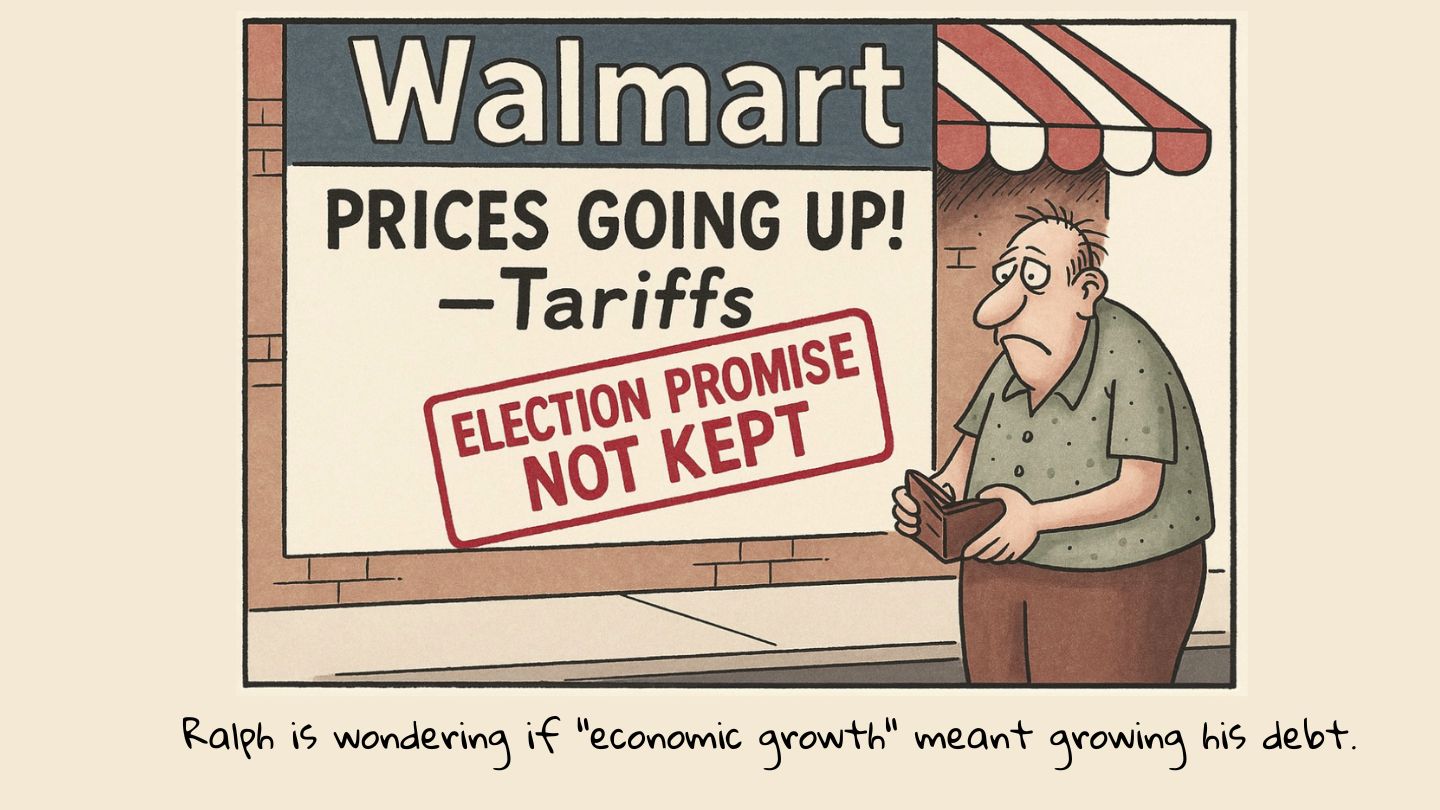
Ralph’s got that look—the one you get when campaign slogans finally collide with the checkout line. Prices up, promises down, and Walmart’s concrete façade standing there like a monument to broken pledges. The sign’s got it right for once: “Election Promise NOT KEPT.” Bold. Honest. Practically a confession.

His wallet’s practically weeping as he stares at the brick wall of everyday low expectations. “Economic growth,” they said. Looks more like economic shrinkage when you’re the one paying for it. Ralph’s just figuring out he’s been holding the tab for promises never intended to be kept.

But hey, at least the slogan’s still free.

Constitutional Clash: Executive Orders vs. the 14th Amendment

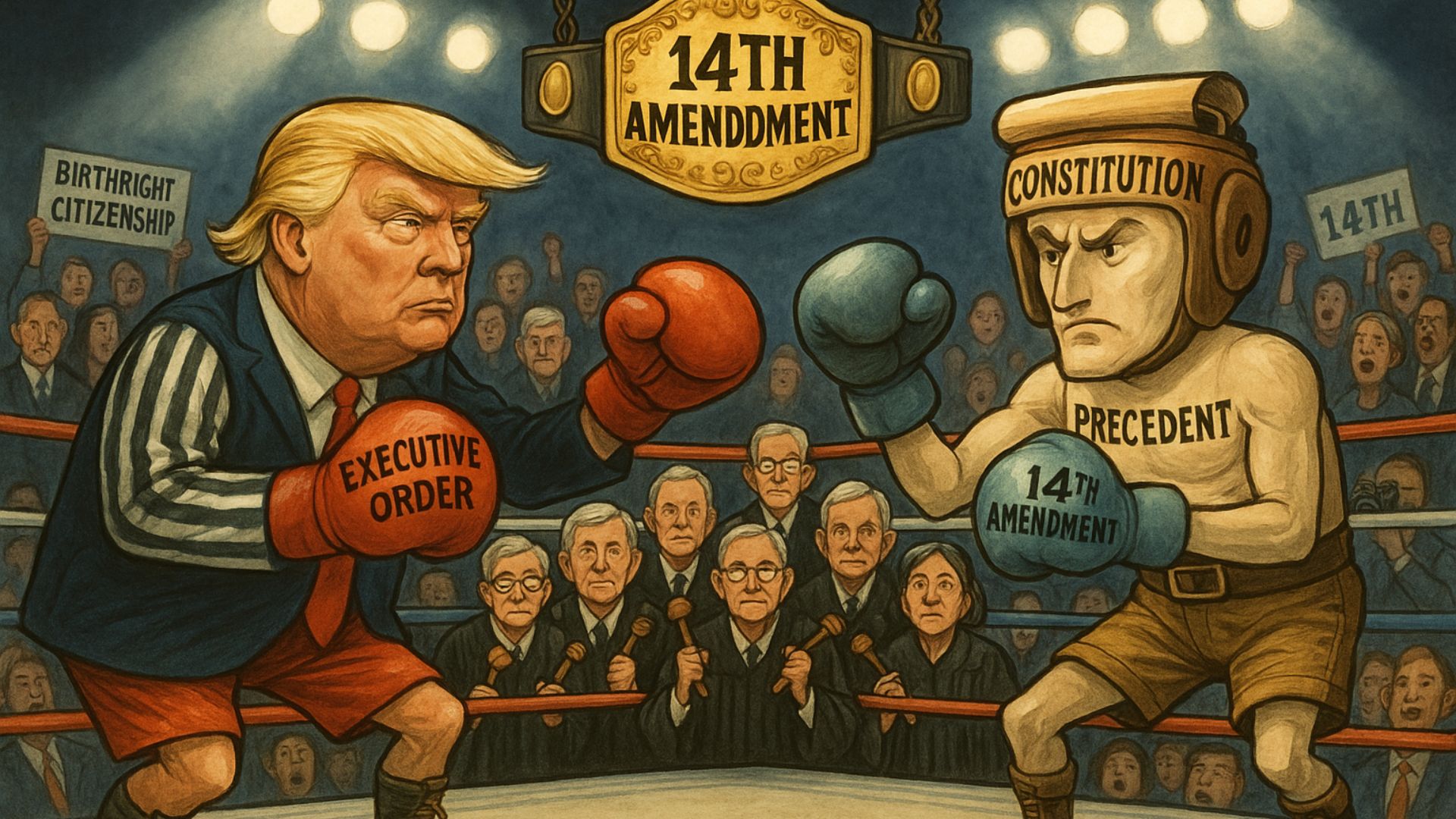
In the latest act of executive bravado, Donald Trump’s attempt to undermine the 14th Amendment via executive order is a shot across the bow of constitutional precedent. This cartoon captures it perfectly—Trump laces up for a gloves-on brawl against the very foundations of birthright citizenship. It’s not just political theater; it’s a deliberate challenge to the core principles that have defined American citizenship since Reconstruction.

Let’s be clear: the 14th Amendment isn’t some loose suggestion scribbled in the margins of history. It’s a cornerstone, etched in blood and hard-won through battles against tyranny and exclusion. The very idea that one person’s signature could override generations of precedent is not just audacious—it’s authoritarian. Yet, here we are, with Trump swinging for the fences, cheered on by sycophants and opportunists who see democracy as a tool to be bent, not a principle to be upheld.

If executive orders can strip citizenship with the flick of a pen, what’s next? The 14th Amendment’s guarantees are not just words; they are the essence of American ideals. But ideals are only as strong as the people willing to defend them. This fight, as the cartoon brilliantly illustrates, is not just between Trump and the Constitution; it’s between authoritarian impulse and the very fabric of American democracy.

The judiciary will have its say, but let’s not pretend this is just a legal question. It’s a moral one. And it’s a test of whether we, as a nation, still believe in the principles that define us—or if we’re willing to trade them away for the whims of one man’s ambition.

51st State

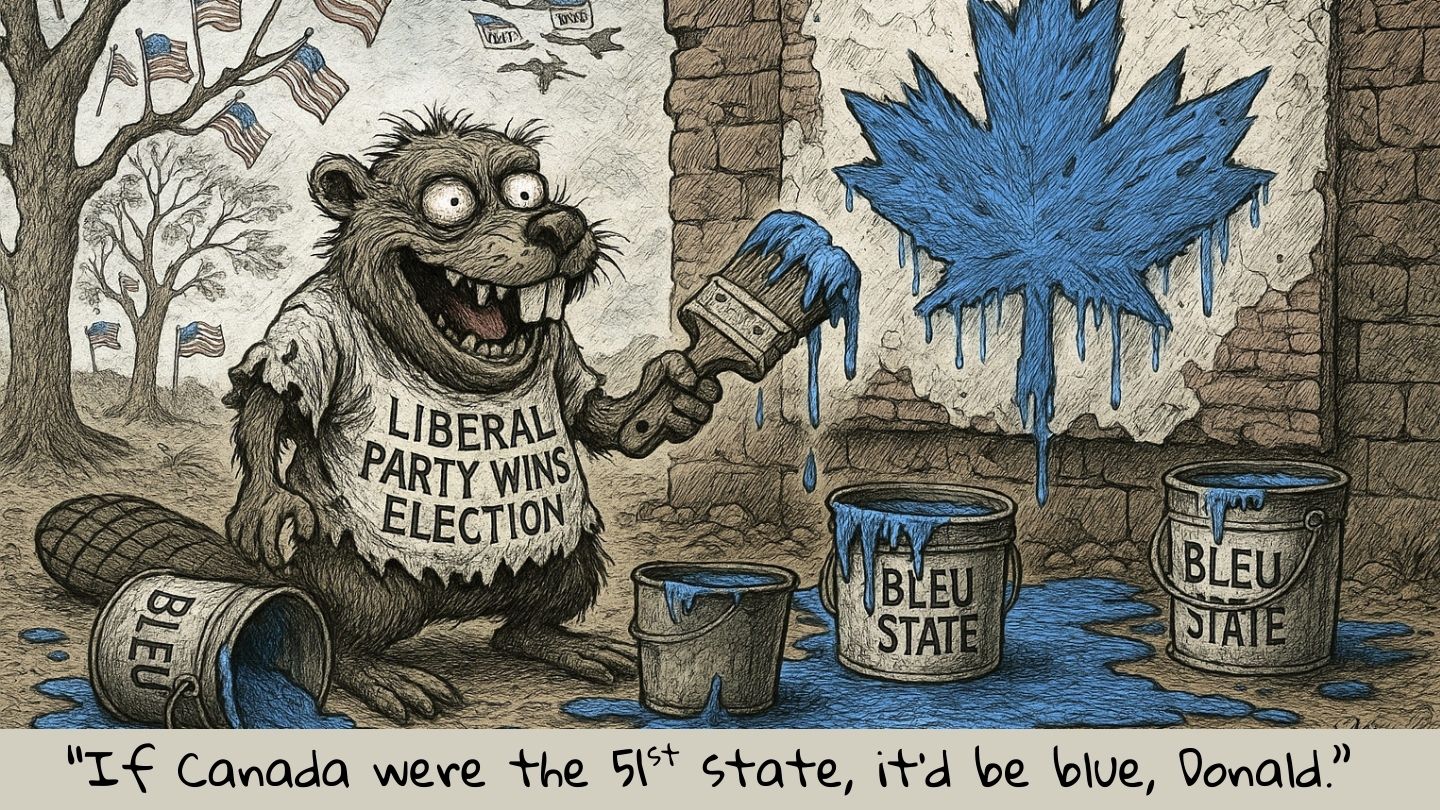
So the Liberals win big in Canada, huh? Guess nothing lights a fire under voters like a neighbor banging on your door, waving tariffs around like eviction notices and hollering about you being the next star on their flag. Trump’s 51st state fantasy? Hell, that probably did more to get Canadians off their asses and into voting booths than any campaign slogan ever could.

Mark Carney’s crew practically waltzed into Parliament with a fresh coat of blue paint, courtesy of American-made anxiety. Nothing like a little economic warfare to remind folks who they don’t want running the show. Canada’s basically telling Trump, “Keep your damn tariffs and your manifest destiny nonsense. We’re not for sale.”

Funny thing is, Trump might’ve handed Carney the win without even crossing the border.