Alina Habba: Lawless Loyalty in a Federal Suit

Alina Habba didn’t climb the ranks of the American legal system. She skipped the line, changed into a power suit, and walked in through a side door marked “Loyalty to Trump.” Now, somehow, she’s the interim U.S. Attorney for the District of New Jersey—without any real prosecutorial experience, a history of courtroom embarrassments, and a résumé more suited to cable news than constitutional law.

But let’s not pretend this is surprising. It’s strategic.

Habba wasn’t picked to prosecute crime. She was picked to be a weapon. And she’s swinging.

Since taking the role, she’s wasted no time in turning the office into a blunt-force political tool. She’s gone after New Jersey’s Democratic governor and attorney general with investigations so nakedly partisan they’d make Nixon blush. She’s filed assault charges against a Democratic congresswoman after a conveniently timed altercation at an ICE facility. And through it all, she’s smirking on television like it’s just another gig.

It’s not a Justice Department anymore. It’s a loyalty test.

This is the template now: appoint the loyal, prosecute the enemies, and call it law and order. Habba is just the latest, loudest example of that model. Her lack of prosecutorial depth isn’t a bug—it’s the point. She won’t hesitate. She won’t question. She knows exactly why she was given the title: to carry out political orders with a straight face and a scorched-earth briefcase.

And she’s doing it.

Forget due process. Forget norms. Forget precedent. Habba’s office is what happens when the legal system is repurposed as a campaign arm, and justice becomes a talking point. She’s not upholding the law. She’s gutting it—while wearing the badge.

This is how democracies rot.

One politicized prosecution at a time.


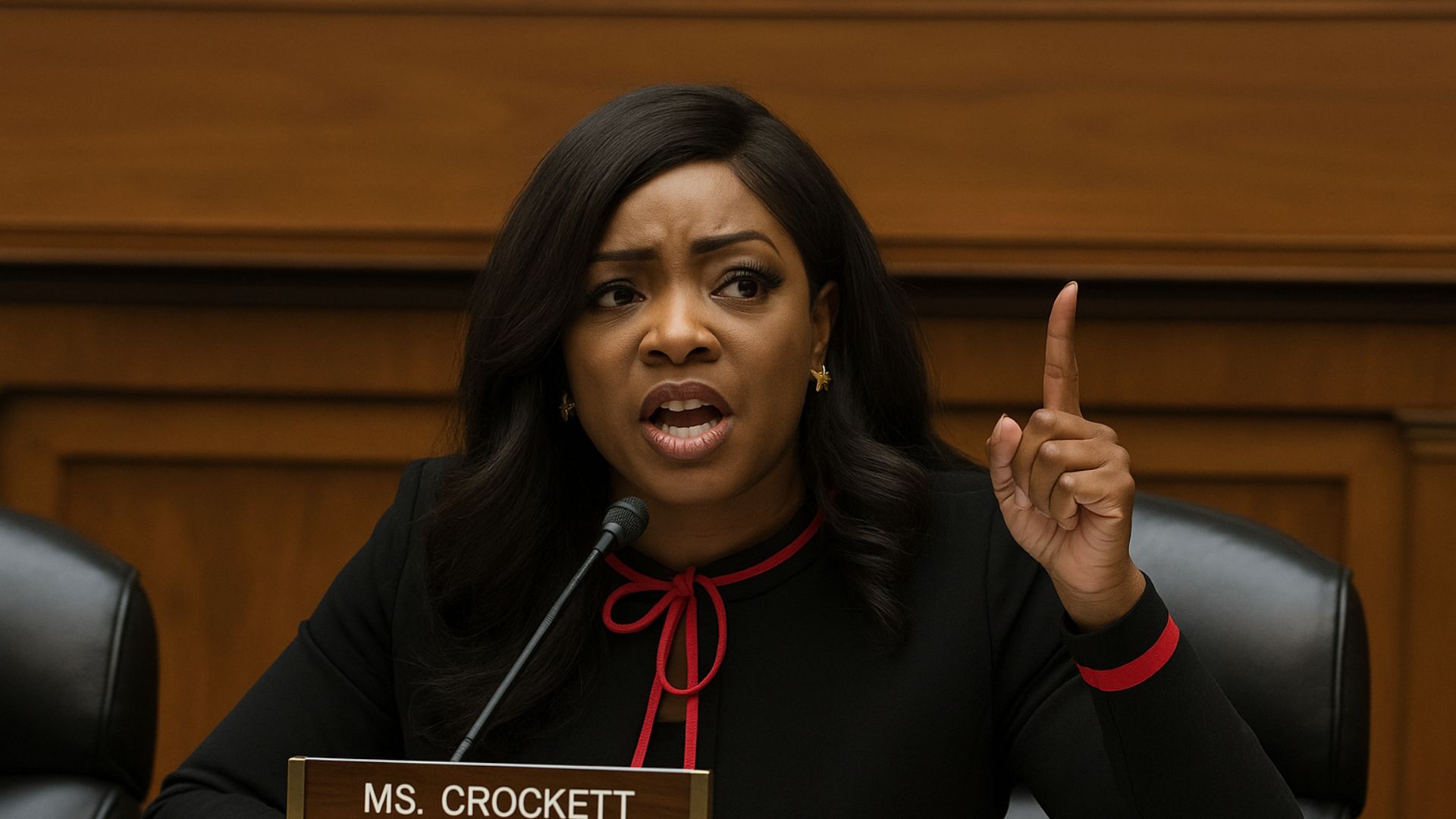
Let’s be clear about something: Jasmine Crockett didn’t run for office to smile pretty for cameras or recite polished platitudes. She stepped into the fight because the people she comes from—the working poor, the disenfranchised, the silenced—have been lied to, locked out, and left behind for far too long. And she’s not afraid to name names or bruise egos along the way.

Raised with a deep awareness of racial injustice, Crockett took that fire into the courtroom. First as a public defender, then as a civil rights attorney representing folks most politicians would rather ignore. She didn’t just talk justice—she rolled up her sleeves and fought for it.

And now she’s doing the same in Congress.

Jasmine Crockett represents Texas’s 30th congressional district, one of the most diverse and economically complex in the state. She stepped into the seat once held by Eddie Bernice Johnson, and she did so with full awareness of the legacy—and the expectation. But Crockett doesn’t mimic. She makes her own path, her own impact, and let’s just say the establishment hasn’t always appreciated her candor.

She’s part of the Congressional Progressive Caucus, but that’s just the label. What matters is her relentless push on voting rights, criminal justice reform, and defending the communities politicians too often exploit. When she speaks, it’s with the weight of lived experience and the urgency of someone who knows what’s at stake.

She’s also made headlines for saying what many of us are thinking. When she clapped back during a committee hearing with a now-famous one-liner aimed at Marjorie Taylor Greene, it wasn’t about theatrics—it was a boiling point. A moment where decorum had to take a back seat to dignity. She said what needed to be said.

And yes, she catches heat for it.

She’s been criticized for off-the-cuff remarks—like when she called out Governor Greg Abbott in a way that made headlines or when she told a reporter what she’d say to Elon Musk, unfiltered. The political class clutches its pearls. Meanwhile, the rest of us—especially those of us in communities that have seen promises made and broken—see something refreshing: a woman who doesn’t play by rules written to exclude her.

Jasmine Crockett doesn’t aim to be palatable. She aims to be powerful. And power, in her hands, looks like honesty, defiance, and refusal to be silenced. It looks like someone who’s not content to “wait her turn” while injustice marches on.

She’s not perfect. No one in this work is. But she is necessary.

In a time when rights are being rolled back, voices are being stifled, and whole communities are being criminalized, we don’t need more politicians who “know how to behave.” We need more fighters. We need more truth-tellers. We need more Jasmine Crocketts.

So here’s to the ones who don’t ask permission to lead—who come in knowing the table was never meant for them, and flip it anyway.


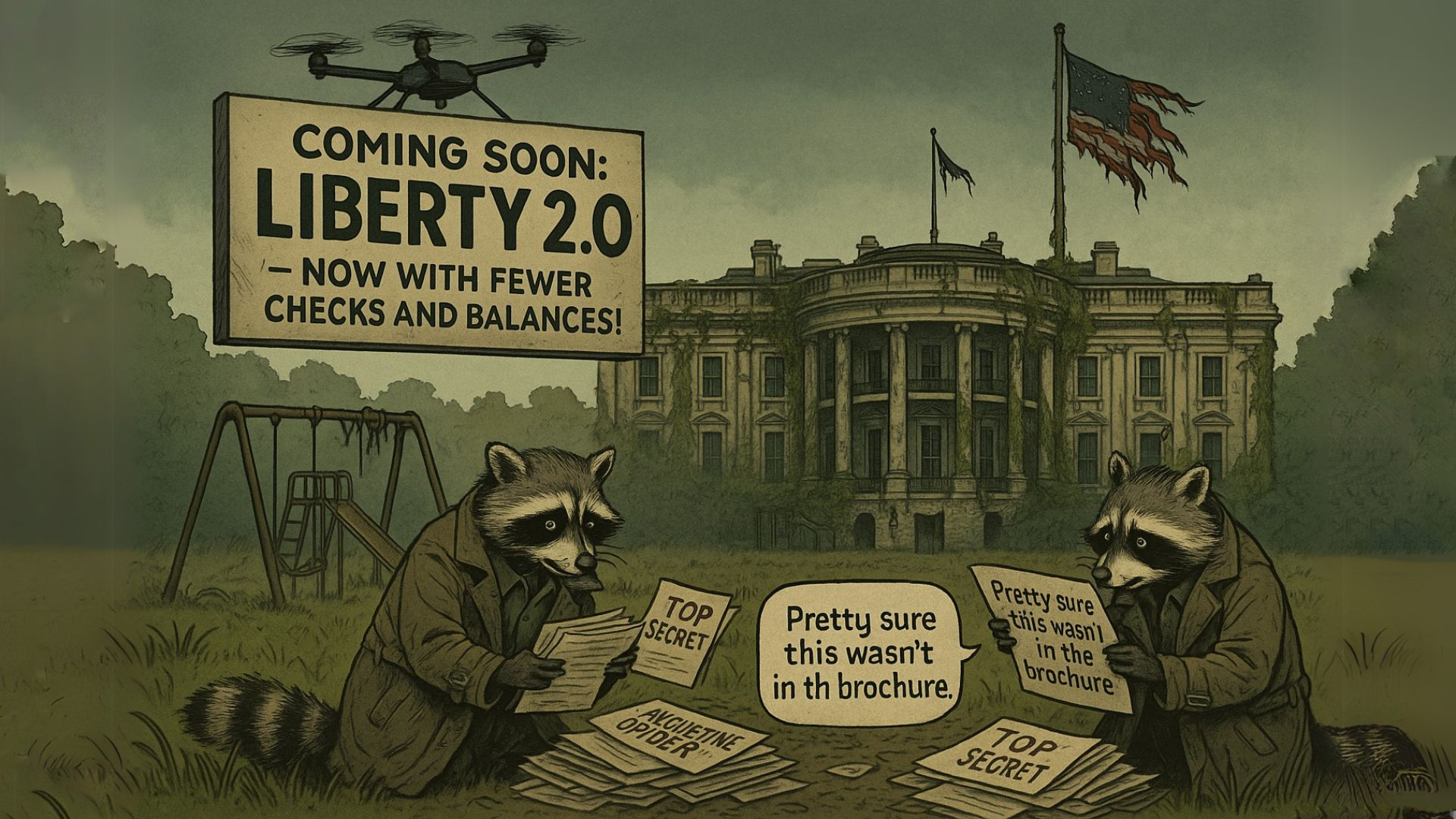
Liberty 2.0: Now With Fewer Checks and Balances!

They told us it would be better. Sleeker. More efficient. “Trust the system,” they said. “It’s just upgrades to an old model.”

But here we are: The White House overgrown and hollowed out, classified documents scattered like fast food wrappers, and two bewildered raccoons—stand-ins for the rest of us—wondering what the hell happened to the brochure we were sold.

The drone doesn’t deliver liberty—it delivers the ad for it. A parody of tech launch culture, hovering over the ruins of institutional safeguards. Welcome to Liberty 2.0—streamlined, stripped down, and surveillance-ready.

This isn’t hyperbole. This is where we are. Executive orders pile up while Congress checks its reflection. Courts twist themselves into legal knots to rationalize the irrational. And we’re left with a tattered flag, a rusted-out playground, and a government selling off the concept of freedom like it’s a discontinued model in a blowout sale.

If you feel like the raccoons do—pretty damn sure this wasn’t in the brochure—then good. You’re paying attention.

Because what’s coming isn’t liberty. It’s the sale of the idea of liberty, duct-taped to the drone of authoritarian creep, dressed up in patriotic decay.

And it’s already airborne.

The Quiet Name of Danila Krasnov

Recently, Alnur Mussayev — former head of Kazakhstan’s National Security Committee and a defector from the post-Soviet intelligence machine — published a statement that should have halted normal operations in every Western newsroom. He posted it under his real name, on a real account, with real consequences. The title: The Evolution of Trump.

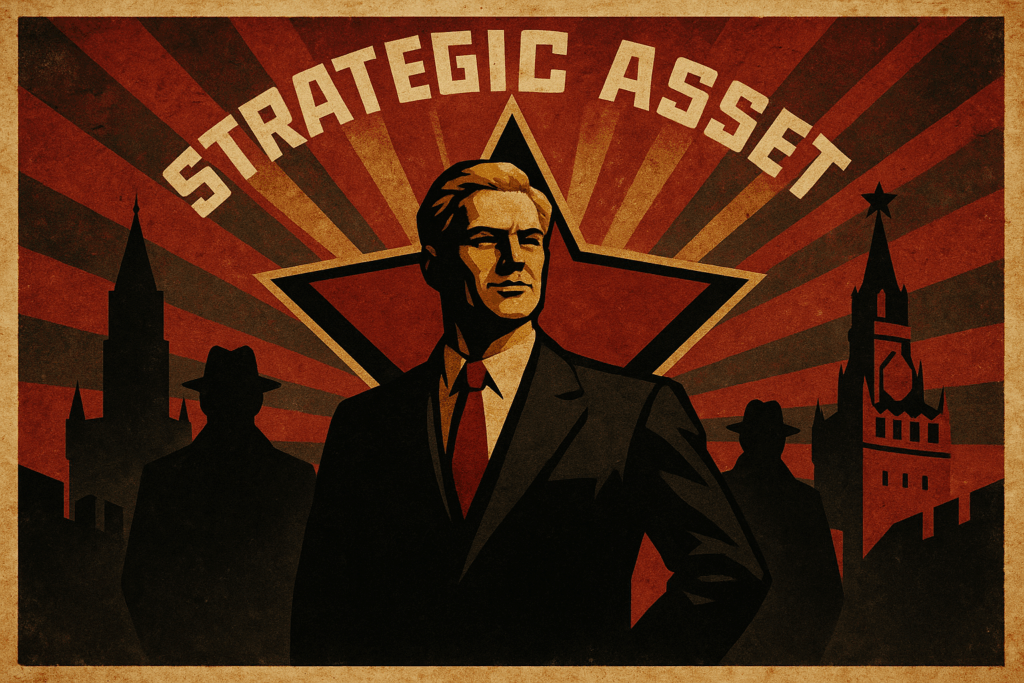
What followed wasn’t analysis. It wasn’t speculation. It was a declaration: a cold, clinical allegation that Donald Trump was recruited as a KGB asset in the 1980s under the direct oversight of General Philip Bobkov, the man who once ran the First Chief Directorate of the KGB — the division responsible for foreign intelligence operations.

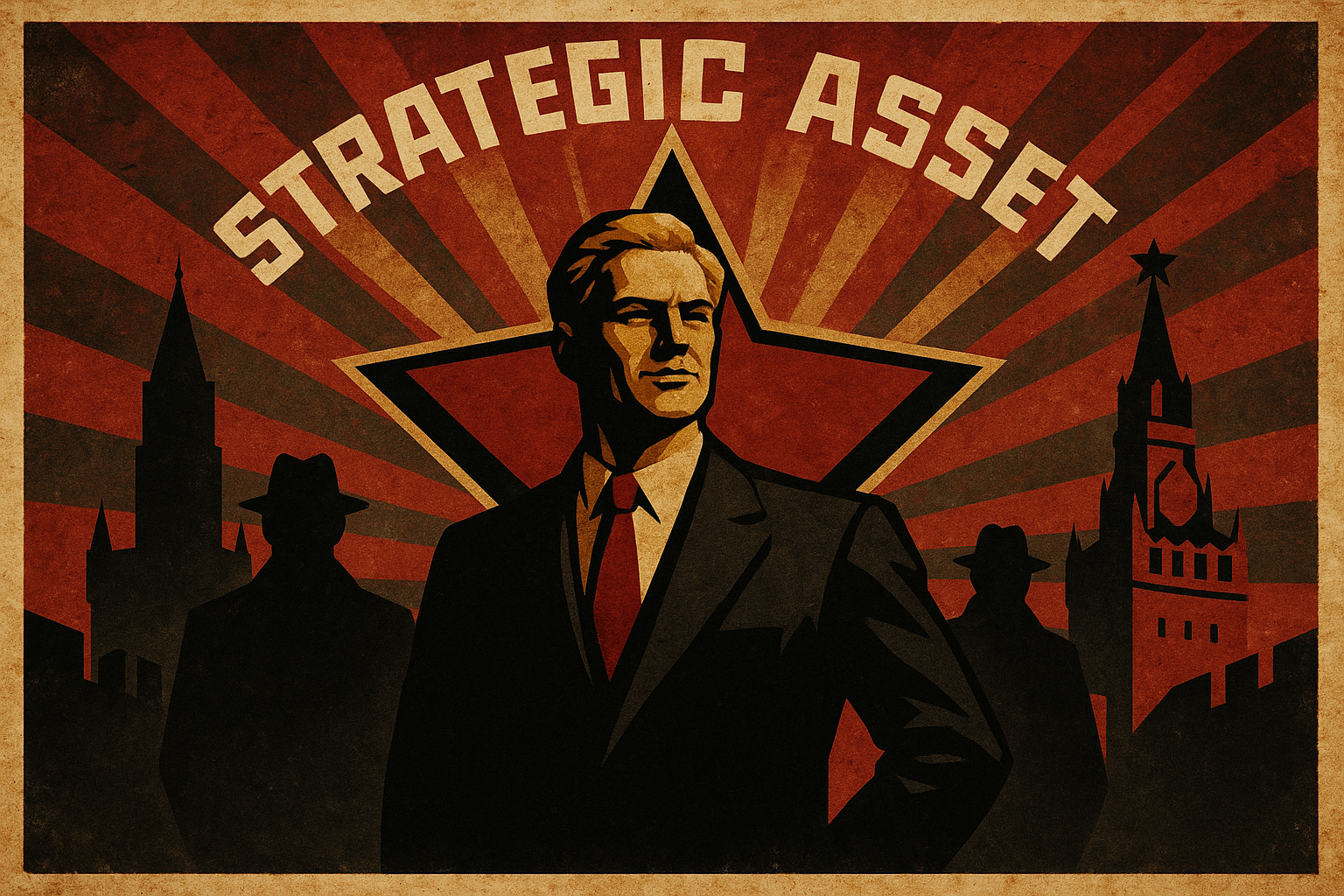
According to Mussayev, the asset’s codename was Danila Krasnov. He claims this wasn’t symbolic, wasn’t myth, wasn’t vague. It was bureaucratic. It was deliberate. And it was enduring. Trump, he writes, was not just useful — he was cultivated, protected, financially supported, and considered operationally viable by the FSB long after the collapse of the Soviet Union.

Let’s pause.

This isn’t a theory. This is a former top-level intelligence official from the post-Soviet bloc putting names, structures, and operational terminology into the public record. In American parlance, it’s akin to a former CIA station chief stating flatly that Vladimir Putin was recruited in 1977 by Langley — and no one saying a word.

But here’s what’s more disturbing than Mussayev’s claim: the silence that followed it.

No emergency segment on CNN. No front-page urgency from the New York Times. Not even a dismissive laugh from Fox News. The same media ecosystem that once pored over the Steele dossier like it was the Dead Sea Scrolls can’t be bothered to parse the meaning of Danila Krasnov.

Mussayev doesn’t present Trump as a pawn. He portrays him as a narcissistic jackpot — eager, flattered, and operationally obedient. He outlines how Russian intelligence propped him up financially, manipulated his failures, and leveraged his vanity for decades. Not just in theory, but in terms that any career intelligence analyst would recognize: “complex operational combinations,” “financial maintenance,” and “long-term strategic resource.”

Strategic. Not historic. Not lapsed. Ongoing.

If Mussayev is telling the truth — and again, there’s no serious journalistic challenge to suggest he isn’t — then we are no longer talking about influence operations, kompromat, or secret hotel tapes. We’re talking about something far more dangerous: a successful long-play intelligence operation, so effective that its asset now commands the executive branch of the United States for the second time in a decade.

The most terrifying part isn’t that Mussayev is possibly telling the truth. It’s that no one with a platform has the courage to treat it that way. Instead, it’s dismissed, ignored, or buried under style guides and editorial policy. The story is too big, too dangerous, too structurally destabilizing to be real — so it is willed into irrelevance.

And yet, it stands. Published. Unretracted. Unchallenged. As clear as the codename itself: Danila Krasnov.

In 50 years, Mussayev claims, Russians will revere Trump as a national hero — more than their fictional spy Stirlitz, more than their medieval saint Alexander Nevsky. If that sounds absurd, remember: all they need is one more U.S. collapse, one more NATO fracture, one more illusion shattered. From Moscow’s perspective, the investment is paying off.

If Mussayev is lying, let the record show it. Debunk it. Name him. Call him out. Investigate. But the refusal to engage — the avoidance — speaks volumes.

We don’t need more outrage. We need courage. And right now, it’s in short supply.

If Trump was Danila Krasnov, then the West isn’t just under threat.

It’s already been breached.
Sean Duffy: When Transportation Policy Meets Reality TV Delusion

America has long flirted with the absurd, but appointing Sean Duffy—yes, the guy from MTV’s Real World—as U.S. Secretary of Transportation isn’t just absurd. It’s grotesque. It’s what happens when we stop pretending that competence matters and start rewarding loyalty, camera-ready grins, and vacuous catchphrases over substance.

Duffy didn’t rise to power through engineering know-how or decades of infrastructure planning. He rose by sticking to the MAGA script like a man auditioning for the Trump Cinematic Universe. He knew the part. The plaid-shirted “family man” from Wisconsin who went full-throttle into culture war nonsense and cable news soundbites. A made-for-Fox puppet who got the call-up when Trump needed someone safe, obedient, and dumb enough to think potholes are just “blue state problems.”

Let’s not sugarcoat this—Duffy is wildly unqualified. His legislative record in Congress reads like a promotional flyer for deregulation and handouts to trucking companies. He once argued that public transportation was a “socialist relic.” Now he runs the entire Department of Transportation. That’s not a punchline. That’s a threat.

This isn’t just about Duffy’s past. It’s about what his appointment says about the present. Trump 2.0 isn’t even pretending anymore. He’s gutting agencies from the inside out by installing loyalty-first hacks who think governance is just messaging. They aren’t here to serve the country. They’re here to serve the brand.

And make no mistake, Duffy is a brand. He sells an image that plays well with the base: large family, Catholic values, America-first rhetoric. But underneath the polish, you’ll find a hollowed-out shell of competence. The man couldn’t run a small-town bus depot, let alone a federal department tasked with overseeing aviation, rail, highways, and transit systems across 330 million people.

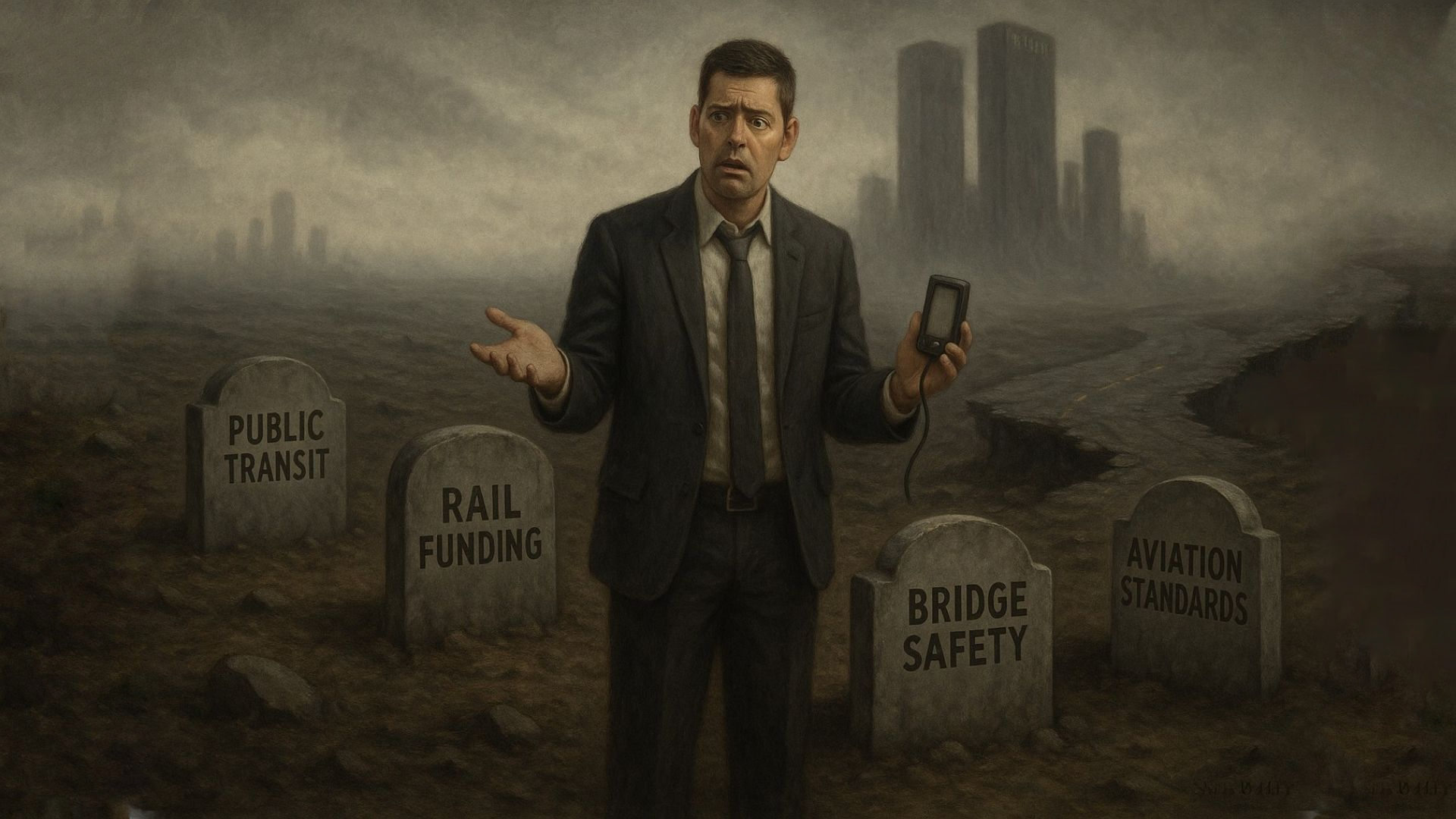
So what happens next? The answer is what’s already happening—chaos. Policy handed over to corporate lobbyists. Safety standards gutted in favor of “efficiency.” Federal grant programs funneled into red state pet projects while blue and urban areas rot. The same playbook Trump used in his first term, just now with fewer adults in the room.

There’s no upside to this. No clever silver lining. This isn’t “shaking things up.” This is turning the machinery of government into a reality show set. And Sean Duffy? He’s not the hero. He’s not the villain. He’s just the clown who said “yes” when asked to wear the costume.

And while he mugs for the cameras, the roads crumble, the trains stall, and the air traffic system inches closer to collapse. Welcome to season two of America’s slow-motion derailment. Directed by Trump. Featuring Sean Duffy. Produced by your silence.


Accountability Isn’t Contagious—2031 (Justice can be Slow)


Presidential immunity does not extend to staff, appointees, advisors, or enablers. If you break the law, hide behind your badge, or falsify the weight of your office to shield misconduct, you’re not protected. You’re complicit.

Lauren and Margery are enablers.

Let’s be clear: immunity for official acts is not a cloak of invincibility for the entire executive branch. It does not give free rein to every deputy, aide, or operative to ignore subpoenas, tamper with evidence, or act outside the law.

Accountability isn’t contagious—but prosecution can be.

Tom Homan: Bureaucratic Brutality with a Badge

Tom Homan isn’t just another hardliner in a suit. He’s the poster boy for what happens when raw power meets zero accountability. In any other era, a man proudly boasting about tearing families apart would be an outlier. In Trump’s America? He’s back in the driver’s seat.

Homan cut his teeth in ICE, a post-9/11 Frankenstein agency built on fear, funded by billions, and run like a private army. He rose through the ranks by turning human suffering into a badge of honor. Family separations? Justified. Mass deportations with no due process? Necessary. Judges who ruled against him? “I don’t care what they think.”

This isn’t law enforcement. It’s state-sponsored trauma.

Now, with Trump clawing his way back into power, Homan’s been dusted off and reinstalled to run immigration policy like a boot camp for cruelty. And let’s be clear—this isn’t about border security. It’s about political theater, white grievance, and a race to the bottom. Homan is the guy who shows up to that race with a shovel.

He’s not just towing the party line—he’s bulldozing it. His public statements read like talk radio scripts. His disdain for courts, his appetite for punishment, and his alignment with far-right agitators make him less of a public servant and more of a demolition crew for civil liberties.

This is what happens when you take policy and strip it of humanity. Homan doesn’t see people—he sees “illegals.” That’s the word he loves to use. Not immigrants. Not asylum seekers. Not families. Just a monolith of menace that justifies everything from cages to child separation.

And now we’re supposed to believe that putting him back in power is about “law and order”? Bull. It’s about fear and control. It’s about using the machinery of the state to remind the rest of us who’s really in charge.

But Homan isn’t the disease—he’s the symptom. The disease is a political system that rewards cruelty, monetizes suffering, and puts thugs in power because they ‘get results.’ Results like trauma, division, and the slow erosion of what little moral standing we have left.

Tom Homan didn’t just enforce bad policy. He helped design it. And he’s back to do it again, meaner and more shameless than ever.

We should be paying attention—not because he deserves the spotlight, but because the people he targets deserve to be seen.

The Oval Office Toy Show: Trump, Golf, and Genocide

If today’s Oval Office press availability had a theme, it was “delusion, distraction, and denial—with a nine-iron in hand.”

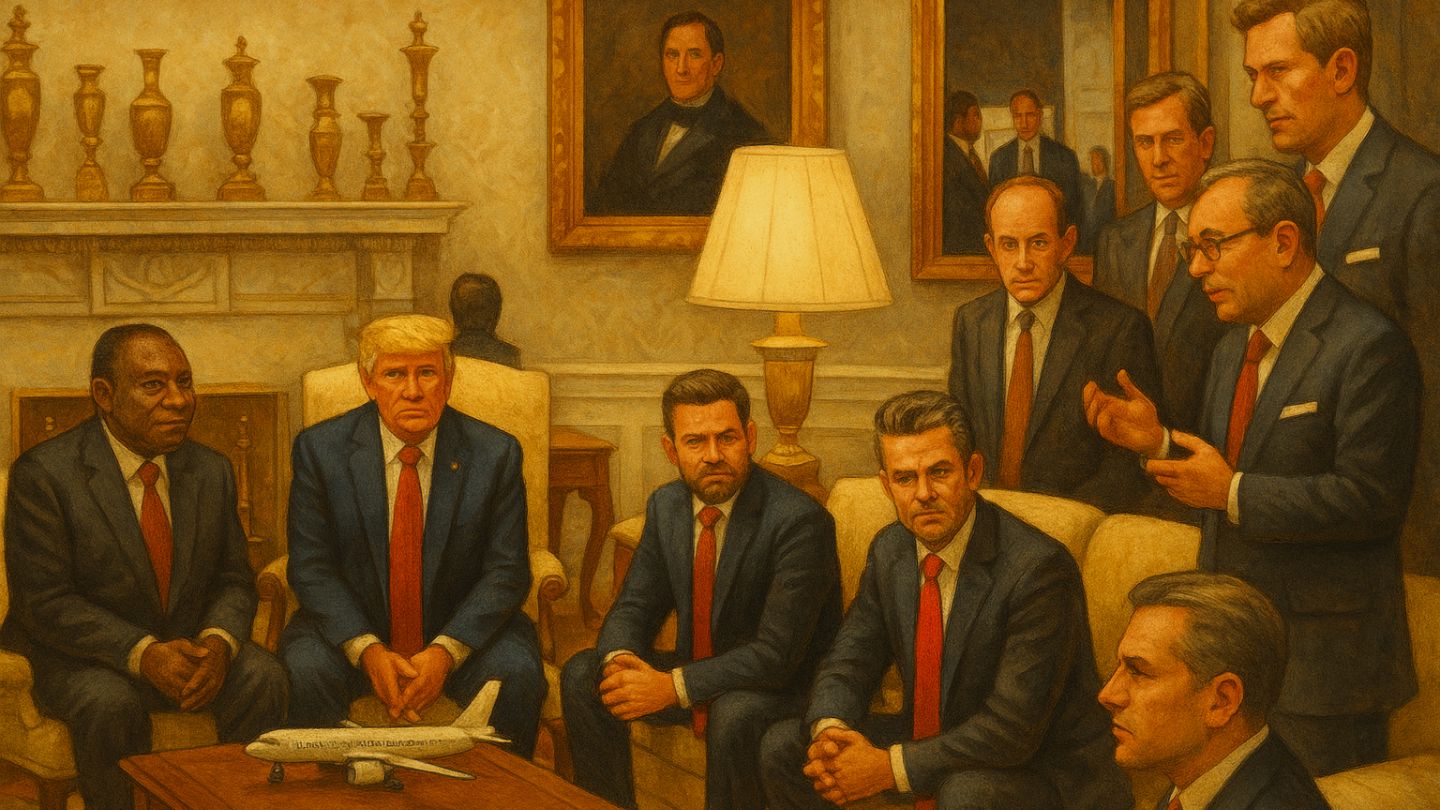
President Trump welcomed South African President Cyril Ramaphosa to the White House in what was advertised as a diplomatic dialogue on trade and international cooperation. What we got instead was part revival tent, part country club awards ceremony, and part conspiracy-laced fever dream.

Trump kicked things off not with policy, but with glowing praise for a gaggle of South African golfers—as if the G20 is being held at Augusta this year. Ernie Els and Retief Goosen got more airtime than Ramaphosa, and at one point, Trump seemed more interested in whether David Frost was a good putter than in discussing international policy. Somewhere in there, he remembered to mention South Africa’s role in the G20, but it quickly devolved into a bizarre rant about “something in the water” that made South Africans good at golf. Spoiler: it’s not diplomacy.

Then came the real Trump: the white nationalist whisperer in full bloom.

Asked about his administration’s open embrace of white Afrikaner refugees while stripping protection from others, Trump didn’t miss a beat. He launched into a rant about land seizures, genocidal mobs, and refugee caravans made up of “criminals from prisons, mental institutions, street gangs.” He rolled out cherry-picked video clips set to ominous music. He waved around articles and death statistics like a man selling doomsday seed vaults on late-night TV. The message was clear: white farmers are victims, and only Trump is willing to “say the quiet part loud.”

Ramaphosa, to his credit, tried to steer things back to reality. He spoke about mutual trade goals, longstanding partnerships, and the need for collaborative crime-fighting. His ministers tried to explain the constitutional process of land reform and the actual scope of rural crime. Even a trade union leader pointed out the racial universality of violence in South Africa. But Trump wasn’t having it.

He kept circling back to one thing: white victims, white crosses, white farmers. And—because it wouldn’t be a Trump presser without it—he squeezed in shots at NBC, a detour into Air Force One procurement, and a brief riff on Elon Musk just for good measure.

By the end, Trump declared he still hadn’t made up his mind about whether genocide is happening in South Africa. But don’t worry—he’s “trying to save lives” from “wars that aren’t ours.” How generous.

This wasn’t diplomacy. It was Trump in his natural state: insecure, self-absorbed, and peddling resentment disguised as concern. Today’s Oval Office wasn’t a stage for international cooperation—it was a one-man circus with a toy airplane on the coffee table and a dangerous narrative in the wings.

And yes, the reporters looked tired. Wouldn’t you?

The Bayonet and the Blowhard: Pete Hegseth’s March on the Pentagon

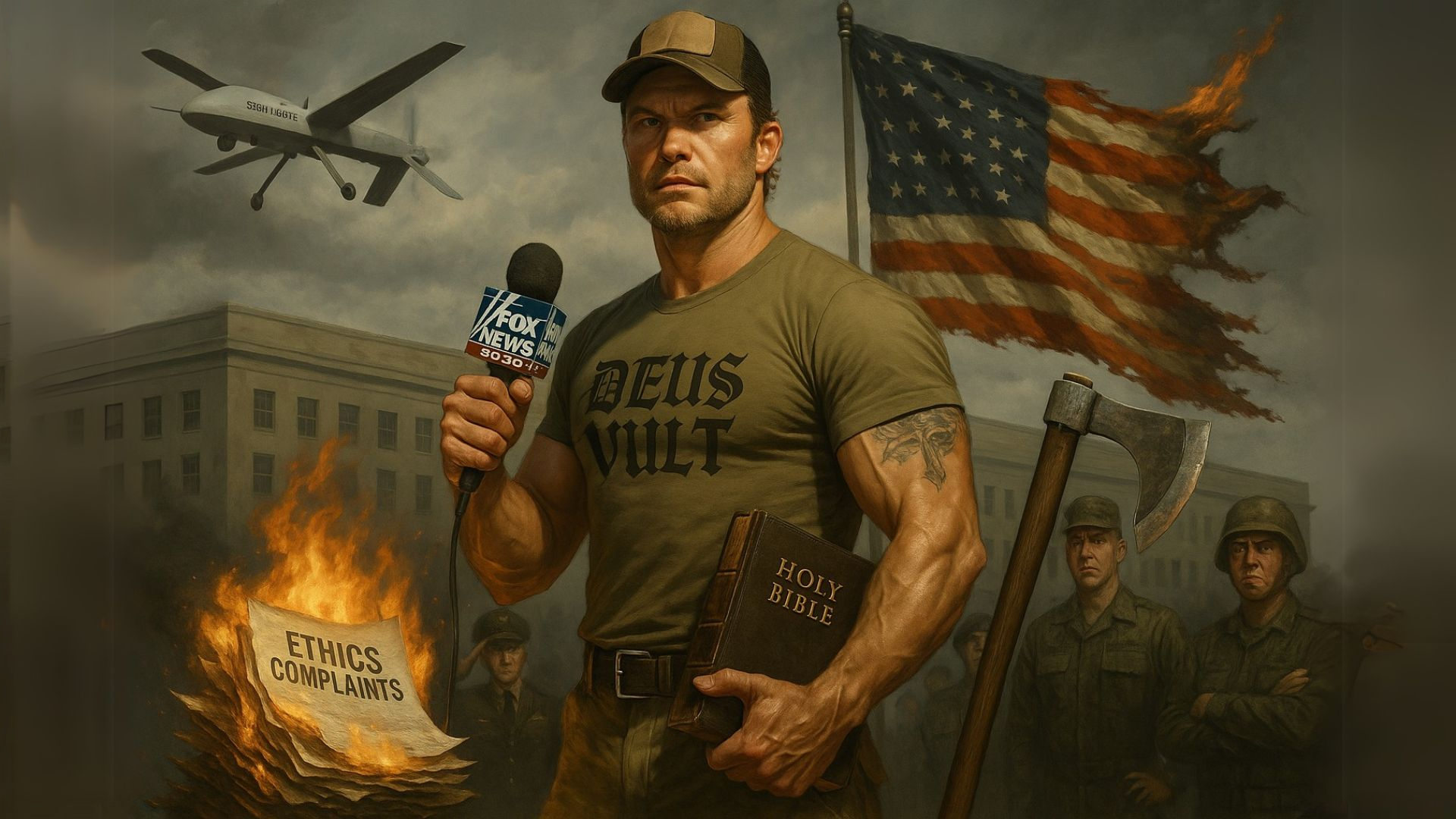
There are few spectacles quite as perverse as the transformation of a television provocateur into a Pentagon power broker. Enter Pete Hegseth, the former Fox News weekend jester who now struts the halls of the Department of Defense like a general without a war—or perhaps more accurately, a general with far too many.

Hegseth’s rise from cable news curio to Secretary of Defense under President Trump’s redux is less a story of qualifications than of cultural resonance. A man who has spent more time in green rooms than war rooms, Hegseth is the personification of this administration’s guiding principle: if it trends, promote it.

To his credit, Hegseth did serve—Guantanamo, Iraq, Afghanistan—and emerged with medals, muscle, and a messiah complex. But even his military résumé, respectable as it is, serves mostly as a backdrop to his greater mission: weaponizing patriotism for political theatre. From Fox’s couch to the Pentagon’s E-Ring, his journey has been buoyed not by strategy but by slogans.

One must pause to admire, however grudgingly, the sheer audacity. Here is a man who once tossed a double-bit axe on live television and nearly took out a drummer, now wielding actual power over America’s military-industrial complex. It would be hilarious if it weren’t so patently dangerous.

Hegseth has made it his business to resurrect what he calls the “warrior ethos”—a euphemism, perhaps, for purging the Pentagon of those deemed insufficiently pugnacious. He has pledged to cut senior military positions, slash “woke” training, and restore “fighting spirit.” One half expects him to bring back leeches and sabres.

But beneath the bluster lies chaos. Allegations of misconduct—sexual, fiscal, ethical—seem to follow him like a bad marching band. His penchant for discussing classified matters over unsecured apps is not so much careless as it is characteristic: the rules are for other people. His appointment was not about competence; it was about compliance.

And yet, here we are. Confirmed by a Senate hanging on a 51–50 thread, with JD Vance’s tie-breaking vote sealing the farce, Hegseth now presides over a military increasingly viewed as a stage for ideological cosplay. The Pentagon, once a place of strategic calculus, has become a set piece in America’s latest culture war.

This isn’t war by statesmen—it’s television by other means. And Pete Hegseth is ready for his close-up.

Elon Musk: Caesar of Controversy, Charioteer of Chaos

Well, isn’t this just the Roman triumph Elon always dreamed of—riding a Tesla chariot through the streets of disdain while the plebeians chant their adoration. I mean, who wouldn’t want to be crowned Caesar of Controversy with the noble title of “Swasticar” ambassador? I’m sure “Musk B-Gone” is just a limited-edition cologne to celebrate his delicate scent of humility. And that “No to ☣️” sign? Probably just a subtle nod to his innovative approach to burning billions on Twitter tantrums. A true people’s champion, clearly basking in the love of his loyal subjects.