The Madness We Deserve

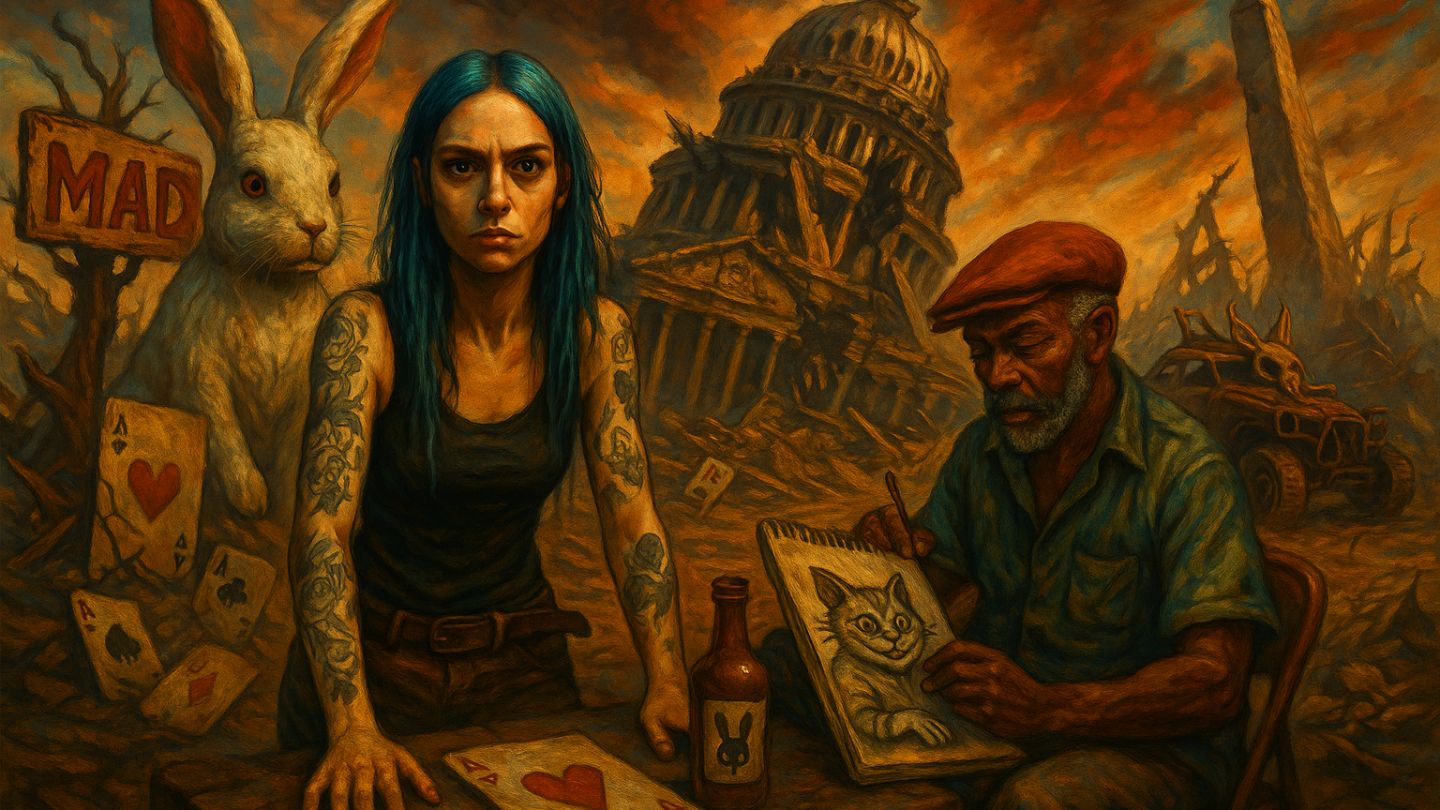
We built this collapse, lie by lie. The Capitol crumbles, a broken promise. The rabbit’s right on time—standing in the ashes of democracy’s myth.

She stands defiant, tattoos telling stories the world tried to erase. Beside her, an old man sketches hope in a place where everything else burns.

Welcome to Wonderland. No rabbit holes, just wreckage.

DEI: Two Steps Back, and the Door Slams Shut

Make America like it was before

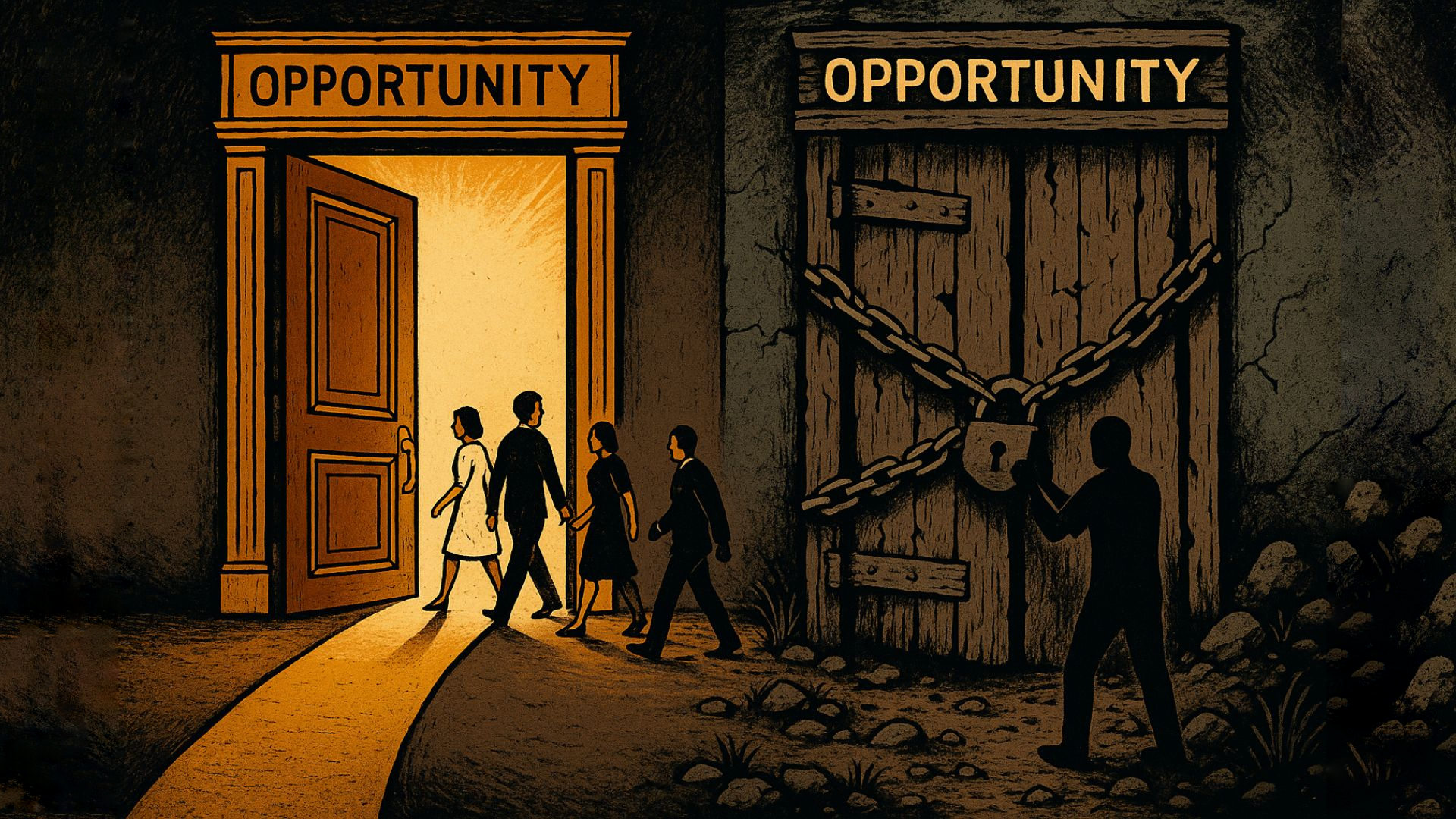
Corporate America and the federal government are calling it a ‘realignment’—a shift back to so-called merit-based systems, all while they slam the door on DEI under the guise of ‘fairness.’ It’s nothing but a glossy repackaging of the same old barriers, built stronger and more resilient this time around. Opportunity, they say, is equal. But if you peek behind the door, you’ll see it’s been padlocked, rebranded, and tucked neatly out of sight. For every headline about ‘progress,’ there’s another about a rollback. For every corporate pledge, there’s a mass layoff of DEI professionals. The path to equity has always been uphill—now, they’ve added landmines.

They might call it reform; I call it regression. And until those chains are broken—not just repainted—we’re still fighting the same damn fight.

It Seems to be Working

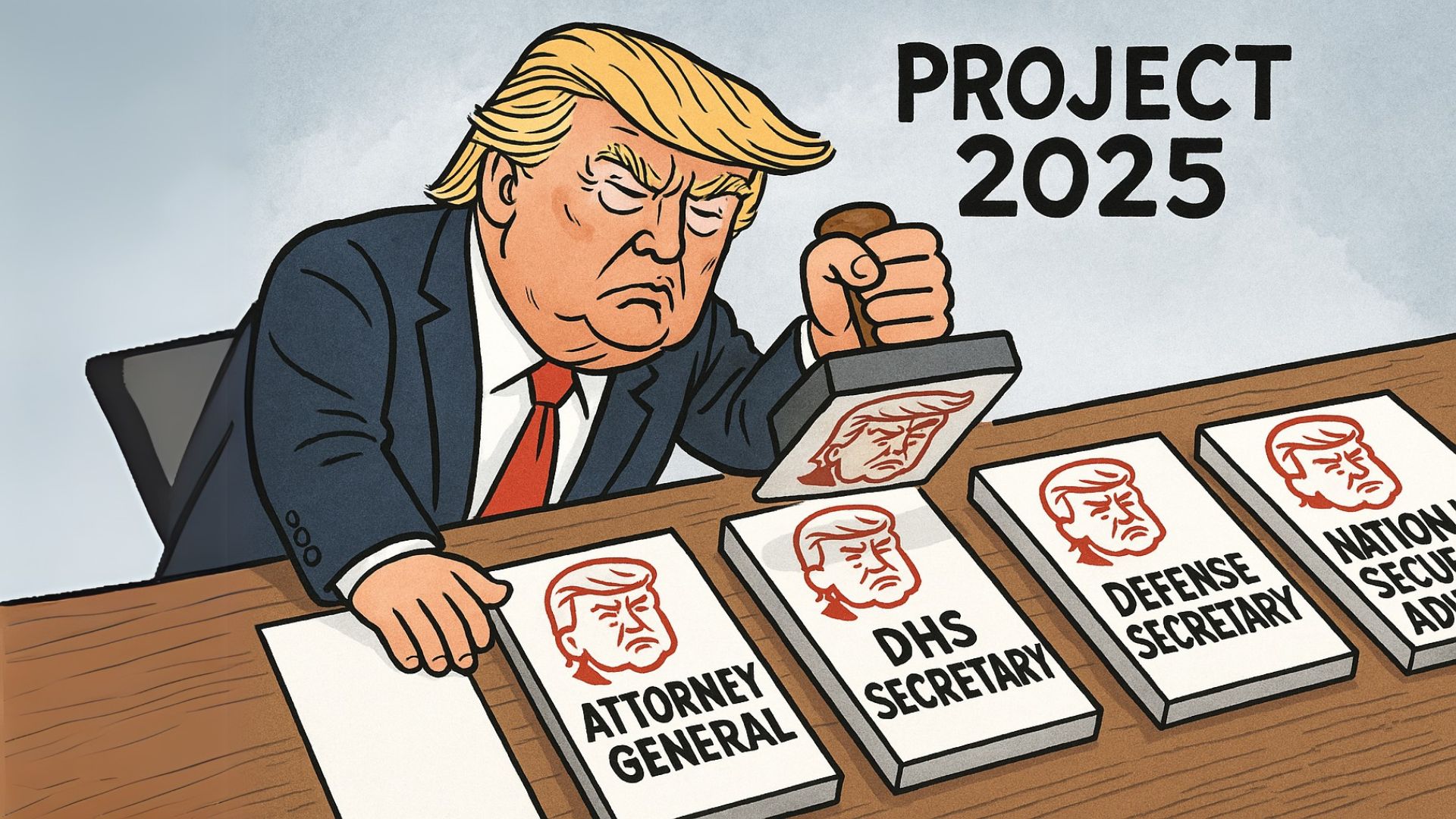
The cartoon is blunt, almost painfully so. Donald Trump sits at a desk with a stamp bearing his face, slamming it down on blocks labeled Attorney General, DHS Secretary, Defense Secretary, and National Security Advisor. Above him, in bold, the words: Project 2025.

The message isn’t exactly subtle. It’s the kind of cartoon that smacks you over the head with its point, not because it’s too heavy-handed, but because the reality it’s depicting is just that stark. The imagery suggests consolidation—not just of power, but of identity. Everything stamped with the Trump brand. Every critical role in government, pressed with the same ironclad ideology. The seal of loyalty.

It’s like watching a brand expansion rather than a government being built. Think less ‘We the People’ and more ‘We the Brand.’ Project 2025 doesn’t even pretend to hide the agenda; it’s plastered right there in the open. The idea that each role—Attorney General, DHS Secretary, Defense Secretary, National Security Advisor—would not just be loyal to a policy or a platform, but loyal to a man.

It’s authoritarianism with a marketing plan.

If the cartoon is to be believed, Trump’s vision for 2025 is a slate wiped clean of dissent. It’s a series of rubber stamps where independent judgment is swapped for brand uniformity. A terrifying efficiency in governance where the only question that matters is: “Will this serve the boss?”

The implications of this are pretty clear. If every major security and justice position is handpicked and rubber-stamped, what checks remain? What balances are left when the only qualification is fealty?

Project 2025 isn’t just a slogan. It’s a blueprint. A plan to stamp out any last vestiges of resistance within the highest offices of American power. And that’s what makes the cartoon so chillingly effective. It’s not far-fetched; it’s a warning. One that’s been stamped, signed, and delivered.

A Slytherin Sorting: Reflections on Power and Ambition

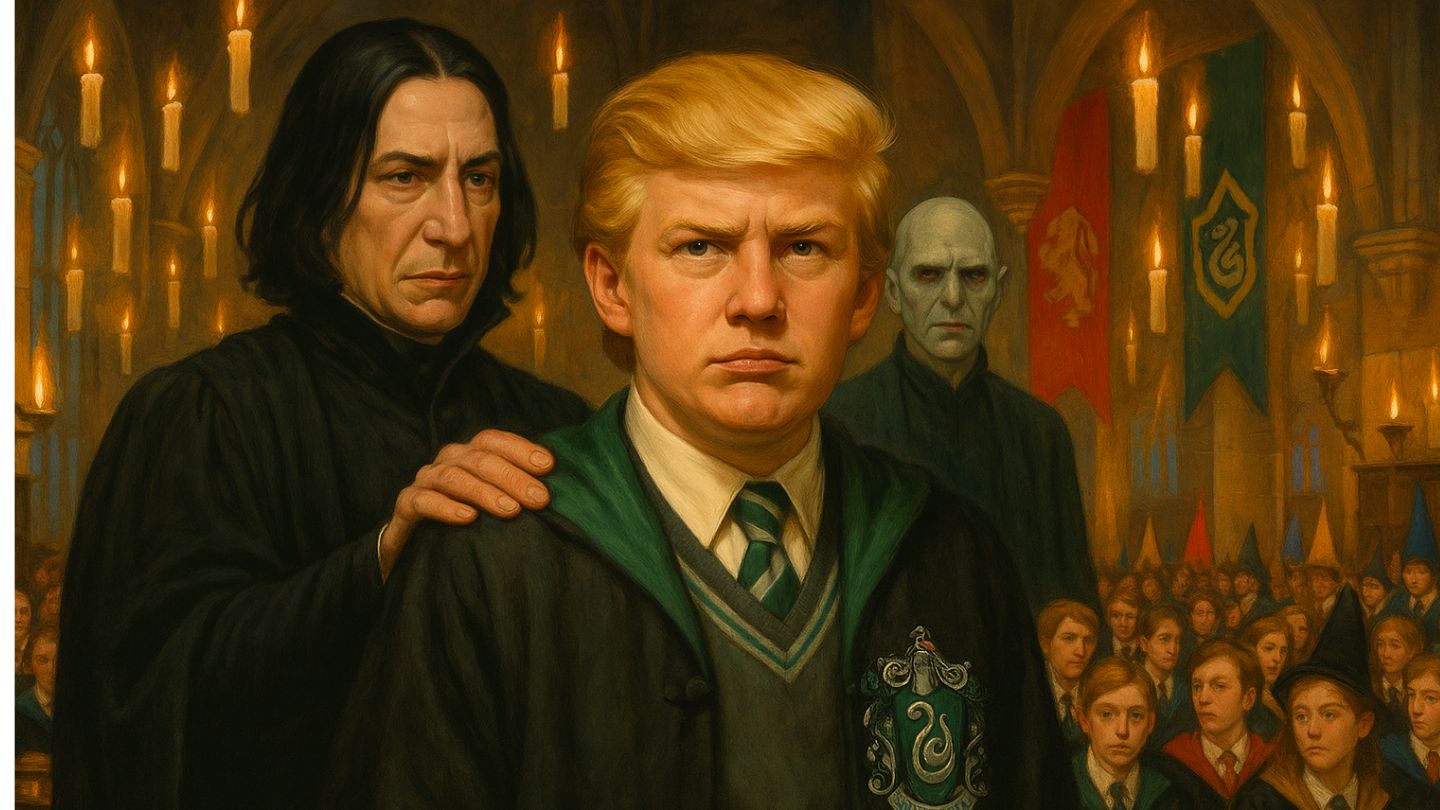
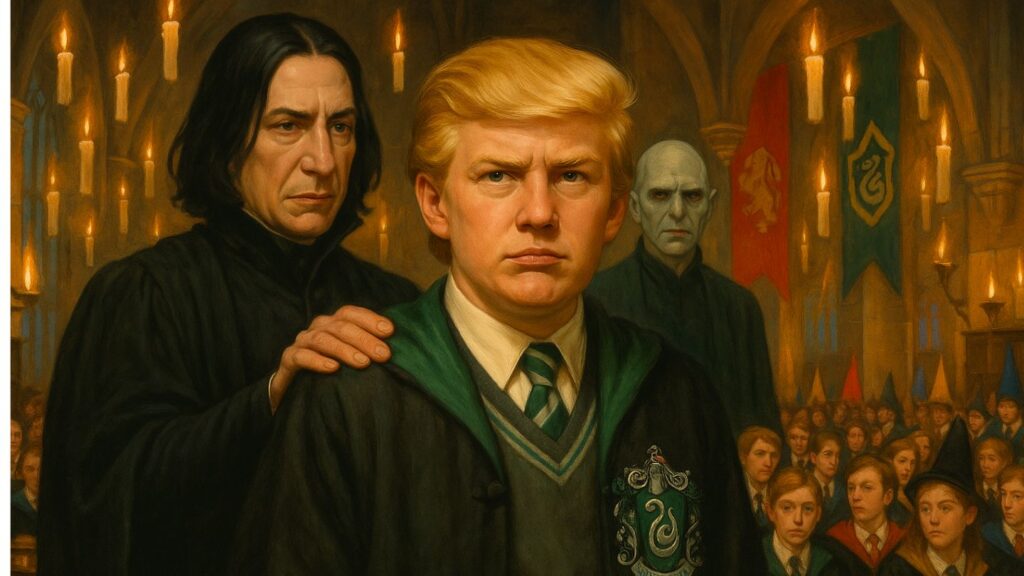
The image hit my inbox early this morning, and I couldn’t look away. There he was, cloaked in Slytherin green, standing with that unmistakable scowl—a young Donald Trump flanked by Severus Snape and the Dark Lord himself. Hogwarts’ Great Hall stretched out behind them, candlelit and shadowed, the emblems of rival houses looming like sentinels.

For a moment, I just stared. Was this some kind of political satire? A fan artist’s fever dream? Maybe, but the longer I looked, the more it made sense.

There’s always been this unspoken understanding among Harry Potter fans that Slytherin represents more than just “evil.” It’s ambition, cunning, and the relentless pursuit of power—traits that are neither inherently good nor bad, but that hinge heavily on the wielder’s intent. I imagine the Sorting Hat would have had very little trouble with this decision. In fact, I think it might have barely brushed his head before shouting “Slytherin!” to the rafters.

It’s easy to demonize Slytherin House, to pin every act of malice and dark magic on its serpentine crest. But ambition in itself isn’t the villain. It’s what you do with that ambition that defines you. Think of Snape: someone who danced on the razor’s edge of darkness but still managed, in the end, to wield that ambition for something more profound than himself. Sacrifice. Protection. Even redemption.

But then, the figure in this portrait isn’t Snape. He’s something far more familiar—a figure driven by ambition, yes, but also by the trappings of ego, the obsession with dominance, and the refusal to accept any view but his own. It’s Voldemort’s shadow that looms over his shoulder, not Dumbledore’s.

The artist’s choice to place Trump in Slytherin robes isn’t just satire—it’s a statement on the nature of ambition untethered from humility or empathy. It’s Slytherin at its most dangerous: a drive for power for its own sake, without regard for the damage left in its wake.

I can almost imagine him at Hogwarts, sneering from the Slytherin table, hatching schemes not to master magic but to control it, to bend it to his will. For someone like him, the Room of Requirement wouldn’t be a place of need—it would be a vault for secrets, a hoard of power waiting to be leveraged.

If Hogwarts teaches anything, it’s that true strength doesn’t come from domination—it comes from unity, from the willingness to fight for something greater than yourself. The artist captured that contradiction perfectly: ambition without purpose, power without conscience, and loyalty that is always conditional.

And isn’t that the lesson Rowling wrote for us, hidden between enchanted pages and midnight book releases? That our choices—not our houses—define us. And some choices are darker than any magic could conjure.
The Gift That Keeps on Taking

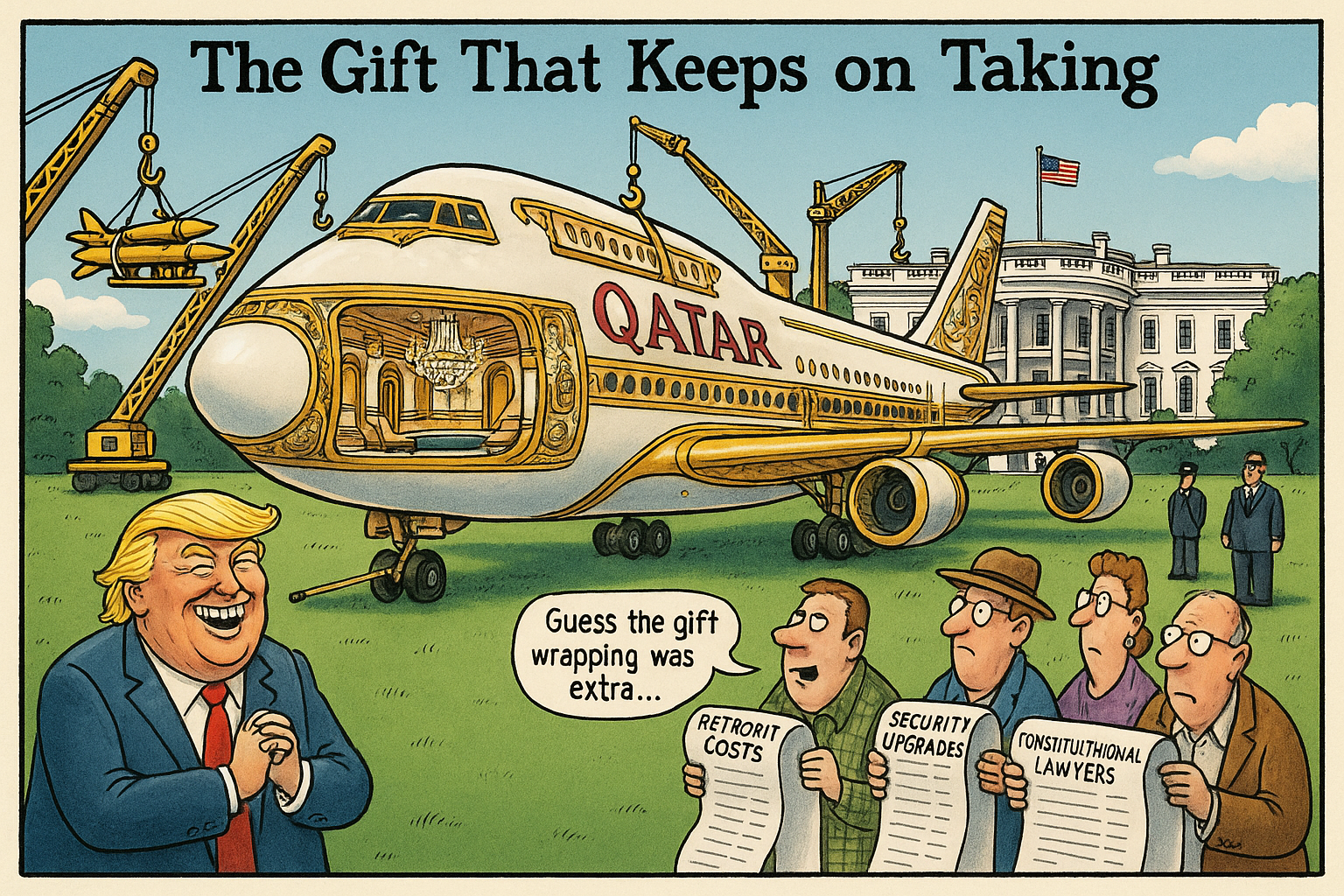
Converting the Qatari-owned Boeing 747-8 into a functional Air Force One is projected to cost between $500 million and $1 billion, with the process potentially extending over several years. Although the aircraft itself is being offered as a gift, the substantial expenses associated with retrofitting it to meet presidential standards would fall on U.S. taxpayers.

Breakdown of Estimated Costs

The aircraft in question, previously registered as A7-HBJ and now P4-HBJ, was originally delivered to Qatar’s royal family in 2012 and is valued at approximately $400 million. Despite its luxurious interior, transforming it into an Air Force One entails extensive modifications, including:

  • Secure Communications Systems: Installation of advanced, encrypted communication equipment to ensure secure global connectivity.
  • Self-Defense Mechanisms: Implementation of missile defense systems and other protective measures.
  • Electromagnetic Shielding: Enhancements to protect against electromagnetic pulses (EMPs).
  • Medical Facilities: Establishment of onboard medical suites for emergency situations.
  • Comprehensive Security Audits: Thorough inspections to detect and eliminate any potential surveillance devices or security vulnerabilities.

Experts indicate that these upgrades could cost hundreds of millions of dollars and require several years to complete. This timeline suggests that the aircraft might not be ready for presidential use until after 2028, potentially limiting its service during the current administration.

Legal and Ethical Considerations

The acceptance of such a significant gift from a foreign government raises legal and ethical questions, particularly concerning the U.S. Constitution’s Emoluments Clause, which prohibits federal officials from receiving gifts from foreign states without congressional approval. While the Trump administration asserts that the plane is a gift to the Department of Defense and plans to transfer it to the Trump Presidential Library post-presidency, critics argue that this arrangement could still pose constitutional challenges.

Summary

While the Qatari Boeing 747-8 is being presented as a generous gift, the financial and temporal costs associated with converting it into a secure and fully functional Air Force One are substantial. These factors, combined with legal and ethical concerns, contribute to the controversy surrounding the proposed acceptance and use of the aircraft.

Howard Lutnick: From Power Broker to Presidential Yes-Man

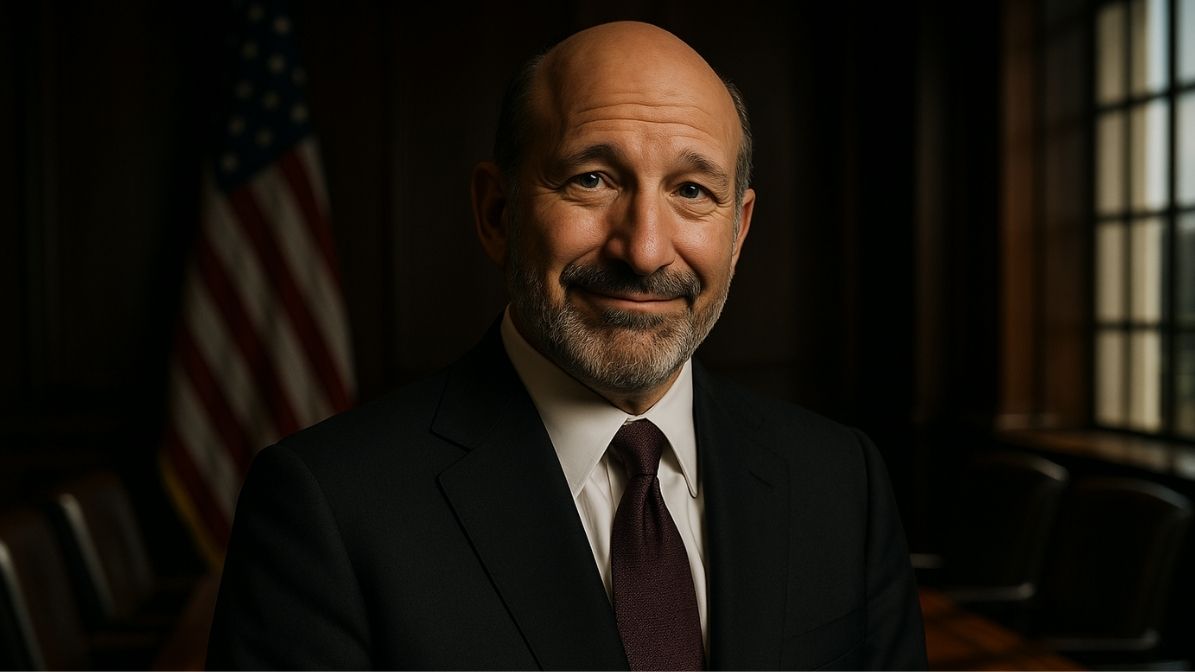
Howard Lutnick: The Billionaire Who Mastered Wall Street, Survived 9/11, and Now Serves as Trump's Loyal Commerce Chief.Howard Lutnick is a name synonymous with high-stakes finance and unyielding ambition. Rising to prominence as the CEO of Cantor Fitzgerald, Lutnick’s legacy is permanently intertwined with the tragic events of 9/11. His leadership in the aftermath of that catastrophe—where Cantor Fitzgerald lost 658 employees in the World Trade Center—was both lauded and criticized. For some, he symbolized resilience and tenacity; for others, his handling of survivor benefits and restructuring efforts left a shadow over his reputation.

Lutnick’s approach to business is ruthless and unapologetic. His strategic acumen in leveraging technology to transform Cantor Fitzgerald into a powerhouse of electronic trading was nothing short of visionary. He capitalized on market shifts and technological advancements, pushing the firm into the digital age with platforms like eSpeed, which revolutionized bond trading.

But with success comes controversy. Lutnick’s aggressive expansion into the financial sector often skirted ethical lines, drawing criticism for prioritizing profits over people. His vocal support for deregulation and his deep connections with political power brokers have raised eyebrows, particularly in the wake of financial downturns where Cantor Fitzgerald seemed to emerge stronger while competitors faltered.

Now, as U.S. Secretary of Commerce under President Trump, Lutnick’s philosophy of ‘profit above all else’ is on full display. His policies reflect a businessman’s mindset—cutthroat efficiency, bottom-line focus, and a relentless drive to dismantle what he sees as bureaucratic roadblocks to economic dominance. Critics argue that his influence may tip the scales even further in favor of the financial elite, widening the gap between Wall Street and Main Street.

Blockchain and cryptocurrency are also in Lutnick’s sights. His understanding of blockchain technology as a decentralized ledger system that could streamline financial transactions and upend traditional banking structures fits perfectly with his disruptive approach to markets. Blockchain, in simple terms, is a digital ledger of transactions that is duplicated and distributed across an entire network of computer systems on the blockchain. It’s designed to be secure, transparent, and virtually tamper-proof—traits that have drawn interest from both financial institutions and technology innovators. Lutnick sees it as the next frontier, a way to further extend Cantor Fitzgerald’s reach and influence in global finance.

Recently, Lutnick’s media appearances have raised eyebrows, with many noting his often-confused demeanor and seemingly scripted responses. His interactions with Trump in public settings have only heightened this perception, where his sycophantic behavior is almost theatrical—nodding in agreement, echoing talking points, and visibly deferring to Trump’s authority, sometimes to the point of awkwardness.

In summary, Howard Lutnick’s journey from financial mogul to political power player is a testament to ambition unchecked by traditional boundaries. Whether his legacy will be seen as one of visionary leadership or ruthless profiteering is still up for debate—but one thing is certain: he’s not done shaking things up.

Everyone is talking about it, I know, so of course I had to.

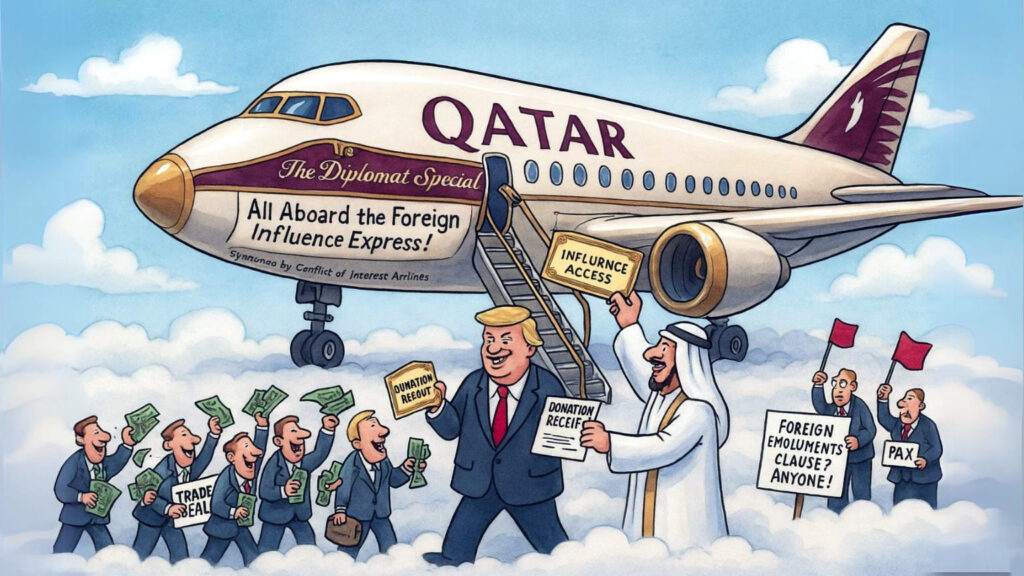
It’s the sort of thing that practically writes itself: a gilded jet from Qatar, wrapped in diplomatic ribbon and stamped with the words “The Diplomat Special.” All aboard the Foreign Influence Express! Don’t forget your trade deals and your neatly filed donation receipts.

Trump, of course, grinning ear to ear, steps off the plane with a “Donation Receipt” in one hand and his other palm open wide. And who’s waiting at the bottom of the steps? A Qatari diplomat, eager to shake hands and hand over a matching slip. In the clouds behind them, a gaggle of businessmen practically frothing at the mouth, clutching dollar bills like they’ve just won the sweepstakes. They’ve got signs that read “Trade Deal” and “Access Granted,” and they’re following Trump down that golden staircase like lemmings with dollar signs for eyes.

And yet, off to the side, two lonely figures wave red flags—one literally. Their sign asks the obvious: “Foreign Emoluments Clause? Anyone?” The other just holds a little flag that reads “Pax,” as if someone might actually notice that there’s a constitutional crisis dressed up in jet fuel and diplomatic immunity.

What’s most impressive here isn’t even the shamelessness. That’s old news. It’s the sheer audacity of painting it gold, rolling it out on a red carpet, and pretending it’s anything less than what it is: a flying billboard for foreign influence. I can almost hear the sales pitch: “Why buy your influence in Washington when you can just gift it directly? Comes with complementary hypocrisy and a side of plausible deniability.”

And lately, what I’m seeing is that cloud of red flags getting thicker and thicker by the day.

Stay tuned—next time, maybe they’ll throw in a yacht.


Cutting Through the Noise: The Real Nancy Mace

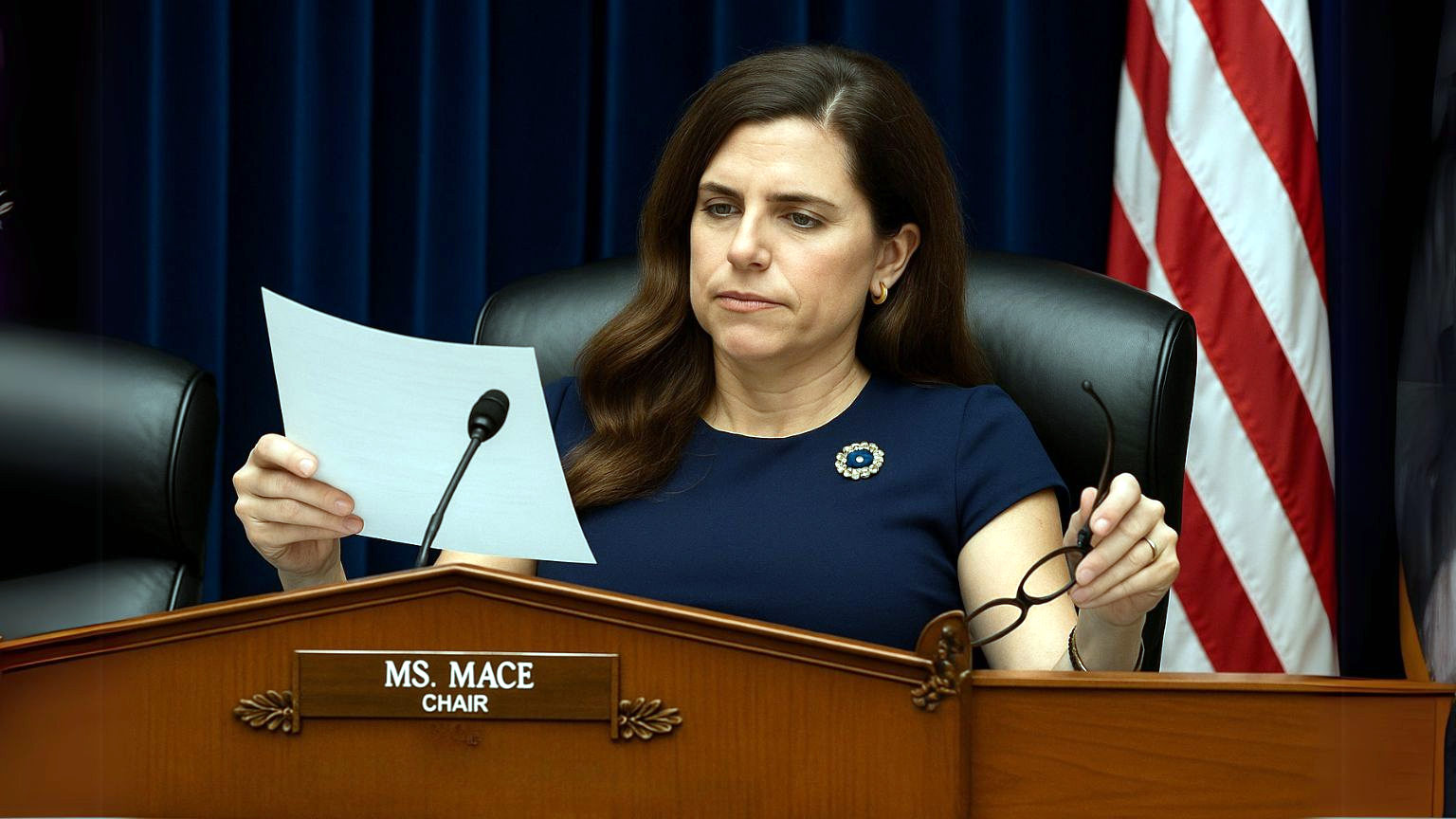
Nancy Mace’s rise is a story of calculated ambition, financial ties, and strategic Trump loyalty.Nancy Mace’s rise in South Carolina politics is no accident. From her carefully choreographed graduation at The Citadel—where her father served as Commandant—to her strategic embrace of Trumpism, Mace has proven adept at reading political tides and positioning herself accordingly. Her rapid ascent to Congress and ambitious sights set on the Governor’s Mansion reveal a politician who understands power and isn’t afraid to wield it. Behind the PR gloss and media narratives lies a calculated operator, leveraging political alliances, financial backers, and public outrage to secure her place in the political arena. This is Nancy Mace—unfiltered and exposed

The Rise to Power: A Calculated Path

Nancy Mace is no accidental politician. Her rise from a dropout waitress to the first female graduate of The Citadel’s Corps of Cadets was a well-constructed narrative, bolstered by her father, Brigadier General James Emory Mace, who just happened to be the Commandant of The Citadel at the time. Political dynasties know how to leverage influence, and Mace played her cards well. By 2020, she was the first Republican woman to represent South Carolina’s 1st District, defeating Joe Cunningham with Trump’s endorsement paving the way.

The Trump Pivot: Playing to the Base

Mace’s calculated pivot after January 6 from moderate Republican to staunch Trump supporter was no moral awakening—it was strategy. With the Republican base consolidating around Trumpism, Mace read the room. Her support for hardline policies like the Protecting Women’s Private Spaces Act and vocal backing of Trump’s Gaza troop proposal signaled her full alignment with the MAGA crowd.

  • Strategic Calculus: Embrace the Trump base, dominate primaries, and lock down rural South Carolina.
  • Cost of Loyalty: Burned bridges with moderates, complicating her path to broader appeal.

[continue reading…]

Trump, RFK Jr., and Dr. Oz: Political Theater at Its Finest

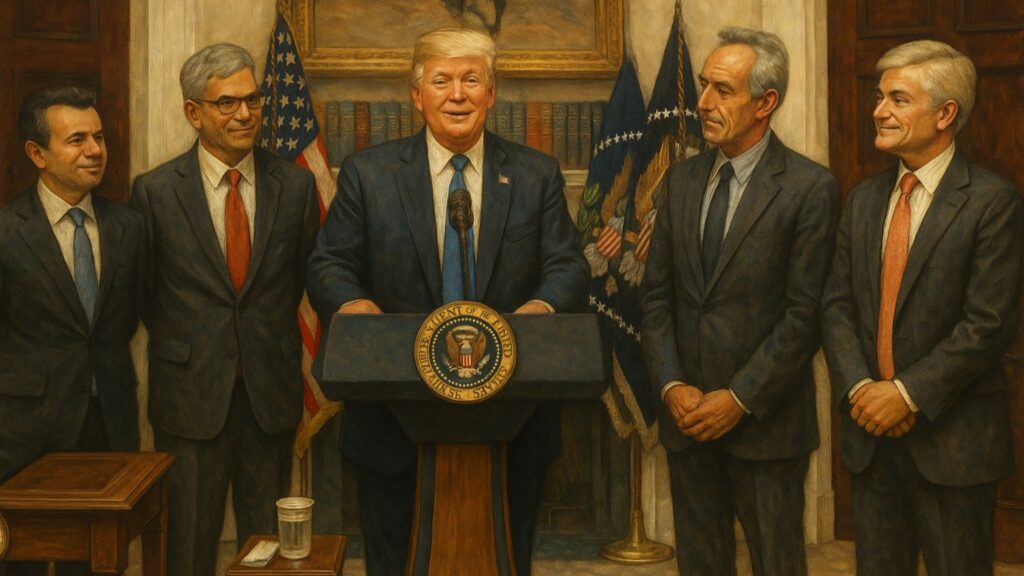
On May 12, with RFK Jr and Dr Oz, Donald Trump held a press conference on his executive order for lowering prescription drug costs.

The press conference was a masterpiece of political theater, a finely tuned illusion crafted for those willing to believe that sweeping change can be conjured with the stroke of a pen and a round of applause. Donald Trump, Robert F. Kennedy Jr., and Dr. Mehmet Oz shared the stage, each playing their assigned role in this act of orchestrated spectacle: Trump, the boastful magician conjuring miracles from thin air; Kennedy, the opportunistic crusader clinging to populist fervor; and Oz, the celebrity doctor eager to translate pseudo-science into policy. Together, they sold a vision of slashed prescription costs and American dominance over Big Pharma, blissfully ignoring the realities of international trade, pharmaceutical pricing, and legislative impotence. It was vintage Trump: heavy on promises, light on details, and utterly indifferent to the mechanics of real governance.

Donald Trump: The Master of Illusions

Trump’s performance at the press conference was a textbook display of his usual tactics: make grandiose claims, inject personal bravado, and sidestep the deeper issues. His declaration that he single-handedly stopped a nuclear conflict between India and Pakistan by leveraging trade is patently absurd. Trade leverage has been a tool of diplomacy for centuries, and India-Pakistan tensions are rooted in decades of complex geopolitical, religious, and territorial issues. Trump framing this as his solo victory is a complete misrepresentation. [continue reading…]

Her inner demon

Last month, Representative Nancy Mace got into an expletive laden argument with one her constituent in a store after he asked her if she was going to have a town hall any time soon.
Apparently, town halls are a touchy subject with many Republican members of Congress after a number of them have resulted in rather raucous situations. It’s almost like asking a vampire to stroll through a garlic festival—there’s bound to be discomfort, a bit of hissing, and the overwhelming urge to bolt for the nearest exit. For some reason, the notion of facing a room full of constituents armed with questions and maybe just a dash of outrage has become about as appealing as volunteering for jury duty on a Monday morning.

And honestly, who can blame them? Town halls these days have a tendency to transform into unsanctioned therapy sessions, where the collective grievances of a community are aired out like last season’s laundry. People want answers, and not just the kind that fit nicely on a bumper sticker. They want explanations for policy decisions, accountability for votes cast, and—heaven forbid—a shred of empathy. But hey, why engage when you can just blame it on “security concerns” and call it a day?

For Nancy Mace, it seems even the mere mention of a town hall is enough to bring out her inner demon. It’s as if being asked actually to talk to the people you represent is now a form of cruel and unusual punishment.