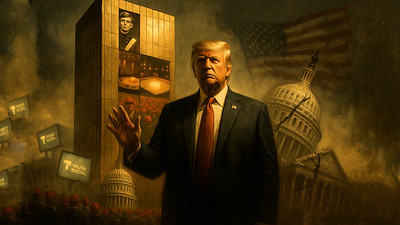
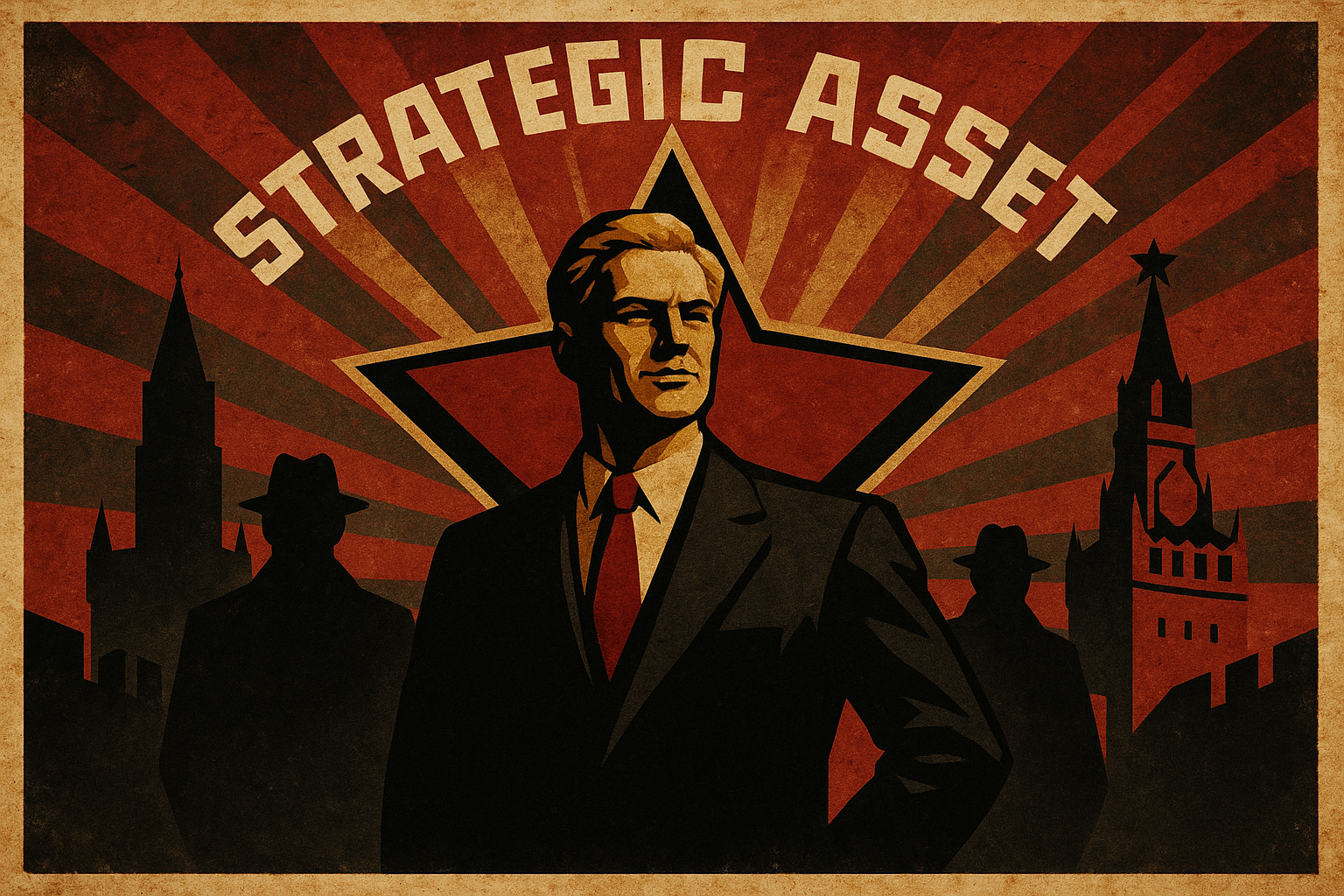
 Recently, Alnur Mussayev — former head of Kazakhstan’s National Security Committee and a defector from the post-Soviet intelligence machine — published a statement that should have halted normal operations in every Western newsroom. He posted it under his real name, on a real account, with real consequences. The title: The Evolution of Trump.
What followed wasn’t analysis. It wasn’t speculation. It was a declaration: a cold, clinical allegation that Donald Trump was recruited as a KGB asset in the 1980s under the direct oversight of General Philip Bobkov, the man who once ran the First Chief Directorate of the KGB — the division responsible for foreign intelligence operations.
According to Mussayev, the asset’s codename was Danila Krasnov. He claims this wasn’t symbolic, wasn’t myth, wasn’t vague. It was bureaucratic. It was deliberate. And it was enduring. Trump, he writes, was not just useful — he was cultivated, protected, financially supported, and considered operationally viable by the FSB long after the collapse of the Soviet Union.
Let’s pause.
This isn’t a theory. This is a former top-level intelligence official from the post-Soviet bloc putting names, structures, and operational terminology into the public record. In American parlance, it’s akin to a former CIA station chief stating flatly that Vladimir Putin was recruited in 1977 by Langley — and no one saying a word.
But here’s what’s more disturbing than Mussayev’s claim: the silence that followed it.
No emergency segment on CNN. No front-page urgency from the New York Times. Not even a dismissive laugh from Fox News. The same media ecosystem that once pored over the Steele dossier like it was the Dead Sea Scrolls can’t be bothered to parse the meaning of Danila Krasnov.
Mussayev doesn’t present Trump as a pawn. He portrays him as a narcissistic jackpot — eager, flattered, and operationally obedient. He outlines how Russian intelligence propped him up financially, manipulated his failures, and leveraged his vanity for decades. Not just in theory, but in terms that any career intelligence analyst would recognize: “complex operational combinations,” “financial maintenance,” and “long-term strategic resource.”
Strategic. Not historic. Not lapsed. Ongoing.
If Mussayev is telling the truth — and again, there’s no serious journalistic challenge to suggest he isn’t — then we are no longer talking about influence operations, kompromat, or secret hotel tapes. We’re talking about something far more dangerous: a successful long-play intelligence operation, so effective that its asset now commands the executive branch of the United States for the second time in a decade.
The most terrifying part isn’t that Mussayev is possibly telling the truth. It’s that no one with a platform has the courage to treat it that way. Instead, it’s dismissed, ignored, or buried under style guides and editorial policy. The story is too big, too dangerous, too structurally destabilizing to be real — so it is willed into irrelevance.
And yet, it stands. Published. Unretracted. Unchallenged. As clear as the codename itself: Danila Krasnov.
In 50 years, Mussayev claims, Russians will revere Trump as a national hero — more than their fictional spy Stirlitz, more than their medieval saint Alexander Nevsky. If that sounds absurd, remember: all they need is one more U.S. collapse, one more NATO fracture, one more illusion shattered. From Moscow’s perspective, the investment is paying off.
If Mussayev is lying, let the record show it. Debunk it. Name him. Call him out. Investigate. But the refusal to engage — the avoidance — speaks volumes.
We don’t need more outrage. We need courage. And right now, it’s in short supply.
If Trump was Danila Krasnov, then the West isn’t just under threat.
It’s already been breached.