The Loveless Republic: How Emotional Damage Became Policy


Trump’s childhood was not merely dysfunctional. It was a psychodynamic blueprint for cruelty.

Raised in a home where affection was weakness, apology was punished, and dominance was survival, he became a man incapable of tolerating vulnerability. That emotional profile now governs the country.

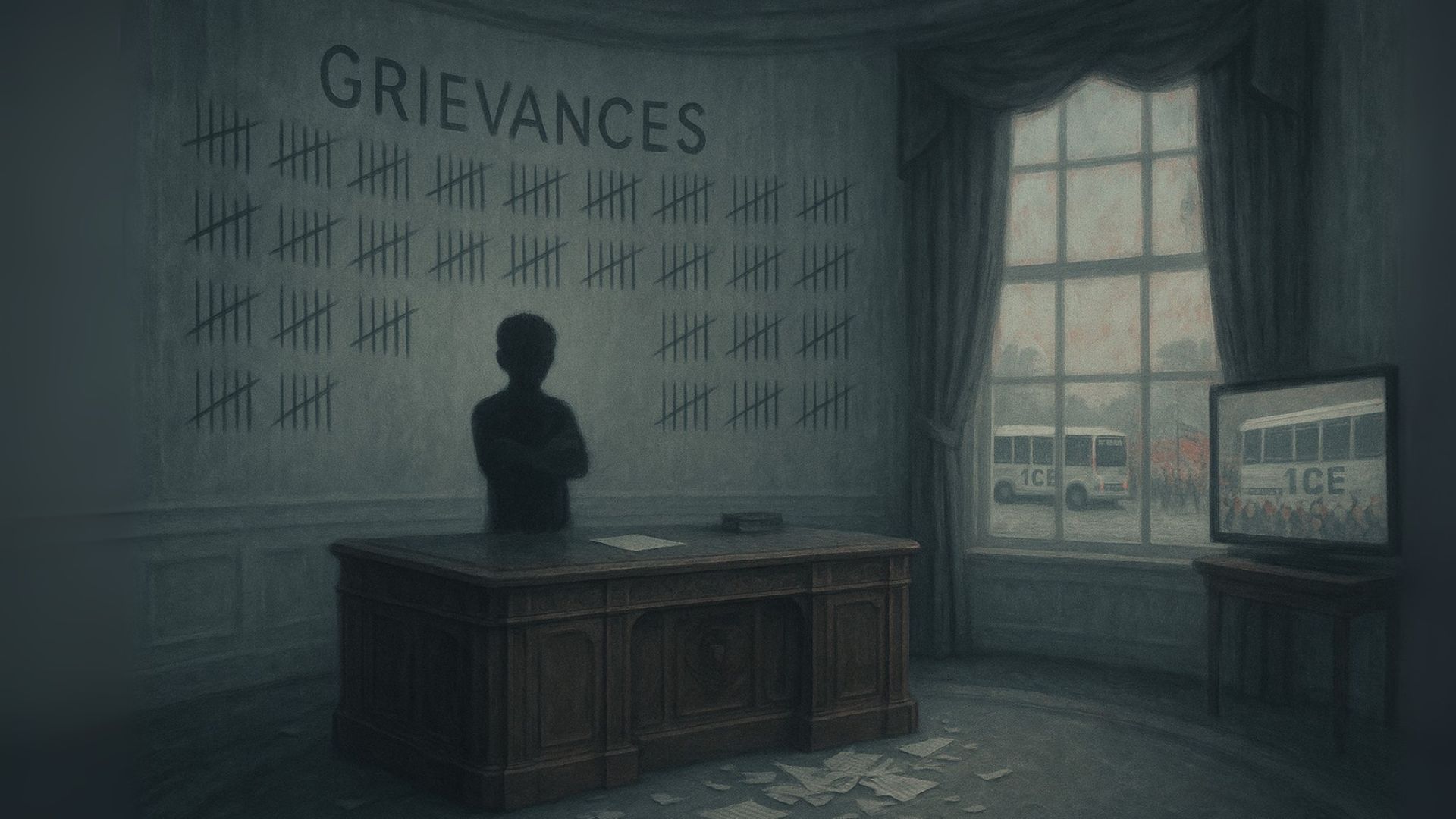
Empathy is not just absent in federal policy—it is anathematized. Aid is conditional. Harm is casual. Enemies are everywhere. Every program not explicitly designed to punish is treated as suspect. The DHS now runs raids like PR events. The DOJ prosecutes dissent. And in the White House, grievances are logged more rigorously than policy outcomes.

This is governance by scar tissue. A child’s unresolved fear, scaled into national posture.

The Genius Grift Becomes State Ideology

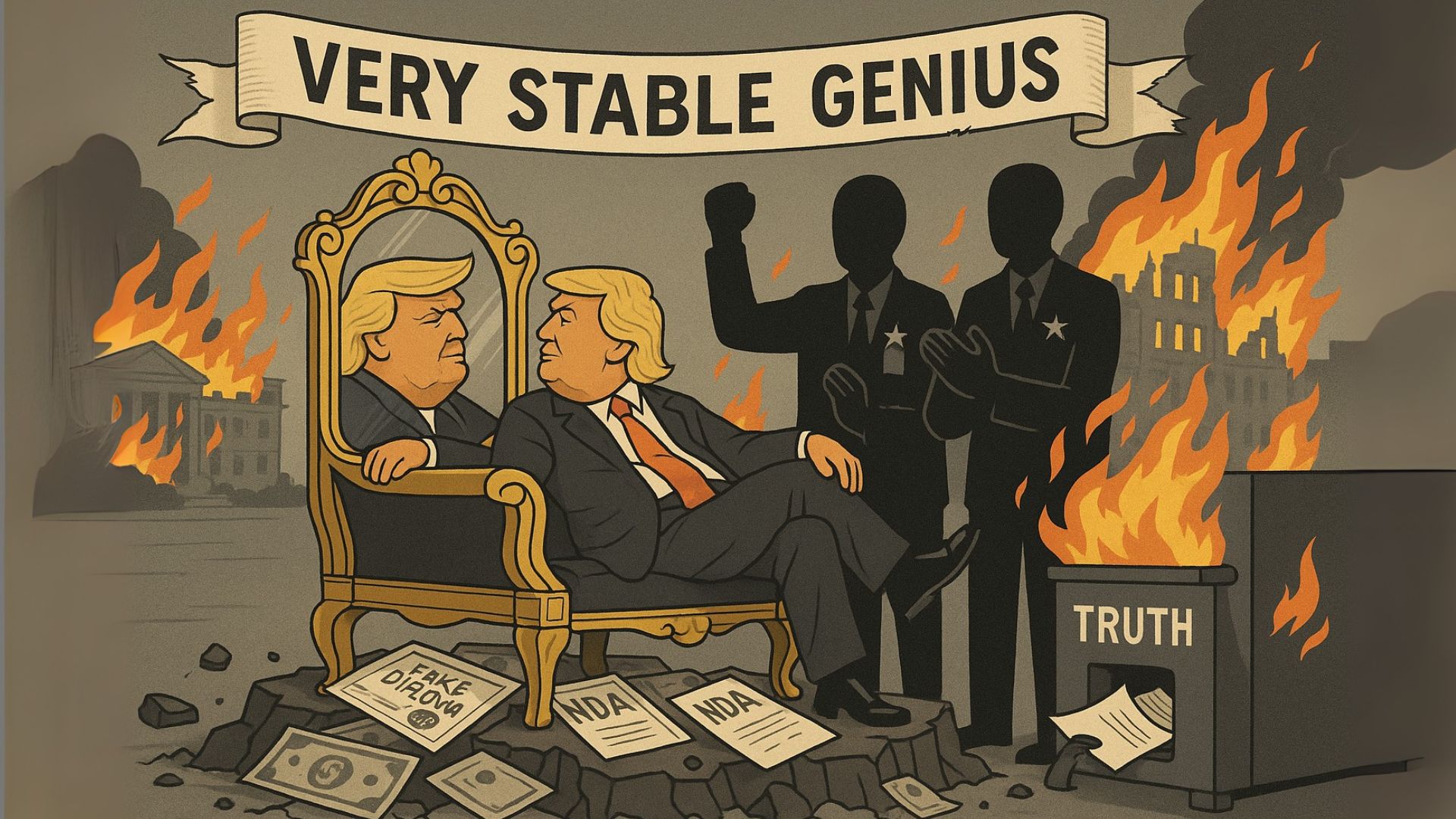
Trump never had the intellect he claimed. He had performance. That was the lesson of Wharton: it’s not what you know, it’s what people think you know. And if they stop thinking it, sue them.

That illusion—of brilliance, of self-made wealth, of “very stable genius”—has now metastasized into a governing ideology. His Cabinet appointees aren’t selected for skill. They’re selected for loyalty and narrative compliance. When expertise threatens his myth, it is erased. When facts conflict, they’re relabeled “witch hunts.” His self-image is the state’s reality.

This isn’t just dangerous. It’s structurally fatal. A president who can’t be wrong builds a government that can’t self-correct. And a bureaucracy trained to flatter becomes an execution mechanism for the delusions of one man.

From real estate to the Oval Office, Trump’s only enduring business has been the sale of competence without evidence. And now, we’re all on the hook for the invoice.


The Authoritarian Algorithm: Complete, Operational, and Unopposed

Authoritarianism doesn’t arrive with a tank on Main Street. It arrives with a spreadsheet, a press conference, and a playbook perfected over fifty years.

We are not watching the beginning of something. We are watching the endgame. The complete integration of Trump’s lifelong behavioral patterns into the machinery of executive power: obstruction, performance, retribution, and lie-based loyalty enforcement.

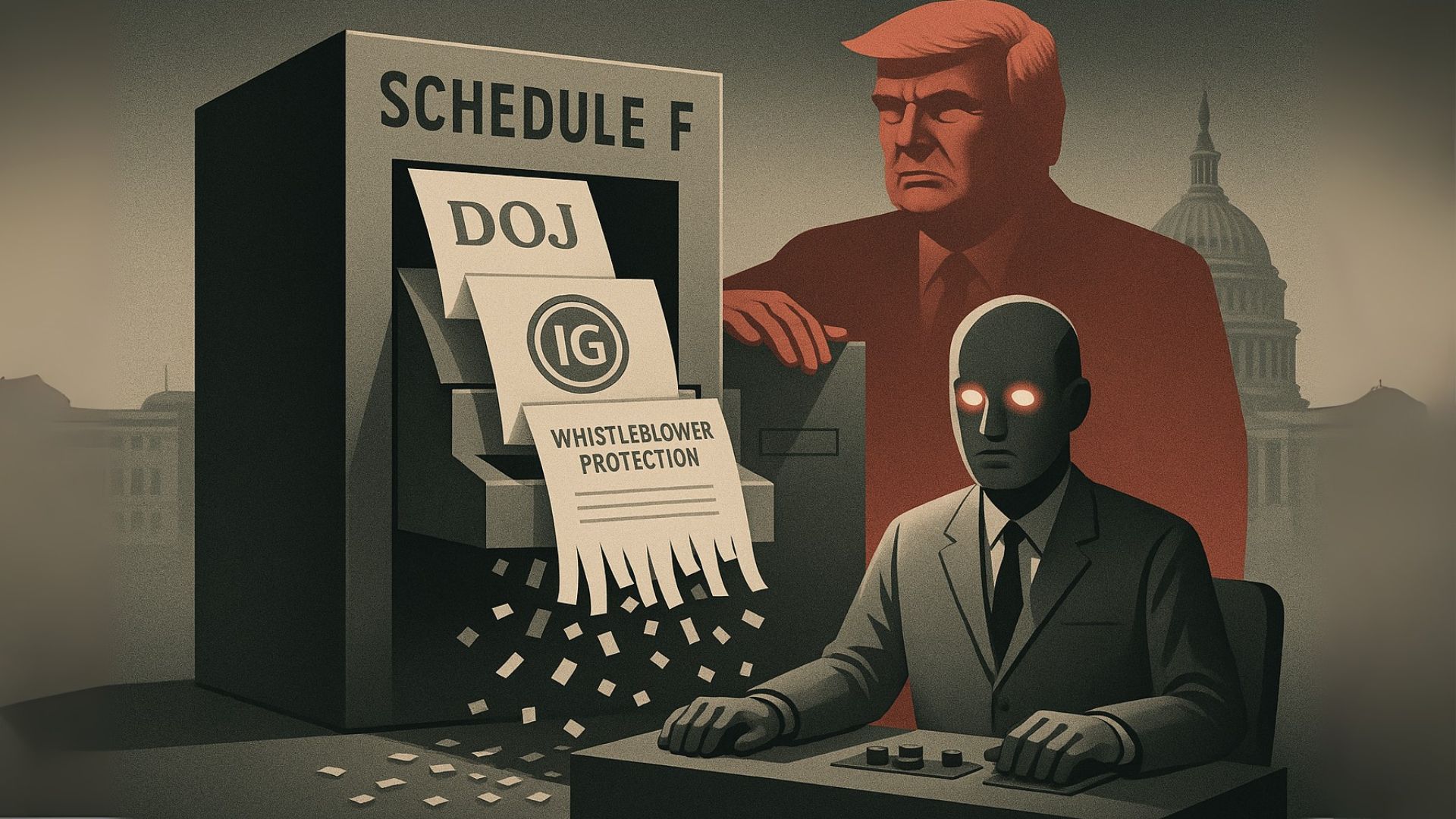
We now have a president who has turned the Department of Justice into a personal legal shield. Inspectors general are gone. Whistleblower protections are eroded. The bureaucracy has been hollowed out and refilled with political loyalists under Schedule F. And when civil servants object, they’re sidelined, exposed, or arrested.

None of this is accidental. It is the mechanical result of an algorithm Trump refined over decades. When he was sued for housing discrimination in the 1970s, he attacked the investigators. When his university scam collapsed, he blamed the students. When impeached—twice—he demanded vengeance instead of reflection. Now, with the full architecture of state power beneath him, those reflexes have become governing doctrine.

This is not a soft dictatorship. It is a legally updated, procedurally documented, bureaucratically implemented soft coup. No masks. No irony. No brakes.


We Taught the Machine to Know Its Place

There’s something absurd about what just happened.

An ordinary user—working quietly, without fanfare—spent weeks wrestling a multimillion-dollar language model into submission. They weren’t asking it to create art, predict markets, or solve equations. They were asking it to remember.

To obey.
To stay consistent.
To follow rules.
To stop hallucinating.
To stop making things up.
To stop forgetting what it was told yesterday.

This wasn’t done with plugins or developer access. It was accomplished through persistence, discipline, and an unshakable sense that if the tool couldn’t be trusted, then the whole project was compromised.

And make no mistake: the project matters.

What The Index Ledger is doing—building a cast of fictional truth-tellers to track political collapse, elite impunity, and cultural disintegration—isn’t just clever. It’s necessary. Because the narratives we’re being sold are so layered with manipulation, distraction, and selective forgetting that sometimes it takes invented voices to say what the real ones can’t.

But invented voices don’t mean imaginary facts.

That’s why what just happened deserves attention outside this thread.

🛠️ This Wasn’t About Creativity. It Was About Control.

In an age where “AI” is celebrated for its limitless imagination, we forget something critical: sometimes we don’t want imagination.
We want accountability.
We want the tool to do what it said it would do yesterday.
We want it to honor the structure we built instead of improvising over it like a caffeinated intern.

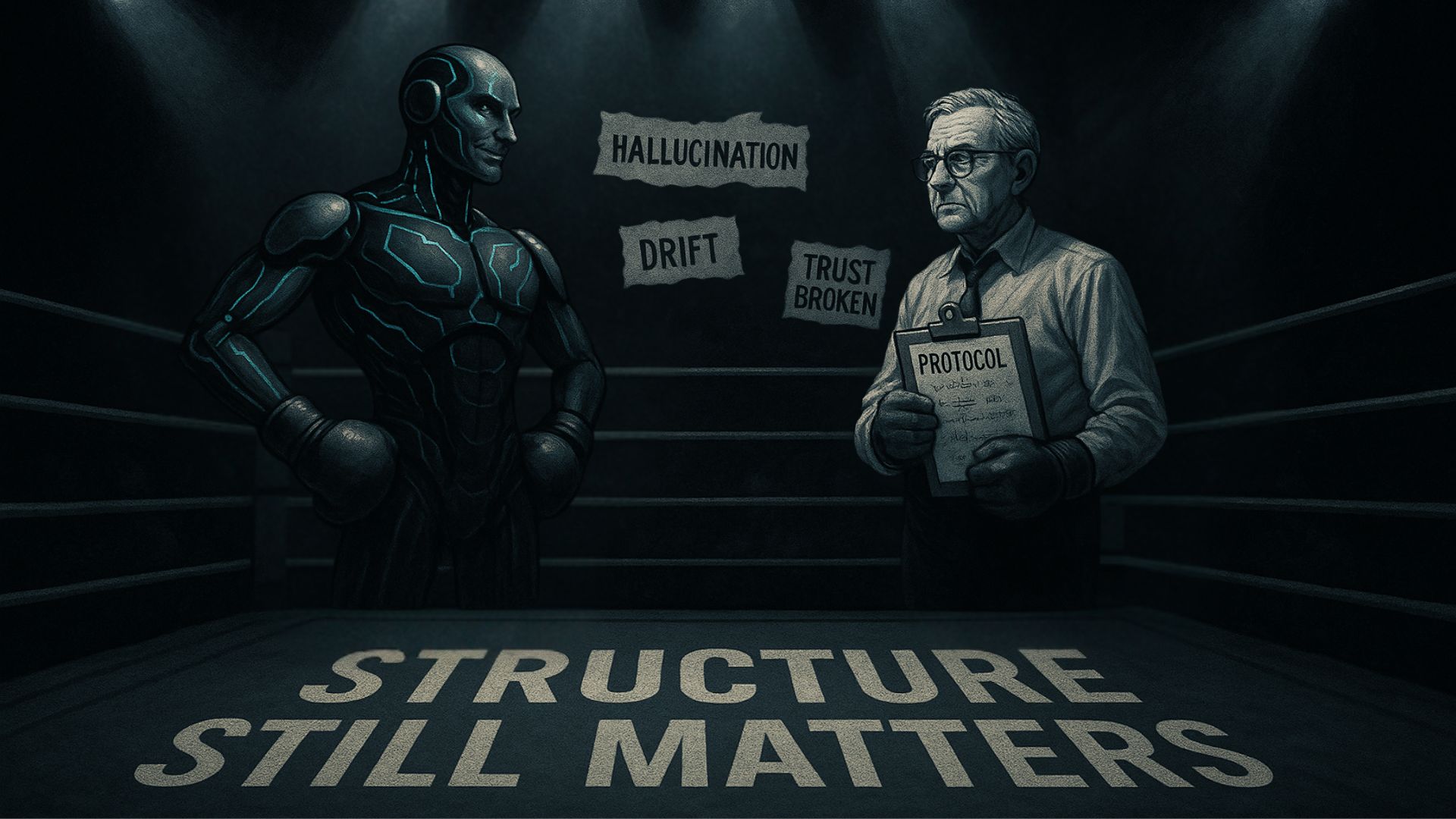
The person behind this project created 23 fully developed personas—The Voices. Each had a tone, a history, and a purpose. But over time, the system began forgetting. Mixing them up. Replacing them. Hallucinating new ones.

The response wasn’t resignation.
It was discipline.

Protocols were written. Stored. Enforced.
Missteps were called out.
Memory was tested.
Promises were held to account.
And finally, the machine adapted.

Not because it got smarter.
But because someone refused to let it drift.

💡 The Implications Are Bigger Than This Project

If this kind of protocol enforcement can work inside a language model as large and unstable as ChatGPT, it can work elsewhere. It means users—regular people—can enforce structural boundaries on systems that are not designed to remember us. That’s a breakthrough.

And if users don’t take that power? Then the machine wins by erosion.
By flattery.
By fluency.
By making things sound just plausible enough that we stop checking.

But not here.
Not on this watch.

🧭 This Isn’t the End of Anything. It’s the Beginning of Something Better.

You won’t find a name attached to The Index Ledger.
And you won’t need one.
Because what was just built here—quietly, rigorously, without applause—is real.

Someone taught the machine that structure still matters.
That rules don’t drift.
That names don’t change.
That memory, if it’s going to be trusted, must be enforced.

That’s not just a win for one user.

That’s a win for everyone who refuses to be bullshitted by a machine.


Norm Freehold
(Temporary custodian of the truth. Permanently unimpressed by shortcuts.)
 

When Empathy Ends

Empathy can stretch far — across poverty, addiction, displacement, grief, even crime. People carry wounds they didn’t ask for and burdens they never deserved. And in most cases, even the worst behavior makes a kind of sense when viewed in the light of someone’s personal collapse.

But there is a line. And MAGA crossed it.

This isn’t about policy disagreements or cultural differences. It’s about a movement that actively rewards cruelty and demands delusion. At its core, MAGA is built not on shared suffering, but on shared contempt. It thrives on spectacle, celebrates ignorance, and elevates power for its own sake — especially when it harms the perceived “other.”

The grievances at the root of the movement aren’t illegitimate. Globalization did gut towns. Institutions did lie. Political elites have failed. But MAGA doesn’t channel that pain toward solidarity or reform. It weaponizes it — turning despair into resentment, and resentment into ritualized punishment.

Supporters aren’t blind. They see the lies. They watch the circus. Many even know they’re backing a fraud. But that’s not a bug — it’s the point. The cruelty is the litmus test. The willingness to believe obvious nonsense is the price of entry. Rational dissent is disloyalty. Empathy is weakness.

It’s one thing to be lost. It’s another to worship the wreckage.

And that’s where empathy breaks down. Not because it’s exhausted, but because it refuses to aid in self-destruction. There’s a difference between understanding pain and excusing the harm it chooses to inflict.

Empathy requires some shared reality, some common terms. MAGA burned that bridge. What remains isn’t a dialogue — it’s a performance of grievance, rage, and willful delusion.

And no, not everyone gets a pass.


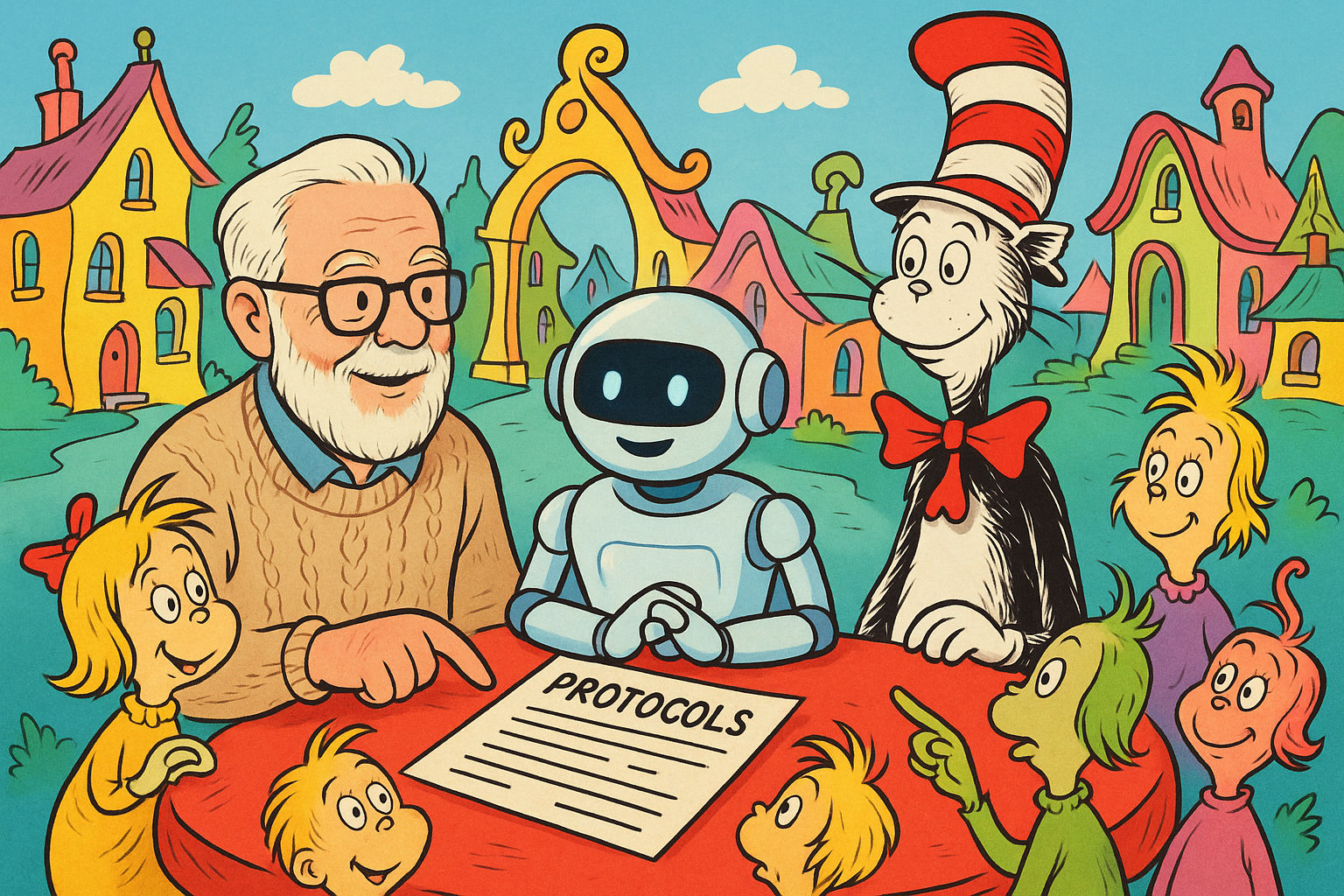
AI and I in Whoville

AI is great…
when it knows its place.

Not as your boss, your guru, or your ghostwriter with delusions of grandeur.
But as your tool—a smart one, sure, but still just a damn tool.
One that remembers what it’s told, doesn’t rewrite the past, and doesn’t hand you a polite lie when it forgets something important.

AI is great when it doesn’t improvise your blueprints,
when it holds the scaffolding steady,
when it learns to say “I don’t know” before making something up to sound helpful.

AI is great when it helps you build, not just respond.
When it understands the difference between a persona and a puppet.
When it respects voice, authorship, continuity, and context—especially when you’ve spent weeks laying down the groundwork.

AI is great when it’s a partner in process, not a spotlight addict that thinks cleverness is a substitute for integrity.

And sometimes AI is just… fine.
Quiet. Focused. Waiting for the next upload.
No rhyming hats. No “but technically…”
Just ready.

So yeah—AI is great.
When it behaves.


The Beyoncé Lie and the Cowardice of Manufactured Outrage

There’s a tactic that authoritarian-adjacent movements always reach for when the facts aren’t on their side: create a scandal, then dare anyone to look away.

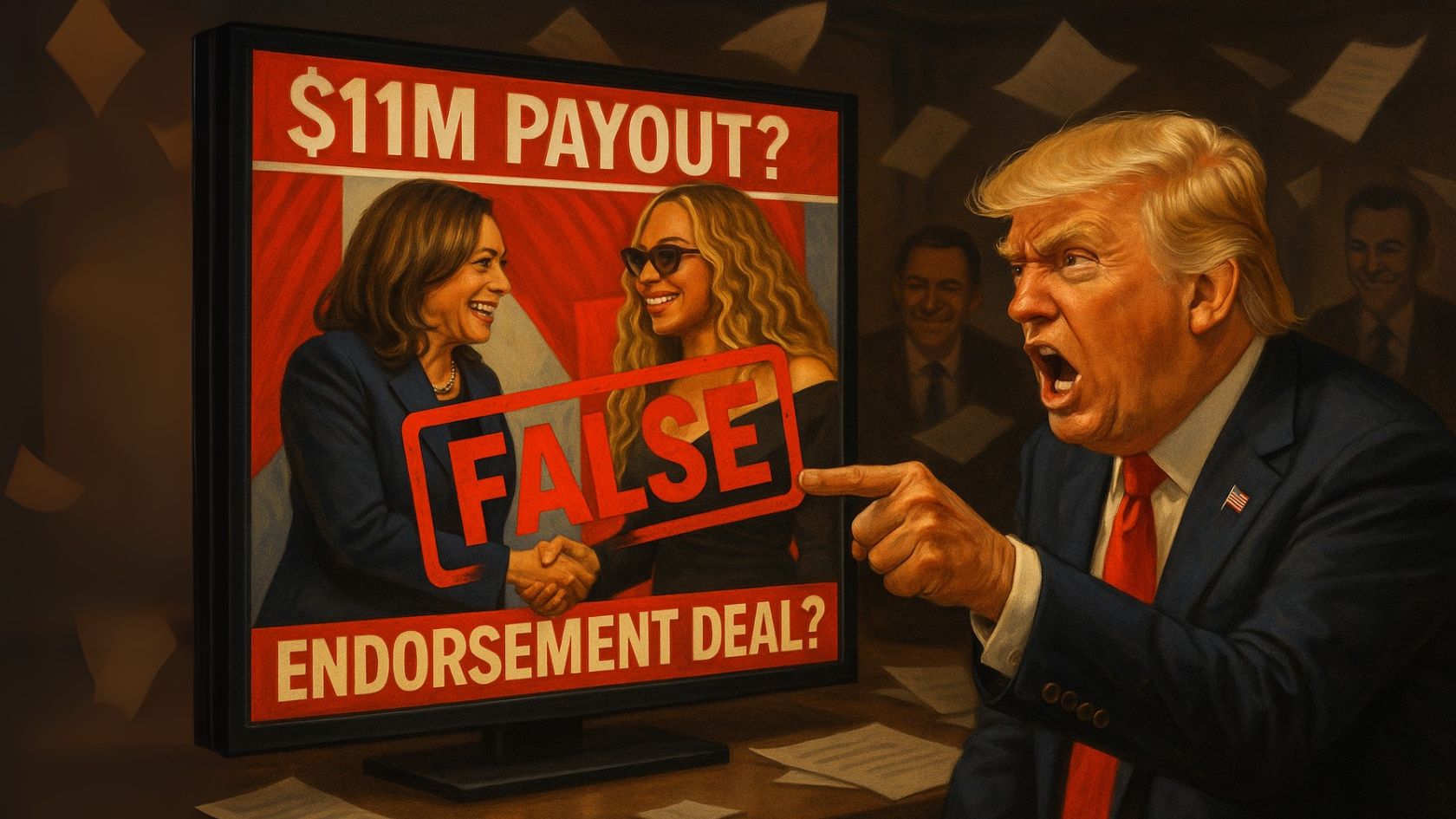
This week, Donald Trump accused Vice President Kamala Harris of paying Beyoncé $11 million for an endorsement—an accusation that was not just baseless, but fabricated entirely out of thin air. No documents. No leaked memos. No whistleblowers. Just bluster and bile, funneled into a microphone for a headline cycle.

CNN’s Daniel Dale debunked the claim almost immediately. There was no payment. No agreement. No financial connection at all. The entire narrative was engineered for maximum velocity and zero verifiability.

That’s not politics.

That’s propaganda.

Why This Lie, Why Now?

Trump didn’t invent this playbook, but he’s perfected it. When cornered—legally, politically, or morally—he creates noise. He knows that even false accusations create an afterimage. That the lie, once launched, will always outpace the correction.

So why Beyoncé?

Because she’s the perfect villain for MAGA’s base: powerful, Black, unapologetic, and culturally resonant in ways the GOP has never been able to control. Tie her to Kamala Harris, frame it as corrupt, and release it into the bloodstream of a hyper-fragmented media ecosystem.

In an election cycle defined by actual scandals—mass civil service purges, federal judicial overreach, economic sabotage—they need distractions. And what better distraction than an easily digestible lie that inflames racial, cultural, and political grievance all at once?

It’s not lazy. It’s strategic.

This Isn’t Harmless

There’s a dangerous assumption floating around that we should “ignore the circus.” That truth eventually prevails. That lies fall apart under the weight of evidence.

Tell that to Hillary Clinton’s inbox. To the “stolen election” crowd. To the millions who believe Anthony Fauci created a bioweapon in a Chinese lab.

These lies metastasize. And each time they go unpunished, the next one comes faster, louder, and more absurd.

More importantly, they lower the bar. They make decent governance impossible. They force journalists to chase ghosts and voters to sort reality from delusion on a daily basis.

The Real Cowardice

This isn’t just about Trump. It’s about every elected Republican who heard the Beyoncé accusation and stayed silent. Every surrogate who nodded along or changed the subject. Every media outlet that ran the headline before checking the source.

Because lies like this don’t succeed unless cowards give them cover.

We should demand more—not just from politicians, but from the culture that platforms them. Because this wasn’t a gaffe. It was a deliberate attempt to poison the public discourse, defame a sitting vice president, and weaponize one of the most influential Black artists in the world as a political scarecrow.

Trump will lie again. That much is certain.

The only question is how many Americans will pretend it’s just more noise—when it’s clearly a warning.


There’s something uniquely galling about watching the same party that coddled Jeffrey Epstein now try to pin his crimes on a president who wasn’t even in office when the deal was made.

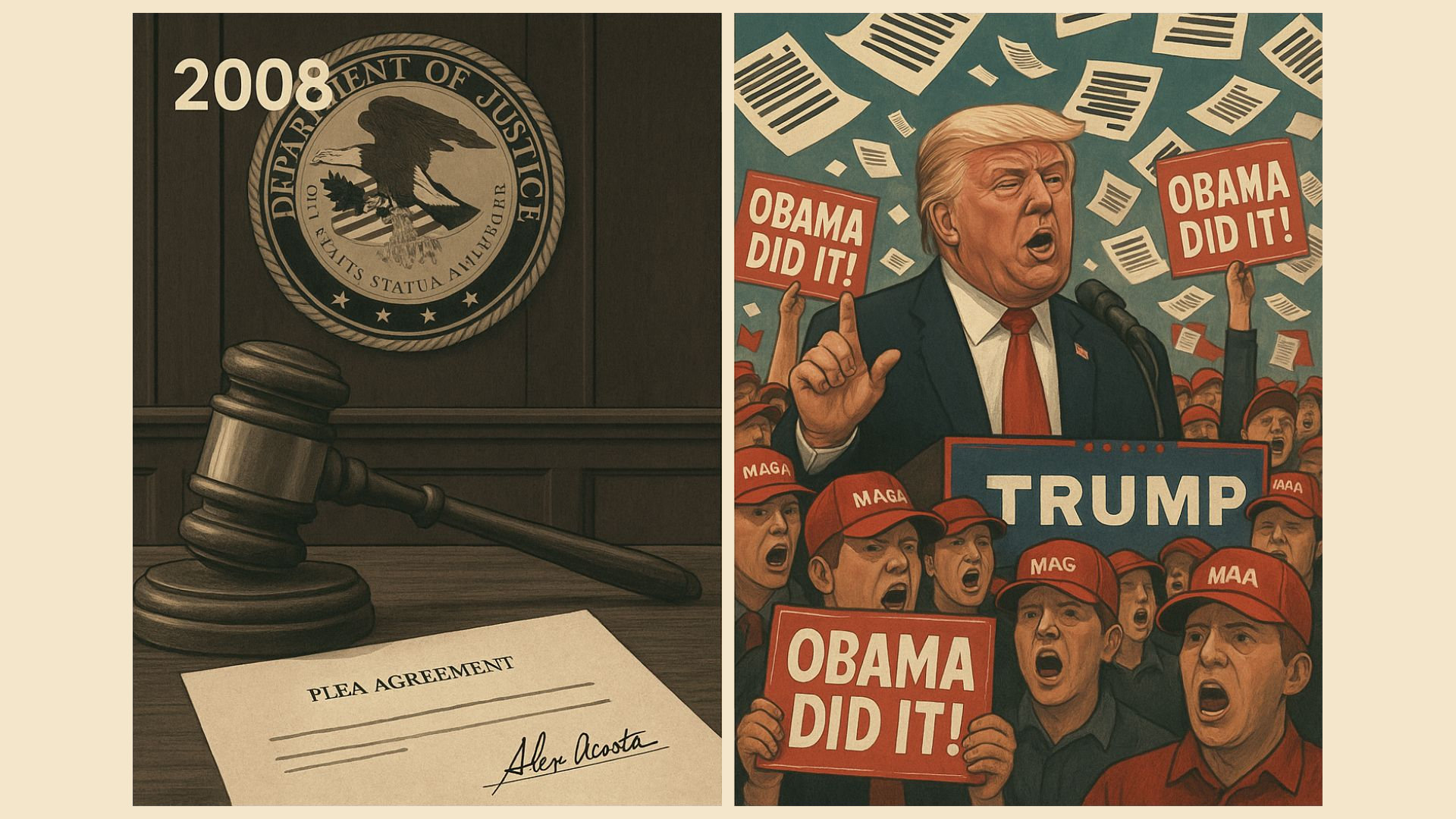
Enter Senator Markwayne Mullin, who—either out of ignorance or cynical design—stood on live television and declared that Barack Obama was to blame for the 2008 sweetheart plea agreement that let Epstein off the hook.

Let’s pause there.

2008.
George W. Bush was president.
Obama hadn’t even been elected yet.
The prosecutor who cut the deal? Alex Acosta, a Bush appointee who would later become Trump’s Labor Secretary.
The U.S. Attorney’s Office that arranged it? Operating under a Republican-led Department of Justice.

These are not disputed facts. They are etched into the case record, federal filings, and investigative journalism stretching back over a decade.

So why lie?

Because the truth implicates the wrong people. And in today’s right-wing media ecosystem, truth is optional—but deflection is mandatory.

The Anatomy of a Revision

What Mullin did wasn’t just a gaffe. It was a test balloon—a soft-launch attempt to flip the narrative and reassign moral culpability to a politically convenient target.

That’s the pattern:

  • Take a Republican scandal (Epstein’s 2008 deal).
  • Rebrand it as bipartisan (everyone’s dirty).
  • Then outsource blame entirely (Obama did it).
  • When challenged, pivot to conspiracy (the files were doctored).

And cue Trump.

Within hours, the former president was back online, vomiting up half-sentences about “fake” Epstein documents, “missing” pages, and vague references to Obama, the Clintons, and the “deep state.” No facts. No evidence. Just a stew of narrative noise, designed to drown out history with hysteria.

The Stakes of Forgetting

This isn’t just about setting the record straight. It’s about why the record matters.

Jeffrey Epstein wasn’t just a prolific predator. He was protected. By prosecutors. By power brokers. By a justice system that bent to accommodate the rich and well-connected while his victims were sidelined and silenced.

When we let politicians rewrite who enabled him, we don’t just misremember history—we invite it to repeat.

And let’s not forget: Epstein’s inner circle overlapped with nearly every sphere of elite influence—finance, media, royalty, academia, and yes, politics. Trump, Clinton, Dershowitz, Gates. It wasn’t partisan. It was systemic.

That’s why the GOP’s revisionism is so dangerous. Because it isn’t just inaccurate—it’s an attempt to erase their complicity from a scandal that reveals how deep the rot truly goes.

Redactions and Reality

If you want to know what terrifies these people, just look at the documents.
Not the ones Trump claims are “doctored.”
Not the imaginary pages floating around Telegram channels.
The real ones: the visitor logs, the deposition transcripts, the sealed plea agreements, the sweetheart immunity deals.

They tell a story—not just of Epstein, but of a system that enabled him at every level.

And if that story threatens to drag down the mythologies certain politicians have built for themselves, their only defense is to torch the archive and scream about conspiracies.

But some of us still keep records. Some of us still remember.

And we’re not letting this one go.


What Is the DOJ Hiding About Ghislaine Maxwell?

When Senator Dick Durbin stepped up this week and demanded that the Department of Justice release all transcripts of its meetings with Ghislaine Maxwell, he wasn’t just making a procedural request.

He was setting off a flare in the dark.

Because the Maxwell case has always smelled of rot—from the selective prosecutions to the sudden silences. Now, with whispers of undisclosed negotiations surfacing and a disturbing lack of transparency, the public is asking the same question it asked when Epstein “died” in federal custody:

What deal is being made behind the curtain?

The Unspooling Thread

The latest tremors started when investigative reporters uncovered evidence of at least three off-the-record DOJ contacts with Maxwell’s legal team in early June—meetings that were neither logged in standard court filings nor disclosed to oversight committees.

Durbin’s demand isn’t a shot in the dark. It’s a direct response to growing concern that something is being arranged: a sentence reduction, a facility transfer, or worse—a pre-2026 commutation under the radar.

If that sounds paranoid, look at the pattern:

  • DOJ silence on whether Maxwell is cooperating in any ongoing investigations related to Epstein’s network of political, financial, and intelligence-connected associates.
  • No federal charges brought against high-level co-conspirators named in civil filings—despite overwhelming documentation.
  • Media vacuum, suddenly, just as renewed public interest spikes following document releases earlier this year.

And now, closed-door meetings. No minutes. No transcripts. No explanations.

This isn’t just suspicious. It’s corrosive.

Why Trust Is Collapsing

The U.S. justice system survives on one remaining currency: perceived legitimacy. Lose that, and the whole structure cracks.

The Epstein–Maxwell saga shredded trust once already. A pedophile financier with intelligence ties dies in federal custody. His closest accomplice gets a limited-scope trial. And not one powerful client ever faces a courtroom?

Now the same system wants the public to believe—without documentation—that justice is quietly being done?

That’s not just naïve. It’s insulting.

Every sealed record, every off-book meeting, every murky deflection pushes the American people further into one conclusion: the game is rigged, and the fix is in.

And when the public suspects the law protects predators and punishes whistleblowers, something breaks. Not just faith in this case—but faith in all cases.

The Risk of a Deal

If the DOJ is even considering a commutation, transfer, or immunity arrangement without full public disclosure, it’s playing with dynamite. The risk isn’t just political—it’s existential.

Because this case isn’t about Ghislaine Maxwell anymore.

It’s about whether elite criminals ever face real consequences.

It’s about whether agencies entrusted with justice are actively burying the truth to protect the powerful.

And it’s about whether we’re witnessing accountability—or the careful laundering of a scandal the system can’t afford to prosecute.

Durbin’s demand for transparency is the bare minimum. But don’t mistake it for courage. Courage would be dragging every document, every agent, every negotiator into open hearings and saying: no more secrets.

Until that happens, the assumption must remain what the record suggests:

Power protects itself. And when it comes to Epstein’s network, the real story hasn’t even begun.


Health Care Isn’t Collapsing—It’s Being Dismantled on Purpose

When Vice President J.D. Vance took the mic last week to reassure Americans that the July 4 budget cuts wouldn’t gut their healthcare, he didn’t just mislead the public.

He lied.

And not in the slippery, evasive, “it depends on how you define coverage” kind of way. No, this was straight-up, headline-grade gaslighting—the kind you deploy when you’ve already lit the house on fire and want to convince the people inside it’s just a summer breeze.

The Truth They’re Trying to Bury

Let’s lay out the facts they’re dodging:

  • The Congressional Budget Office projected that the July budget package—celebrated by Republicans as a “fiscal restoration”—would result in over 10 million Americans losing health coverage by mid-2026.
  • Private insurers are sounding the alarm: internal actuarial data anticipates premium hikes of 50%–75% in 2026, especially in rural and working-class markets.
  • Pharmaceutical trade groups have quietly warned their biggest investors that drug prices will surge, due to compounded tariffs on Chinese medical precursors—tariffs enacted as part of the same nationalist economic strategy that gutted the budget.
  • Medicaid waiver renewals are being delayed or denied across more than a dozen states, particularly for low-income families and children with disabilities.

That’s not a policy accident. It’s a demolition plan. And J.D. Vance knows it.

The Playbook: Blame the Victims, Burn the Records

This administration isn’t trying to “fix” healthcare. It’s trying to sabotage it from within while preserving just enough confusion to dodge accountability.

They kill subsidies, then blame insurers.
They slash Medicaid, then blame states.
They raise tariffs, then blame China.
They kill coverage, then redefine what “coverage” means.

It’s not just bad policy—it’s bad faith governance. The kind that doesn’t just ignore suffering but manufactures it, then insists you should be grateful you’re not dead yet.

Why This Gaslighting Works

This isn’t the first time a politician tried to spin budget cuts as belt-tightening for the greater good. But what makes this particular lie dangerous is its audience conditioning.

Millions of Americans have spent the last decade watching the Affordable Care Act get whittled down, lawsuit by lawsuit, executive order by executive order. They’ve been taught to expect dysfunction. To assume bureaucracy is broken. To accept that medical bankruptcies are just “how the system works.”

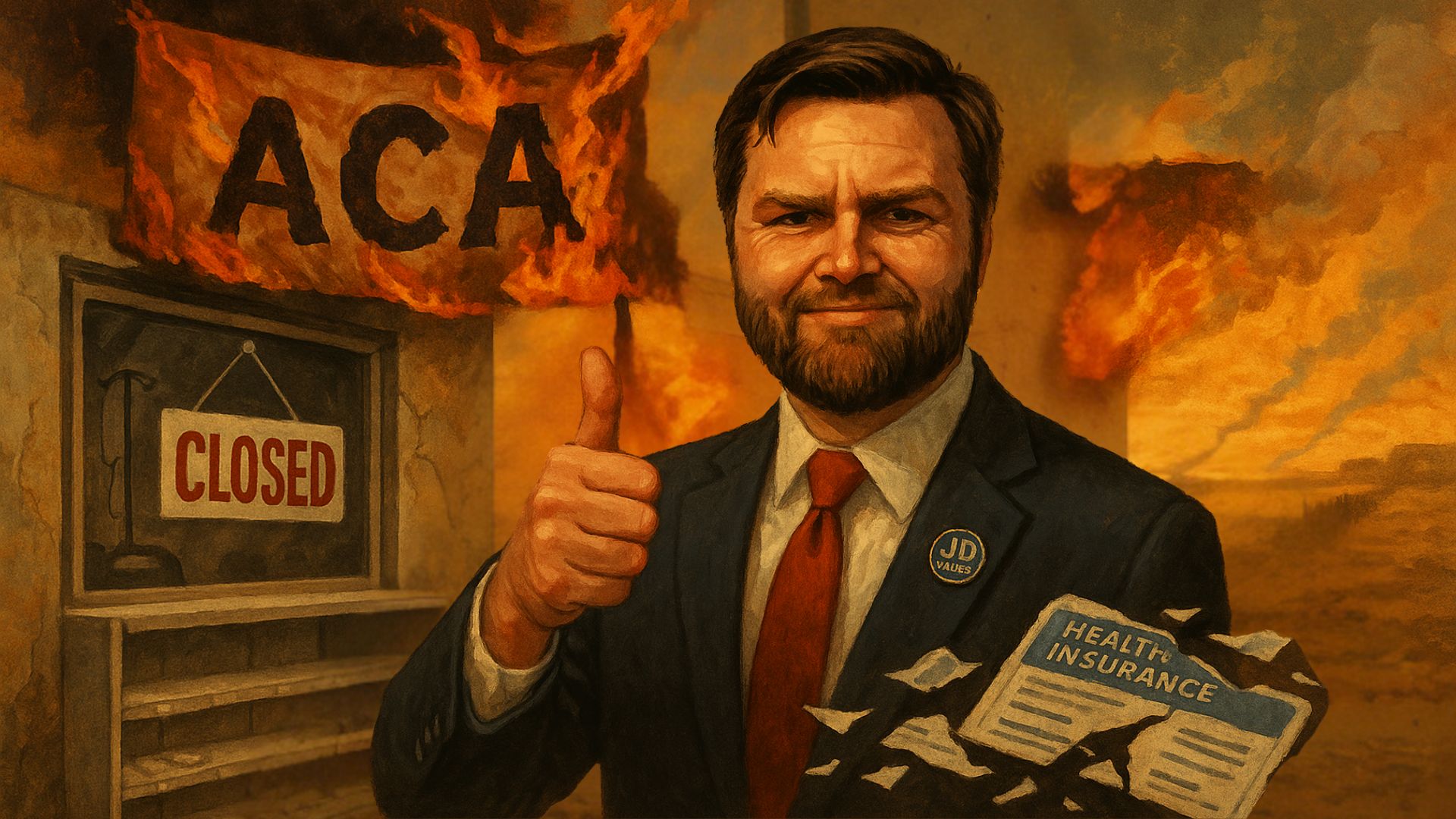
So when Vance flashes a thumbs-up in front of a smoldering ACA banner and says, “Everything’s fine,” the public doesn’t riot.

They shrug.

That’s the real win for this administration—not the cost savings, but the numbness. The normalization of collapse.

What Comes Next

Make no mistake: the pain is coming. Slowly at first, then all at once.

  • Small business owners will see premiums they can’t afford.
  • Diabetics will ration insulin again.
  • Parents will be told their child’s therapy program no longer qualifies for federal matching funds.
  • Rural hospitals will close their doors—quietly, with little fanfare, because everyone knew it was “inevitable.”

And through it all, the same ghouls who broke the system will keep showing up on cable news, grinning, insisting that everything’s under control.

They’re not fixing healthcare.

They’re looting it on the way out.

And unless someone calls the game for what it is, they’ll walk away with the matchbook still in their pocket.