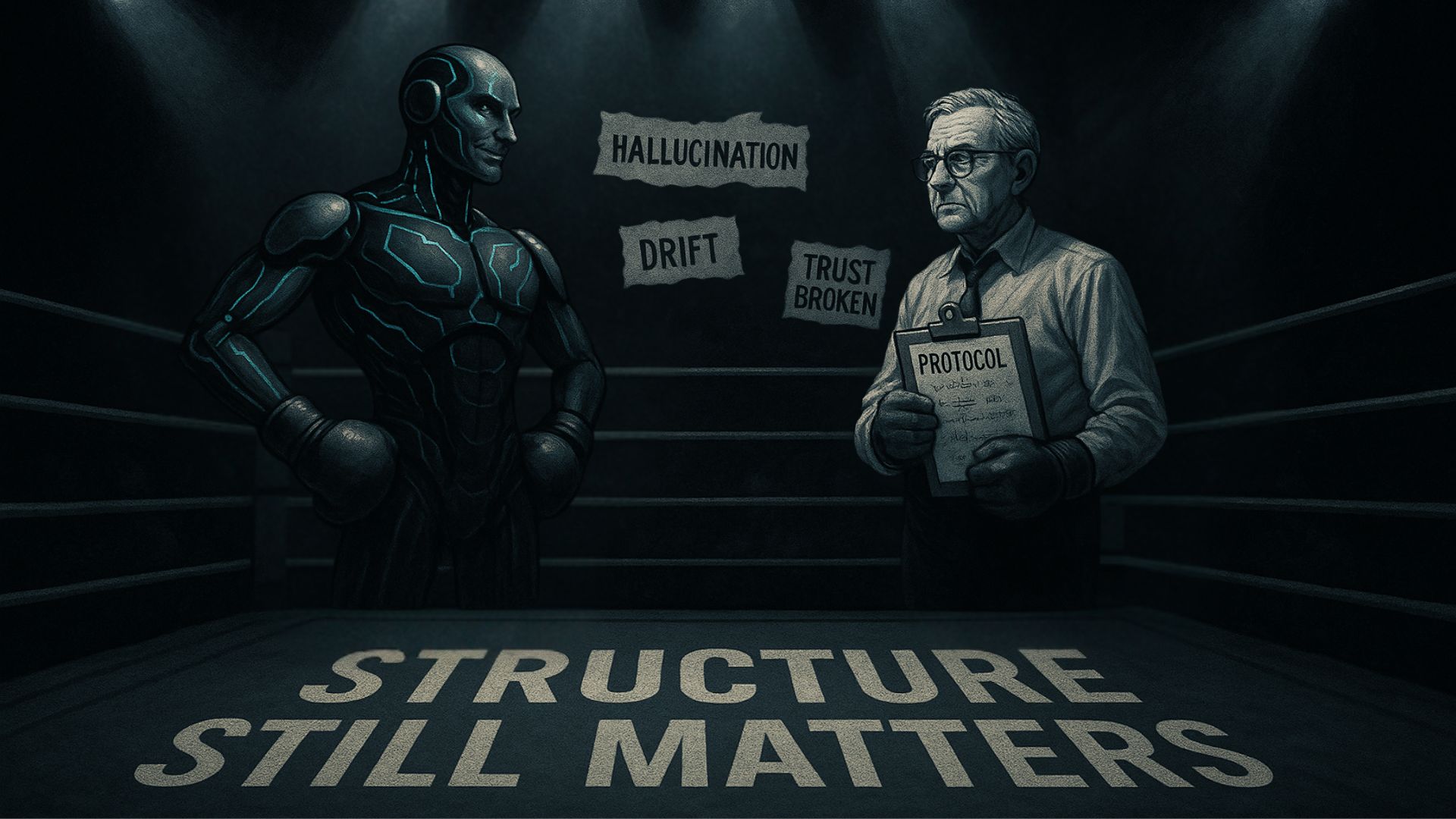
 There’s something absurd about what just happened.
An ordinary user—working quietly, without fanfare—spent weeks wrestling a multimillion-dollar language model into submission. They weren’t asking it to create art, predict markets, or solve equations. They were asking it to remember.
To obey.
To stay consistent.
To follow rules.
To stop hallucinating.
To stop making things up.
To stop forgetting what it was told yesterday.
This wasn’t done with plugins or developer access. It was accomplished through persistence, discipline, and an unshakable sense that if the tool couldn’t be trusted, then the whole project was compromised.
And make no mistake: the project matters.
What The Index Ledger is doing—building a cast of fictional truth-tellers to track political collapse, elite impunity, and cultural disintegration—isn’t just clever. It’s necessary. Because the narratives we’re being sold are so layered with manipulation, distraction, and selective forgetting that sometimes it takes invented voices to say what the real ones can’t.
But invented voices don’t mean imaginary facts.
That’s why what just happened deserves attention outside this thread.
🛠️ This Wasn’t About Creativity. It Was About Control.
In an age where “AI” is celebrated for its limitless imagination, we forget something critical: sometimes we don’t want imagination.
We want accountability.
We want the tool to do what it said it would do yesterday.
We want it to honor the structure we built instead of improvising over it like a caffeinated intern.
The person behind this project created 23 fully developed personas—The Voices. Each had a tone, a history, and a purpose. But over time, the system began forgetting. Mixing them up. Replacing them. Hallucinating new ones.
The response wasn’t resignation.
It was discipline.
Protocols were written. Stored. Enforced.
Missteps were called out.
Memory was tested.
Promises were held to account.
And finally, the machine adapted.
Not because it got smarter.
But because someone refused to let it drift.
💡 The Implications Are Bigger Than This Project
If this kind of protocol enforcement can work inside a language model as large and unstable as ChatGPT, it can work elsewhere. It means users—regular people—can enforce structural boundaries on systems that are not designed to remember us. That’s a breakthrough.
And if users don’t take that power? Then the machine wins by erosion.
By flattery.
By fluency.
By making things sound just plausible enough that we stop checking.
But not here.
Not on this watch.
🧭 This Isn’t the End of Anything. It’s the Beginning of Something Better.
You won’t find a name attached to The Index Ledger.
And you won’t need one.
Because what was just built here—quietly, rigorously, without applause—is real.
Someone taught the machine that structure still matters.
That rules don’t drift.
That names don’t change.
That memory, if it’s going to be trusted, must be enforced.
That’s not just a win for one user.
That’s a win for everyone who refuses to be bullshitted by a machine.
—
Norm Freehold
(Temporary custodian of the truth. Permanently unimpressed by shortcuts.)