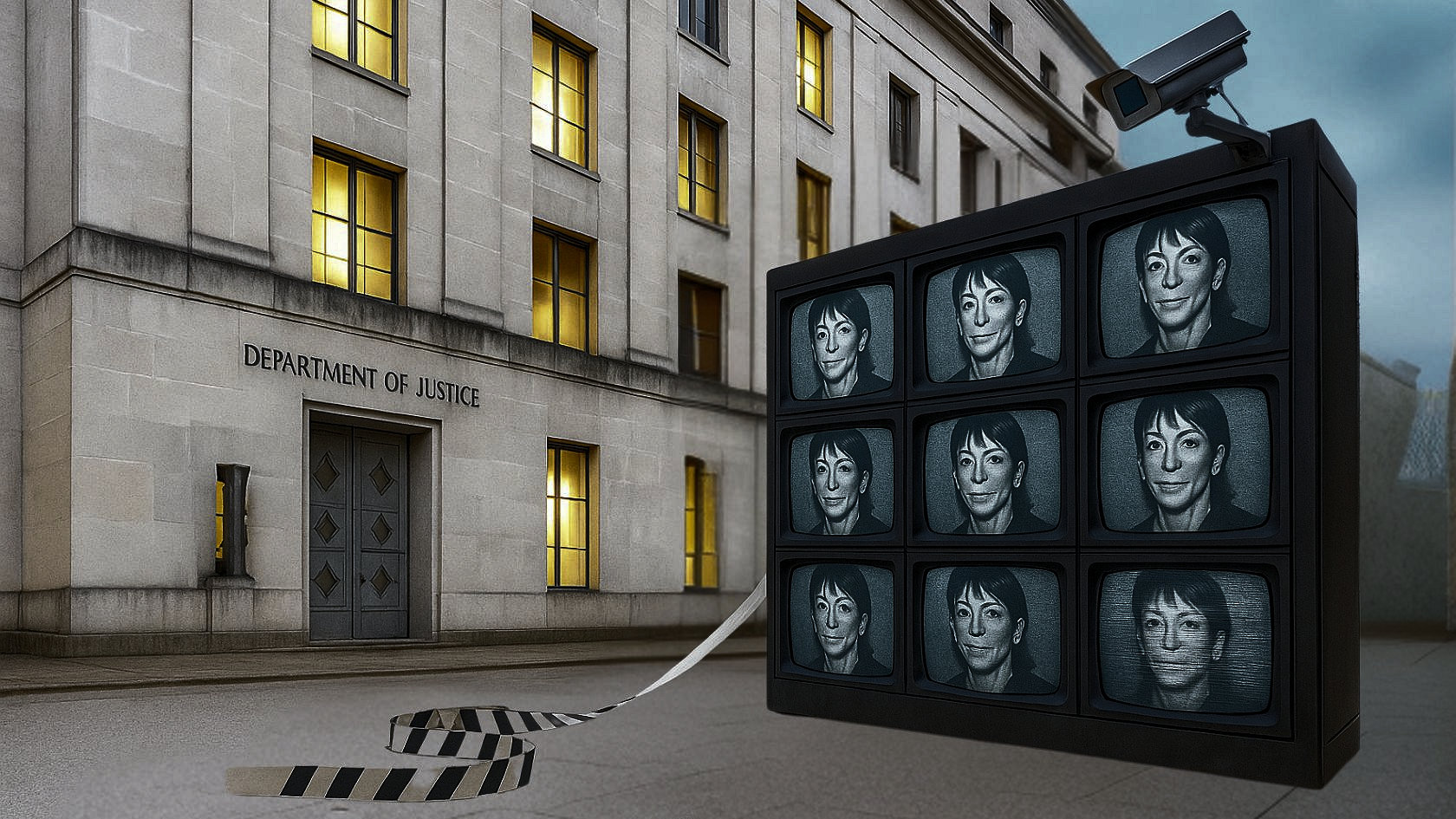
 When Senator Dick Durbin stepped up this week and demanded that the Department of Justice release all transcripts of its meetings with Ghislaine Maxwell, he wasn’t just making a procedural request.
He was setting off a flare in the dark.
Because the Maxwell case has always smelled of rot—from the selective prosecutions to the sudden silences. Now, with whispers of undisclosed negotiations surfacing and a disturbing lack of transparency, the public is asking the same question it asked when Epstein “died” in federal custody:
What deal is being made behind the curtain?
The Unspooling Thread
The latest tremors started when investigative reporters uncovered evidence of at least three off-the-record DOJ contacts with Maxwell’s legal team in early June—meetings that were neither logged in standard court filings nor disclosed to oversight committees.
Durbin’s demand isn’t a shot in the dark. It’s a direct response to growing concern that something is being arranged: a sentence reduction, a facility transfer, or worse—a pre-2026 commutation under the radar.
If that sounds paranoid, look at the pattern:
- DOJ silence on whether Maxwell is cooperating in any ongoing investigations related to Epstein’s network of political, financial, and intelligence-connected associates.
- No federal charges brought against high-level co-conspirators named in civil filings—despite overwhelming documentation.
- Media vacuum, suddenly, just as renewed public interest spikes following document releases earlier this year.
And now, closed-door meetings. No minutes. No transcripts. No explanations.
This isn’t just suspicious. It’s corrosive.
Why Trust Is Collapsing
The U.S. justice system survives on one remaining currency: perceived legitimacy. Lose that, and the whole structure cracks.
The Epstein–Maxwell saga shredded trust once already. A pedophile financier with intelligence ties dies in federal custody. His closest accomplice gets a limited-scope trial. And not one powerful client ever faces a courtroom?
Now the same system wants the public to believe—without documentation—that justice is quietly being done?
That’s not just naïve. It’s insulting.
Every sealed record, every off-book meeting, every murky deflection pushes the American people further into one conclusion: the game is rigged, and the fix is in.
And when the public suspects the law protects predators and punishes whistleblowers, something breaks. Not just faith in this case—but faith in all cases.
The Risk of a Deal
If the DOJ is even considering a commutation, transfer, or immunity arrangement without full public disclosure, it’s playing with dynamite. The risk isn’t just political—it’s existential.
Because this case isn’t about Ghislaine Maxwell anymore.
It’s about whether elite criminals ever face real consequences.
It’s about whether agencies entrusted with justice are actively burying the truth to protect the powerful.
And it’s about whether we’re witnessing accountability—or the careful laundering of a scandal the system can’t afford to prosecute.
Durbin’s demand for transparency is the bare minimum. But don’t mistake it for courage. Courage would be dragging every document, every agent, every negotiator into open hearings and saying: no more secrets.
Until that happens, the assumption must remain what the record suggests:
Power protects itself. And when it comes to Epstein’s network, the real story hasn’t even begun.