A Little Color, and the Hunger Returns

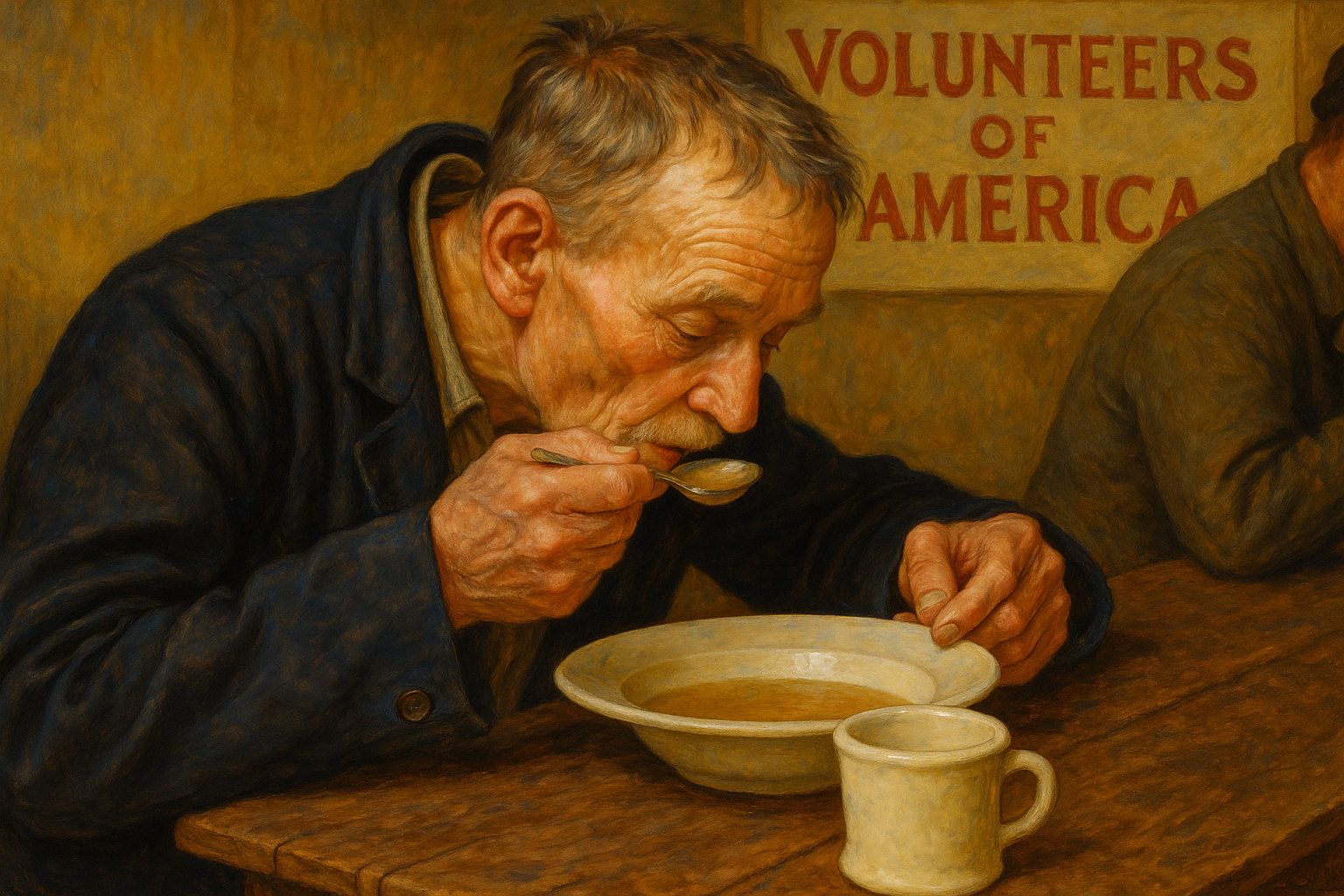
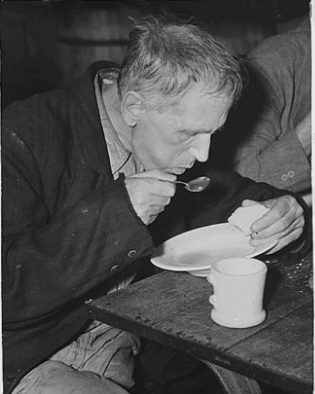
The man is hungry. That part hasn’t changed.

They softened the image—brushed in a little warmth, smoothed the light, brought out the curve of the spoon. The sign behind him, Volunteers of America, stands clear now, proud even. In the original photo, it was cropped out, barely legible. But someone made a choice to include it. To paint him in full.

And now here he is, again. Not just a man in a bread line during the Depression, but something closer, more intimate. Someone you could mistake for your grandfather. Or your neighbor. Or the man on the bench outside the gas station last week, coat too big, cup too empty.

We do this with the past. We retouch it. Reframe it. Soften the parts that chafe. But this image, for all its nostalgic tones, doesn’t let go of the ache. It reminds us that the hunger was real. That the charity was necessary. That the man’s dignity is not in the brushstrokes—but in the way he holds the bowl without complaint.

It also reminds us that hunger didn’t disappear when the cameras did.

In 1935, he lined up quietly at a soup kitchen. In 2025, someone’s doing the same at a food bank in your county. Same hands. Same need. Different coat.

And here we are, polishing the past like it was a lesson already learned. Pretending “again” means greatness instead of emergency all over again.

There’s a danger in mistaking warmth for truth. In imagining that if we just paint the past well enough, we won’t have to face how present it still is.

This man deserved more than a bowl and a borrowed coat. So do the ones here now.

We didn’t escape this era. We just rebranded it.

And we are not done feeding each other yet.


The Past, Reimagined Like Rockwell #15
Is This the “Again?” #9


About “Again”
Each image in this series confronts the myth behind “Make America Great Again.” By adopting Norman Rockwell’s nostalgic style but inserting America’s excluded truths, the series asks: When was it great? For whom? It’s not just a reimagining — it’s a reckoning.
 

They’re Coming for the Backcountry

If you’ve ever camped in a national forest, hiked a quiet trail far from cell towers, or just stood in a place so still you could hear the wind through pine needles — you need to know what’s happening.

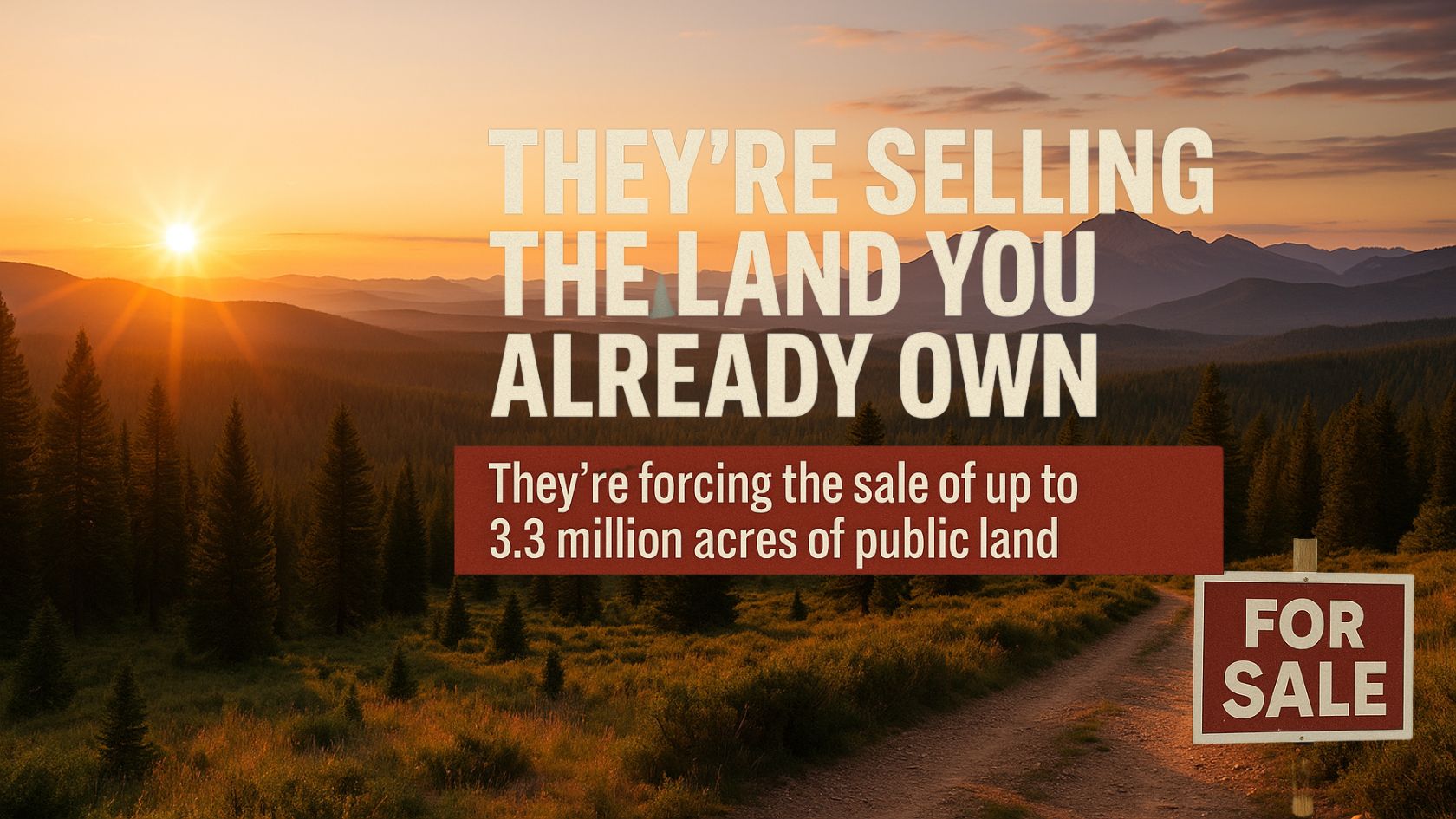
The Trump administration and their Senate allies have baked a land sell-off into a must-pass budget bill. It forces the sale of 3.3 million acres of public land, mostly in the West. Doesn’t matter if the land’s wild, intact, or cherished. If it’s not a designated national park or monument, it could be up for grabs.

They claim it’s for housing. But most of this land is nowhere near utilities or towns. You can’t build affordable housing when there’s not even a road. What you can do is drill. Or mine. Or clear-cut. And that’s the point.

They even wrote in a loophole to skip public bidding — so this land can go straight to developers and industry without competition or oversight. It’s theft in slow motion, carried out with a spreadsheet and a smiling press release.

I’ve lived out there. Hiked it. Slept in its silence. If they take this land, they’re not just selling trees. They’re selling the soul of the place.


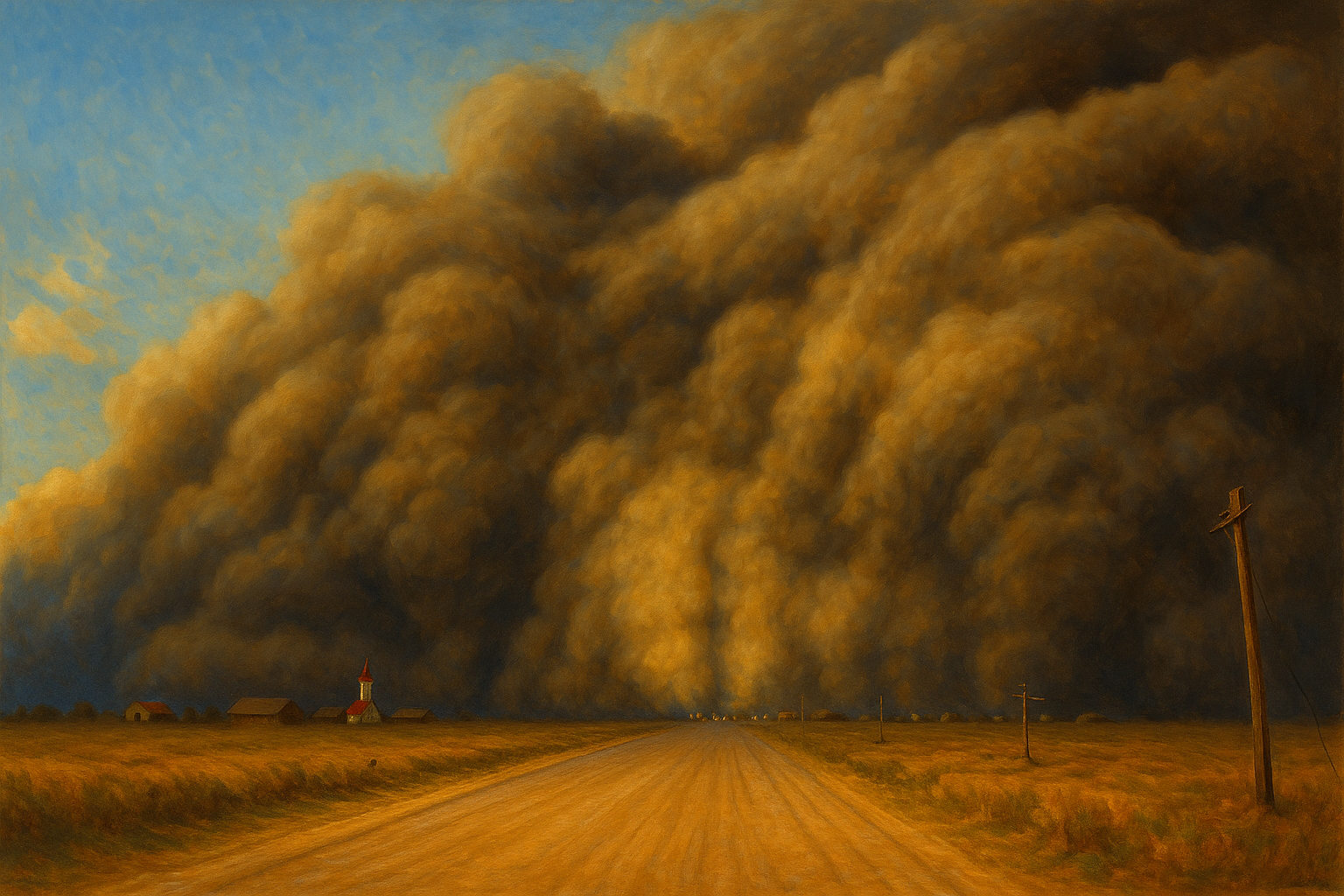
This image is a derivative from “Kodak view of a dusk storm Baca Co., Colorado, Easter Sunday 1935″, Photo by N.R. Stone,” using Sora AI and rendered in the fashion of Norman Rockwell.

Easter Sunday, April 14, 1935 — The Day the Sky Turned to Dust

On Easter Sunday, April 14, 1935, residents of Baca County, Colorado, awoke to one of the few calm, warm days they’d experienced in months. For a region devastated by drought and economic ruin, the peaceful morning felt like a reprieve. Families dressed in their Sunday best, attended church, and gathered for modest celebrations. But by afternoon, what looked like a black wall on the horizon brought that peace to an abrupt, terrifying end.

The storm that rolled over Baca County was not an ordinary dust storm. It was one of the most devastating environmental events of the Dust Bowl era—a phenomenon so extreme it became known as “Black Sunday.” The sky darkened unnaturally fast as a massive cold front from Canada stirred up millions of tons of dry topsoil and hurled it across seven states. Winds in excess of 60 miles per hour carried the dust in a towering, rolling wall that swallowed towns whole. Visibility dropped to near zero. The air turned brown, then black. The temperature plunged, and even lamps couldn’t cut through the choking darkness.

One of the most iconic images of that day was taken in Baca County itself: a grainy, stark photograph titled “Kodak view of a dusk storm, Baca Co., Colorado, Easter Sunday 1935,” captured by N.R. Stone. The photo, preserved by the Franklin D. Roosevelt Presidential Library, shows the suffocating wave of dust descending over the plains. It remains one of the most enduring symbols of the Dust Bowl.

That day marked a turning point. Dust storms weren’t new by 1935—farmers and townsfolk across the Great Plains had been dealing with them for years. But Black Sunday was different. The scale was overwhelming, and it struck on a holiday, catching everyone off guard. Some thought the end of the world had come. Others collapsed in fear. Entire communities were paralyzed as the storm passed over them.

The term “Dust Bowl” itself entered popular use after an Associated Press reporter used it while covering the aftermath of the storm. National attention finally turned toward the ecological and human disaster unfolding in the Plains. President Franklin D. Roosevelt’s administration responded by ramping up soil conservation programs and launching New Deal projects to rehabilitate damaged lands. In the weeks following the storm, the Soil Conservation Service was established to promote better farming practices and stem the tide of ecological destruction.

For those who lived through it, Black Sunday left an indelible mark. Some fled west, joining the migration of Dust Bowl refugees. Others stayed and rebuilt. But no one who stood in the path of that storm ever forgot it. In Baca County, what began as a quiet day of hope turned into a descent into darkness—a day when the sky fell down and the land seemed to give up. It was the worst of the Dust Bowl, concentrated into a single, unforgettable storm.


This time period was only great in that it was the time of the great drought—often referred to as the dust bowl—during the Great Depression, certainly not a time that most would want to bring back again.


About “Again”
Each image in this series confronts the myth behind “Make America Great Again.” By adopting Norman Rockwell’s nostalgic style but inserting America’s excluded truths, the series asks: When was it great? For whom? It’s not just a reimagining — it’s a reckoning.


The Past, Reimagined Like Rockwell #14
Is This the “Again?” #8

The Great American Land Heist

Buried inside a recent budget reconciliation bill — the kind Congress passes to fast-track spending — is a clause requiring the federal government to sell off up to 3.3 million acres of public land. That includes forests, grasslands, and conservation areas across the western United States.

This isn’t a maybe. The law would force it. There’s no room for local vetoes, public input, or environmental review. The language is vague enough to cover vast swaths of currently protected land, and it even removes competitive bidding — giving well-connected buyers priority access.

Why is this happening? The official excuse is to create space for “housing.” But most of these lands lack even the basic infrastructure — no roads, no water, no power. The reality is, this is a strategic wealth transfer: a policy-built shortcut for corporations and billionaires to acquire land at public expense.

Montana, by the way, is excluded from the sell-off. That’s not a coincidence — a powerful Trump ally from Montana objected, and his state was carved out.

This is not just land policy. It’s a test run for how authoritarianism hides inside paperwork. If this bill passes, it opens the door to more seizures, more privatization, and more dismantling of the public trust. Quietly. Legally. Permanently.


They’re Selling the Land You Already Own

You might’ve missed it in the flood of headlines, but Congress — with Trump back in the driver’s seat — just packed a land sell-off into a budget bill. No, not a proposal. Not an idea. A requirement. They’re forcing the sale of up to 3.3 million acres of public land. That’s national forests, recreation areas, and open country that belongs to you and me.

They say it’s for “housing.” But let’s be honest — nobody’s building starter homes out in the backwoods of Utah or along a wild riverbank in Oregon. These are remote places, full of trees, wildlife, and history. What they’re really doing is handing them over to wealthy developers, oil companies, and mining outfits — quietly, and at cut-rate prices.

There won’t even be competitive bidding. That means if you’re rich enough and close enough to the right people, you can scoop up land that’s been public for generations — no questions asked.

This isn’t just about trees or trails. It’s about who this country is for. If you care about having places to fish, camp, hike, or just breathe — this should make your blood boil. Because once it’s gone, it’s gone.


Nostalgia

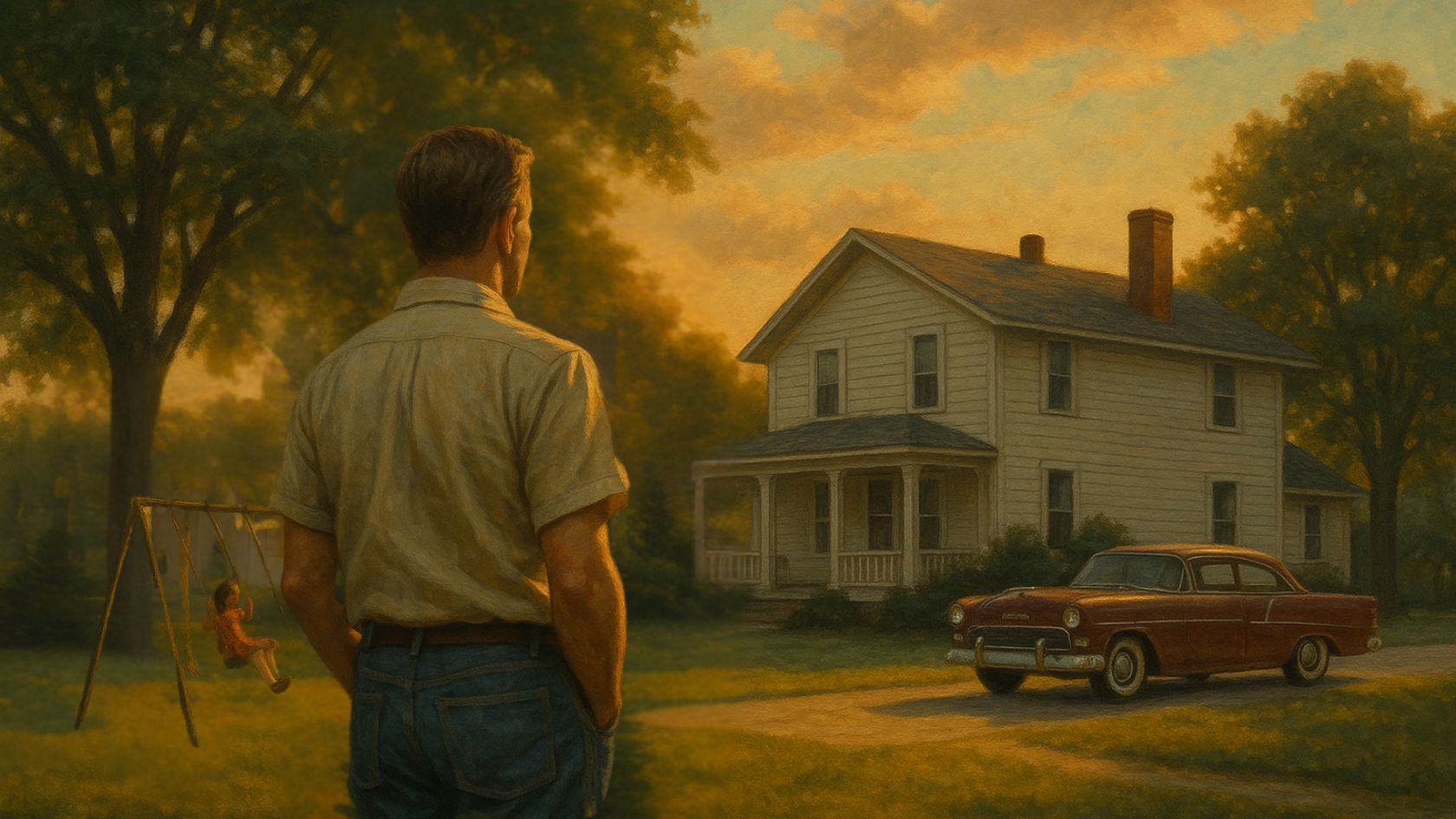
I remember coming back with Grandpa from the cabin on Lake McConaughy.
.
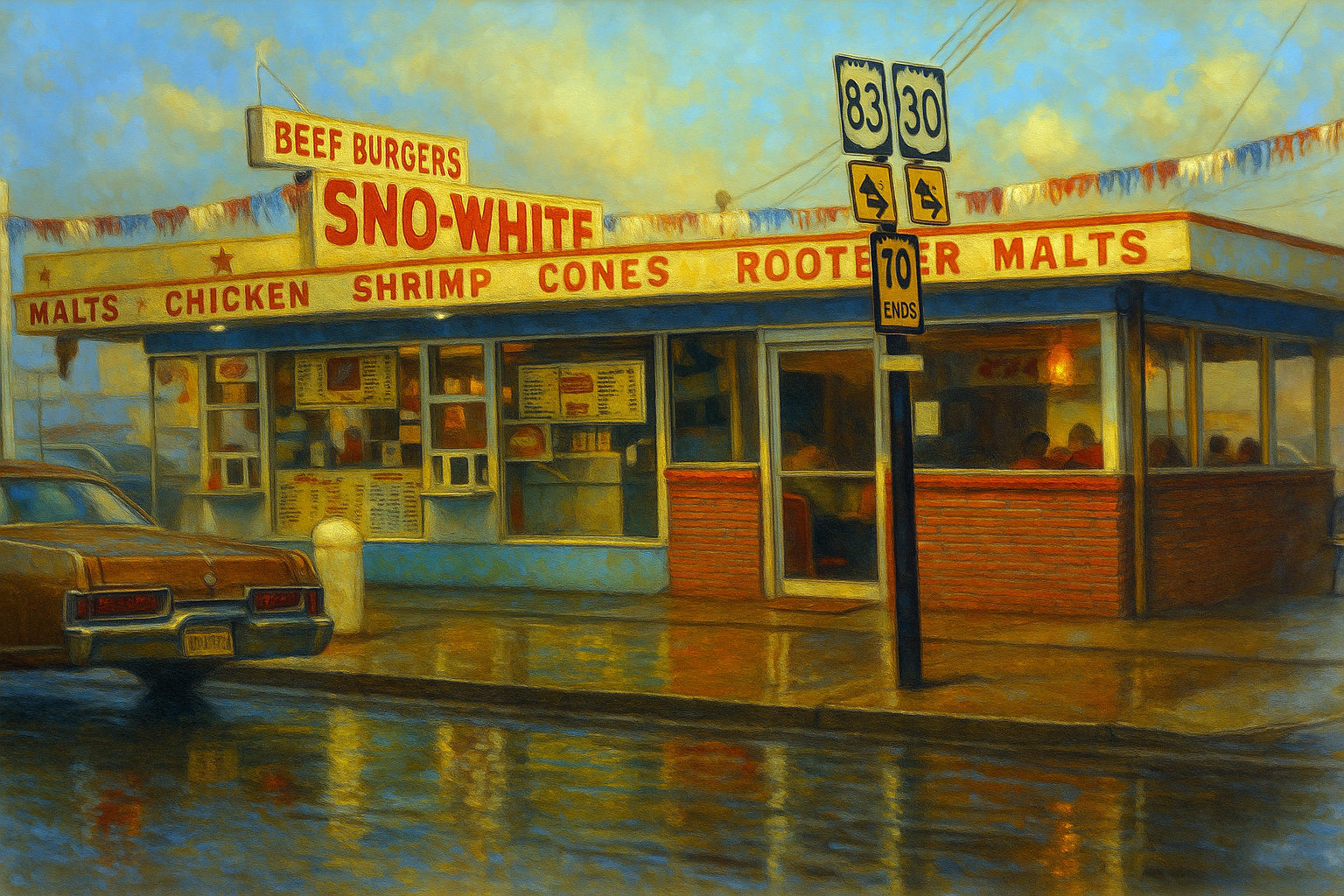
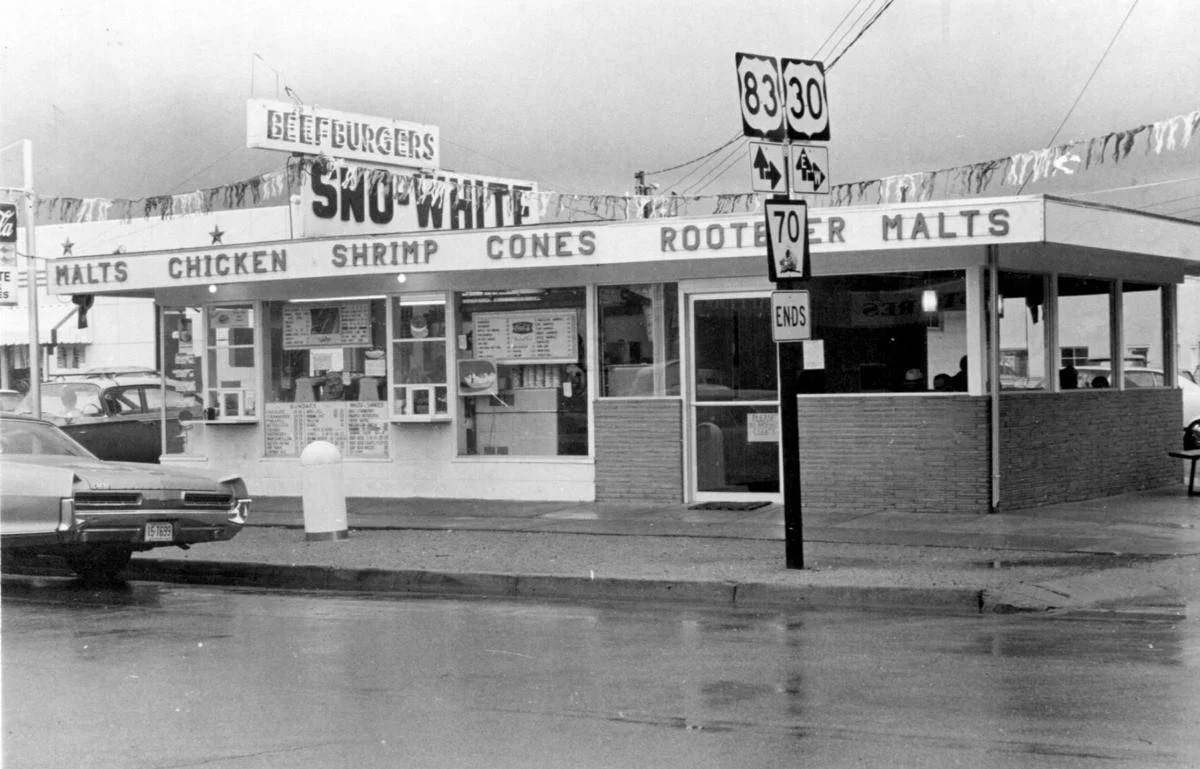
Along the way we stopped next to a corn field and he filched several ears of sweet corn. We stopped at the Sno-White and got vanilla ice cream cones. It was about 1962, I think.
.
Mom had left my sister and I with our grandparents. She was somwhere in Idaho, or maybe it was Texas by then. Dad was in California with his new family.
.
That ice cream sure was good. So was the sweet corn.
.
Nostalgia is a funny thing.

It smooths out the sharp edges. Polishes the rust. Paints over the cracks and calls it heritage.

It turns a backbreaking job into “the good kind of hard work.” It turns segregation into “simpler times.” It turns political dysfunction into “when people could disagree and still get along”—usually spoken by someone who never had to fear the consequences of being disagreed with.

Funny, isn’t it?

Not funny in the laugh-out-loud way. Funny in the way you laugh when you’re too tired to cry.

Because nostalgia rarely tells the truth. It tells a curated story. A version of the past where you were younger, your world was smaller, and your place in it felt secure. The grocery store had fewer brands. The news came at 6 and 10. People knew your name—because they all looked like you, worshipped like you, voted like you.

But not everyone got to enjoy that comfort. And not everyone wants to go back.

There’s a reason nostalgia gets weaponized in politics. It’s not just sentimental—it’s strategic. A well-placed “remember when…” can shut down debate faster than any data point. You don’t have to prove that things were better back then. You only have to make someone feel it.

Ask anyone who’s sold snake oil: belief beats evidence every time.

So when someone says they want to return America to its former greatness, it’s worth asking:
Whose memory are we restoring?
Whose pain are we ignoring?
Whose truth did we leave out of the scrapbook?

Because nostalgia, in the wrong hands, becomes a blindfold. And if we’re not careful, we’ll find ourselves walking backward—confident we’re headed in the right direction because it all feels familiar.

Nostalgia is a funny thing.
It remembers what it wants.
And it forgets who paid for it.


MAGA: The Slogan That Sold a Past America Never Lived

It didn’t start with a vision. It started with branding.

The day after Mitt Romney lost to Barack Obama in 2012, Donald Trump sat in his gilded tower and brainstormed slogans—not policies, not reforms, but slogans. One after another, they fell short until four words emerged that would reshape American politics: Make America Great Again.

Within five days, he filed a trademark. Not to launch a movement. To secure a product.

From the beginning, “MAGA” wasn’t about restoring greatness. It was about controlling the narrative. About bottling a vague national yearning—then selling it back as red hats and rally chants. A brand, not a blueprint.

What Trump understood—and what his critics underestimated—was that the details didn’t matter. People didn’t need proof that America had ever been “great” in the way he implied. They only needed to believe that someone, somewhere, had taken that greatness away. That greatness was a thing you could lose—and therefore something you could blame someone else for.

The power of the phrase lay in its intentional hollowness. It didn’t define what era was being referenced, or who exactly got to share in that greatness. And that ambiguity wasn’t a flaw—it was the strategy. It let each supporter fill in the blank with their own personal mythology. For some, it evoked postwar affluence. For others, it meant before desegregation. Before globalization. Before a Black president.

The hat became the uniform. The slogan became the catechism. And the trademark—the literal, legal trademark—was the quiet tell: this wasn’t a movement, it was a market.

While Hillary Clinton’s campaign tested 85 slogans to try to capture something hopeful, MAGA bypassed optimism entirely. It latched onto grievance. Into that vacuum of perceived loss—economic, cultural, demographic—Trump poured an intoxicating brew of spectacle and victimhood.

Even when critics pointed out that the phrase was lifted from Ronald Reagan, or that its echoes of exclusion were unmistakable, the response was indifference. Of course it was backward-looking. That was the point. A promise to return, not advance. A covenant to protect the idea of America as remembered, not as lived.

It worked because it never had to be true. It only had to feel true to those who wore it.

And in that, Trump revealed something deeper than political messaging. He exposed the country’s hunger for simplicity, for certainty, for eras unburdened by nuance or accountability. MAGA didn’t describe a policy platform. It diagnosed a cultural illness—and sold the cure as a memory.

A nation built on contradictions found its mirror in four trademarked words.

And we’re still living in their echo.


When ‘America First’ Comes for the Constitution

America First was never just a slogan. It’s a test.

A test of whether we will allow the Executive Branch to devour the very structure that guards our freedoms. A test of whether we confuse power for legitimacy.

In 2025, we’re witnessing the transformation of a nationalist branding campaign into a blueprint for executive domination—facilitated by Project 2025’s chilling vision of a “unitary executive.” That vision erases the firewall between governance and ideology. It replaces seasoned civil servants with handpicked loyalists. It hands the President not just the pen but the whole parchment.

The Constitution was designed not for kings, but for tension—three branches pulling against one another to prevent tyranny. “America First” twists that tension into subservience, not service.

We’re told this is about sovereignty. But what is a nation without the integrity of law? Without checks and balances? Without the humility to question its own power?

We must name this clearly: this isn’t patriotism. It’s imperialism in a red hat.


Gabbard, Inc.: The Making of a MAGA Intelligence Asset

Tulsi Gabbard’s journey from progressive insurgent to Trump-appointed DNI isn’t an evolution. It’s a carefully engineered asset flip.

Follow the money. Three PACs with ties to shady operatives. Tens of thousands spent to inflate her book sales. Cozy media appearances traded for strategic elevation. This isn’t organic grassroots credibility—it’s a case study in narrative laundering.

As Director of National Intelligence, Gabbard oversees agencies she once accused of politicized overreach. Now she’s positioned to filter what those agencies produce. The same woman who legitimized Assad with a handshake, who echoed Russian disinfo about Ukraine biolabs, is now the gatekeeper for U.S. intelligence assessments.

That’s not just dangerous. It’s strategic. Gabbard serves a dual purpose: she gives MAGA credibility with independents and anti-war leftists, while simultaneously advancing Trump’s distrust-and-dominate model of governance.

Don’t mistake contradictions for chaos. They are tactical. And Tulsi Gabbard is right where they want her.

Tulsi Gabbard Deep Research Report

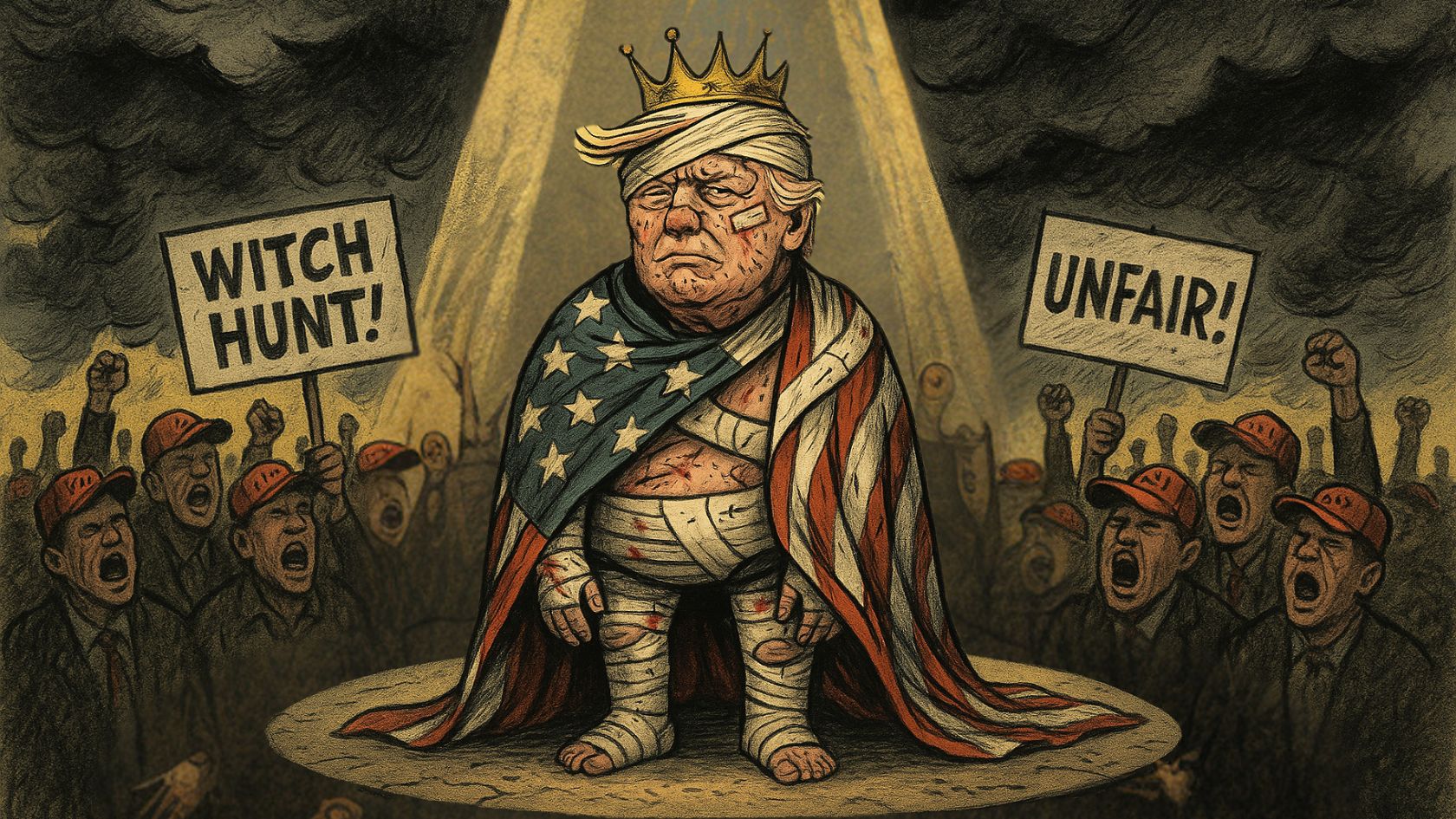
Whiny King of the Fragile Empire

Trump built an empire out of hurt feelings.
And now, every time the heat turns up, he melts.

He’s not just a con artist or a strongman—he’s a damn drama queen. Every indictment, every investigation, every challenge to his ego turns into a pity parade with gold-plated floats. “So unfair.” “Witch hunt.” “They’re after me!” We’ve heard it all before, and it’s rotting our ability to tell real harm from cosplay oppression.

While he plays martyr-in-chief, actual victims get ignored. Immigrants in cages. Queer kids banned from bathrooms. Pregnant women arrested for miscarriages. But sure, let’s all hold hands and sob for the billionaire who can’t stop yelling at reporters from his private jet.

He’s not being silenced. He’s just pissed people stopped clapping.