Truth? He Kills It for Sport.

Words That Don’t Fit Trump #2: Truth

He doesn’t just lie—he revels in it.

Every time Trump makes something up and gets away with it, he smiles a little wider. Truth isn’t an ideal to aspire to. It’s a hurdle to stomp. He turns gaslighting into performance art. Lies so loudly, so often, people start calling it style.

And worse—some start to like it.

Truth becomes cringe. Facts become weak. Being honest means being “woke.” That’s the virus he spreads.

This isn’t just about politics. It’s about teaching people not to care what’s real. Because if nothing’s real, nothing’s wrong.

That’s not just dishonest—it’s predatory.


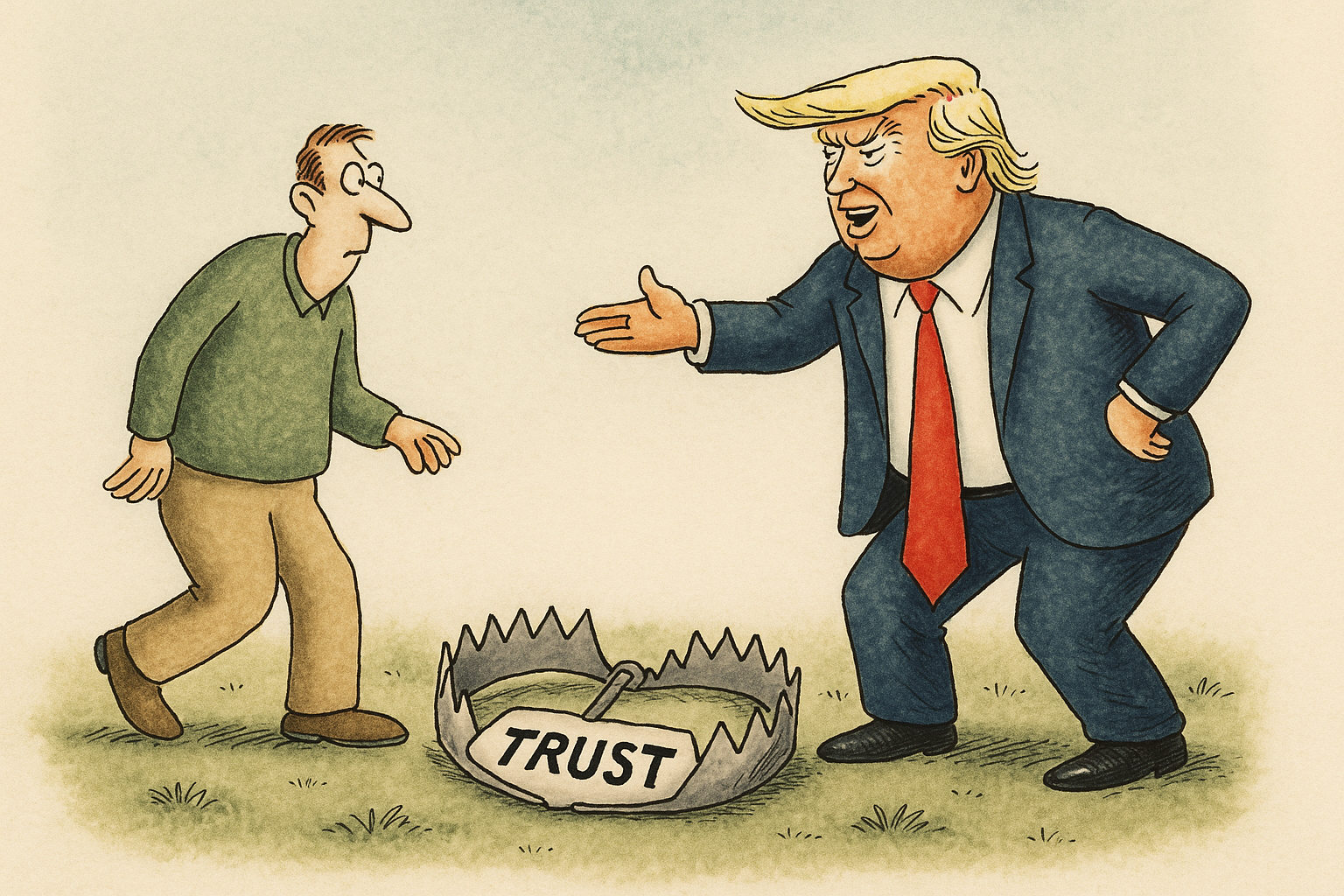
Trust Is for the Next Sucker

Words That Don’t Fit Trump #1: Trust

Behind every failed Trump venture is a trail of people who trusted him.

Contractors stiffed. Investors conned. Voters seduced, then sacrificed. Even his closest allies learn eventually: loyalty is never mutual. It’s conditional. Temporary. Transactional.

Trust, to him, is just the bait.

It’s how he got the country to follow him into a pandemic with no plan. How he got a mob to storm the Capitol. How he convinced working people that a billionaire playboy who dodges taxes and pays hush money was their champion.

You don’t have to fall for it again. You don’t have to believe that someone like him can be “different this time.” You don’t have to confuse dominance with leadership.

Trust, real trust, requires integrity. And that word doesn’t fit Trump either.


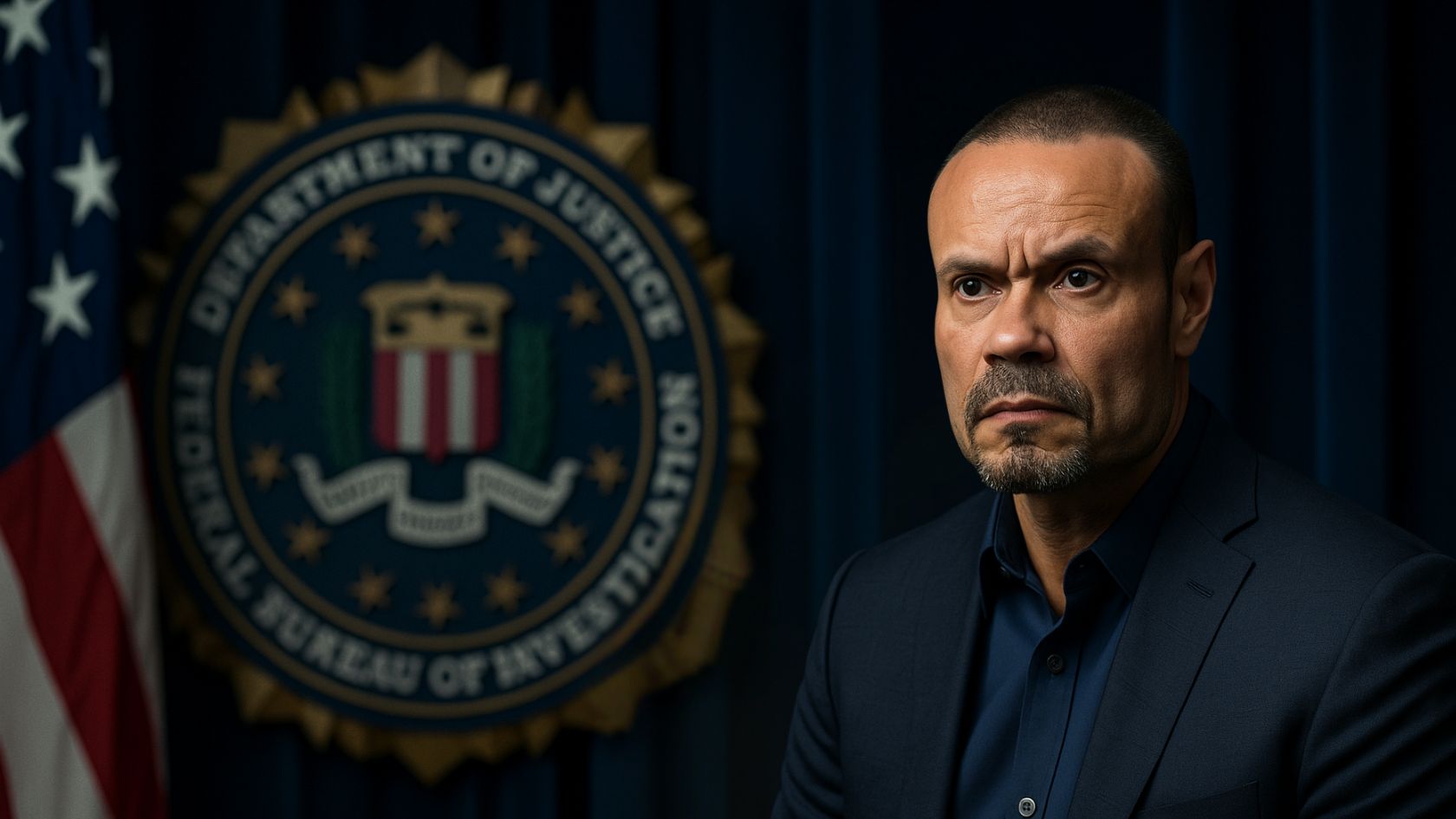
Dan Bongino’s Quiet Coup: From Conspiracy to Command

Dan Bongino didn’t earn his new title through Bureau experience. He earned it through allegiance—broadcast, weaponized, and rewarded.

Once banned from YouTube for spreading COVID lies and election conspiracies, Bongino is now deputy director of the FBI. He called the agency “irredeemably corrupt” in 2021. In 2025, he took its keys.

This isn’t reform. It’s repurposing. The relocation of FBI training to Alabama and the reexamination of politically charged cases aren’t policy shifts—they’re narrative rewrites. They create an agency aligned not with truth, but with a movement.

It’s about loyalty. Loyalty to Trump. Loyalty to grievance politics. Loyalty to the lie that America’s real problem is “wokeness” and not the people gutting our institutions from within.

Trump didn’t just bring in a loyalist. He brought in a broadcaster. Bongino’s audience now includes field agents, directors, and anyone still watching the slow conversion of law enforcement into ideology enforcement.

The danger isn’t just who Bongino is. It’s what his presence signals: that loyalty is now strategy, and that the war on truth has made it through the front gates of justice.

And it brought a podcast.

Bongino’s microphone might’ve lost a few sponsors, but now it has a badge. And that should scare the hell out of anyone who still believes the FBI should serve the Constitution—not a cult of personality.

Still Here. Still Fighting. Still Watched.

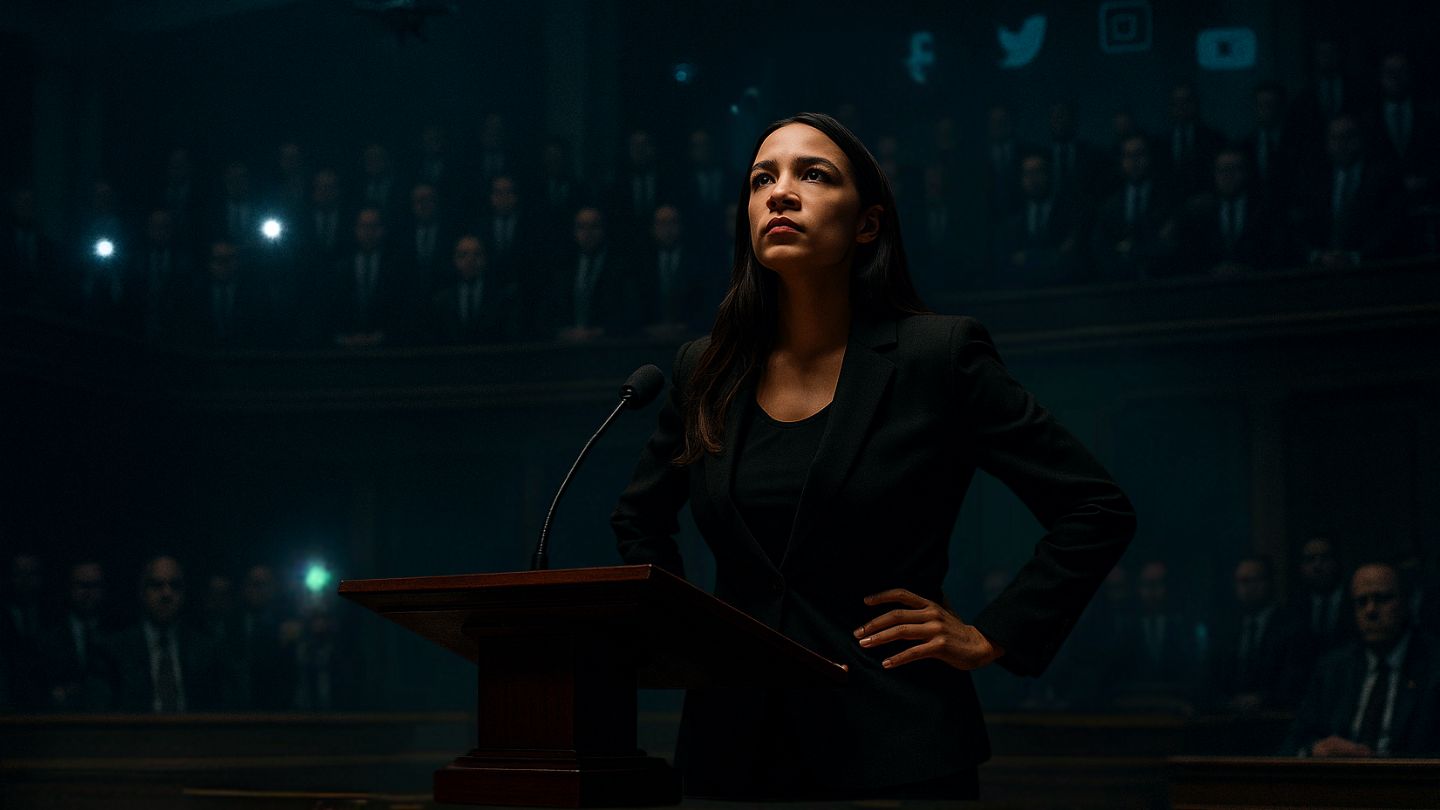
Alexandria Ocasio-Cortez was never supposed to win.

The problem with turning someone into a symbol is that we stop treating them like a person. Alexandria Ocasio-Cortez is now a symbol—of hope, of rage, of threat, of sellout—depending on who you ask and how many burners they manage.

She didn’t wait for permission, didn’t line up endorsements, didn’t come from the “right” family. She showed up in Congress the way most people show up in life—scraping, hustling, watching bills stack higher than paychecks.

Six years later, she’s still in that seat. Still proposing legislation the suits call impossible. Still throwing punches where others whisper.

Some call her a failure for not passing every dream she voiced. But what they miss is this: she made those dreams speakable. She forced the conversation. She dared to define justice as something structural, not sentimental.

She gets called a grifter by the Right, a traitor by the far Left, and a distraction by centrists who can’t move the needle without her oxygen.

They tried to meme her into a joke. They tried to scandalize her into silence. They tried to paint her as too much of everything—too Latina, too loud, too radical, too pretty, too online.

But she’s still here. Still fighting. Still watched.

Not perfect. Not above critique. But in a system engineered to neutralize difference, her persistence is its own kind of defiance.

Still introduces legislation. Still forces conversations her party avoids. The Green New Deal wasn’t just a headline; it was a map. The “Tax the Rich” dress wasn’t just a stunt; it was bait, and the media bit hard.

And whether you love her, loathe her, or outgrew her, one thing’s clear:

She’s made it impossible to pretend the old rules still work.

She’s also doing what representatives are supposed to—working for the needs of her constituents.


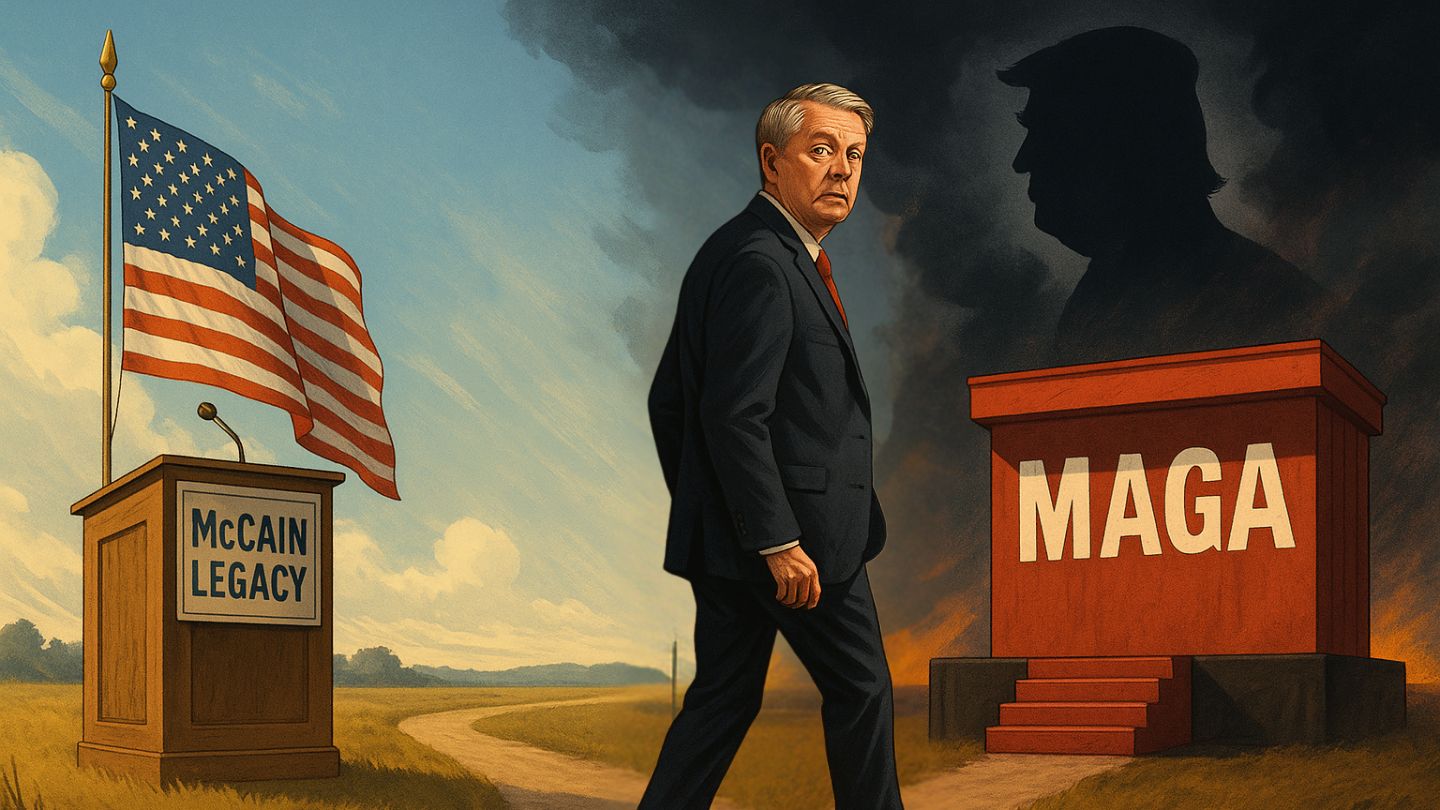
The Calculated Spine of Lindsey Graham

Lindsey Graham’s career has never been about where he stands. It’s about when he decides to move.

This is a man who called Donald Trump a “jackass” in 2015 and voted for Evan McMullin in 2016—then spent the next eight years golfing with Trump, defending him during both impeachments, and securing a re-election endorsement that now anchors his 2026 campaign.

He did not evolve. He adapted.

Graham has built his power on committee leverage and procedural fluency, not grassroots loyalty or policy innovation. From chairing the Judiciary Committee—where he midwifed the confirmation of Brett Kavanaugh and rushed Amy Coney Barrett through a pre-election Senate—to his current post atop the Senate Budget Committee, his real talent is reading the institutional moment and aligning himself with it just fast enough to survive.

But that survival comes at a cost: credibility.

From Tragedy to Tenure

Born into the back room of a café in Central, South Carolina, Graham lost both parents by the age of 22. He raised his younger sister and built a life of military and legal accomplishment: JAG officer, Air Force colonel, Bronze Star recipient. No one can question his perseverance.

But the contrast between his origin story and his legislative trajectory is stark. He traded the moral clarity often forged in hardship for the transactional ambiguity of Washington power games. He learned how to make himself indispensable to men like John McCain, and then—when the tides changed—to men like Donald Trump.

Judicial Power Broker

Graham’s legacy, if we’re being honest, isn’t legislative. It’s judicial. As Judiciary Chair, he oversaw over 200 federal judicial confirmations, including a third of the current Supreme Court. These appointments will shape abortion access, voting rights, gun laws, and environmental policy for a generation.

It wasn’t an accident. It wasn’t even ideological consistency. It was opportunity. Graham was once a cautious moderate on immigration and climate—co-sponsoring the 2013 immigration reform bill and acknowledging human-driven climate change in 2015. But by 2020, he had recast himself as a MAGA loyalist who framed opposition as sedition and process as war.

In 2018, his performance during the Kavanaugh hearings made headlines. His outrage was choreographed, his language inflammatory, and his purpose crystal clear: to signal to the Trump base that he could be counted on to fight dirty for their judicial future.

Foreign Policy Hawk, Domestic Chameleon

Graham remains a hawk’s hawk abroad—advocating military intervention in Iran, Venezuela, and North Korea, and calling for bombing Iranian oil infrastructure as recently as 2023. He co-authored the Sanctioning Russia Act of 2025, imposing sweeping tariffs and financial penalties on countries still buying Russian energy. It’s one of the harshest economic tools drafted by the Senate in decades.

But domestically, he’s slipperier. His tax policy votes, especially for the 2017 Trump tax cuts, ballooned the deficit while claiming to serve working families. His stances on immigration and energy “independence” shift to match the base. His reelection campaign touts border militarization, not solutions.

Personal Mystery, Public Calculation

Graham’s personal life remains private—and that privacy has invited speculation. He’s addressed some of it, including a near-marriage during his time in Germany, but he’s also leaned into the enigma. In politics, ambiguity is sometimes armor.

But ambiguity also works both ways. It keeps your enemies guessing. It keeps your supporters unsettled. And it lets your record be rewritten every few years, depending on who’s watching.

2026 and Beyond

Graham enters his next reelection fight with a Trump endorsement and a $15.6 million war chest. He has a powerful perch in the Senate, a new Russia sanctions bill with global implications, and a legacy entwined with every conservative legal ruling of the past decade.

What he doesn’t have is trust across the aisle—or among independents. A recent Winthrop Poll shows his approval rating at 37% statewide, even lower than fellow South Carolina Senator Tim Scott.

That’s the Graham paradox: highly effective, yet largely distrusted. Loyal—to power. Faithful—to expedience. Steady—only when the winds don’t change.

In this version of the GOP, Lindsey Graham isn’t an outlier. He’s the blueprint.
 

There’s a story Americans like to tell—that progress, once won, holds. That civil rights are a ladder, and once climbed, we never step down. That fairness, once codified, becomes our new floor.

The dismantling of Diversity, Equity, and Inclusion initiatives in the United States proves otherwise.

This wasn’t a cultural backlash. It was a coordinated blueprint, implemented across courts, legislatures, boardrooms, and media feeds. What we’re living through is not a spontaneous eruption of “anti-wokeness,” but a sustained, deliberate rollback of the tools that were created to close structural gaps and broaden access to opportunity.

The campaign started with language. Terms like “DEI hire” became public code for insinuation—suggesting someone was hired not for their skill, but for their identity. In truth, such language is reputational sabotage masked as critique. It reduces complexity to caricature, erasing the reality that these programs weren’t about special treatment—they were about leveling a playing field designed with only a few in mind.

From there, the legal attacks followed. Lawsuits invoked civil rights language to undermine civil rights goals. State legislatures passed sweeping bans on equity programs in education and government. Universities were compelled to purge offices, faculty were silenced, and mentorship programs vanished. The federal government didn’t just issue new rules—it erased the infrastructure entirely.

And while courts debated intent and agencies issued denials, the on-the-ground consequences unfolded in quiet devastation.

In rural towns and underserved schools, in HR departments and hiring committees, the invisible scaffolding of equity work was dismantled. Programs supporting veterans, students with disabilities, first-generation graduates, women in STEM—all quietly cut or defunded. Not because they failed. But because they dared to exist.

This is not the work of extremists on the fringe. This is mainstream, well-funded, and increasingly normalized. It is powered by billionaires and ratified by politicians. It is clothed in the language of “neutrality” but driven by a deep resistance to shared power.

And if we don’t name it for what it is, we’ll be complicit in its permanence.

Because this was never just a debate about policy. It’s about who gets to define fairness—and who gets to benefit from forgetting what it once meant.


Nebraska Tornado—The Storm You Can See

Somewhere between Wallace and Wellfleet, Nebraska, on June 16, 2025, a funnel reached from the belly of a supercell and touched the earth. It scoured the prairie under a sky heavy with fury and silence, twisting dust into the air with surgical precision.

Locals will mark the moment by fences snapped, pivots overturned, and sky-colored memories that will take years to fade. But there’s more to this than a single twister.

Because this wasn’t just weather.
This was warning.

What Happened

On the evening of June 16th, a confirmed tornado developed in Hayes County, Nebraska. Touching down between Wallace and Wellfleet, it tore across rural farmland in open daylight, observed by meteorologists and private citizens alike. It formed under a rotating supercell that had already prompted multiple tornado warnings from the National Weather Service. Hail the size of ping pong balls accompanied it. Thankfully, no fatalities have been confirmed.

The funnel and its rotation were unmistakable—seen on radar, in real time, and through the lenses of those who still believe witnessing counts for something.

Where We’re Headed

Events like this used to be described as freak weather. Now they’re part of a system—both atmospheric and political.

This administration has gutted climate monitoring, slashed NOAA budget lines, and undermined the National Weather Service’s authority—all while wrapping “weather forecasting” in the language of culture wars. DEI programs that once supported rural public safety outreach? Gone. Climate science collaborations with universities? Dismantled. Leadership at FEMA and the Department of Energy? Replaced by political loyalists with no crisis credentials.

The storm didn’t ask who you voted for.
It didn’t check your party registration before it spun out of the sky.

The Real Danger Isn’t the Wind

The danger is the hollowing out of our institutions. When science is politicized and emergency preparedness is recast as “woke overreach,” we end up with a country unprepared to warn, adapt, or rebuild.

The midwestern plains have always carried risk. But in 2025, the greatest risk isn’t in the clouds—it’s in Washington.

Because you can survive a tornado.
But you cannot rebuild what you defund.


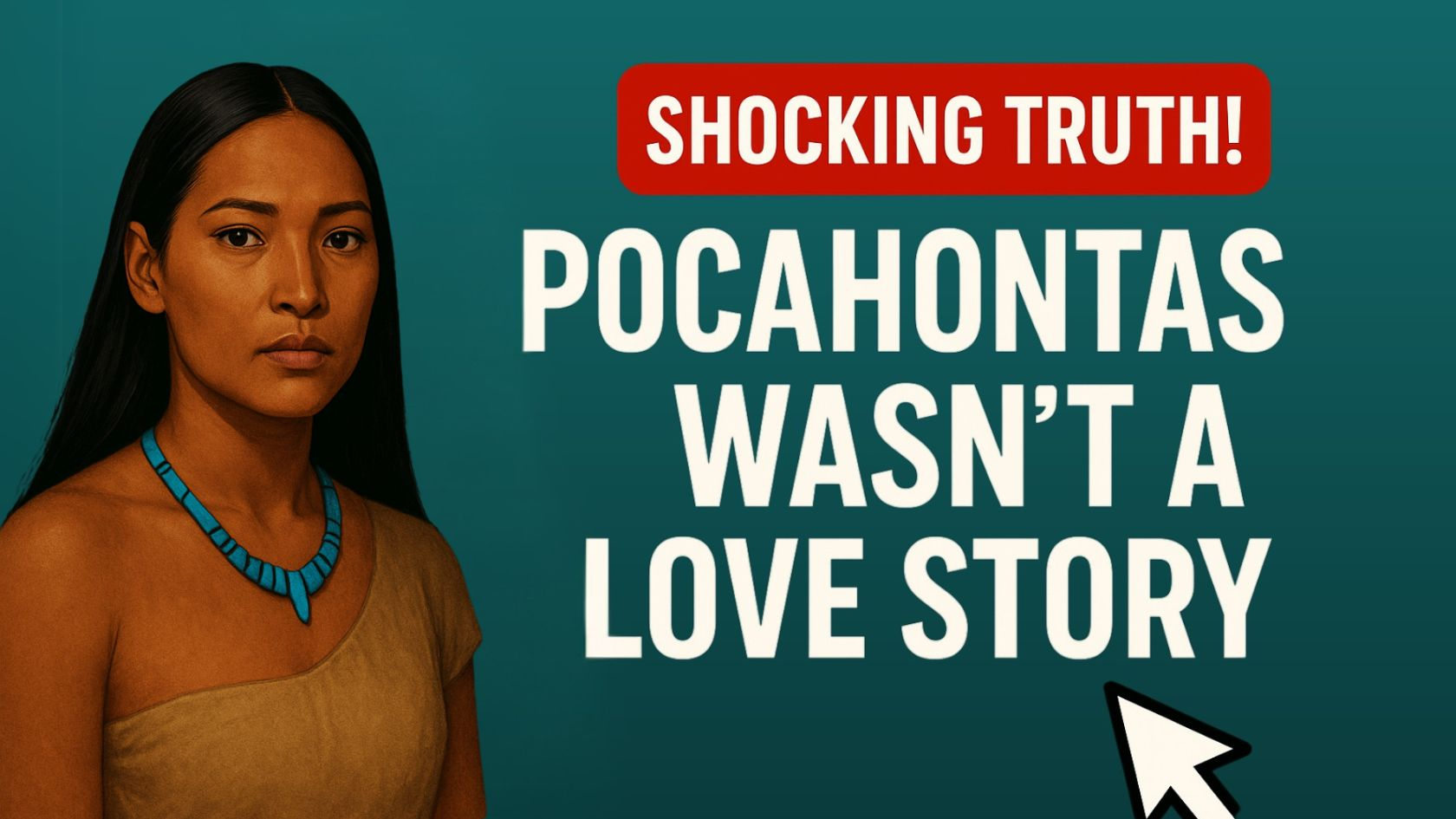
In the churn of online content, few names from early colonial America generate as much traffic as Pocahontas. Social media headlines promise shocking truths or secret histories, usually paired with nostalgic imagery or dramatic music. Some are educational. Many are cynical engagement traps. And more than a few quietly reinforce revisionist myths under the guise of revelation.

But the truth is not romantic. It’s not harmonious. It’s not even ambiguous.
What happened to Pocahontas was a kidnapping, a forced conversion, and the exploitation of a child by a colonial empire.

From Matoaka to Myth

Born around 1596, Pocahontas’s real name was Matoaka. “Pocahontas” was a nickname—likely meaning “playful one.” She was the daughter of Wahunsenacawh, the paramount chief of the Powhatan Confederacy in what is now Virginia.

She was likely just 10 or 11 years old when the English established Jamestown in 1607. The oft-repeated tale in which she saved John Smith from execution didn’t appear in any of Smith’s early writings—it was added years later, after she had become famous in England and could no longer contradict him. Historians widely believe the scene, if it happened at all, was part of a ritual Smith misunderstood or deliberately embellished.

That story, and its many retellings, became the foundation for a national myth: that colonization was noble, mutual, and even romantic.

The Real Story

In 1613, during ongoing hostilities between the English and the Powhatan people, Pocahontas was abducted by English Captain Samuel Argall. She was taken as a hostage to force her father’s cooperation.

During her year of captivity, she was isolated, indoctrinated, and baptized under the name Rebecca. Her forced conversion and cultural erasure were presented as spiritual salvation.

In 1614, she was married to tobacco planter John Rolfe. The marriage was politically motivated and deeply unequal—a colonial tactic disguised as diplomacy. Rolfe himself described the union not in terms of affection but as a strategy to “advance the good of the plantation.”

The Trip to England and Her Death

In 1616, Pocahontas was taken to England by the Virginia Company to promote their “success” in civilizing Indigenous peoples. She was dressed in English clothes, paraded through court, painted in oil, and introduced to royalty—not as a person, but as proof of concept.

She died in 1617, at around 20 or 21 years old, just as she prepared to return home. The cause was likely smallpox, pneumonia, or tuberculosis. She was buried in Gravesend. The exact location of her grave is lost.

The Clickbait Afterlife

Today, Pocahontas lives on in viral videos, hashtag threads, and simplified classroom slides. She’s used to sell everything from cultural nostalgia to political agendas. Some creators mean well. Others are clearly monetizing tragedy.

In some circles, she’s portrayed as a Christian heroine. In others, a princess. In still others, a victim of a global conspiracy. Very few portrayals center what she actually was: a young girl, trafficked across an ocean, held up as a symbol of peace while her own people were systematically displaced and destroyed.

Even the better-intentioned online narratives often flatten the story to a single twist ending: “She didn’t marry John Smith!” As though correcting that one myth unlocks the rest of the truth.

It doesn’t.

Why It Still Matters

This is not just a question of historical accuracy. It’s a question of power.

Pocahontas’s story is still used to soften the brutality of American colonization. Her name is invoked in politics, branding, and entertainment as a symbol of innocence and integration. The real events—her abduction, forced conversion, marriage under duress, and early death—are tidied away to preserve the fiction.

What she endured wasn’t a storybook romance. It was a case study in cultural conquest. And remembering her honestly is one small act of resistance against the machinery that turned her life into content.


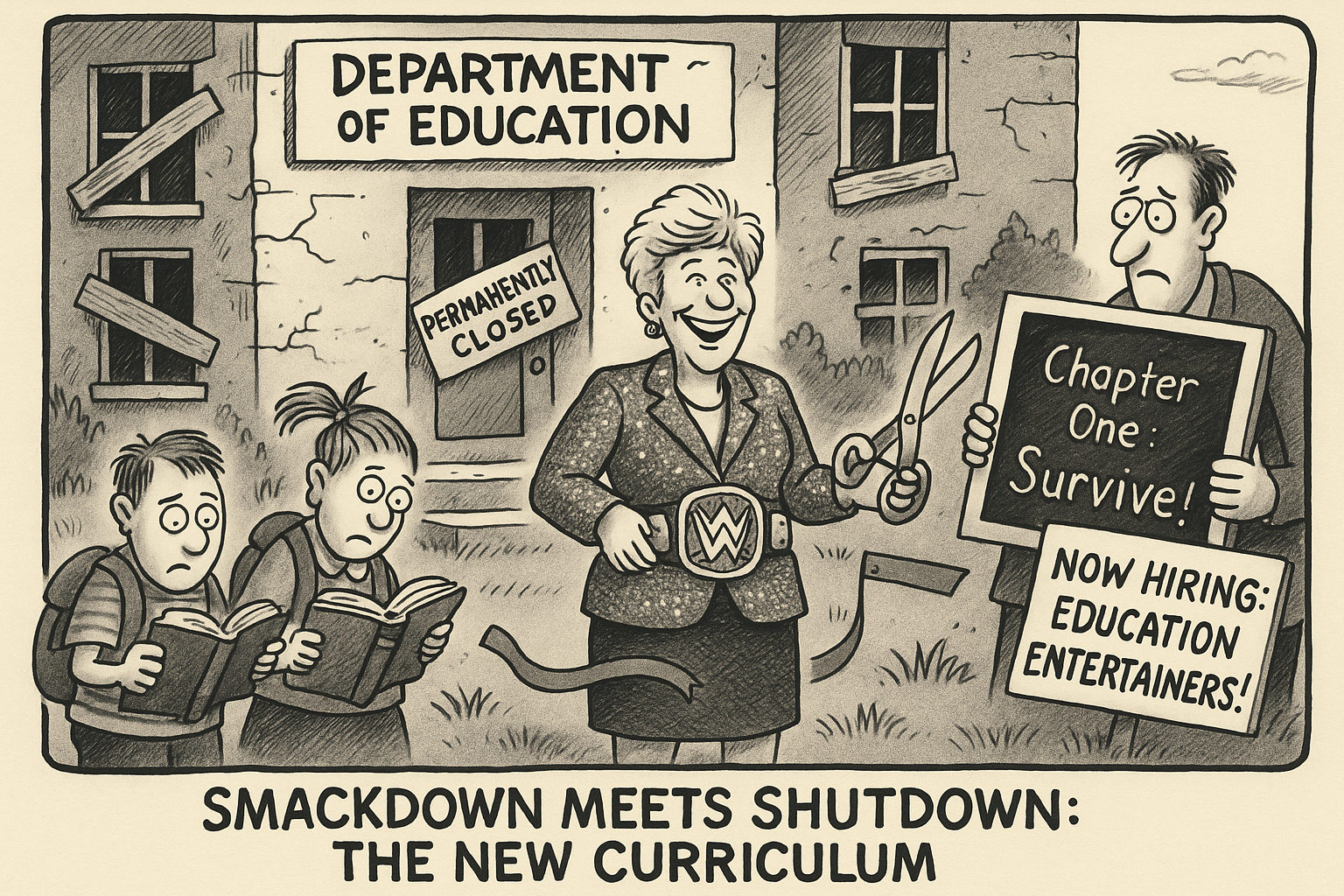
When Linda McMahon was sworn in as U.S. Secretary of Education, it wasn’t with the quiet resolve of a public servant—it was with the swagger of a political appointee armed for demolition. Her background was not in teaching, school administration, or public education policy, but in running a scripted entertainment empire. Yet that lack of experience was never a liability to those who appointed her. It was the point.

Her role was never about improving the Department of Education. It was about ending it.

From day one, McMahon’s actions revealed a strategic campaign of erosion. More than 1,900 federal education staff have been laid off. DEI initiatives have been systematically purged. Programs have been stripped, grants slashed, and federal oversight intentionally blunted. Executive orders have been signed directing her to prepare the department for closure. McMahon calls it efficiency. Her critics call it sabotage.

What’s happening is not negligence—it’s intent.

Public education, at its best, has served as a national compact: a promise that zip code, income, race, or disability would not determine a child’s access to opportunity. That fragile promise has always been uneven, always contested—but it remained a shared goal. McMahon’s tenure has weaponized that unevenness. Her rhetoric of “school choice” and “parental rights” serves a narrower function: to privatize, to decentralize, and to abandon responsibility.

Voucher programs, long favored by conservative policy groups, are being aggressively expanded. But data shows they disproportionately benefit higher-income families and often worsen academic outcomes for students most in need. In McMahon’s framework, parents who lack access to private schools or live in underfunded districts are simply collateral damage.

The elimination of DEI initiatives is more than symbolic. It’s ideological. It is a coordinated erasure of tools once aimed at addressing systemic inequality. Civil rights protections for marginalized students—already inconsistently enforced—are being hollowed out in the name of political purity.

There’s a cruelty in the silence that follows these cuts. Unanswered emails from families seeking accommodations. Unreviewed complaints from students of color. Unfunded literacy programs in rural counties. The ghost of a functioning department still lingers, but the muscle has been severed.

What’s left is a shell.

And behind that shell stands someone who once sold conflict as entertainment—now selling austerity as reform. Her longtime loyalty to Donald Trump has never been subtle. Her appointments, both at the SBA and now in education, were rewards not for expertise but for obedience. In this administration, governing isn’t about public service. It’s about executing the ideological will of a shrinking base.

Linda McMahon is not an educational leader. She’s a liquidation agent.

The consequences will outlast her term. When the federal government steps back, it doesn’t create freedom—it creates gaps. And those gaps are filled not by innovation, but by inequality. The states most eager to dismantle protections will move the fastest. The students who depended on those protections will fall the furthest.

And the rest of us will watch the lights go out in slow motion.


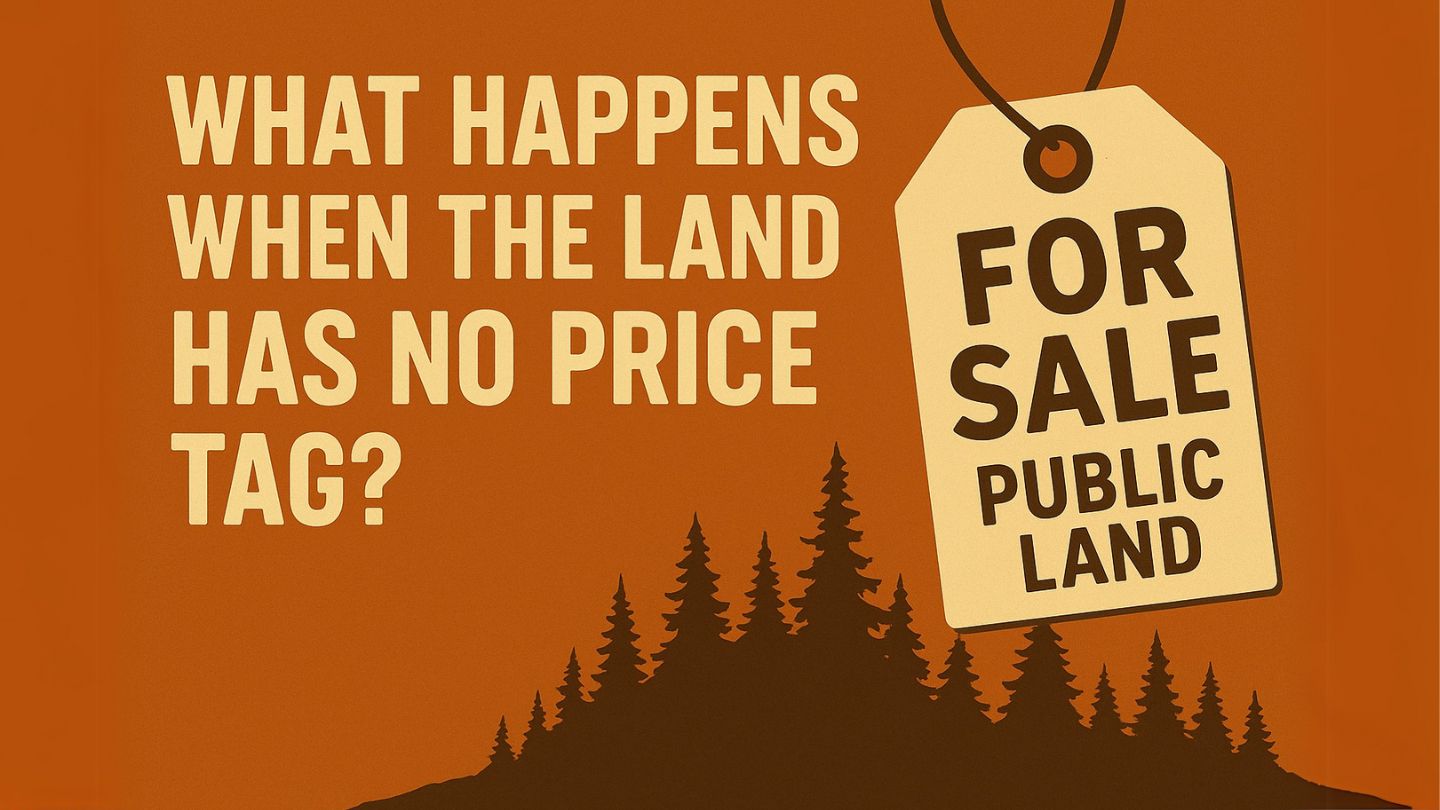
What Happens When the Land Has No Price Tag?

A new law moving through Congress would require the government to sell more than 3 million acres of public land — forests, plains, and open space held in trust for all Americans. Most people haven’t heard about it. That’s by design.

They say it’s for housing. But much of this land is remote, undeveloped, and sacred. These are places that still breathe — places where water runs free, animals roam, and plants grow where they’ve always grown. And now they’re being marked for sale.

There will be no competitive bidding. No tribal consultation. No real environmental review. Just fast-tracked deals for the well-connected, written into law behind closed doors.

They left Montana out of the bill. That’s where a Trump ally lives. His land stays safe. Ours does not.

This isn’t about housing. It’s about power. It’s about turning the natural world into inventory. It’s about erasing the idea that some land should be left alone — not because it’s profitable, but because it matters.

When we let the land be sold, we sell something in ourselves too. And once it’s gone, we don’t get it back.