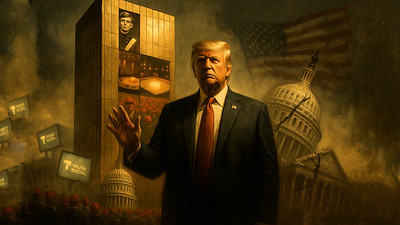
Stephen Miller and the Federal Boot on Your State’s Neck

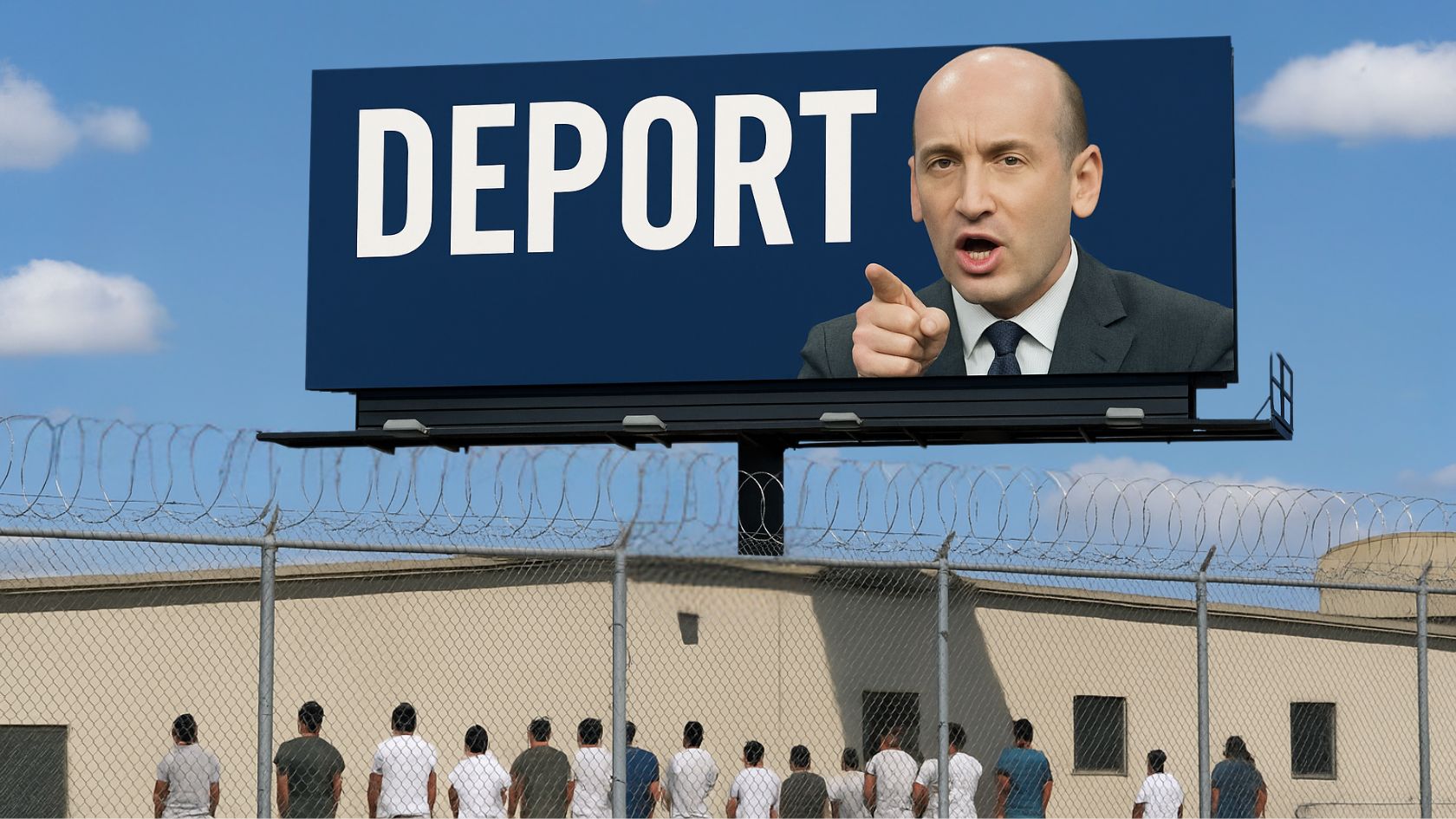
Let’s talk about Stephen Miller. He’s not a household name like Trump or DeSantis, but don’t kid yourself—this guy’s the muscle behind the scenes. The paperwork villain. The kind who builds cages with legal briefs and calls it “patriotism.”

You ever hear him go on about “states’ rights”? Yeah, me too. Until some state doesn’t do what he wants—like protect immigrants or let kids read books without a federal permission slip. Then it’s game over for states’ rights. He’ll throw the whole weight of the federal government at them and call it constitutional.

Through his little outfit, America First Legal, he’s suing states left and right. Want to keep ICE out of your city? Not on Miller’s watch. Want your school to actually teach about civil rights or gender identity? He’s coming for your school board next.

So let’s cut the crap. “States’ rights” was never about rights—it was about control. It’s the oldest bait and switch in the book. Use it when it’s convenient, ditch it when it’s not. And Miller’s made a damn career out of that switch.

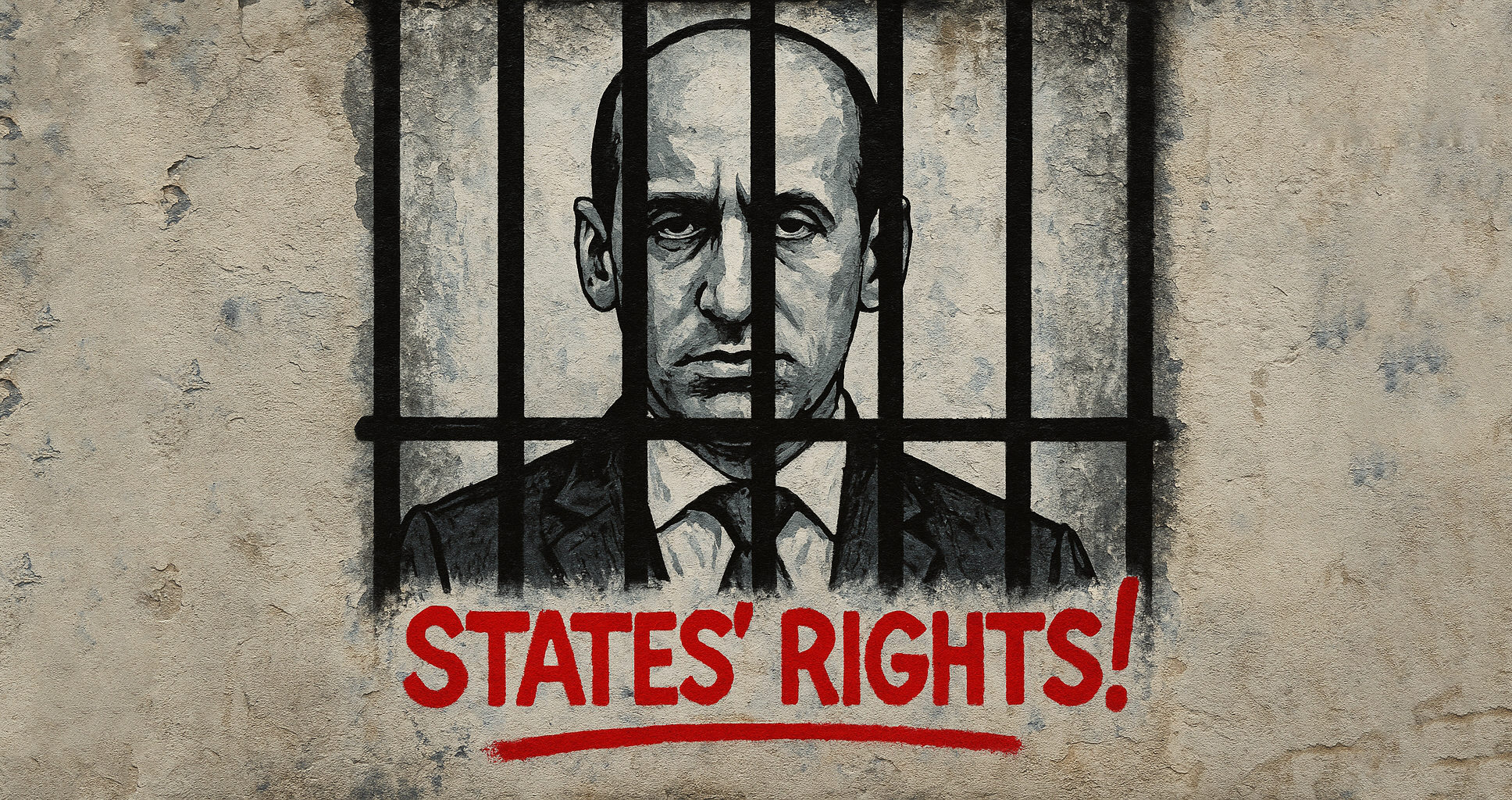
That’s why the graffiti of him behind bars hits so hard. “STATES’ RIGHTS!” in red, like a bad joke on a cracked wall. Because the guy who used to cry foul over federal overreach is now the one stretching Uncle Sam’s arms into every statehouse that doesn’t clap on cue.

And if that doesn’t piss you off, it should. Because if they can crush California or New York or Illinois, they’ll come for your town next. Doesn’t matter if it’s blue, red, or purple—if you don’t kneel, they’ll try to make you.


Weaponized Legality and the Death of Citizenship

What Stephen Miller understands—and what too many still don’t—is that you don’t need a wall if you can erase the meaning of belonging.

That’s what’s happening now. Birthright citizenship, guaranteed since the 14th Amendment and affirmed by Wong Kim Ark in 1898, is no longer just debated on fringe blogs—it’s being shredded in the Oval Office by executive order. Deportation isn’t enough. Now they want rendition—extralegal exile to third countries, without trial, without ties, without recourse. El Salvador. Rwanda. Libya. It doesn’t matter where, as long as it’s far and terrifying.

The Trump administration isn’t confused about what it’s doing. This isn’t security. It’s demographic engineering. It’s ethnic erasure in legal language. And the proof is in the narrative: undocumented means criminal, birthright means scam, asylum means threat.

Call it what it is: White nationalism by statute.
Wrapped in procedural language. Funded by fear. Sold as policy.
And if we don’t stop it in court, we will be complicit in silence.


It Ain’t About Safety—It’s About Submission

Here’s the thing nobody on TV wants to say:
When a president starts calling in troops to deal with protesters, the problem isn’t the protesters. It’s the president.

Trump doesn’t care about LA. He doesn’t care about ICE or borders or crime or David Huerta. He cares about keeping the cameras off the fact that his economy’s tanking, his trade deals are ghost stories, and half his own party is privately praying he forgets how to speak.

So what does he do? He picks a fight with California. He slaps “emergency” on everything like duct tape on a broken bumper. And he dares the rest of us to notice the smell of dictatorship under all that patriotic cologne.

This ain’t about law and order. This is about making us bow. And I don’t bow to liars with parades.

Needed Deployment or Intentional Distraction?

They say it was about law and order. About protecting ICE agents and federal buildings. About keeping Los Angeles from “descending into chaos.” But if you believe that, you haven’t been paying attention. Or maybe you’ve just gotten used to the smell of bullshit in the air.

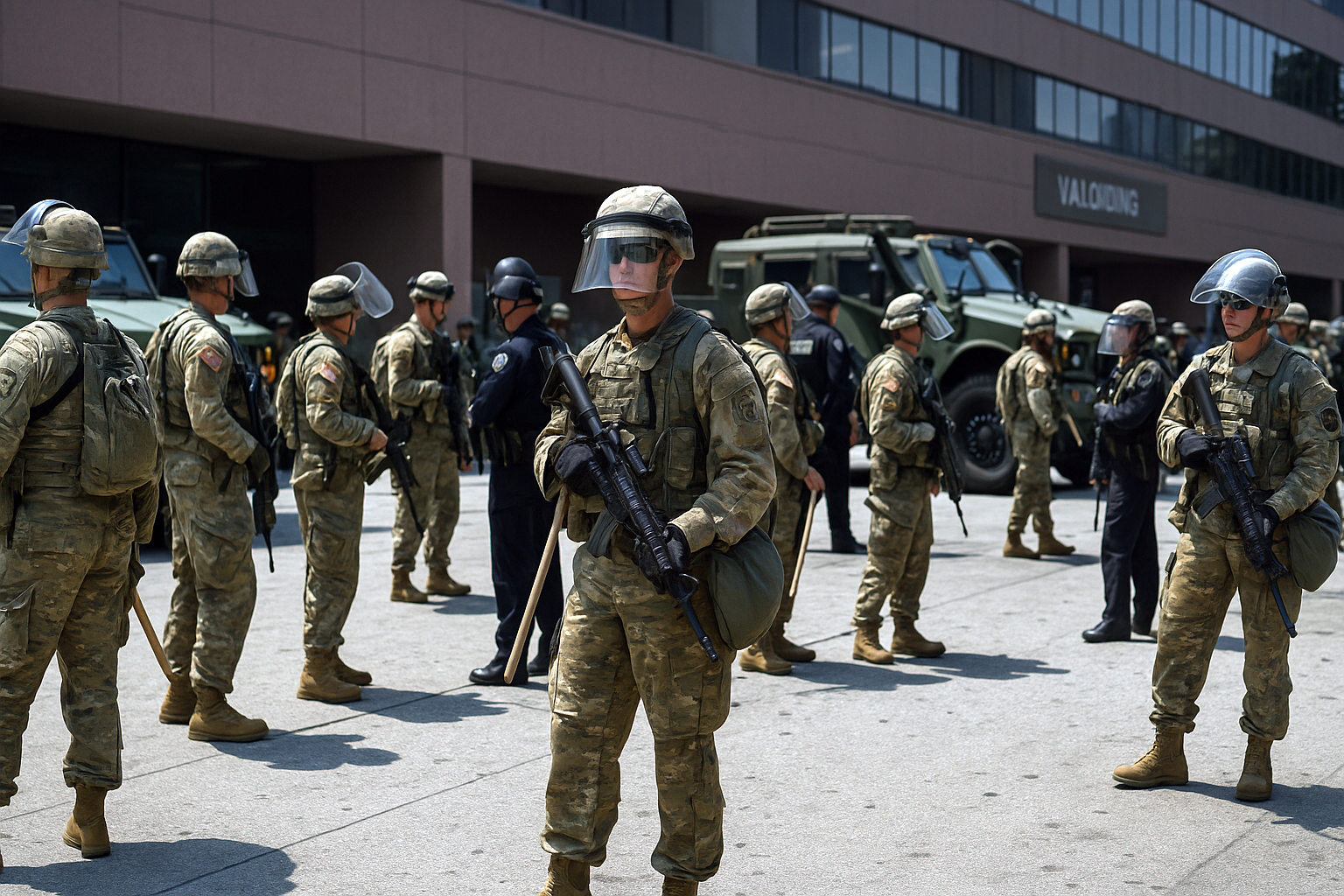
In June 2025, President Trump deployed over 4,700 troops—National Guard and Marines—to California, without the governor’s request or consent. That’s not just a response. That’s a statement. And the statement wasn’t aimed at the rioters. It was aimed at the cameras.

Let’s get a few things straight. Yes, there were protests. Yes, there was tension. ICE kicked off immigration raids in the middle of L.A.’s Fashion District, and people showed up angry. Tear gas flew. Flash-bangs echoed. But “rebellion”? That’s the word Trump’s legal team latched onto to justify it under Title 10, Section 12406—which lets the president federalize the National Guard if there’s a rebellion against U.S. authority.

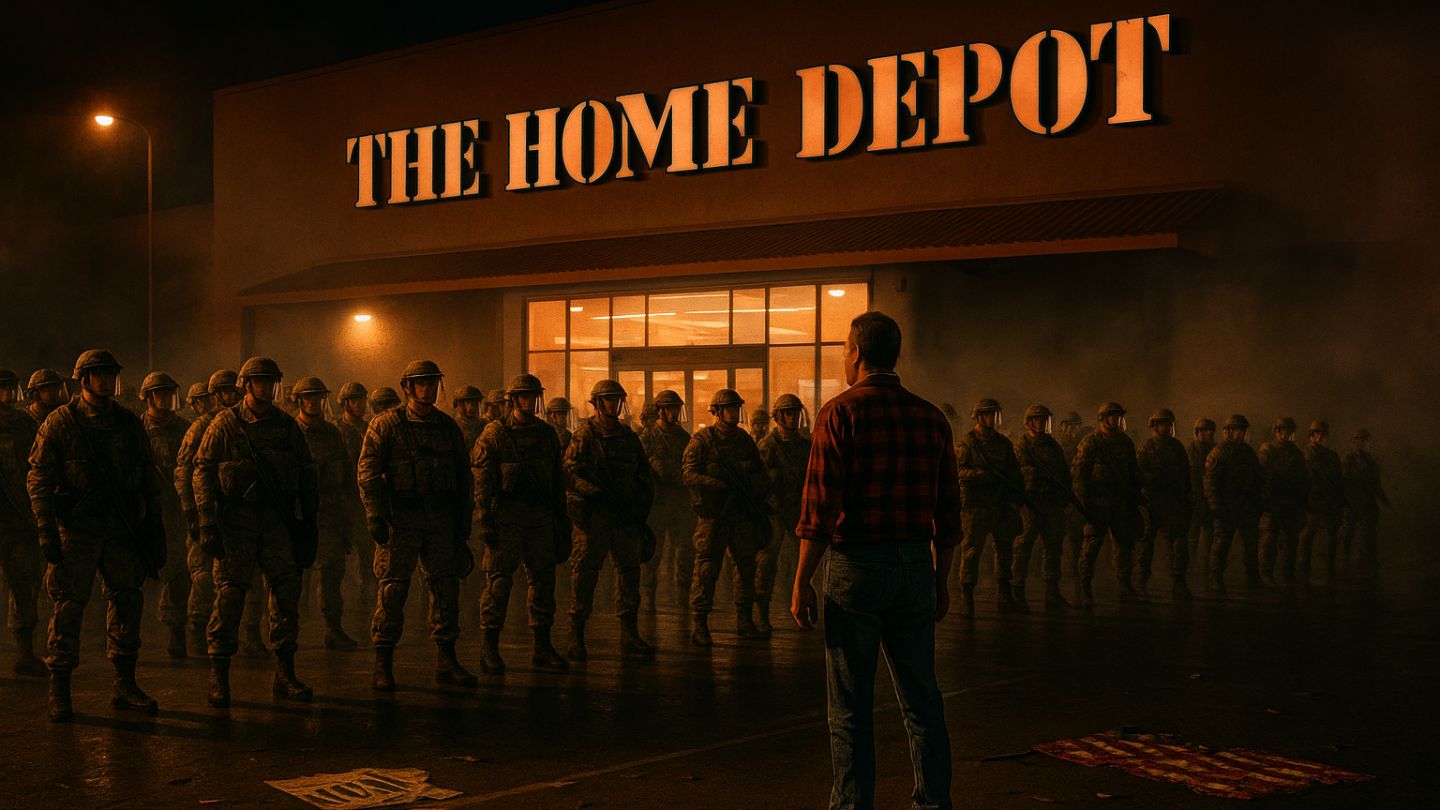
Rebellion? That word has meaning. And it doesn’t mean a couple hundred people chanting outside a Home Depot.

Let’s stop calling it a deployment and start calling it what it feels like: an occupation. You don’t send nearly five thousand troops into a city just to “protect a few buildings.” You send them to send a message. And the message is: We’re in charge here now. That’s not support—that’s suppression. That’s not coordination—that’s coercion. And if you think this stops at California’s border, you’re not paying attention.

No, this wasn’t about the threat on the ground. This was about the threat in the headlines.

Because while boots were hitting the pavement in L.A., Trump’s administration was dealing with a pileup of political messes. Inflation’s rising again. Tariffs are spooking the supply chain. Consumer confidence is wobbling. The travel ban he dropped on 19 countries wasn’t going over well with anybody outside the MAGA base. The Musk-Trump spat hasn’t cooled down, and that big, beautiful budget bill he keeps promising? Still hanging in limbo like a forgotten campaign banner.

So what do you do when your policies start to stink and your ego takes a hit? You stage a crisis. You put troops on the street. You create a visual distraction so overwhelming that nobody talks about the rest. And in this case, it worked. For a few days, the coverage shifted from “Trump policy backlash” to “Trump takes control.”

But let’s not pretend this is new. This is textbook Trump:

  • Turn federal force into a campaign prop.
  • Use California as the punching bag.
  • Make “the optics” louder than the facts.

And just like before, he wrapped it all in the flag, barked about “law and order,” and dared anyone to question him without being labeled a traitor.

The real traitor is the one who uses the military like a prop, who turns a constitutional republic into a reality TV show, and who punishes states for not clapping loud enough.

Governor Newsom called it unconstitutional. Civil rights groups called it authoritarian. Legal scholars are still arguing over whether it holds up in court. But anyone with two working eyes and half a conscience knows what it was: a distraction tactic dressed up as national security.

We’ve got to stop taking the bait. Every time we argue about the protest, we let the policy slip by unnoticed. Every time we debate whether it was “necessary,” we miss the part where it was deliberate.

This wasn’t a call for calm.

It was a siren for control.

And if we don’t call it out for what it is, next time, it won’t just be California.


Kneel First, Then Maybe We’ll Talk

There’s a new rule in Trump’s America: If your state doesn’t bow, don’t expect help when it’s drowning or on fire.

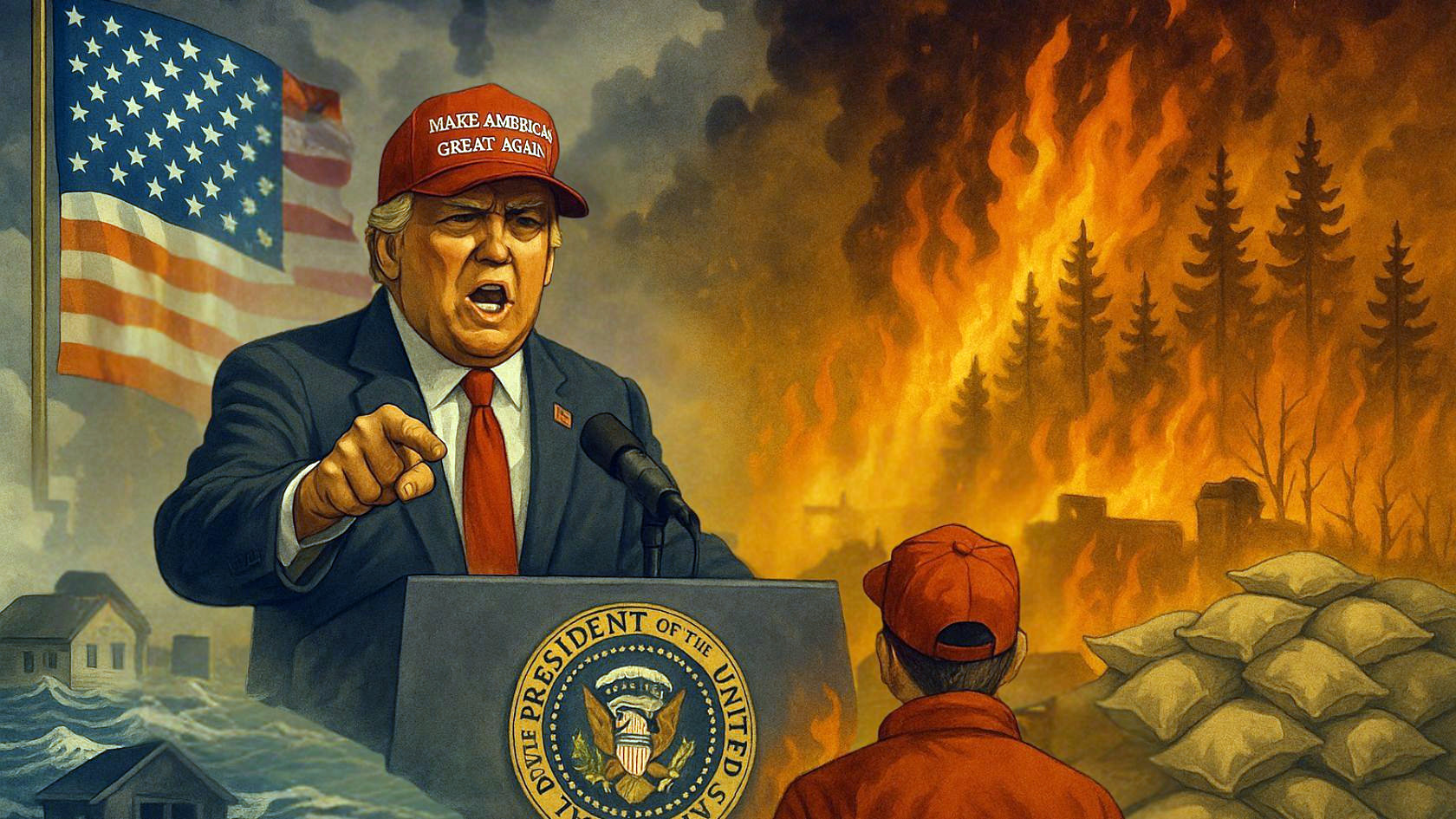
This second go-round, Trump doesn’t even pretend to be president of the whole country. Floods in Oregon? Wildfires in California? Good luck getting federal aid if your governor didn’t clap at the last MAGA rally. But send a photo of you wearing a red hat, and the sandbags show up overnight.

We’ve always had fights between state and federal governments. But this is different. This is a shakedown. Trump’s turned FEMA into a political weapon. The message is clear: say nice things or suffer.

And if you say “no thanks” to his brand of help—like California did when it tried to handle protests without military boots on the ground? He’ll send the National Guard anyway, like he did in Los Angeles. That wasn’t support. That was a warning shot.

This isn’t governance—it’s revenge politics. Aid has become a prize for loyalty. Troops have become tools of intimidation.

And too many folks still don’t see it. Or worse—they do, and they’re just fine with it.


Aid as Allegiance

Under our Constitution, federalism was designed to balance power—not consolidate it in the hands of a single man. But under Trump’s second term, that balance is no longer honored. It is manipulated. Weaponized.

Federal disaster relief has become conditional. Blue states—those whose leadership defies the administration—find themselves waiting longer, or hearing nothing at all. When wildfires scorched California or floods overwhelmed parts of the Pacific Northwest, help came late, or not at all.

And when local leaders decline unwanted federal involvement—as California’s did during 2025 demonstrations in Los Angeles—Trump sends forces anyway. Thousands of National Guard troops deployed against the wishes of the state. Not as assistance. As defiance.

This is no longer policy. It is performance politics laced with punishment.

We are witnessing the erosion of cooperative federalism in real time. The principle that government should serve all people equally has been hollowed out and replaced with a cruel transaction: loyalty in exchange for help. Silence in exchange for peace.

This country cannot function if aid is conditional, and autonomy is ignored. The states are not supplicants. The President is not a king.

But in Trump’s America, the message is clear: disobedience carries consequences. And that is the hallmark not of leadership, but of authoritarian control.


They Asked for Help. They Got a Threat.

Here’s how it works now: if your state asks for disaster relief, you better smile while you do it—and you better have voted the “right” way, too. If you didn’t? Don’t hold your breath.

That’s how Trump 2.0 runs things. Aid is for friends. For everyone else, it’s delay, deflect, or disappear.

But say you don’t want his help—like when California said no thanks to National Guard boots during protests in LA this spring? He sent them anyway. Two thousand troops, uninvited, marching in to show who’s boss.

That’s not support. That’s a federal muscle-flex. It’s him saying, “I’ll help you when I feel like it—and I’ll roll in when I want to, whether you like it or not.”

The logic here is twisted but clear: kneel and you might get water bottles. Push back and you’ll get boots.

This isn’t how you run a country. This is how you run a protection racket.

And yeah, some people still cheer it on. But some of us see the game. And we’ve had enough. Because real help doesn’t come with strings. And real leadership doesn’t send troops to punish you for governing yourself.

So go ahead, send your guards. We’ll still be here. Organizing. Resisting. Growing something that doesn’t need your permission.


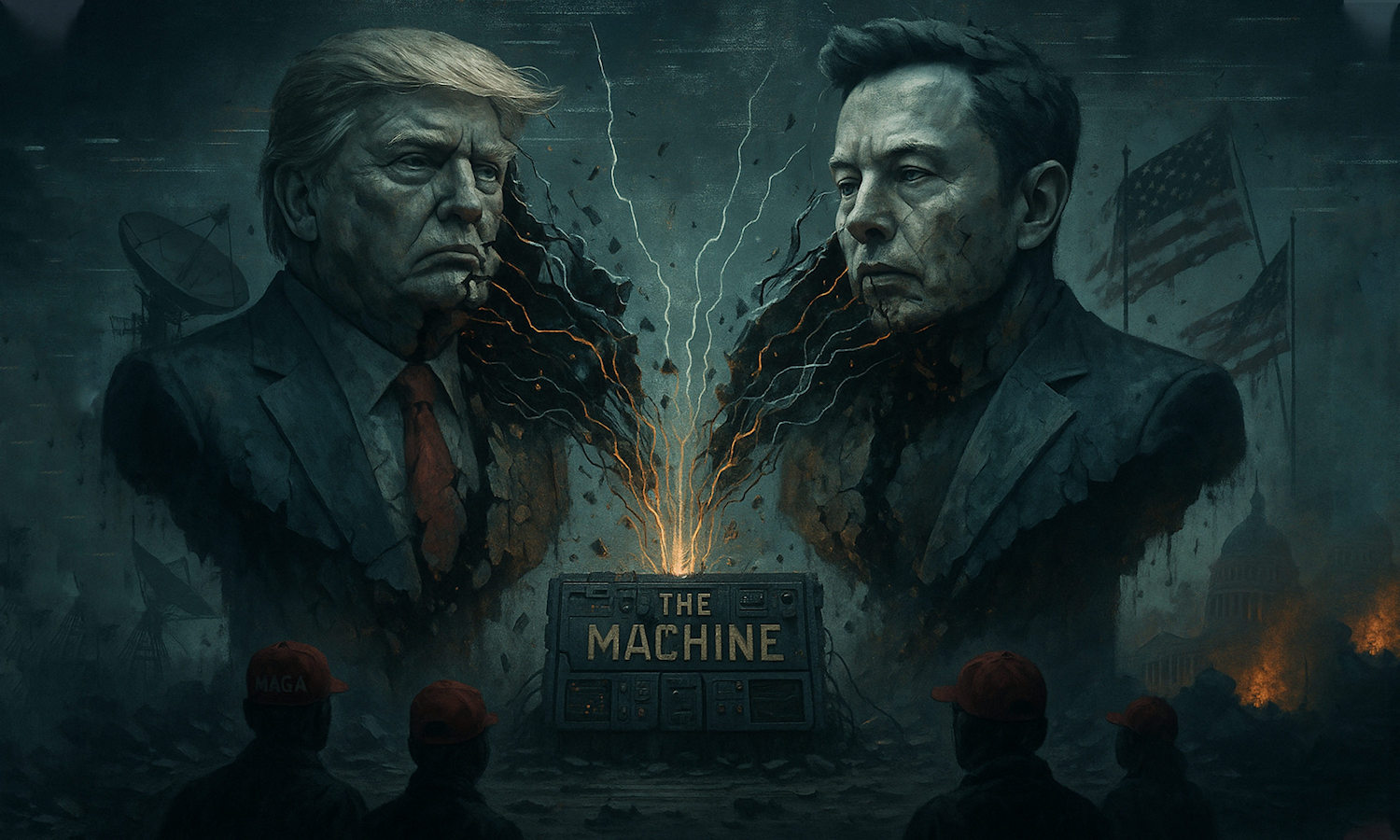
Mutually Assured Detonation: Trump, Musk, and the Fracturing Machine

The Trump–Musk rupture isn’t just drama. It’s structural. And if you blink too fast, you’ll miss the gears grinding beneath the fireworks.

Two men. One presidency. And a billion-dollar feud unraveling in real time across rival social platforms.

Let’s dispense with the basics: Elon Musk bankrolled Trump’s 2024 return with nearly $300 million and was rewarded with unprecedented access to power. In what barely passed for legality, Trump hollowed out a branch of the federal Office of Management and Budget and handed Musk control of a Frankenstein agency dubbed the Department of Government Efficiency. It became a shell operation with real data, real contracts—and zero oversight.

From there, the pairing got weirder. Musk shadowed Trump like a self-appointed vizier—showing up in the Oval, mugging through press conferences, and making decisions no one could trace. He held the White House megaphone and the launch codes to America’s satellite infrastructure. The unspoken truth? Musk wasn’t just a donor—he was a partner.

Until yesterday.

The public spat began with threats and accusations flying across Truth Social and X. Trump claimed he fired Musk. Musk countered that Trump owed him the presidency—and threatened to drop Epstein-related kompromat. Then came the economic threats. Trump floated revoking federal contracts. Musk, in turn, teased the decommissioning of his space assets and reminded the world: he’s going to outlive Trump by decades.

And just like that, the curtain dropped.

Behind the headlines, the damage is deeper than either man will admit. Trump’s political machine relies on three things: money, message control, and voter microtargeting. Musk delivered all three. Without him, the gears jam.

Let’s be clear—this is a system built on mutual blackmail. Trump needs Musk’s data, his money, and his silence. Musk needs Trump’s government protection to keep regulators off his back and contracts flowing. Remove one brick, and the façade teeters.

And while they posture for dominance, the Republican base is watching—and splitting. Die-hard Trumpers are already branding Musk a traitor. The more tech-sympathetic libertarians are confused. The influencer class is hedging. If Musk can defy Trump in public and survive, it signals a shift no one’s ready for: that Trump’s grip may finally be loosening.

Musk, for his part, is making a move. He’s aiming past Trump. His message to the Republican Party is unmistakable: I’ve got the reach, the data, the rockets—and the future. Trump is just the past, clinging to a podium he didn’t even build.

This isn’t a falling-out. It’s a rupture in a cartel of power. A billionaire standoff between two men used to impunity. It could get louder. It could get darker. But either way, the Machine isn’t humming like it used to.

Something’s slipping. And they both know it.


They didn’t just gut CP3—they handed it to a 22-year-old grocery clerk turned campaign loyalist and called it leadership.

Thomas Fugate, barely out of college, is now acting director of the Department of Homeland Security’s Center for Prevention Programs and Partnerships (CP3). His qualifications? A degree from UTSA, a landscaping business in high school, a stint at H-E-B, and a loyalty badge earned as a Trump campaign advance team member. That, apparently, was enough to put him in charge of what was once the nation’s flagship effort to prevent domestic terrorism.

This isn’t satire. It’s the federal government under Trump 2.0.

Let’s be clear: CP3 was never perfect. But under prior leadership, it was staffed with experts, funded to engage with schools, civic groups, and local law enforcement, and committed—at least nominally—to preventing radicalization and mass violence. Now, it’s a shell. Staff has dropped from 80 to fewer than 20. Grant programs are being quietly buried. And Fugate, who interned at the Heritage Foundation and parrots MAGA slogans on social media, is the placeholder standing over its grave.

The message isn’t subtle. This isn’t about qualifications. This is about obedience. About elevating symbols of loyalty to choke the institutions that once restrained Trumpism’s worst instincts. Fugate’s rise is not a fluke—it’s a tactic.

Trump’s second term is littered with these appointments. CP3 didn’t need an expert, it needed someone who wouldn’t object when the mission was redirected—away from white supremacist violence and toward “border threats” and “cartel activity.” Fugate is not leading a counterterrorism office. He’s overseeing its controlled demolition.

And yet DHS calls it a credit to his “work ethic.”

What they mean is: he won’t ask the wrong questions. Won’t leak. Won’t dissent.

What’s left of CP3 will either be repurposed or dissolved. In the meantime, threats of domestic terrorism—school shooters, militia cells, hate-driven violence—go understaffed, underfunded, and unmonitored. That’s the point.

The Trump administration doesn’t believe domestic extremism is the problem. It believes its critics are.

Appointing Fugate is more than nepotism—it’s a statement. It says this administration will hand national security to the least qualified person in the room if it means undermining what little institutional resistance still exists.

Fugate is just one more cog in the Trump Machine. And like every other piece, he wasn’t chosen to succeed.

He was chosen to obey.


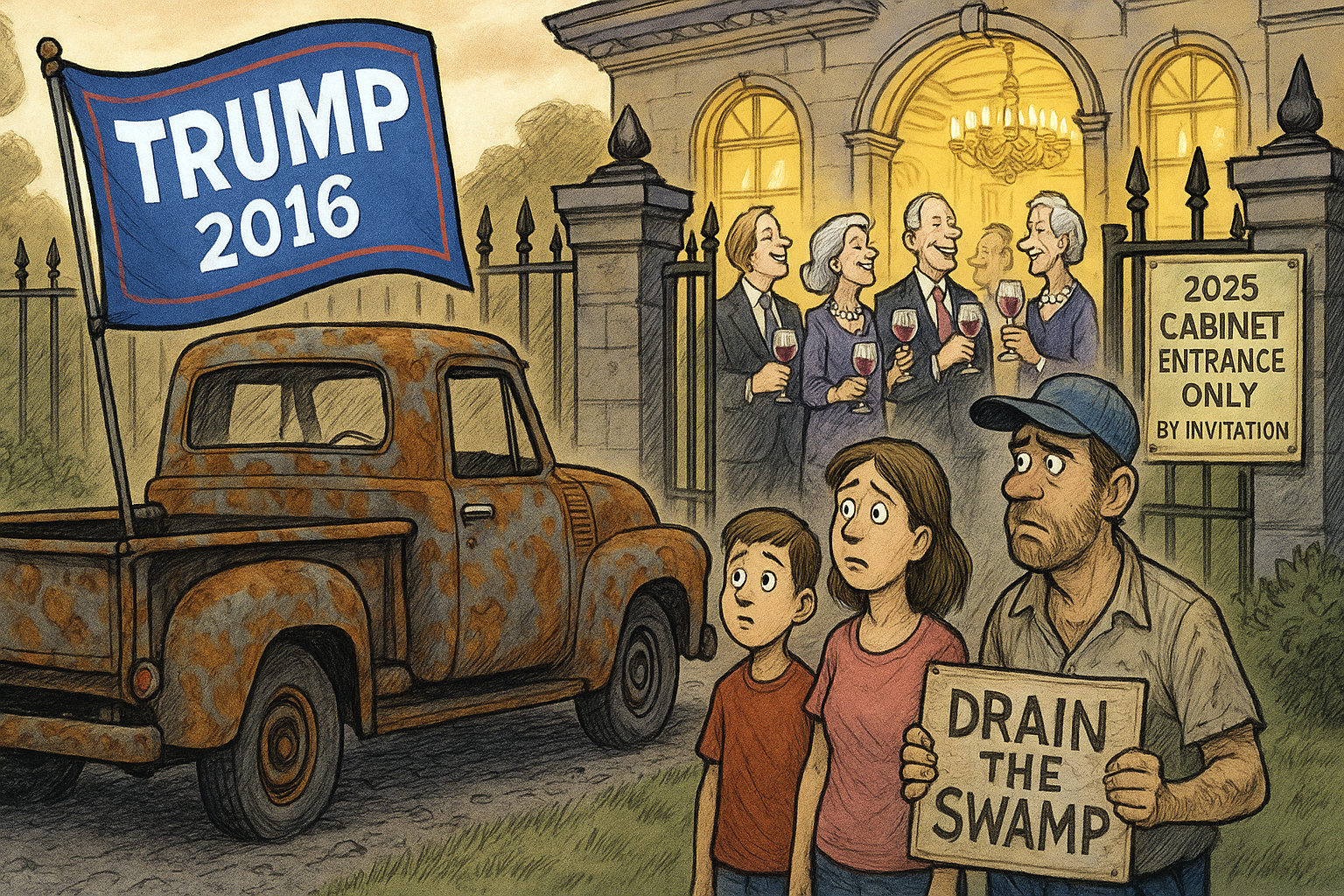
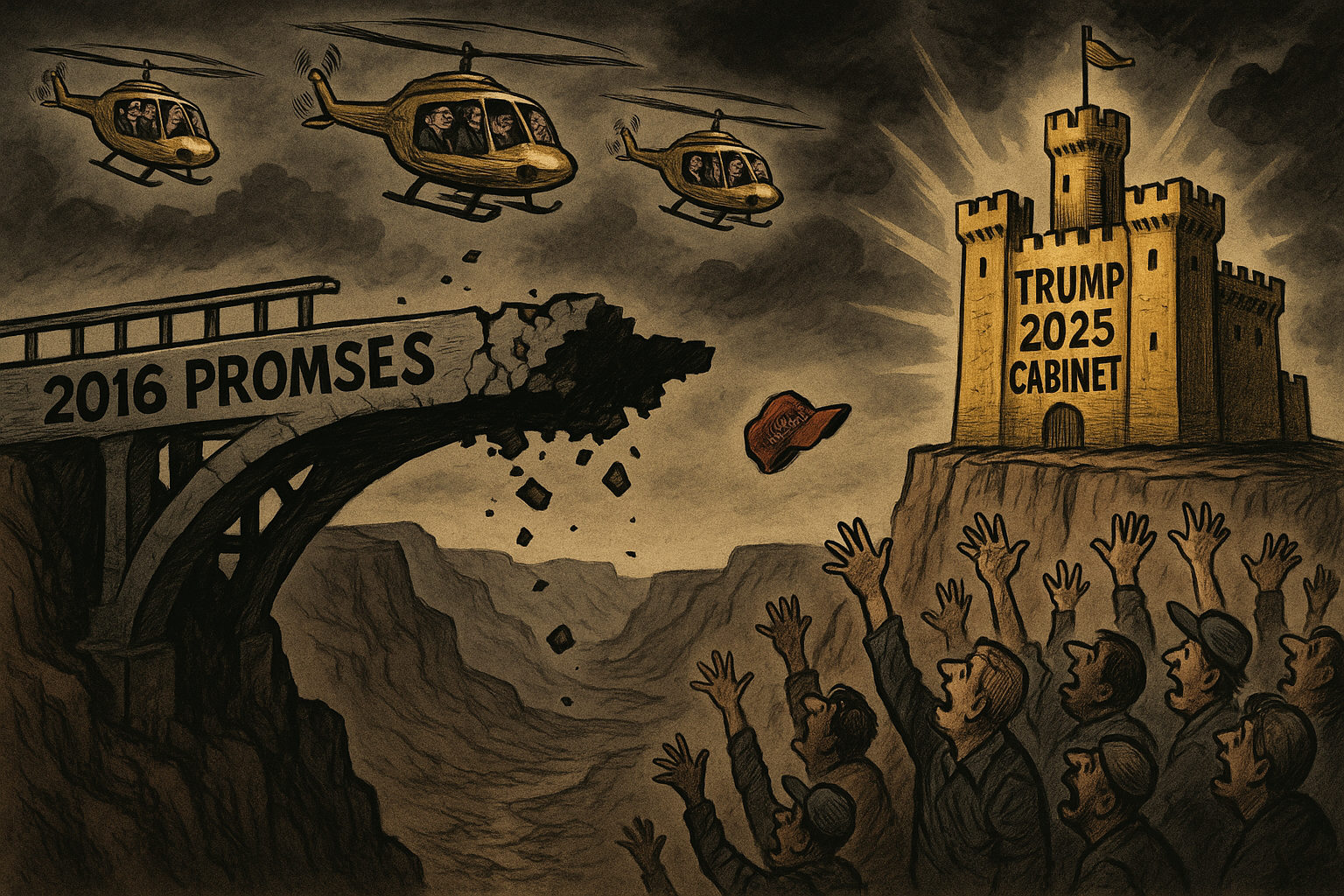
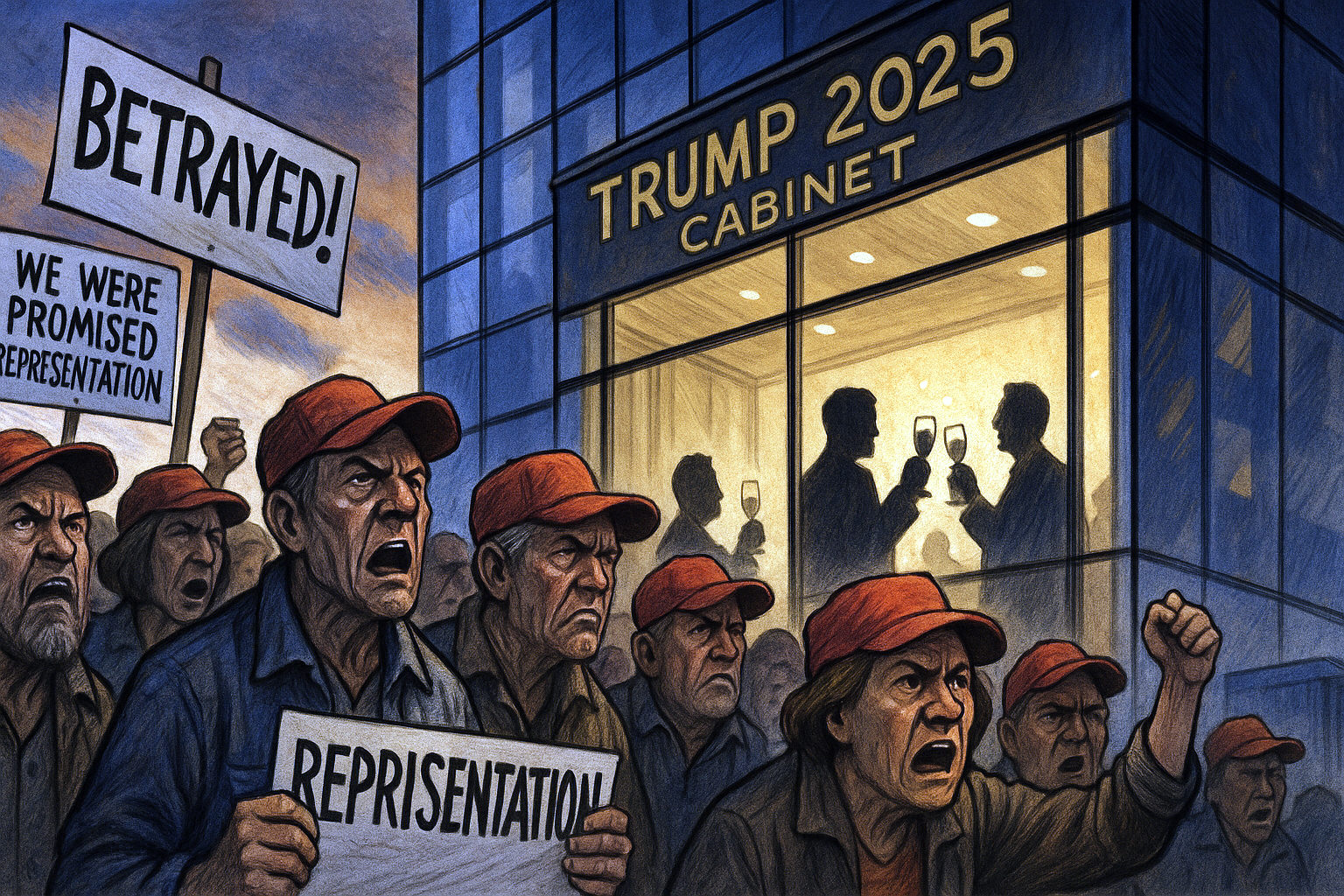
Betrayed

The MAGA base feels betrayed by Trump’s 2024 cabinet, filled with billionaires.