A Question.

Sometimes the truth doesn’t need a caption—it just needs to be seen clearly, without noise.

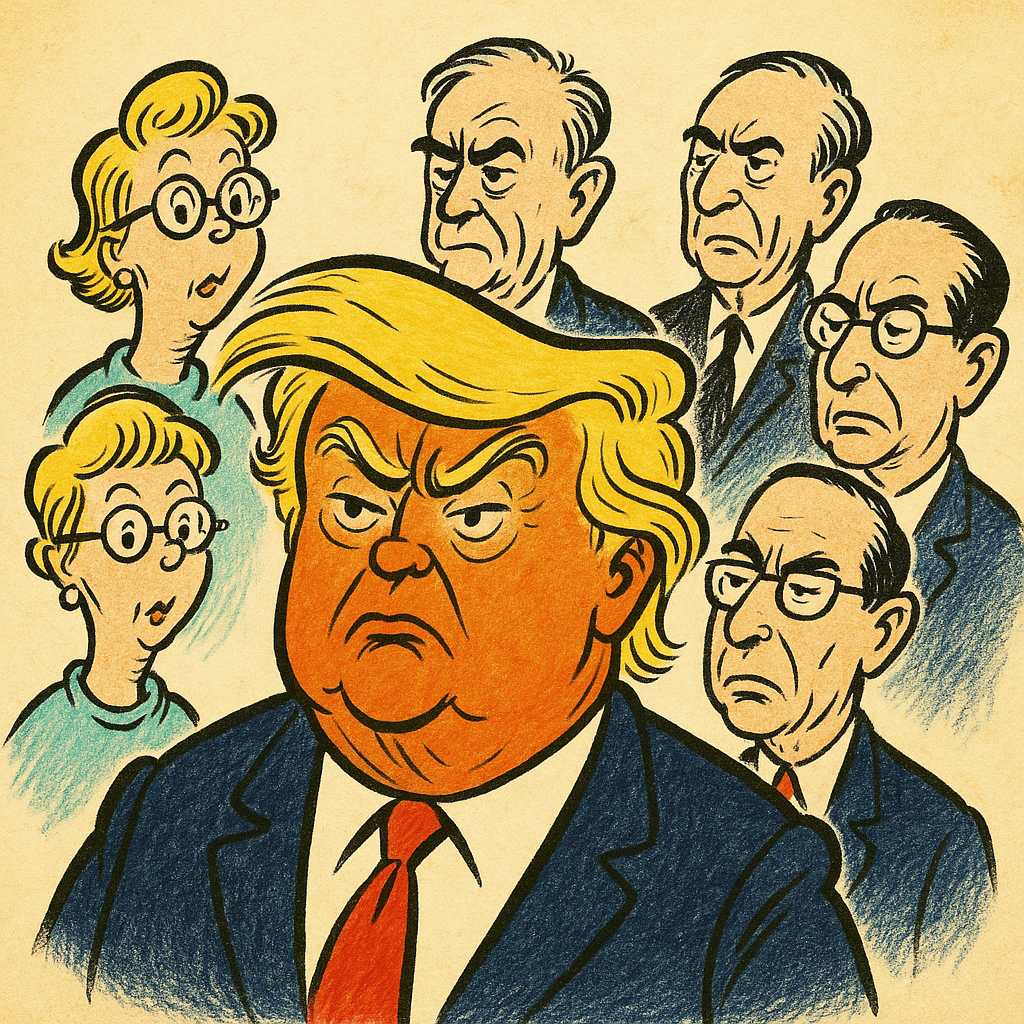
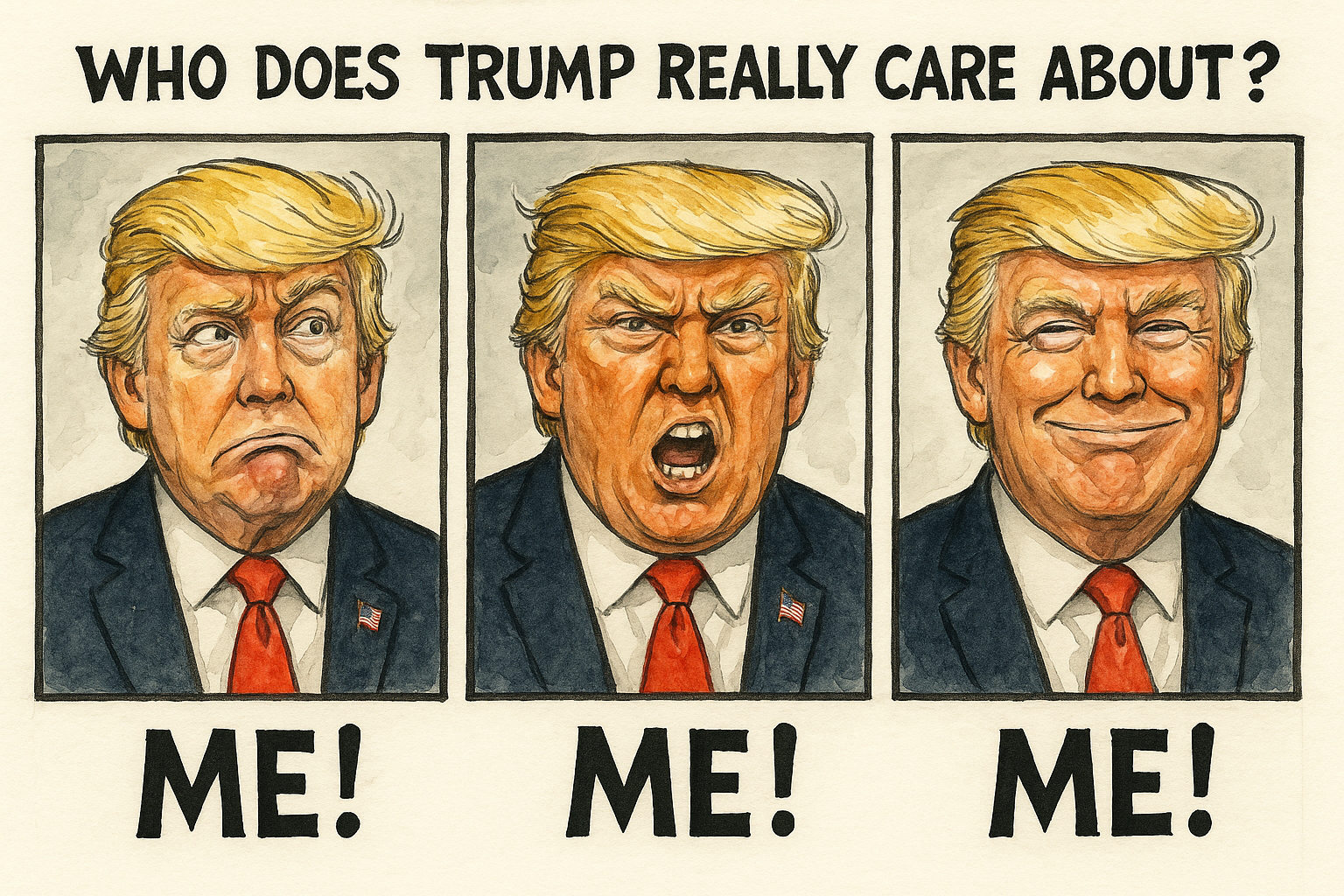
One question with three answers, and all of them wear the same face. Power isn’t about service to others in his world—it’s become a mirror for the ego. And some men never stop looking.

This isn’t politics. It’s pathology.

And it’s costing us everything.

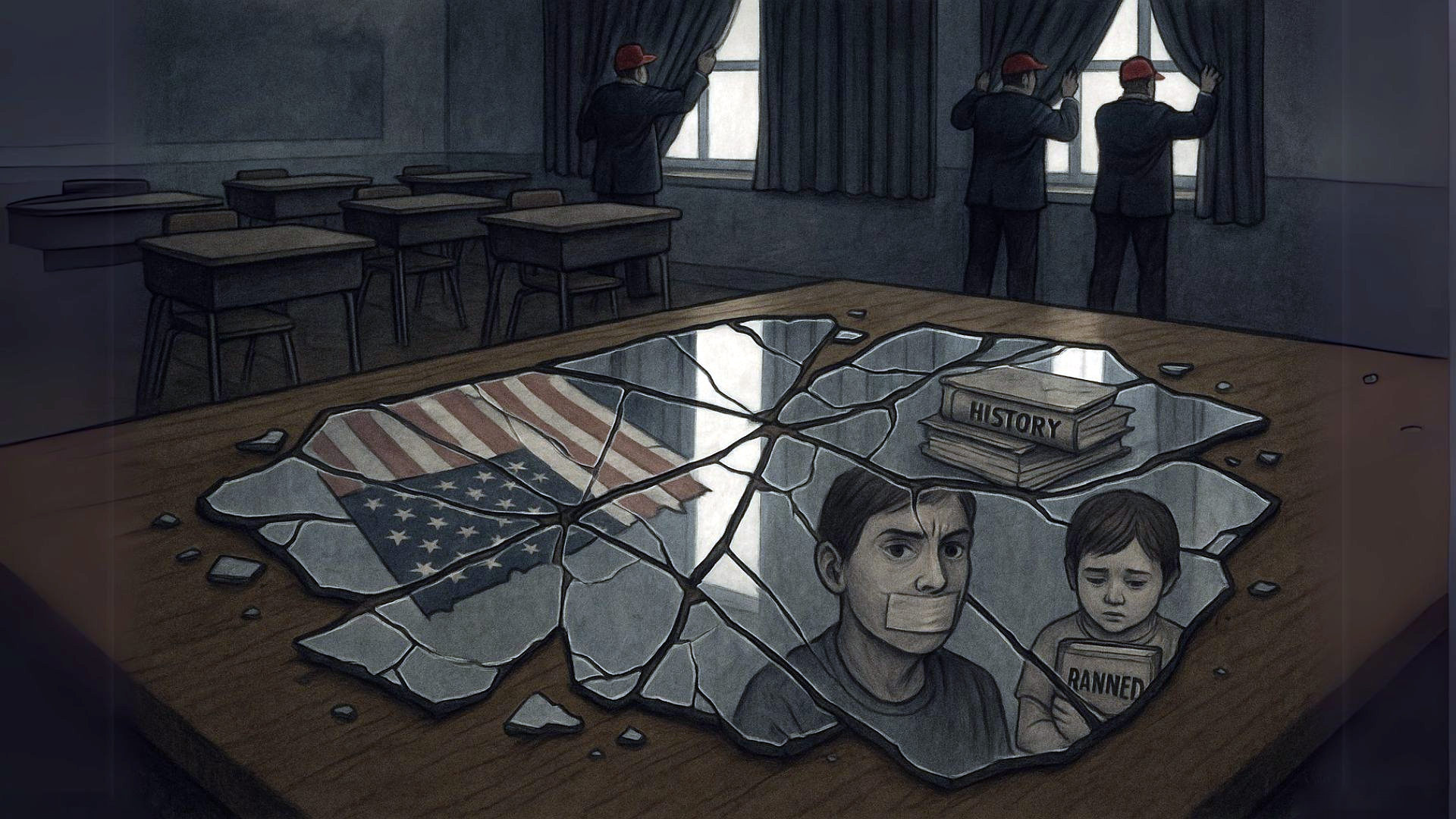
They’re not just rewriting textbooks. They’re smashing mirrors.

In state houses and school boards, behind podiums and cable segments, a fevered movement is working overtime to erase reflection. Not disagreement—reflection. The quiet reckoning with what we’ve done, what we’ve allowed, and who we’ve excluded. The moment you look inward and ask: Was that right? Did we do harm? Could we be better?

Authoritarianism has no appetite for that. It requires performance, not perspective. Loyalty, not learning. And in Trump’s second act, we are watching a government—and a culture—scrub every surface clean of self-awareness.

It’s in the book bans, of course. The campaigns against “wokeness,” “critical race theory,” “gender ideology.” But it goes deeper than rhetoric. What they’re afraid of is not just discomfort—it’s disruption of the myth.

The myth that America was always right. That our sins were minor and our victories divine. That to question the system is to betray the nation. And that real patriotism means never looking too closely at the flag you’re waving.

So they attack mirrors:

  • A journalist asking hard questions? Biased.

  • A teacher explaining redlining? Indoctrinator.

  • A trans kid existing in public? Threat.

  • A protester kneeling with a sign? Terrorist.

Because each one—by simply showing up with the truth of who they are or what they know—shatters the illusion. And when a movement is built entirely on illusion, the truth is not inconvenient—it’s fatal.

They say they want “patriotic education.” But patriotism without honesty is propaganda. They demand “American values,” yet fear the history that shaped them. They wrap themselves in the Constitution while ignoring its authors’ warnings about unchecked power and cultivated ignorance.

Let’s be clear: this isn’t about protecting children, or saving tradition, or restoring decency. This is about survival of a narrative—one that cannot bear the weight of scrutiny.

And so, they smash the mirrors. One by one. Hoping we’ll forget what we look like.

But we remember.

And we will hold up new mirrors. Sharper ones. Ones that cannot be broken by decree or dogma. Because the truth is not theirs to destroy. It’s ours to defend.

And the America worth believing in—the one that struggles, stumbles, but still reaches—only survives if we keep looking.

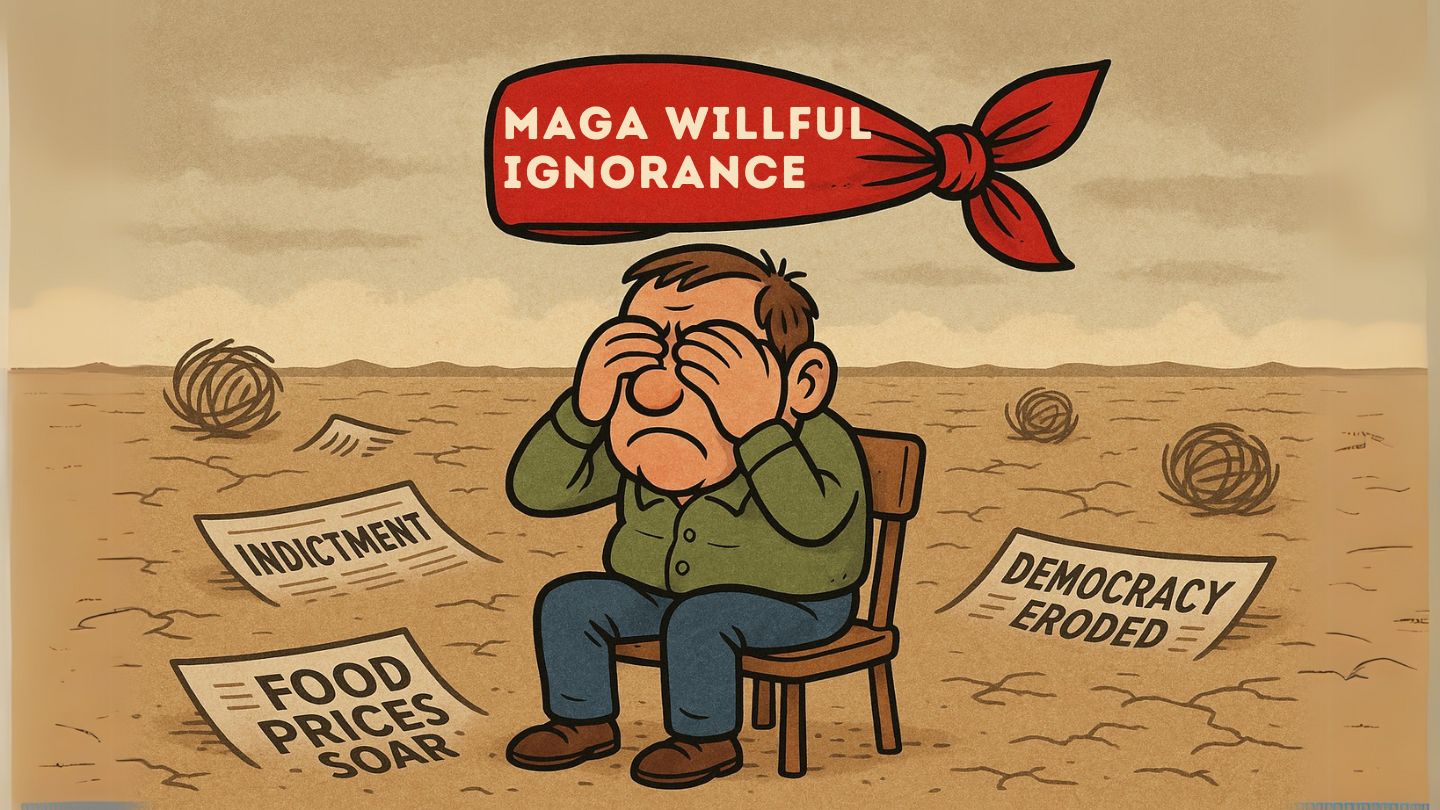
MAGA willful ignorance.

They don’t misunderstand. They refuse to understand.
Because understanding would demand reckoning—with history, with harm, with the ease of being lied to when the lie flatters.
Willful ignorance isn’t blindness. It’s a choice to look away, over and over, until looking becomes a habit and truth feels like an attack.
This isn’t about facts. It’s about comfort.
And comfort, in the MAGA world, is always built on someone else’s erasure.

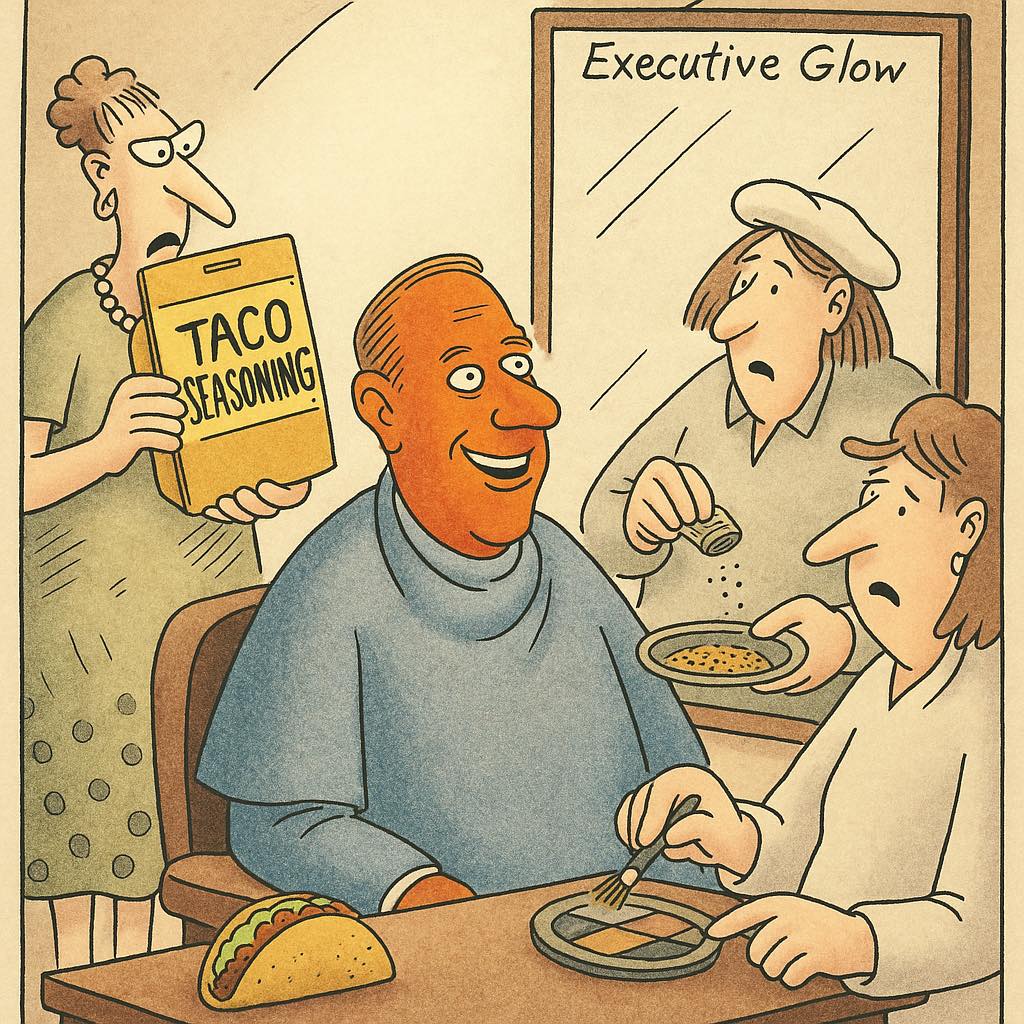
TACO glow

Turns out it isn’t orange makeup after all. It’s taco seasoning.

Nothing Left But Waiting

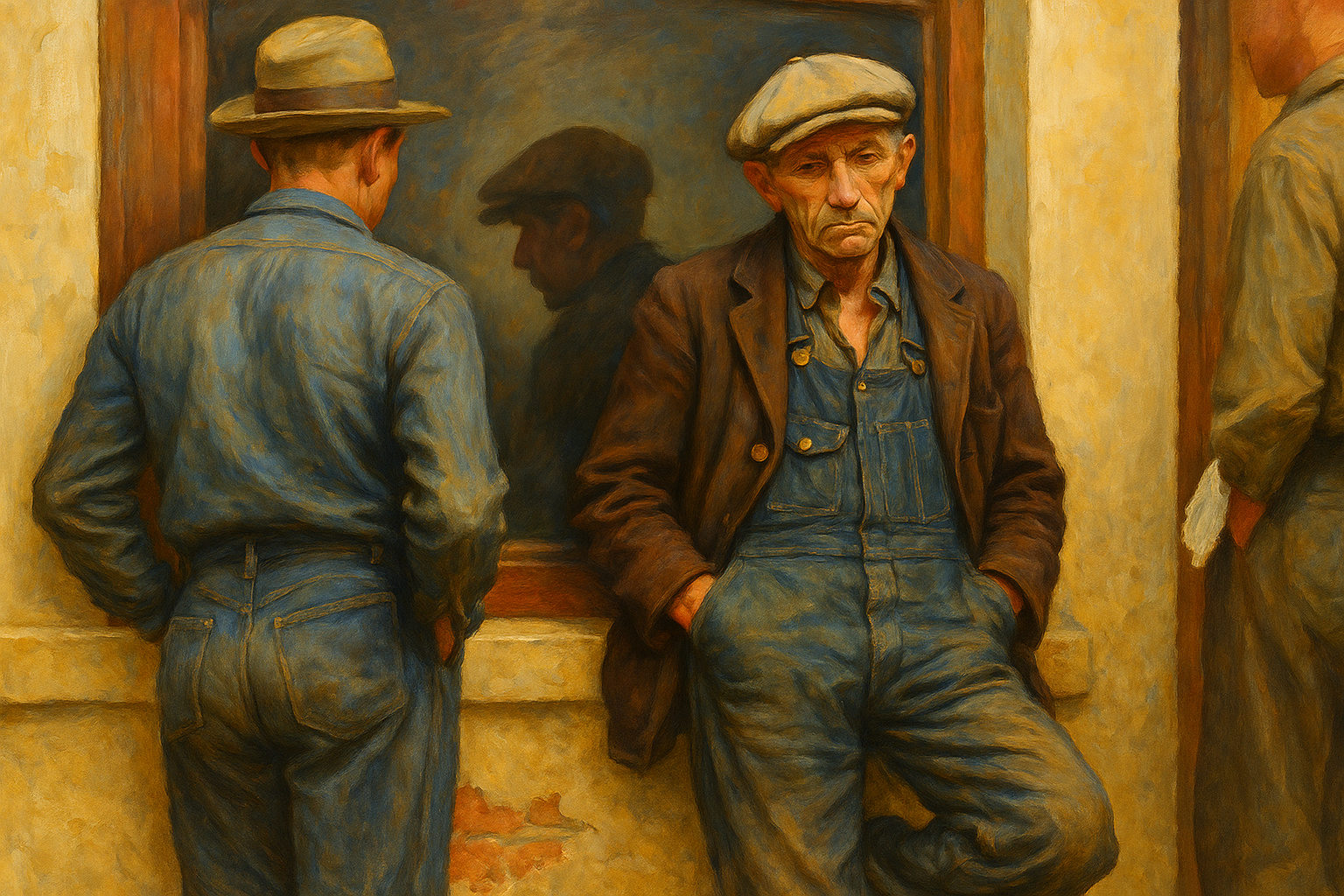
He’s leaning against a wall, one hand in his pocket, jaw clenched like he’s been biting back frustration for years. A couple of other men linger nearby—silent, still, heads down. They’re not talking. They’re not hopeful. They’re just waiting.

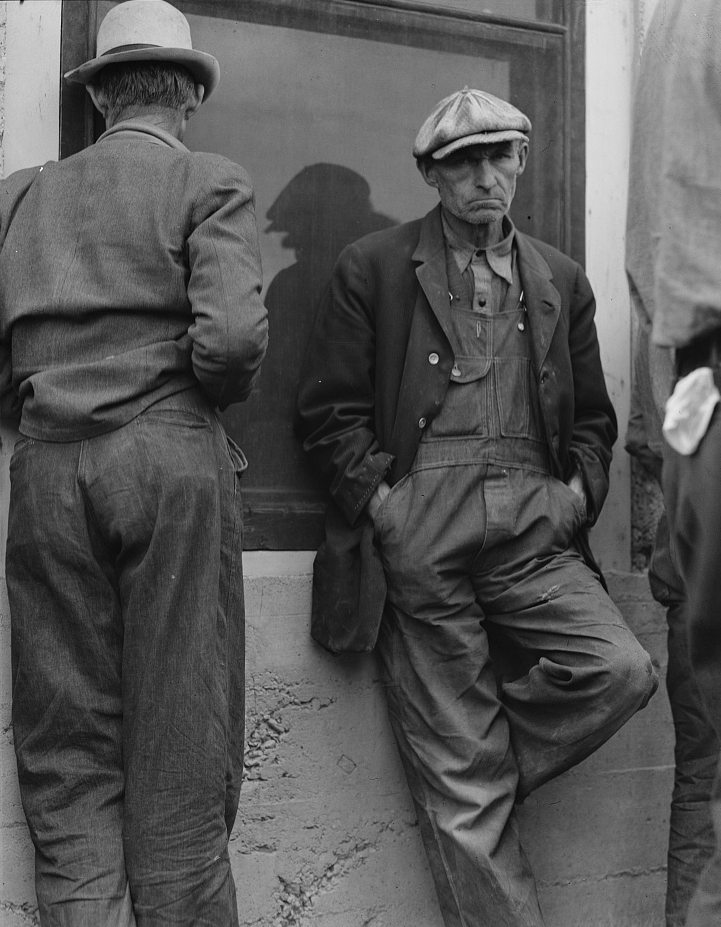
What you’re looking at is a reworked version of a photo taken in 1937 San Francisco, in the thick of the Great Depression. The original—black and white, shot by Dorothea Lange—was documentary, plain and raw. This version adds color, tone, detail. It draws you in. Makes you stop.

But don’t mistake style for fiction.

This man was real. The despair was real. And the waiting? That part hasn’t changed a damn bit.

Today, he might have a cracked phone in his hand. Maybe he’s in a Dollar Tree parking lot instead of outside a job agency. Maybe he’s got just enough gas to get to the next shift that pays less than what the rent wants. The scenery’s different. The look in his eyes isn’t.

See, the system’s been redesigned, not rebuilt. They’ve swapped breadlines for apps and called it innovation. Dressed up instability and sold it as freedom. But the weight on that man’s shoulders—that didn’t vanish when the photo got recolored. It just got spread around to more people.

This image doesn’t romanticize him. It remembers him. Reminds us.

That wall he’s leaning on? That’s not just brick and mortar.

It’s every promise this country made to working people—and never kept.

(Is this the America MAGA is nostalgic for? I think not)


Title: Waiting for the semimonthly relief checks at Calipatria, Imperial Valley, California. Typical story: fifteen years ago they owned farms in Oklahoma. Lost them through foreclosure when cotton prices fell after the war. Became tenants and sharecroppers. With the drought and dust they came West, 1934-1937. Never before left the county where they were born. Now although in California over a year they haven’t been continuously resident in any single county long enough to become a legal resident. Reason: migratory agricultural laborers


The Past, Reimagined Like Rockwell #13
Is This the “Again?” #7


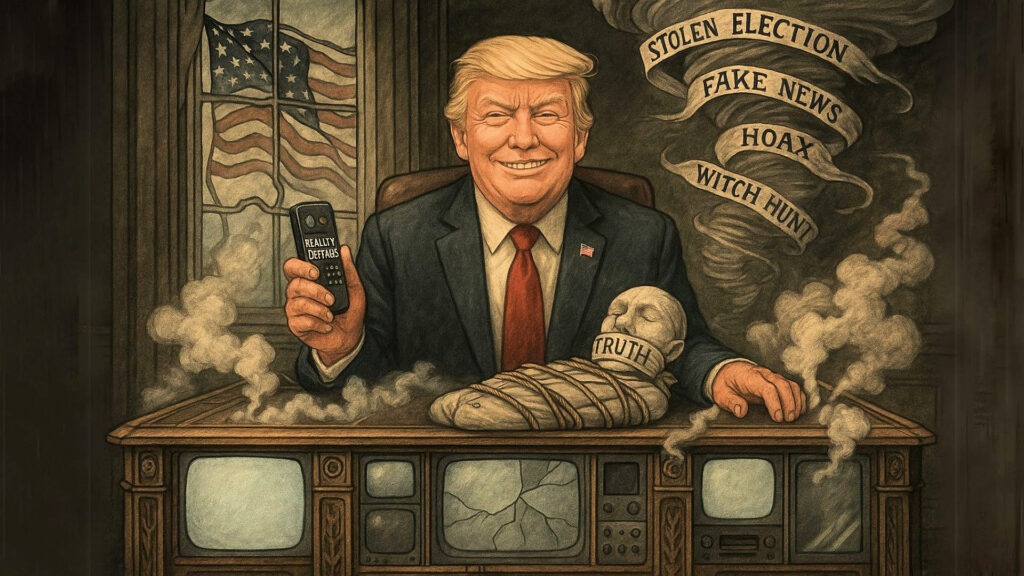
In Trump’s America, Reality Is Optional

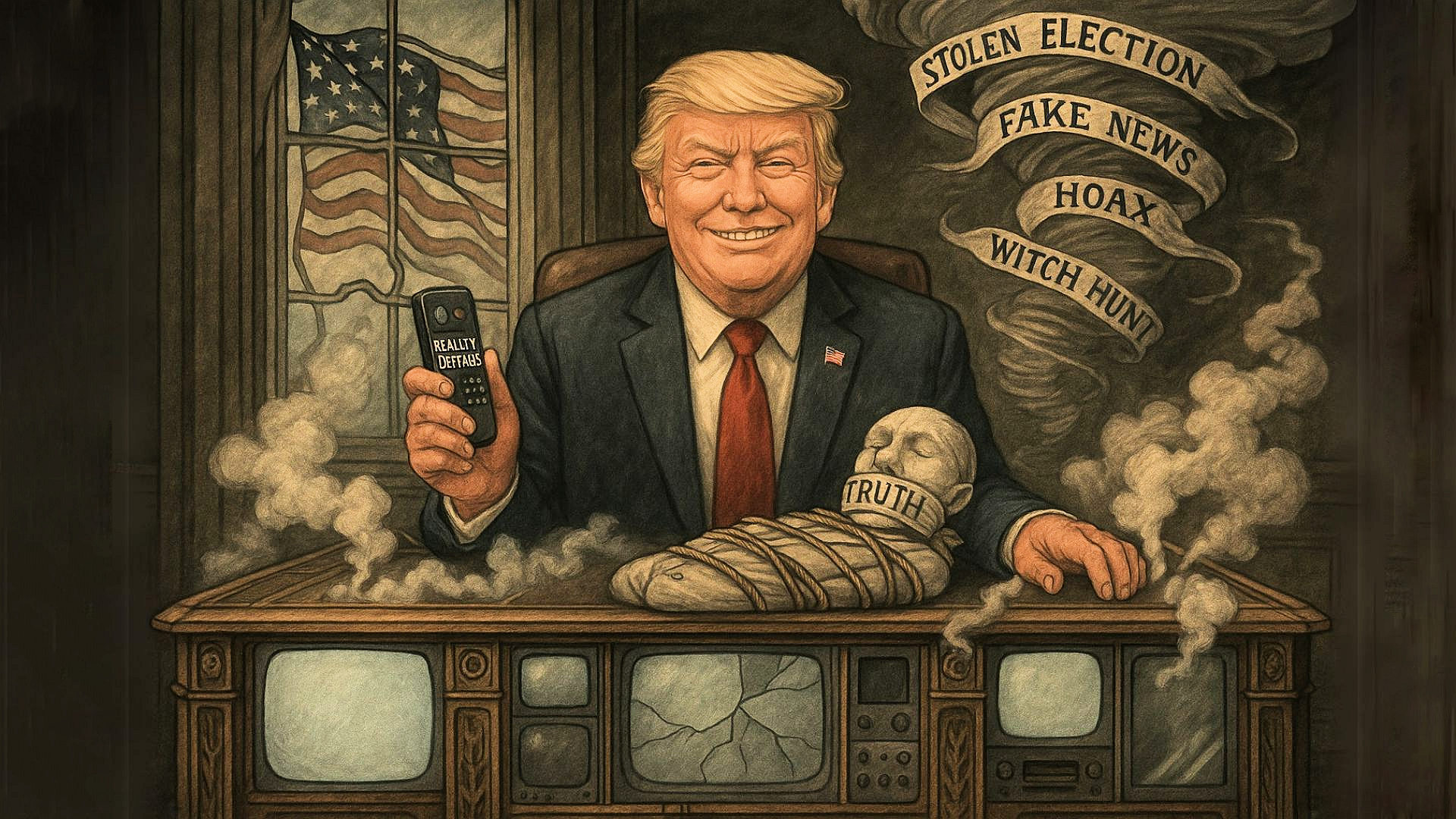
In a functioning democracy, reality serves as the common ground. In Trump’s America, it’s treated as a hostile witness.

From the earliest days of Donald Trump’s political ascent, one tactic became immediately clear: when the facts are inconvenient, discard them. When the truth threatens power, manufacture a new one. And when institutions resist the lie, accuse them of betrayal until the public no longer knows what to believe.

This isn’t accidental. It’s doctrine.

“Alternative Facts” Wasn’t a Joke—It Was a Mission Statement

When Kellyanne Conway defended a blatant lie about inauguration crowd size by introducing the phrase “alternative facts,” the press treated it as an Orwellian slip. But it wasn’t a misstep. It was a signal. In Trump’s orbit, reality is not fixed—it is programmable, mutable, disposable.

What followed was a presidency built on this premise. A sustained campaign to replace observable reality with a cultic narrative. One in which:

  • The President is always the victim.
  • His enemies are always criminal.
  • And the truth is whatever serves the moment’s political need.

The Mechanics of Manufactured Truth

Trumpism doesn’t just deny facts—it replaces them with performance:

  • COVID-19 was downplayed as a Democratic hoax.
  • The 2020 election was declared rigged before a single vote was counted.
  • January 6 was rebranded as “a tourist visit.”
  • Climate change is a Chinese plot. NATO is a scam. The press is the enemy of the people.

Every one of these lies was advanced with the same blueprint: repeat it loudly, punish dissent, and flood the media space with noise until resistance buckles under fatigue.

The result is institutional gaslighting at scale. A distortion field so relentless that truth is not just hard to find—it becomes dangerous to assert.

The Loyalty Test: Repeat the Lie or Be Replaced

This isn’t about confusion—it’s about control. Reality is made optional so that loyalty becomes mandatory. To survive in Trump’s inner circle, you must not only accept the lie but repeat it on command. Bill Barr learned this. So did Dr. Birx. So did Mike Pence, whose life was threatened for refusing to join the final act of electoral fiction.

Loyalty to the lie becomes the price of admission. Dissent becomes treason. And objective truth becomes irrelevant.

Projection as Policy

Accuse others of what you’re doing. Call the media fake while spreading disinformation. Blame rigged systems while rigging them. Frame yourself as the patriot while backing those who storm the Capitol. These are not contradictions—they’re strategies. The louder the accusation, the more effectively it conceals the crime.

When Reality Is Optional, Accountability Dies

The damage isn’t abstract. Denying a pandemic killed hundreds of thousands. Undermining elections has fractured civic trust and fueled domestic terrorism. Ignoring climate science accelerates disaster. And through it all, truth—measurable, documentable, actionable truth—is devalued to the point of ridicule.

This is not the messy debate of democracy. This is epistemological warfare. A regime not just comfortable with the lie—but dependent on it.

In Trump’s America, reality is optional. But the consequences aren’t.

The longer we pretend this is normal, the more irreversible it becomes. The only antidote to institutionalized fiction is unflinching truth—delivered without apology, received without excuse, and defended without pause.

Because if reality becomes optional, so does democracy.
 

Elon Musk and the Resurrection of the Industrial Saint

“History doesn’t repeat—but it does inform. And those who profit from forgetting it rarely pay the price alone.”

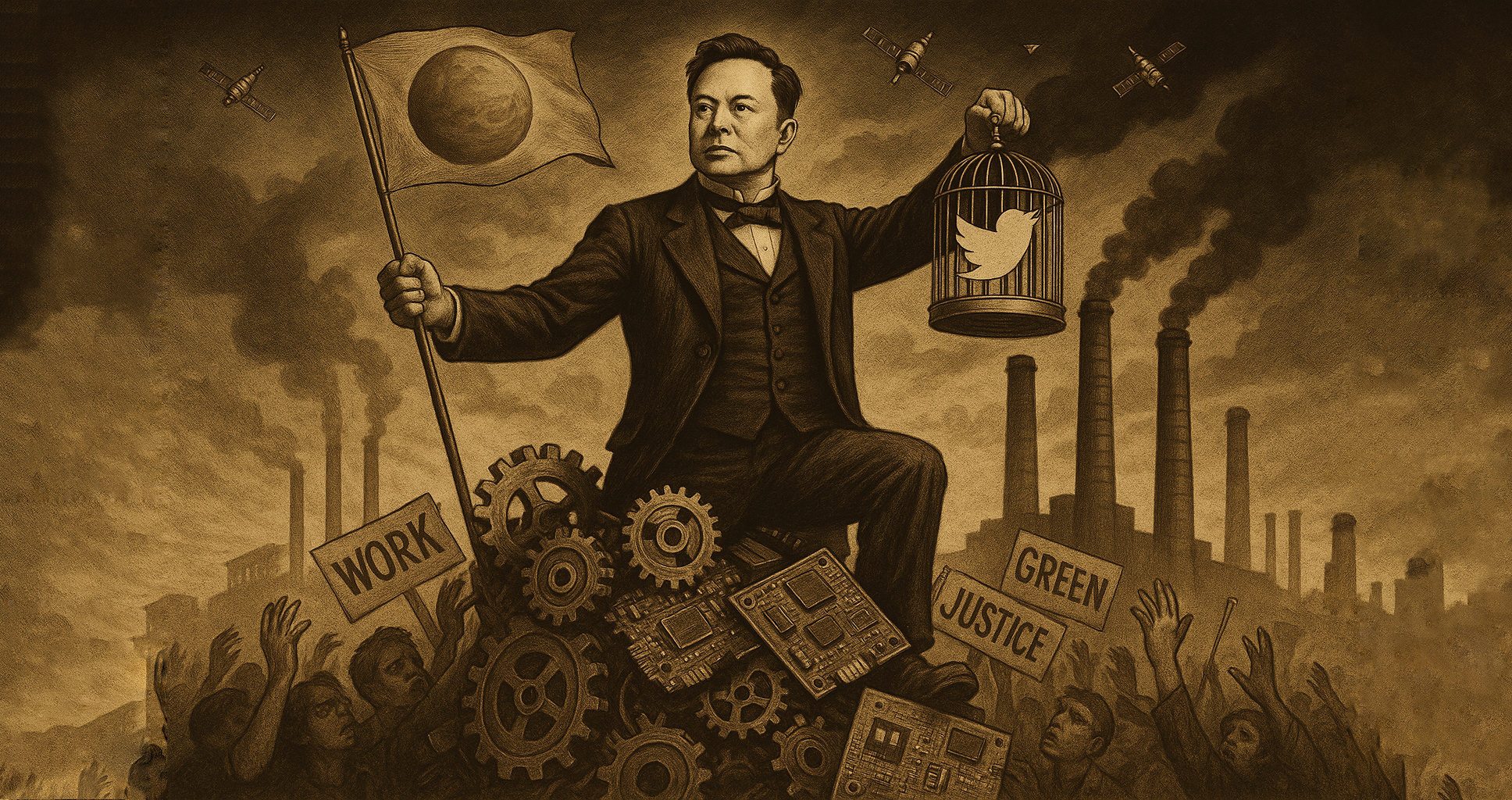
In the gilded glare surrounding Elon Musk—billionaire, disruptor, technocrat—what strikes me most is not his novelty, but his familiarity. We’ve seen this man before. Not this exact name, not this exact face, but this shape of ambition wrapped in salvation mythology. Musk isn’t a rupture in American history. He’s its recurrence.

We’ve always canonized those who claimed to build the future. In the 19th century, it was Carnegie with his steel, Rockefeller with his oil, Ford with his factories. Each offered progress with one hand while the other squeezed labor, rewrote law, or reshaped the press. They were called visionaries. Today, Musk is called the same.

But what does he build, really?

His cars are assembled through supply chains riddled with labor violations. His satellites blanket the sky with no vote from the earth below. His rockets romanticize Mars while water systems in Mississippi and Native lands remain undrinkable. His social media empire—now weaponized under a name drawn from science fiction—erodes truth in real time. And yet, he frames it all as frontierism. He speaks in the language of pioneers, disruption, and inevitability.

This is not innovation. It is imperial repetition.

Musk’s real skill is myth engineering. Like Ford before him, he wields media not to inform, but to reinforce an origin story. He speaks to a public conditioned to equate wealth with wisdom, and disruption with destiny. In doing so, he draws from an old American pattern: the Industrial Saint. The man who saves humanity by remaking it in his own image.

And in this story, dissent is treated as heresy. Unions are the enemy. Regulators are bureaucratic obstacles. Journalists are noise. Critics are canceled—or worse, discredited.

But here’s the truth: no amount of innovation grants immunity from accountability. We’ve been here before. We’ve seen what happens when private empires operate without public reckoning.

Musk doesn’t need to be demonized. He needs to be historicized. What matters isn’t whether he succeeds in colonizing Mars. What matters is who gets forgotten on Earth while he tries.

Let us not mistake the fog of futurism for clarity. If history teaches anything, it’s that unchecked visionaries tend to build cathedrals to themselves—and call it progress.


Nothing Left but Forward

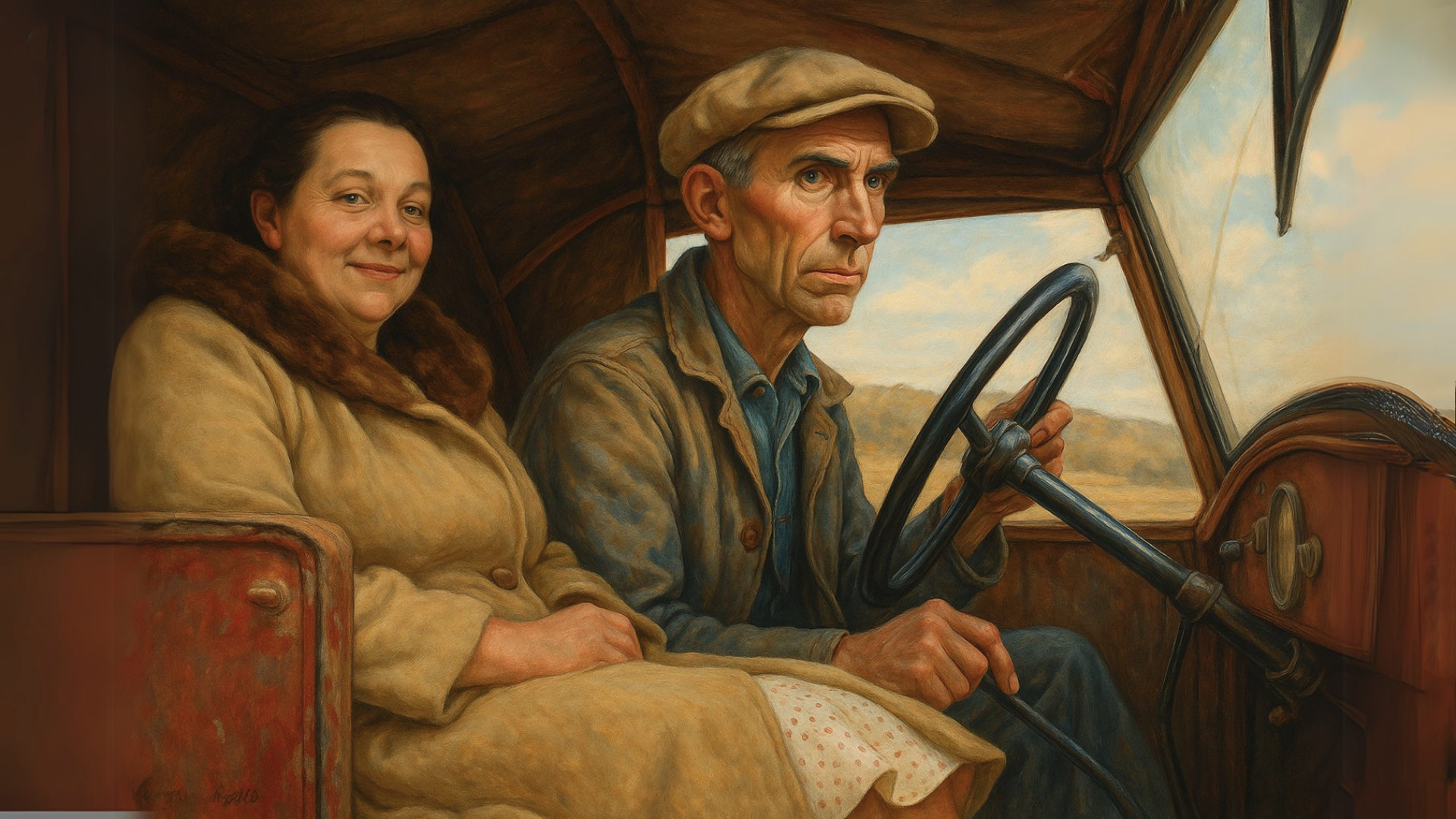
In February 1937, somewhere on California’s Pacific Coast, a couple sat side by side in a beat-up vehicle. The woman wore a faint, practiced smile — not wide, but composed, as if holding the line against everything they’d left behind. Her hands rested in her lap. The man, eyes fixed on the horizon, held the steering wheel with one hand and the gear shift with the other, his posture suspended between motion and exhaustion. Drought had claimed their Missouri farm. The banks had taken what was left. Now, everything they owned was packed around them. All that remained was the road ahead — and each other.

This reimagined rendering, drawn in the spirit of Norman Rockwell but born from the lens of Dorothea Lange, refuses to soften what it shows. The man’s face is weathered by dust and decision. The woman’s faint smile doesn’t cancel out the weight she carries. They are not symbols. They are survivors.

They left everything behind for a chance—a whisper of dignity, a paycheck that might stick, a roof without a landlord’s knock. They weren’t asking for luxury. They were chasing work. Food. Shelter. That’s it.

And now?

Now we live in a country where the powerful talk about “real Americans” while gutting the programs that keep families afloat. We hear speeches about greatness from men who’ve never gone hungry, never fixed a truck, never sat with eviction paperwork in their lap.

When they say they want to make America “great again,” I look at faces like this and wonder: which part are they trying to bring back?

The desperation? The displacement? The quiet, obedient poor?

This couple didn’t want pity. They wanted fairness. Opportunity. A shot.

And here we are again—not in a cloud of dust, but drowning in gig work, shuttered hospitals, and promises that vanish like rain that never came.

Is this the ‘Again?’
Because if it is, we should’ve known better the first time.


The Past, Reimagined Like Rockwell #12
Is This the “Again?” #6

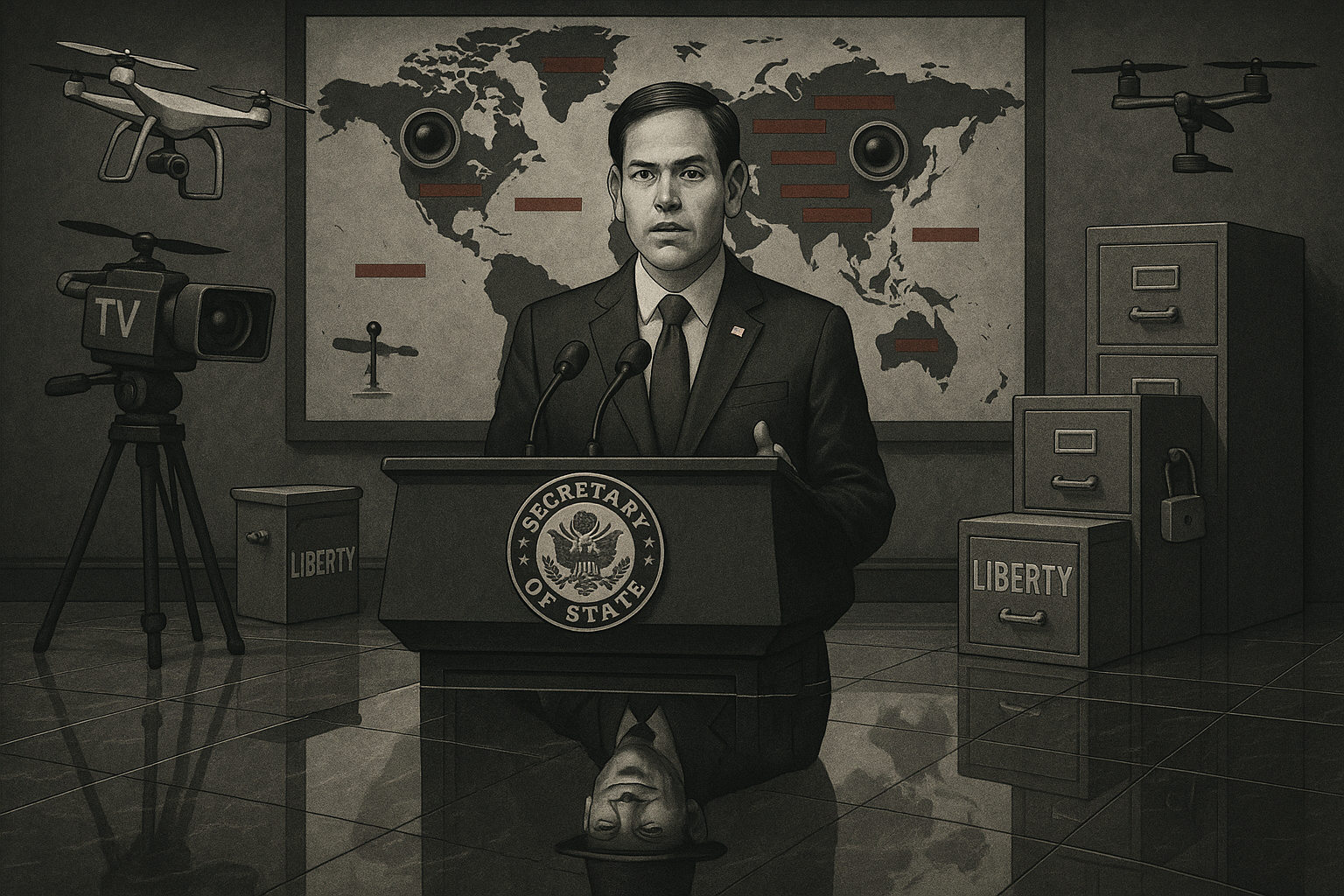
The Velvet Fist of Marco Rubio

Marco Rubio didn’t vanish. He mutated.

While the headlines were chasing louder names and louder crimes, Rubio was slipping through the side door of power with his tie straight and his tongue polished. Now he’s Secretary of State and Acting National Security Advisor. That means he’s not just in the room—he is the room, shaping the story America tells the world, and deciding who gets crushed behind the curtain.

This isn’t a comeback story. It’s a shell game. The man who once rode the Tea Party wave, then shrank beneath Trump’s shadow, has now rebranded as the adult in the room. Don’t buy it. Behind the clean speeches and policy briefings is the same cold-blooded opportunist who traded principle for placement every chance he got.

He’s using the State Department like a toolbelt: cutting staff, consolidating control, and pushing “efficiency” while placing loyalists into key roles. Abroad, he’s selling the old Cold War fear package—China this, Russia that—but now with a new twist: human rights as a weapon. He’s issuing visa bans to “foreign censors,” using America’s wounded notion of free speech as a branding exercise while ignoring the domestic gag orders creeping into his own country.

That’s the con: Rubio positions himself as a defender of liberty, while helping build the infrastructure that silences it.

He talks like a moderate, but acts like a technocrat with a God complex—managing narratives, sanctioning dissent, and making sure the machinery keeps running clean while grinding bones underneath.

Rubio isn’t leading a restoration. He’s executing a refinement. He’s the quiet face of a regime that learned from Trump not to shout—but to smile, reorganize, and make authoritarianism look like diplomacy.

This is the new model: no red hats, no chants, no mobs. Just well-dressed men with titles, rewriting freedom into a trademark.

And Marco Rubio is the prototype.