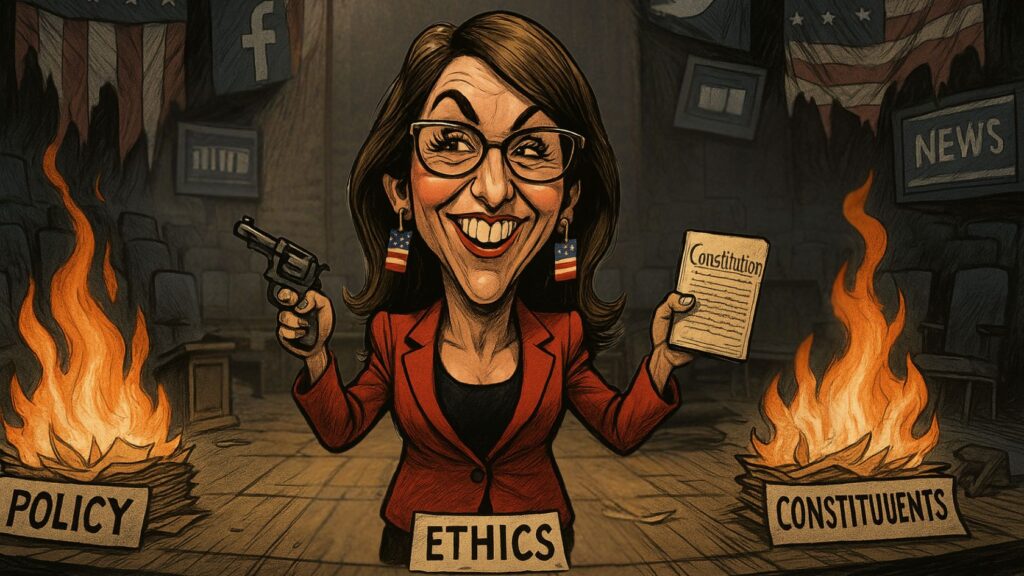
The Trump Machine isn’t some mystery

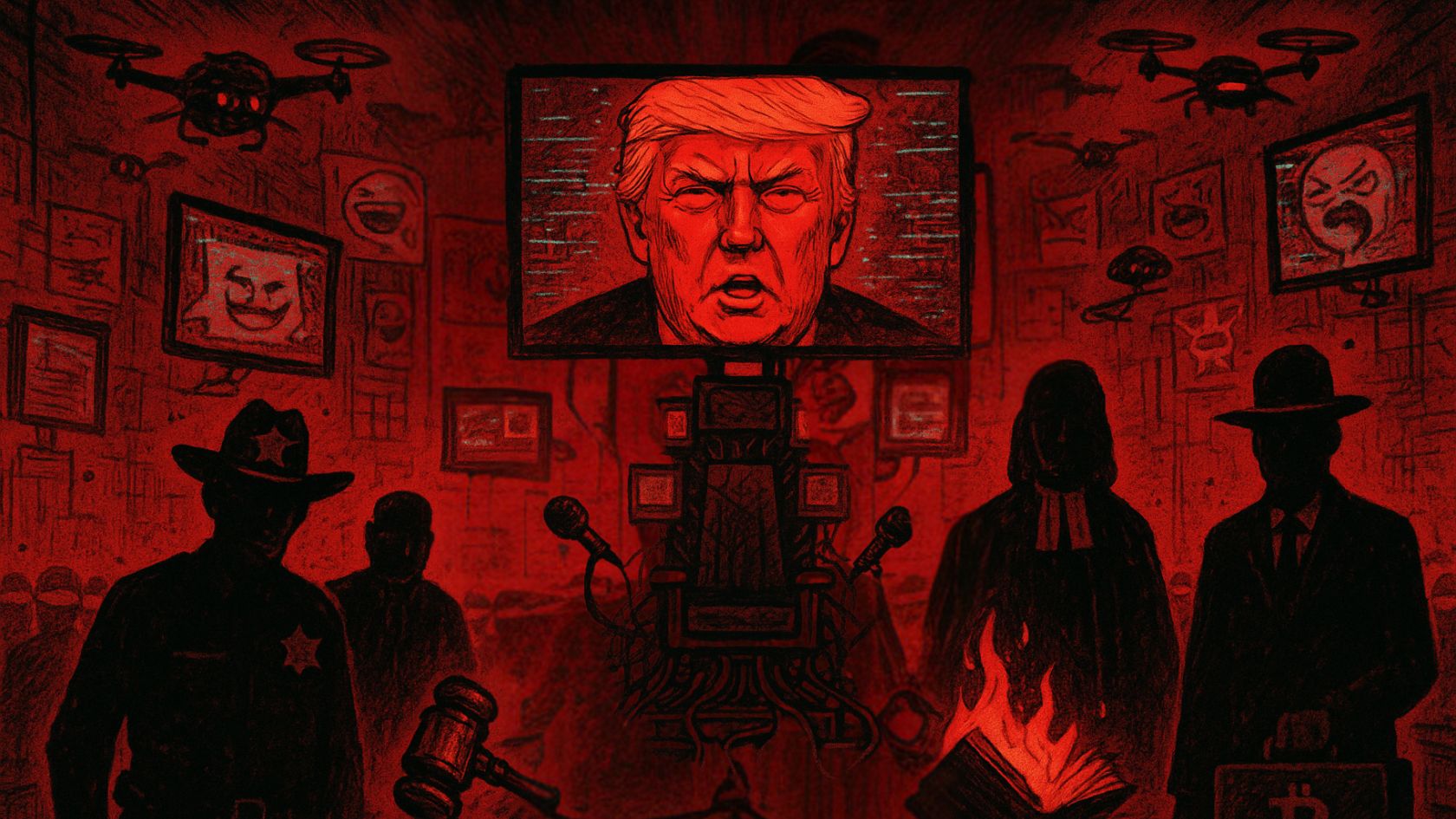
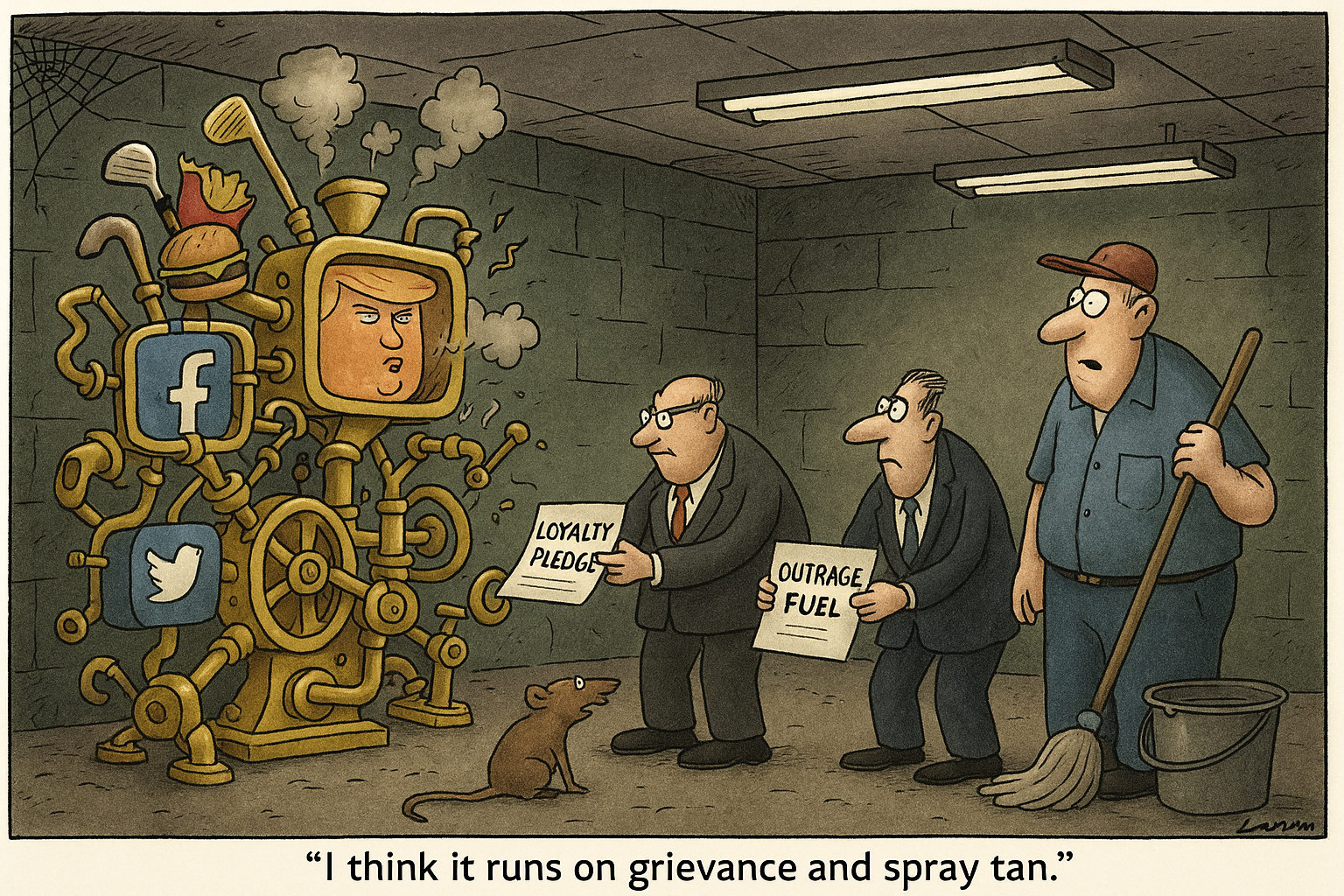
The Trump Machine isn’t some mystery. It’s rage, media, and money stitched together with lies and flag decals. It chews up working folks, spits out culture war garbage, and calls it freedom. We’ve seen this scam before—just louder now, with better branding. But machines break.

We need people to see through it. People who don’t buy the con. People who care enough to stand up, speak out, and start ripping out the wires.

Trump’s Machine

Wired to the Throne: Notes on the Beast They Built

They didn’t just build a campaign.
They built a machine—a monster wired to the pulse of every rage-click, every televised grievance, every gospel-soaked blood chant in a school gymnasium turned rally site.

And now it runs on autopilot, drunk on power and bloated with loyalty oaths.

The Trump Machine isn’t just a network. It’s a syndicate.
It feeds on money, media, and menace.
Fox News turned into a launchpad.
Bannon’s podcast is the war drum.
Truth Social is the graffiti-covered bathroom wall where the mob leaves its orders.

Behind the levers: Susie Wiles, Steve Bannon, Stephen Miller, Kash Patel—operatives turned overseers.
Not advisors. Not aides. Enforcers.
They don’t just serve Trump. They guard the machine from within, loyal to the mythology, not the man.

Look closer and you’ll see what powers it:
Disinformation as currency.
Hate as policy.
Surveillance rebranded as patriotism.
White grievance wrapped in Jesus and camo.

They fired the watchdogs.
They pardoned the Proud Boys.
They turned sheriffs into state-sanctioned warlords.
They replaced law with loyalty and turned justice into a game of sides.

This isn’t politics. This is a blueprint for soft dictatorship.

If you think Project 2025 is just a wishlist, think again.
They’re already clocking in.

Crypto bankrolls.
Book bans.
A DOJ led by Pam Bondi.
An FBI run by a sycophant.
An education department bent on erasure.

They’re not hiding it.
They’re livestreaming it.

And yet, people still call it populism—like it wasn’t handcrafted in boardrooms and war rooms by billionaires, bigots, and burn-it-down ideologues.

So what do we do?

We call it what it is.
We disrupt it.
We defund it.
We refuse to be its background noise.

Because this machine was built to outlast its creator.
But it wasn’t built for us.
It was built against us.


Every machine has a brain. In the Trump Machine, Susie Wiles is it.

Her role is not symbolic. It’s structural. She engineered Trump’s movement into something that doesn’t collapse when he walks offstage. She turned rage into spreadsheets, grievance into infrastructure. She institutionalized what others could only ignite.

Trumpism needed two things to endure: chaos on the surface, and control beneath it. Wiles built the control. She managed state campaigns with precision. She controlled post-presidency money through Save America PAC. She filtered endorsements, dismantled rivals, and rebuilt the party from the back room out.

And then she became Chief of Staff.

She doesn’t debate policy. She builds the conditions under which policy happens—or doesn’t. She ensures the right hands are on the levers. Her version of governance isn’t democratic or consultative. It’s strategic and selective. Her office is the firewall between Trump’s impulses and the permanent structure of executive power.

This is the long game of autocracy: not chaos, but consolidation. Not ideology, but filtration. Not one man—but a machine. And Wiles is the one reading the schematics.


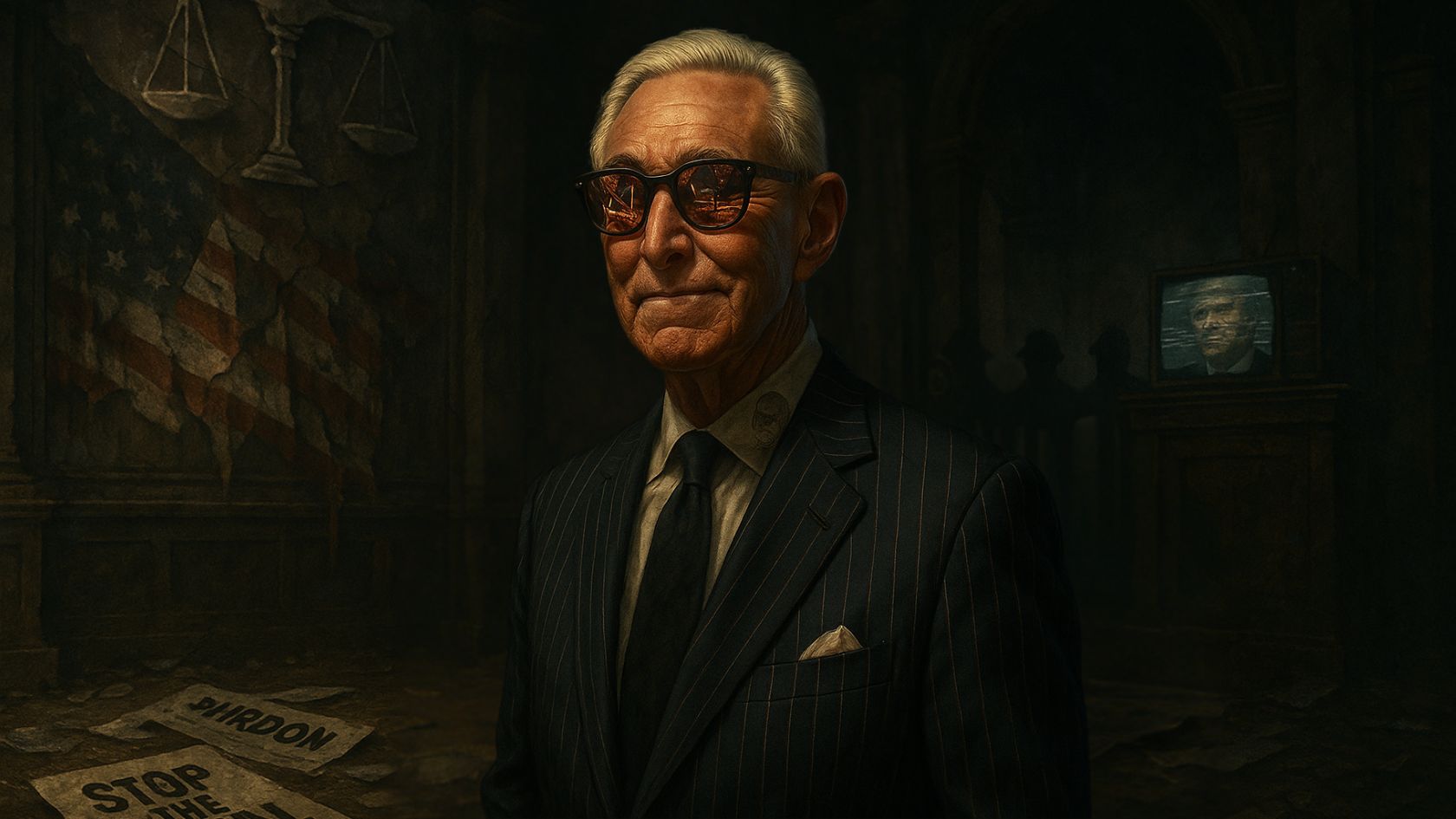
Roger Stone: The Rot That Wears a Smile

Roger Stone isn’t a strategist. He’s rot in a tailored suit—a lifetime political cancer metastasizing under the Republican skin for over five decades, smiling for the cameras while injecting poison through backchannels.

He has always understood that spectacle matters more than truth. From Nixon’s dirty tricks to the MAGA-era’s final descent into fascist theater, Stone has operated as a parasite of democracy—feeding on dysfunction, then branding it with smug aphorisms like “Hate is a stronger motivator than love.” That isn’t a philosophy. It’s a confession.

Let’s be clear: Roger Stone did not merely advise Donald Trump—he helped midwife an era of performative authoritarianism. He encouraged Trump to run, taught him how to weaponize grievance, and built propaganda pipelines between the Oval Office and the extremist fringes. Through Infowars, through “Stop the Steal,” through backdoor dealings with Proud Boys and Oath Keepers, Stone operated not as a political consultant—but as an architect of insurrectionist culture.

And when the law caught up to him? He lied. He tampered with witnesses. He obstructed Congress. And still, predictably, he was pardoned—because that’s how decay rewards loyalty in an empire of grift. Stone was never held accountable in any meaningful sense. He was made into a martyr by the same forces he radicalized.

Now, in 2025, he returns through the front door: broadcasting to the faithful, laundering conspiracies through mainstream radio, whispering into Trump’s inner circle while denying any official title. It’s strategic—Stone knows shadows offer better cover than spotlights.

But let’s not pretend this is cleverness. It’s cowardice dressed as cunning. And it’s working only because institutions continue to underestimate just how far these actors will go when there are no lines left to cross.

Stone is not an outlier. He is the blueprint.

And until we stop treating him like a colorful footnote and start recognizing him as a systemic engineer of democratic decline, the rot will keep smiling—and spreading.


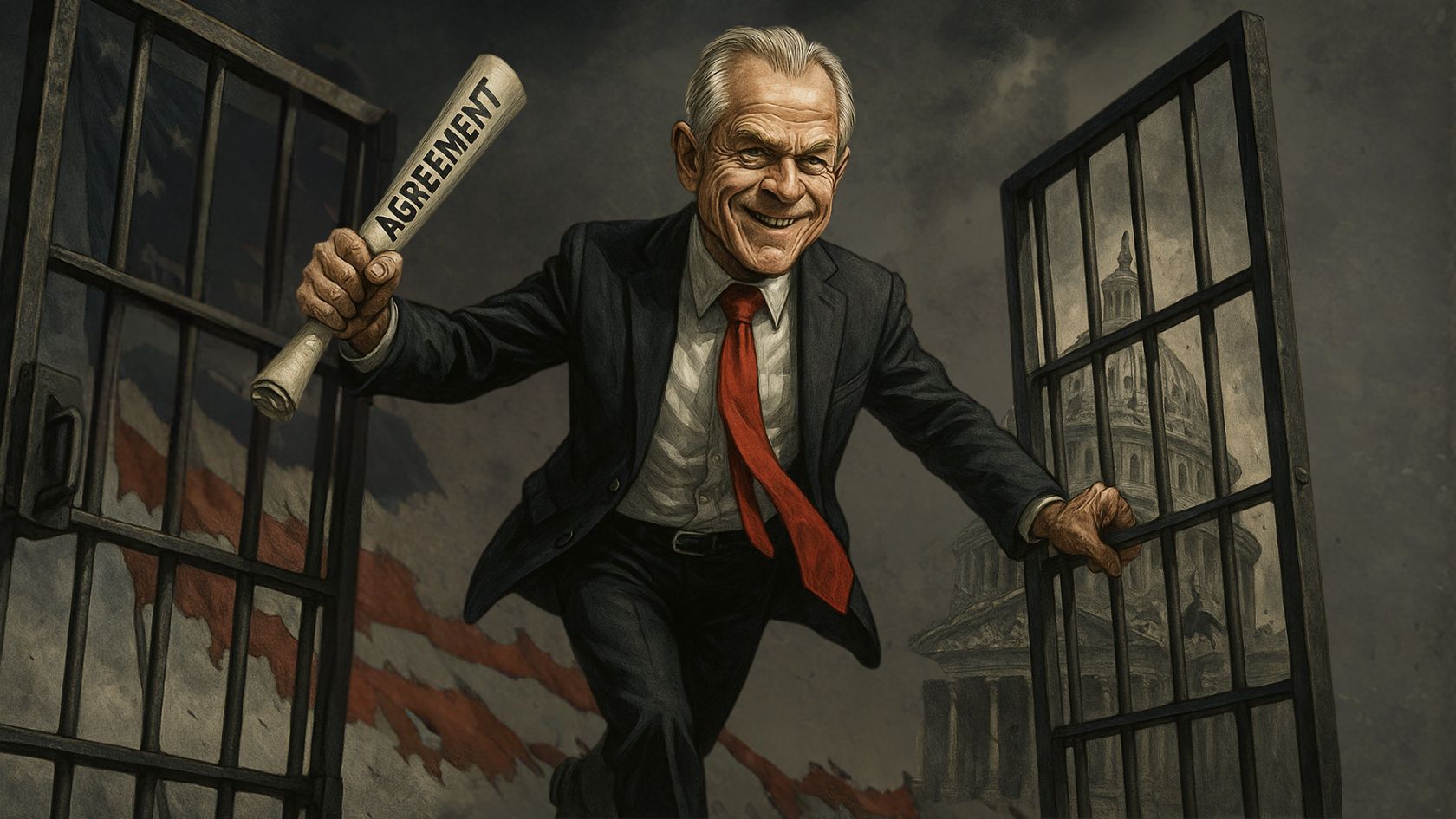
What We Excuse Now: Peter Navarro and the Power of Contempt

In another era, a conviction for contempt of Congress would have been enough to end a political career. But in 2025, it earns you a promotion. Peter Navarro, recently released from a federal prison after defying a lawful subpoena, now serves once again as a senior counselor in Donald Trump’s White House. His title is new, but his purpose remains the same: to wage economic war on America’s behalf, regardless of the truth, the law, or the consequences.

Navarro has always seen himself as the blunt instrument in Trump’s economic toolkit—a hammer in search of foreign nails, especially if they’re stamped “Made in China.” His fixation on tariffs and “fair trade” has been dressed in academic credentials, but often unaccompanied by academic rigor. He invented a fictional source—Ron Vara—to bolster his arguments. He pushed unproven COVID treatments in the middle of a global emergency. He helped engineer the “Green Bay Sweep,” an effort to overturn a democratic election.

And still, here he is. Back in the White House.

That’s not resilience. That’s rot.

Navarro’s appointment is not about expertise. It’s about allegiance. He is being rewarded for his loyalty, not his legitimacy. He stood by the former president through scandal, insurrection, and indictment. He refused to testify. He went to jail for it. And in this White House, that’s not a liability—it’s a credential.

This is what we excuse now.

We excuse contempt—not just of Congress, but of fact, of accountability, of the basic civic contract that says public service is a responsibility, not a shield. We excuse manufactured narratives, disinformation campaigns, and policy built on grievance rather than data. We excuse lawbreaking if it’s done in the name of “America First,” even when the real target is the rule of law itself.

Navarro isn’t alone in this. He’s simply the most visible embodiment of a deeper problem: the consolidation of power by those who believe the ends justify the means, and who no longer pretend otherwise. Project 2025 isn’t just a framework. It’s a field test. And Peter Navarro, with his prison record and platform, is proof that it’s already underway.

Langston Hayes writes not to offer comfort, but clarity. This moment demands both. Because if we don’t name what we’re witnessing, we’re already complicit in forgetting it.


When the history of this era is written—assuming we survive it—David Richardson will not be remembered for his competence. He will be remembered, if at all, as the man who took the helm of FEMA and immediately began sawing holes in the lifeboats.

A former Marine with the charisma of a fire drill and the subtlety of a sledgehammer, Richardson was installed as Acting FEMA Administrator not to manage disasters, but to embody one. He replaced Cameron Hamilton—who made the fatal error of resisting the Trump administration’s desire to eliminate FEMA entirely. One can almost imagine the job posting: “Seeking loyalist with combat credentials and contempt for institutional memory. Must work well under authoritarianism.”

Richardson wasted no time. He centralized all authority, informing staff that he alone speaks for FEMA. This, presumably, was meant to reassure. Instead, it echoed like the overture to a constitutional breakdown—because in Richardson’s FEMA, hierarchy replaces expertise, and fear replaces coordination.

He scrapped FEMA’s updated hurricane-response plan, reverting to last year’s version. He slashed emergency training programs. And when questioned about hurricane season, he quipped that he didn’t even know the U.S. had one.

The nation, it seems, is to be protected by a man who thinks June in the Gulf is a casual affair.

This is not negligence. It is the logical endpoint of governing as theater, where the plotline is always the same: gut the agency, blame the states, and declare victory atop the rubble.

Richardson doesn’t need to prepare for climate disasters because, in this administration, disasters are not to be mitigated—they are to be managed politically. Disasters are leverage. And FEMA, once tasked with preparedness and response, now resembles a stage prop in a slow-rolling coup.

In his short tenure, Richardson has accomplished precisely what he was sent to do: undermine federal response, demoralize professional staff, and broadcast loyalty to a president who views institutions as personal liabilities.

The floodwaters are rising. The levees are crumbling. And FEMA, under its new commander, is whistling into the wind—led by a man who doesn’t believe in storms unless they’re useful.

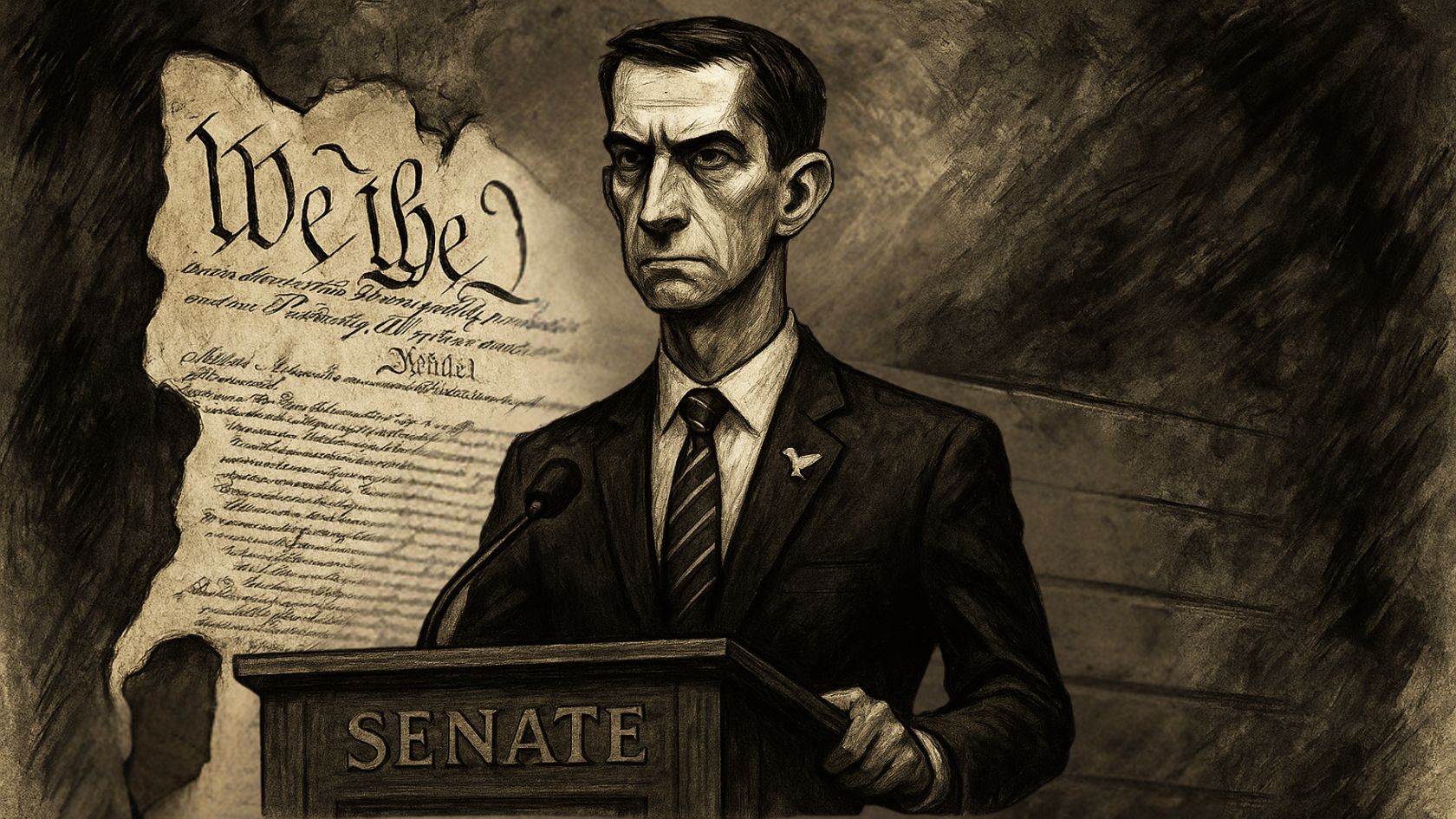
The Discipline of Dissent: What Tom Cotton Wants to Silence

There is a kind of man who wraps himself in the Constitution while quietly sharpening the knife to gut it. Senator Tom Cotton of Arkansas is such a man.

He speaks of “order” and “honor” with the cadence of a soldier and the conviction of a man who has never truly questioned the orders he was given. He references Madison but governs like McCarthy, demanding obedience in the name of patriotism while labeling dissent as danger. It is not the rule of law he reveres—but the rule of men like himself.

Let us be plain: Cotton has mastered the language of constitutionalism, but not its meaning. He does not seek to expand liberty or protect the vulnerable. He seeks to restore a hierarchy—racial, cultural, and political—under the banner of discipline. His America is not a pluralistic republic. It is a gated compound, guarded by surveillance, softened by slogans, and scrubbed of complexity.

In 2020, when a nation protested the killing of George Floyd, Cotton’s response was not reconciliation or reform—it was a call to deploy the military against civilians. He justified this as strength. But strength without justice is merely suppression.

He distanced himself from the attempt to overturn the 2020 election, and for that, he earned momentary praise from some corners. But it was never conscience that stayed his hand—it was calculation. Cotton understood that chaos must be controlled to be useful. An insurrection is a poor campaign ad.

Now, as chair of the Senate Intelligence Committee, Cotton pushes legislation designed to inflame suspicion of immigrants, outlaw “DEI” initiatives, and wage culture war from within the bureaucracy. His affiliation with Project 2025—the policy blueprint for a post-democratic presidency—reveals his ambitions. He no longer wants to control the Senate. He wants to control the civil service, the courts, and the narrative itself.

Tom Cotton is not a demagogue in the style of Trump. He is more dangerous. He is deliberate. He is educated. And he has read every word of the Constitution he seeks to subvert.

There are many threats to democracy. Some come shouting from podiums. Others, like Cotton, come with folders, footnotes, and flags.

We must recognize them all.


The Senator from Stage Right: Josh Hawley’s One-Man Show

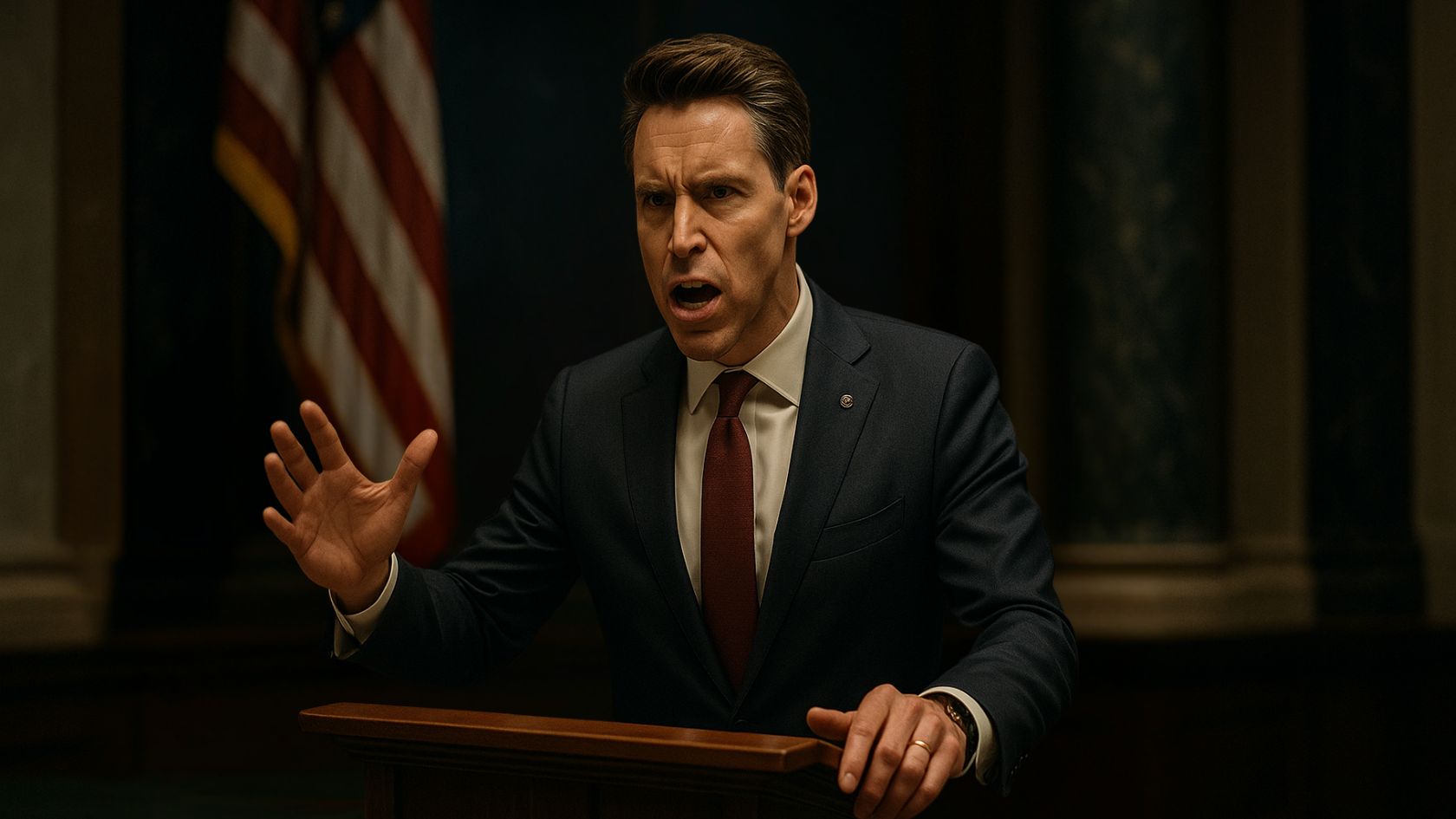
It must be exhausting to be Josh Hawley—forever sprinting from one television hit to the next, one moral panic to another, one sanctimonious soliloquy to the inevitable fainting couch of performative outrage. Missouri’s senior senator—though one struggles to find anything senior about his judgment—has carved out a peculiar niche in American politics: the constitutional scholar who finds democracy inconvenient, the Ivy League populist who loathes the elite, and the devout Christian who treats empathy like a heresy.

Hawley’s latest turn in the spotlight involves a breathless recitation of claims from a supposed Secret Service whistleblower who alleges that President Biden “gets lost in his closet.” One assumes this wasn’t meant metaphorically—though with Hawley, who knows? Either way, the senator trotted this claim onto the political stage like a Shakespearean prop skull, demanding gravitas while offering only spectacle.

We’ve seen this before. From his raised fist on January 6 to his bestselling lament about manhood being in peril, Hawley is not so much legislating as auditioning. His America is a set piece, his opponents mere strawmen in ill-fitting costumes, and his followers—God bless them—are treated as both audience and extras in his heroic narrative.

He bills himself as a populist, but he’s no Huey Long. This is not firebrand redistribution. It’s culture-war cosplay, complete with moral indignation and a soundtrack of Tucker monologues. Hawley doesn’t seek to improve the lives of his constituents. He seeks validation—preferably with camera angles and applause breaks.

And yet, for all his theatricality, Hawley is dangerous. He is articulate, disciplined, and ideologically committed to a vision of America where loyalty matters more than law, and performance more than principle. He offers a slick, made-for-TV version of autocracy—patriotic on the surface, authoritarian in the subtext.

So when Hawley claims that Biden is cognitively unfit, ask yourself: is this concern or choreography? When he quotes scripture, is it faith or framing? And when he rails against elites, is he really reaching for the common man—or just angling for better seats at the next Heritage Foundation gala?

Josh Hawley doesn’t fear chaos. He counts on it. Because for a man who sees governance as theater, the greatest sin is not sedition—it’s silence.


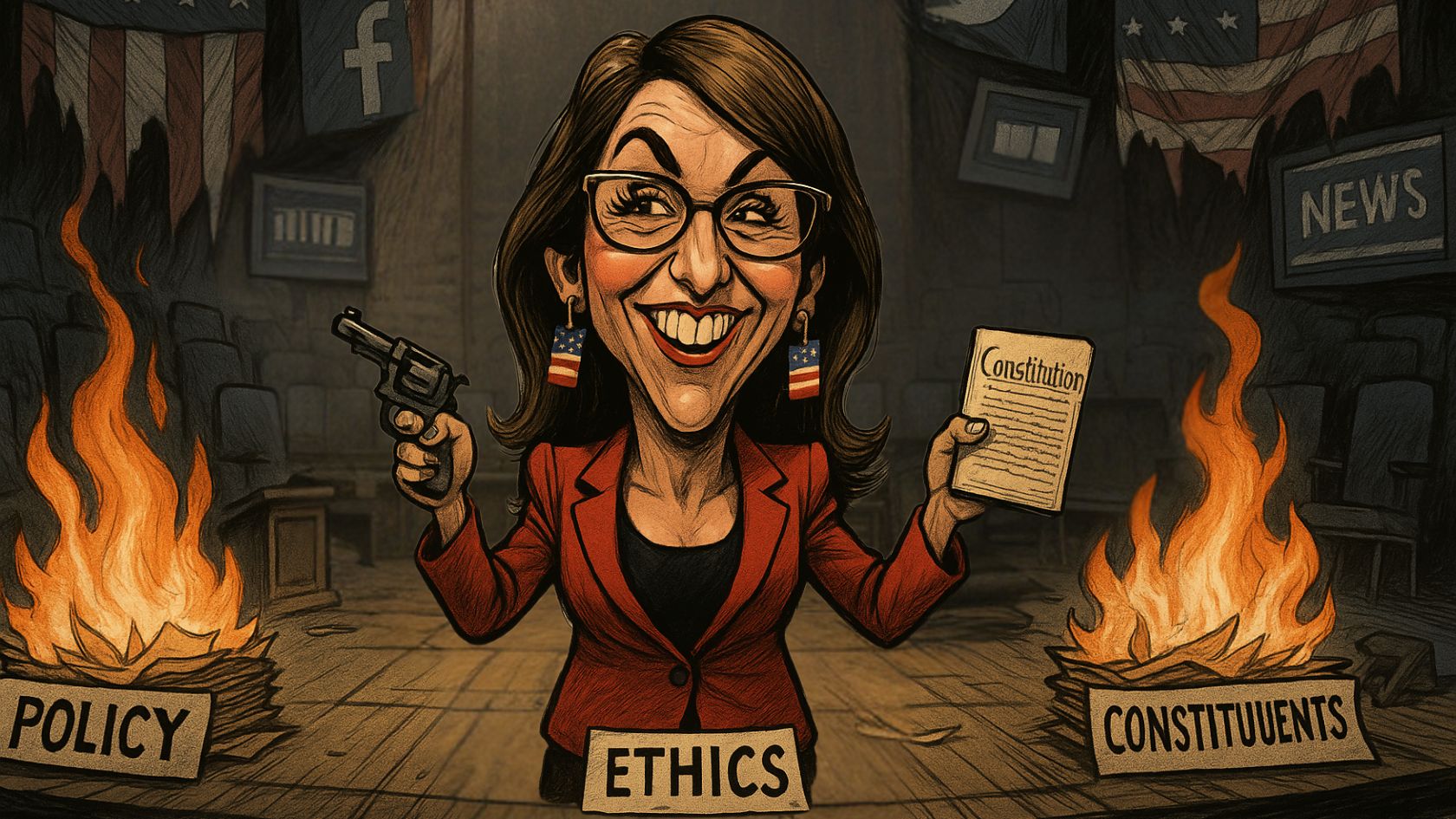
Lauren Boebert is what happens when performance replaces public service. Marketed as a scrappy, gun-toting patriot, she’s built a career on outrage, not outcomes—more interested in playing a congresswoman on television than doing the job behind the scenes.

Her rise was engineered through spectacle. Raised in working-class hardship and dropping out of high school as a teen mother, Boebert later earned her GED—just in time to run for office. She gained attention through her restaurant, Shooters Grill, where waitstaff openly carried firearms. It wasn’t a policy platform—it was a photo op with a menu.

She first gained national attention by heckling Beto O’Rourke over gun rights in 2019. That moment went viral, turning a small-town diner owner into a MAGA darling. In 2020, she unseated a five-term Republican incumbent and carried that energy into Washington, bringing with her a brand of bombast that quickly eclipsed any meaningful legislative agenda.

Since taking office, Boebert has aligned herself with the far-right Freedom Caucus and the MAGA wing of the Republican Party. Her signature legislative effort? A failed bill to make the AR-15 the “National Gun of the United States.” Beyond that, her record consists mostly of social media spats, cable news appearances, and fundraising off manufactured culture wars.

The controversies have been relentless: violations of the STOCK Act, questionable campaign expenditures, inflammatory rhetoric surrounding January 6th, and repeated ethics concerns. During the Capitol riot, she tweeted Speaker Pelosi’s whereabouts. In 2023, she was ejected from a Denver theater during a performance of Beetlejuice—caught vaping, groping her date, and lying about it on security footage. Add to that a messy divorce, a string of arrests, and connections to extremist groups, and the pattern becomes undeniable: scandal isn’t a distraction—it’s the business model.

When redistricting and poor approval numbers threatened her re-election in Colorado’s 3rd District, she abruptly switched to the 4th—where she didn’t live—declaring it “God’s plan.” Voters there gave her a narrow win, but it was less an endorsement of her leadership than a sign of party loyalty in a deeply gerrymandered district.

Boebert’s political career offers little in the way of constituent service or legislative success. What it does offer is a window into a political system that rewards noise over nuance and grievance over governance. She is not an outlier—she is the logical outcome of a media and fundraising ecosystem that thrives on chaos.

For those still wondering whether Boebert represents the people of Colorado, the answer is simple: she represents herself. The rest is just a stage, and the audience is paying for the props.
 

“Not everything loud deserves a microphone. And not every elected official deserves our silence.”

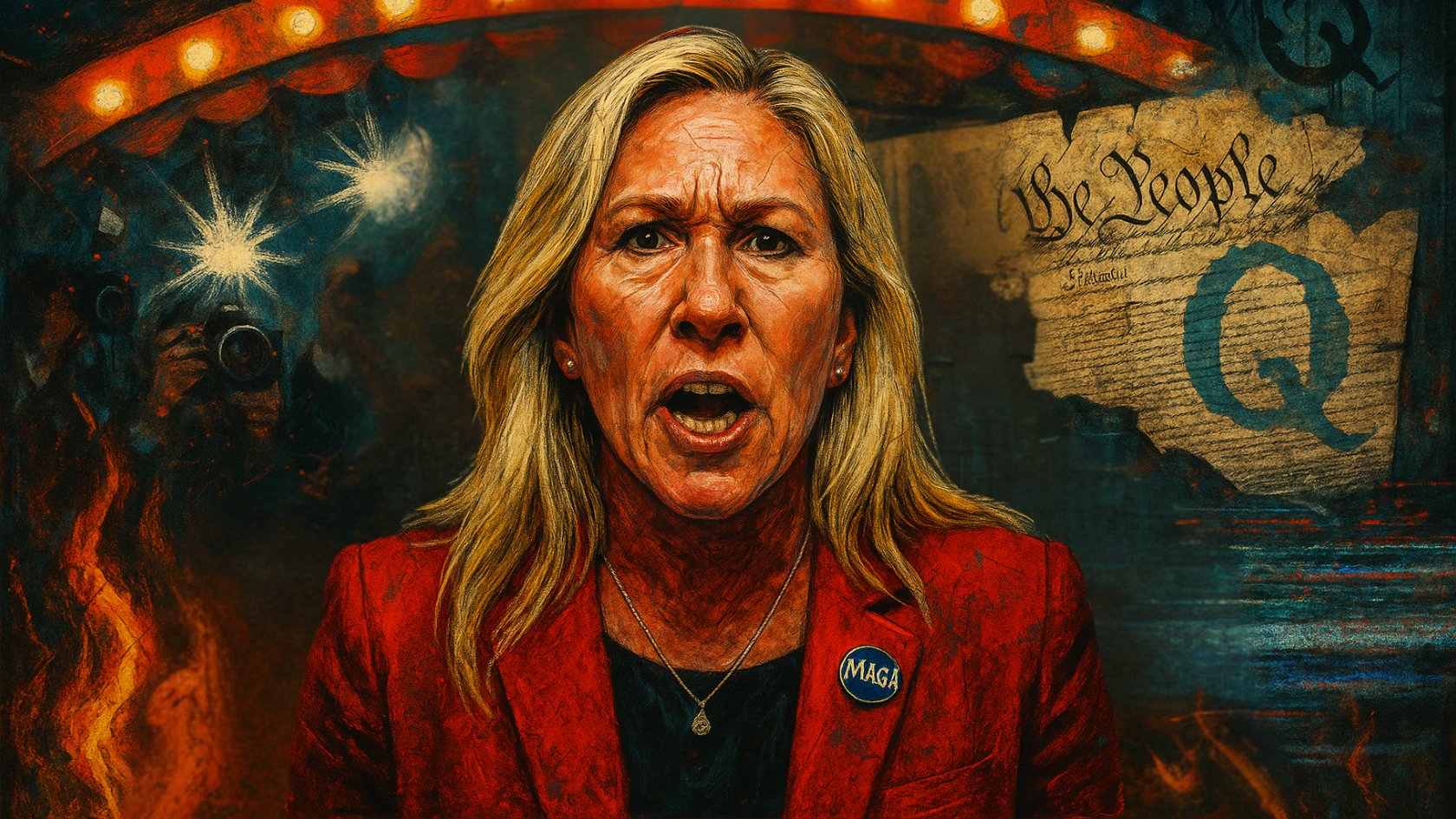
There was a time when Congress was filled with people who—while flawed—understood the weight of public service. They didn’t treat governing like a reality show, and they didn’t spit conspiracy theories into cameras just to catch a clip on Fox News by sundown. But that time, it seems, has slipped quietly into the past. And in its place, we have people like Marjorie Taylor Greene.

She is not simply a provocateur. That word is too generous—too stylish. She is a performance politician, weaponizing grievance and outrage like tools of the trade. She doesn’t write laws. She writes spectacle. She doesn’t represent citizens. She rallies cults of personality. And she doesn’t seek justice. She seeks attention. At any cost.

Her journey from CrossFit business owner to congressional chaos agent is not an accident—it’s a case study in what happens when the civic filter breaks down. When voters are fed more rage than reality, and when the institutions designed to vet public servants lose the will to hold the line.

Greene has trafficked in lies about school shootings, 9/11, vaccines, election integrity, and global cabals. She’s harassed colleagues, mocked the vulnerable, and used every tool of media manipulation to stay in the spotlight. And every time she crosses a line, she moves the boundary for the entire discourse.

Some will say she’s just “saying what people think.” That she’s unfiltered and bold. But being unfiltered isn’t a virtue when what you’re pouring out is poison. Democracy can’t survive on stunts and slogans. It survives on the hard, boring, disciplined work of truth and trust.

We are not obligated to pretend this is normal. We are not required to nod politely at the demolition of civic standards. And we must not allow the loudest voices in the room to set the rules for the rest of us.

Marjorie Taylor Greene doesn’t just reflect the chaos. She profits from it. And she’s proof that the danger isn’t just in those who lie—but in those who make a career out of it, camera-ready and Constitution-optional.

We don’t need more volume. We need more vigilance. And we need to say—out loud, and without apology—that truth still matters, decency still matters, and leadership is not a costume you put on after the cameras roll.

Because if we let clowns rewrite the rules, it won’t be long before the circus owns the tent.