In the annals of the American republic, few epochs have encapsulated the nation’s fractured soul as acutely as the winter of 2025. With Donald J. Trump ensconced once more in the Oval Office as the Forty-Seventh President—a nonconsecutive encore that defied the gravitational pull of political precedent—the United States teetered on the precipice of renewal and rupture. The last forty-eight hours of the first week in December, spanning from the chill dawn of Monday, December 1, to the frost-kissed eve of Wednesday, December 3, would etch themselves into the historical ledger not as a mere interlude, but as a microcosm of the Trumpian restoration: a whirlwind of partisan skirmishes, policy salvos, and cultural convulsions that laid bare the fault lines of a republic at war with itself. This essay, rendered in the somber cadence of history’s gaze, surveys these events through a quintessentially American lens—where the clamor of congressional halls, the fury of foreign entanglements, and the quiet desperation of domestic hearths converge to define the body politic.

The Northern Tempest: A Prelude in Snow and Silence

As the sun crested over the heartland on December 1, a Nor’easter—a biblical scourge of white fury—descended upon the Midwest, blanketing Missouri, Iowa, and Michigan in up to ten inches of snow. Icy tendrils snaked across secondary roads, transforming thoroughfares into treacherous labyrinths and compelling a cascade of school closures that rippled through the nation’s educational sinews. Districts from St. Louis to Des Moines shuttered their doors, delaying openings or canceling classes outright, a stark reminder of America’s vulnerability to the caprices of climate in an age of contested environmental stewardship. This was no mere meteorological footnote; in the Trump era, where federal resources strained under the weight of border fortifications and tariff wars, the storm evoked whispers of neglect. Rural families, already pinched by inflation’s lingering vise, huddled in homes bereft of the federal largesse that might have eased the burden—foreshadowing the deeper cuts to come.

Yet, amid the drifts, a more insidious silence fell upon the White House. For the first time in four decades, the administration opted against commemorating World AIDS Day, a deliberate elision that stunned public health advocates and galvanized the remnants of the Obama-era compassion machine. No proclamations echoed from Pennsylvania Avenue; no red ribbons adorned the West Wing. Critics decried it as emblematic of Trump’s disdain for “woke” pieties, a rejection of the multicultural tapestry woven into America’s social safety net. In this void, the ghosts of 1980s indifference stirred, compelling activists to flood social media with remembrances of lost kin, their digital vigils a defiant counterpoint to official amnesia. Here, in the quiet refusal to mourn, one glimpsed the administration’s cultural crusade: a recalibration of national memory toward self-reliance over collective empathy.

The Halls of E Pluribus Unum: Partisan Bloodletting in Tennessee

By midday on December 2, as the snow receded eastward, the nation’s gaze pivoted southward to Tennessee’s Seventh Congressional District, where a special election convulsed the body politic like a fever dream of 2018’s midterms. The vacancy left by Republican Mark Green’s July resignation—to chase private-sector lucre—had birthed a proxy war: Matt Van Epps, the Trump-endorsed heir apparent, against Aftyn Behn, a Democratic upstart whose Nashville grit threatened to flip a ruby-red bastion. With millions poured in by super PACs and the specter of House Speaker Mike Johnson’s razor-thin majority (now swelling to 220-213 upon Van Epps’s projected triumph), the contest transcended local lore. Trump himself tele-rallied, urging Van Epps to eclipse even his own electoral feats—a hyperbolic benediction that underscored the Forty-Seventh’s messianic grip on the GOP soul.

Van Epps’s victory, called amid a surge of rural turnout, averted a Democratic upset but exposed fissures in the Republican edifice. Behn’s overperformance in a district once deemed impregnable emboldened the opposition, her concession speech a clarion call for a “Tennessee tide” shifting leftward. Polymarket oddsmakers had pegged Republican odds at over 90 percent, yet the race’s ferocity—fueled by Trump’s shadow and Johnson’s frantic barnstorming—signaled the midterms’ prelude: a nation where every vacant seat became a referendum on the MAGA imperium. In the broader historiography of American democracy, this skirmish evoked the fractious special elections of yore—the 1930s’ New Deal battlegrounds or the 1990s’ Gingrich revolts—reminding us that the House, that raucous agora, remains the republic’s truest pulse.

The Narcotic Reckoning: Strikes, Pardons, and the Cartel Conundrum

No thread wove through these forty-eight hours more perilously than the war on narco-terror, a saga that blurred the meridians of foreign policy and domestic despair. On December 1, U.S. forces unleashed hell upon a Venezuelan speedboat laden with cocaine, the second such strike in as many days—a fusillade that Defense Secretary Pete Hegseth defended with the fervor of a crusade. In a Cabinet Room tableau broadcast nationwide, Hegseth, eyes ablaze, recounted watching the initial assault live: “White bales aren’t Christmas gifts from Santa,” he quipped, schooling reporters on the imperatives of interdiction. Yet controversy erupted over a follow-up barrage, with human rights watchdogs decrying it as “execution without trial,” and survivors’ tales filtering through Venezuelan backchannels. The White House’s muddled chain-of-command—Trump’s improvisational fiat versus Hegseth’s tactical zeal—left even allies adrift, a microcosm of the administration’s “America First” adventurism.

Compounding the irony, Trump on December 2 extended clemency to Juan Orlando Hernández, the erstwhile Honduran president ensnared in one of the largest narco-conspiracies on record—400 tons of cocaine funneled northward, per U.S. indictments. The pardon, inked amid vows to “defeat the poison,” ignited bipartisan fury: Senator Mark Kelly thundered, “If Trump wants to stop drug traffickers, why pardon the kingpin?” MAGA faithful hailed it as realpolitik—courting Central American allies against migration surges—while detractors branded it hypocrisy incarnate. This narcotic pas de deux, echoing the Reagan-era Iran-Contra shadows, underscored America’s perennial entanglement: a superpower ensnared in the webs it spins to police its appetites.

The Domestic Crucible: Welfare Wars and Cultural Crusades

Within the republic’s hearths, the administration’s blade fell heaviest on the Supplemental Nutrition Assistance Program (SNAP), the food stamp lifeline for 42 million souls. On December 1, White House aides, led by Brooke Rollins, unveiled a draconian pivot: withholding aid from Democrat-led states unless they surrendered recipient data to root out “massive fraud.” This gambit, couched in fiscal rectitude, menaced 16 million children with hunger’s specter, prompting a Rhode Island judge’s rebuke as “defiance” of court orders. In blue strongholds from California to New York, the edict evoked the Great Society’s unraveling, a deliberate fraying of the welfare state’s fabric under Trump’s deregulatory scythe.

Concurrently, cultural fault lines quaked. Faith-based “crisis pregnancy centers”—bulwarks of the post-Roe anti-abortion redoubt—braced for Supreme Court scrutiny, challenging probes into their purported deceptions. In Washington, D.C., a 29-year-old Afghan national, Rahmanullah Lakanwal, faced charges in the December 1 shooting of two National Guard members near Farragut West Station—a tragedy that inflamed immigration hawks and swelled impromptu memorials with American flags. Trump’s rhetoric crescendoed to xenophobic crescendos: Somali-Americans, he fulminated on December 2, were “third-world garbage” who “do nothing but bitch,” singling out Rep. Ilhan Omar as emblematic of an influx from “hell.” The tirade cleaved the nation anew—progressives decrying it as the most overtly racist presidential utterance since George Wallace’s firebrand days, while supporters cheered a return to unvarnished nativism.

Even the Cabinet Room became a stage for frailty’s farce. Trump, fresh from mocking “Sleepy Joe” Biden, nodded off mid-meeting on December 2—eyelids heavy as the republic’s burdens—prompting viral schadenfreude and 25th Amendment murmurs. Secretary of State Marco Rubio, ever the diplomat, lauded Trump’s “transformational” foreign policy, yet the tableau bespoke a leader whose vigor waned even as his grievances waxed eternal.

Epilogue: Toward an Uncertain Meridian

As December 3 dawned, the republic exhaled uneasily from its forty-eight-hour maelstrom. Van Epps’s oath would buttress the GOP ramparts; Hegseth’s strikes would echo in cartel dens; SNAP’s shears would bite into breadlines. Yet beneath the headlines lurked a deeper narrative: a nation grappling with its dual inheritance of exceptionalism and exclusion, where Trump’s shadow loomed as both lodestar and specter. Historians of posterity may liken this interlude to the Gilded Age’s robber-baron tumults or the New Deal’s nascent agonies—moments when America, in its roiling vitality, glimpsed the chasm between aspiration and actuality.

In the end, these hours affirmed the republic’s enduring paradox: a colossus of innovation and iniquity, where snowstorms and shootings, pardons and polemics forge the forge of democracy. As the Forty-Seventh’s tenure unfolds, one wonders if the tipping point Trump invoked will tilt toward unity or abyss. For now, the ledger remains open, its ink still wet with the blood of division.
 

A Retrospective — November 22–28, 2020

A look back at our reality as it was five years ago

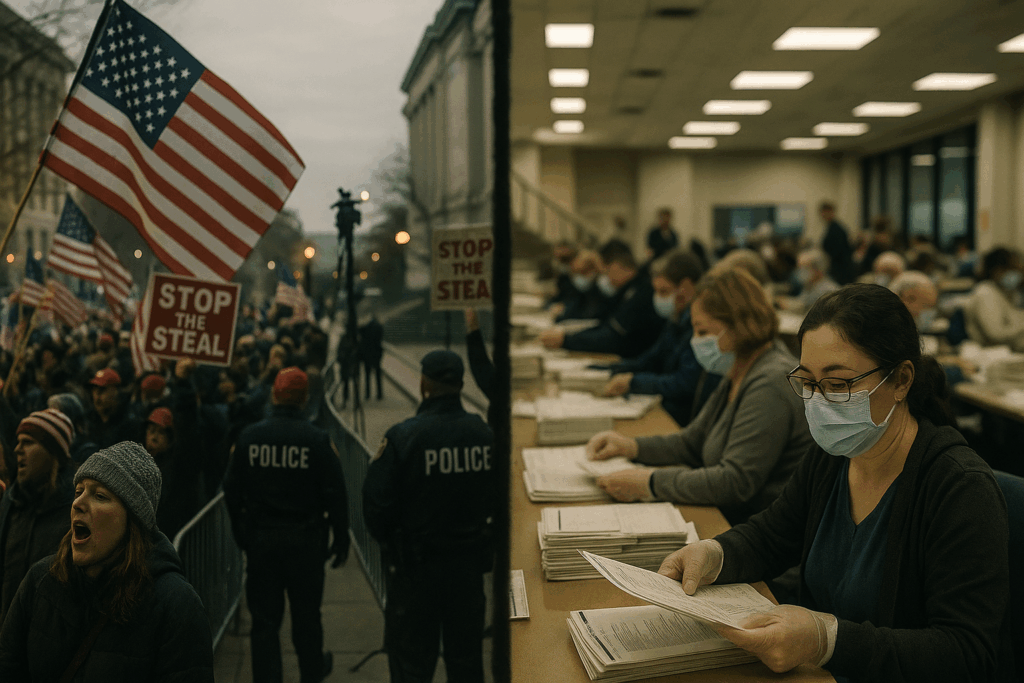
The final full week of November 2020 opened in a state of unresolved uncertainty. Several states were approaching certification deadlines, the General Services Administration still had not issued its ascertainment letter, and legal challenges continued to circulate through courts at multiple levels. People entered the week knowing that routine processes were underway, but the national interpretation of those processes remained fractured. Every procedural step, no matter how familiar to election officials, carried heightened political meaning for the public.

Sunday, November 22, brought a wave of attention to Michigan, where state legislators had met with the president at the White House late the previous week. Public reaction centered less on the specifics of the meeting—which remained largely opaque—and more on the idea that such a meeting was happening at all. Many Americans viewed the invitation as an attempt to influence certification. Others believed it was an appropriate part of addressing concerns about the election. These contrasting interpretations continued the pattern that had defined November: identical events generating incompatible narratives depending on the observer’s underlying assumptions.

Meanwhile, certification in some states moved forward with fewer complications. In Minnesota, Vermont, and Colorado, the process proceeded as expected, receiving only modest public attention. The relative quiet in these states offered a contrast to the intense focus on places where margins were narrow or where challenges were ongoing. This uneven distribution of attention created a national map where certain states carried symbolic weight far beyond their electoral totals.

On Monday, November 23, a significant development occurred when the administrator of the General Services Administration issued the ascertainment letter, permitting the formal transition process to begin. The decision did not resolve political disputes, but it changed the administrative landscape. The projected incoming transition team gained access to federal agencies, briefings, and coordination channels. Career officials, who had been operating in uncertainty, could now engage in the work that normally occurs earlier in November.

The release of the letter drew different interpretations across the country. Some people saw it as an acknowledgment of the projected results. Others framed it as a procedural necessity with no bearing on the outcome of ongoing legal challenges. Still others viewed the timing as evidence that political pressure had finally outweighed resistance. The letter itself was straightforward, but the meanings attached to it were not.

Despite the administrative shift, legal efforts from the president’s team continued. Press conferences reiterated claims of widespread fraud, although many of the allegations had already been dismissed by courts or contradicted by local election officials from both parties. Public reactions remained polarized. Some Americans viewed the legal defeats as confirmation that the allegations lacked merit. Others believed the defeats reflected institutional bias rather than substantive findings. The divide was no longer simply political; it had become epistemological.

In Georgia, attention returned to the Senate runoff elections scheduled for January. The outcomes would determine control of the U.S. Senate, and both parties began intensifying campaign efforts. Voters in the state found themselves at the intersection of two national storylines: the unresolved tension surrounding the presidential election and the impending fight over Senate control. Messaging from campaigns and national figures blended discussions of future policy with disputes about the integrity of the recent vote.

Meanwhile, Pennsylvania prepared to certify its results. Election officials emphasized that certification was not optional and that the deadlines were set by state law. County-level updates varied from routine to contentious, depending on local conditions. Some counties completed their work with little pushback. Others became focal points of political attention. The unevenness contributed to a sense that routine civic processes had become entangled in broader national conflict.

Throughout the week, the pandemic worsened significantly. Case numbers rose across the country, and hospital systems reported increasing strain ahead of Thanksgiving. Public-health officials urged people to limit gatherings, avoid travel, and maintain precautions. Despite the warnings, airports saw higher volumes than previous weeks. Many Americans were torn between caution and a desire for normalcy after a year of extraordinary disruption.

State and local governments issued new restrictions. California announced a curfew targeting nonessential activity in several counties. Ohio implemented mask mandates and limits on gatherings. Other states introduced targeted measures intended to reduce transmission without closing large sectors of their economies. The patchwork nature of these policies reflected uneven public tolerance for restrictions, as well as varying political approaches to pandemic management.

Tuesday and Wednesday brought increased attention to the president’s public statements, which continued to assert that the election had been stolen. These statements shaped public expectations in communities where trust in the electoral process had eroded. People interpreted routine actions—such as certification votes, recount results, and court filings—through the lens of these assertions. The effect was cumulative, reinforcing the belief among many that the political system itself had become unreliable.

Certification deadlines in several states arrived midweek. Michigan certified its results on Monday, Georgia on Tuesday, and Pennsylvania continued through its county-level processes. Each certification generated immediate reactions online, with supporters and critics attaching political meaning to procedures that election administrators treated as legal obligations. The factual content of the certifications did not resolve broader disputes. Instead, they contributed to an expanding record of developments that people interpreted through conflicting frameworks.

On Wednesday, November 25, the projected incoming administration held briefings on pandemic response and potential cabinet nominees. These briefings were notable not for their content—which focused on public health, economic recovery, and transition planning—but for the fact that they occurred alongside ongoing disputes over the legitimacy of the election. The coexistence of transition preparation and rejection of the election outcome created a sense of dual political realities operating in parallel.

Thanksgiving arrived on Thursday under circumstances unlike previous years. Many families scaled down or canceled gatherings due to pandemic concerns. Others proceeded with traditions, sometimes modifying them with distancing or outdoor arrangements. Travel numbers remained below typical holiday levels but higher than many public-health officials had hoped. The day highlighted the degree to which personal decisions were influenced not only by health guidance but by months of accumulated stress, fatigue, and competing narratives.

Friday brought renewed attention to Wisconsin, where a partial recount was underway at the request of the president’s campaign. The recount focused on specific counties and was funded by a payment from the campaign to the state. Observers reported that the recount was proceeding normally, though disputes arose over whether certain ballots should be included. These disputes were not unusual for recounts, but their presence fed into national debates already in motion. In this environment, even routine administrative disagreements were interpreted as evidence of deeper systemic problems.

Meanwhile, Black Friday shopping patterns revealed another layer of the national mood. Retailers saw significant shifts toward online sales, driven by both pandemic precautions and changes in consumer behavior. In-person shopping occurred at reduced levels, with some malls and stores seeing modest crowds and others remaining quiet. The economic implications of the holiday season were a point of concern for small businesses already strained by months of uncertainty.

On Saturday, November 28, local governments across several states issued warnings about potential post-Thanksgiving case spikes. Hospitals in the Midwest, Mountain West, and parts of the South reported severe capacity challenges. Some communities prepared for the possibility of field hospitals or redirected patient flows. Yet even as the pandemic intensified, national attention remained divided between health concerns and ongoing political conflict.

Throughout the week, people struggled to navigate a national landscape where familiar markers of certainty were compromised. Certification deadlines came and went, but they did not settle the political conflict for large portions of the public. Administrative progress in the transition process occurred, but it did not create a shared understanding of legitimacy. Public-health warnings intensified, but they competed with holiday traditions and political disputes for attention. Americans were not simply disagreeing about what was happening; they were interpreting the same developments through fundamentally different lenses.

By the end of November 28, several states had certified their results, transition planning had formally begun, and the pandemic had entered its most dangerous phase to date. Yet public perception remained fractured. People were living through complex, overlapping crises without a shared interpretive framework to anchor them. The country moved forward procedurally while remaining divided conceptually.

The conditions of this week reflected a deeper shift in national life—one in which events no longer carried inherent meaning but instead were assigned meaning through separate, incompatible realities. The legal filings, the certifications, the recounts, the transition steps, and the public-health warnings all unfolded in plain view. What differed were the interpretations that people used to understand them.

The country was continuing through November with no consensus about the trajectory of the moment or the stability of the institutions guiding it.

Events of the Week — November 22 to November 28, 2020

U.S. Politics, Law & Governance

  • November 22 — President-elect Biden receives additional calls from foreign leaders as the U.S. transition delay continues.
  • November 23 — The General Services Administration finally authorizes the formal presidential transition, allowing the Biden team access to federal resources and briefings.
  • November 24 — The Trump administration permits Biden to begin receiving the President’s Daily Brief.
  • November 25 — States continue certifying election results ahead of the Electoral College deadline.
  • November 26 — Thanksgiving Day: Public-health officials urge Americans to avoid travel; millions still travel despite warnings.
  • November 27 — The U.S. reports its highest single-day case totals to date, with hospitalizations also breaking records.
  • November 28 — Local governments impose new restrictions as winter surge intensifies nationwide.

Global Politics & Geopolitics

  • November 22 — Ethiopia’s government intensifies military operations toward Mekelle in the Tigray region.
  • November 23 — European nations debate easing restrictions ahead of the December holidays.
  • November 24 — Armenia continues political shakeups following the ceasefire agreement.
  • November 25 — China identifies new small clusters prompting targeted testing campaigns.
  • November 26 — France announces plans for a phased reopening after weeks of lockdown.
  • November 27 — Germany extends restrictions into December as infections remain high.
  • November 28 — The U.K. outlines a new tiered restriction system set to begin in early December.

Economy, Trade & Markets

  • November 22 — Retailers prepare for a predominantly online Black Friday season.
  • November 23 — Markets rise on the news that the formal transition has begun.
  • November 24 — Consumer confidence shows slight improvement before holiday shopping begins.
  • November 25 — Weekly jobless claims surpass 72 million since March.
  • November 26 — Holiday spending patterns shift heavily toward e-commerce.
  • November 27 — Retailers report strong online sales but limited in-store traffic.
  • November 28 — Economists warn that December could bring major job losses without new federal relief.

Science, Technology & Space

  • November 22 — Public-health officials warn that holiday gatherings may create “super-spreader” conditions.
  • November 23 — Federal agencies begin sharing pandemic data with the Biden transition team.
  • November 24 — AstraZeneca announces interim vaccine results showing varied efficacy depending on dosage.
  • November 25 — CDC urges Americans to limit travel and indoor gatherings through winter.
  • November 26 — Researchers warn that Thanksgiving travel may produce case spikes in mid-December.
  • November 27 — Hospitals report rising numbers of younger patients among new admissions.
  • November 28 — Climate researchers note persistent drought conditions across much of the West.

Environment, Climate & Natural Disasters

  • November 22 — Remnants of Iota continue to affect Central America.
  • November 23 — Heavy rain falls across the Southeast and Mid-Atlantic.
  • November 24 — Snowstorms hit parts of the northern Rockies and Great Plains.
  • November 25 — Thanksgiving travel is disrupted in several states by weather systems.
  • November 26 — Flooding affects coastal areas from heavy rain and high tides.
  • November 27 — Wildfire season winds down across the West.
  • November 28 — Temperature fluctuations bring mixed precipitation across the Midwest.

Military, Conflict & Security

  • November 22 — Ethiopia issues a 72-hour ultimatum for Tigrayan forces in Mekelle to surrender.
  • November 23 — Russia continues establishing peacekeeping operations in Nagorno-Karabakh.
  • November 24 — Taliban attacks escalate across southern Afghanistan.
  • November 25 — NATO jets intercept Russian aircraft near alliance airspace.
  • November 26 — Iraq reports new ISIS activity in rural provinces.
  • November 27 — Nigerian forces continue operations against Boko Haram.
  • November 28 — Somalia expands counterterror operations in response to recent attacks.

Courts, Crime & Justice

  • November 22 — Courts across the U.S. process ongoing election-related legal challenges.
  • November 23 — Mexico reports new arrests tied to cartel activity.
  • November 24 — Belarus intensifies detentions of opposition activists.
  • November 25 — Hong Kong authorities make additional national-security arrests.
  • November 26 — U.S. prosecutors highlight widespread unemployment-benefits fraud.
  • November 27 — European agencies coordinate cybercrime crackdowns.
  • November 28 — Brazil expands pandemic-related corruption investigations.

Culture, Media & Society

  • November 22 — Media highlight widespread anxiety over holiday travel risks.
  • November 23 — Public attention shifts to the beginning of the formal transition process.
  • November 24 — Coverage focuses on Thanksgiving preparations and safety warnings.
  • November 25 — Airlines report heavy travel despite public-health messaging.
  • November 26 — Pandemic-altered Thanksgiving events take place across the country.
  • November 27 — Black Friday shopping adapts to distanced, mostly online formats.
  • November 28 — Communities prepare for a December defined by restrictions and uncertainty.


A Retrospective — November 15–21, 2020

Mid-November 2020 carried an undercurrent of unresolved tension. Projected results from earlier in the month remained in public view, but the political and administrative processes that normally follow an election had not settled into their usual patterns. People entered this week with an awareness that the transition was stalled, the legal challenges were multiplying, and the pandemic was accelerating at its fastest rate yet. The convergence created a feeling that the country was moving in multiple directions at once without a clear sense of which development would shape the next phase.
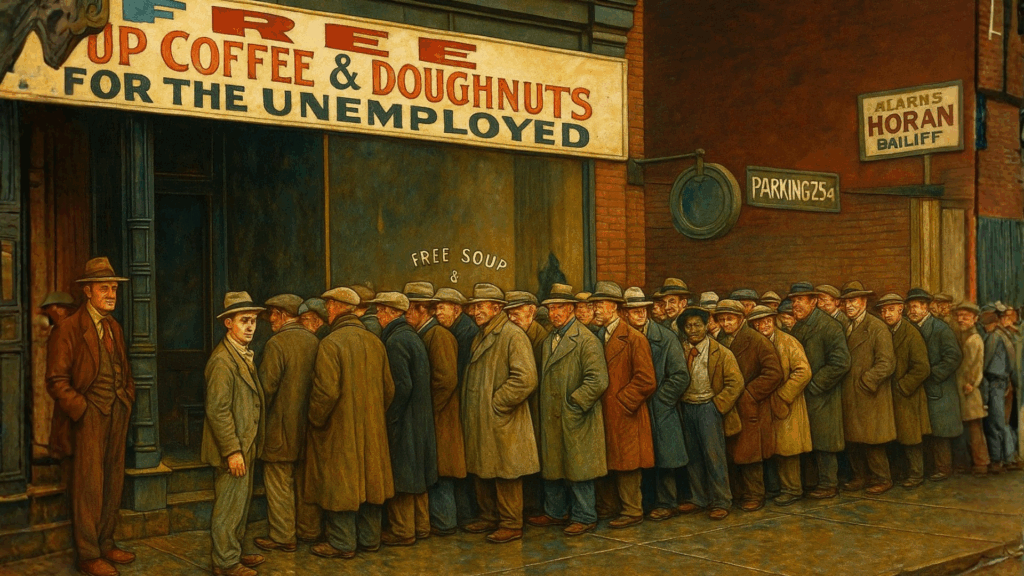
Sunday, November 15, saw large demonstrations in Washington, D.C., where supporters of the president gathered to protest the projected results and to assert that the election had been unfair. Similar rallies had happened the prior week, but this one drew particular attention because of its scale and its visibility. The crowds framed their presence as a defense of democracy, while critics saw the events as an attempt to delegitimize an outcome that had not gone in the president’s favor. The same scenes—flags, signs, speeches—were interpreted differently depending on where viewers stood politically and what they believed about the election so far.

At the same time, counter-protests appeared in parts of the city, though on a smaller scale. The interactions between the groups were tense in some locations but largely separated by police presence. For many Americans watching from elsewhere, the very fact of dueling rallies in the nation’s capital signaled a deeper fracture in national understanding. The protests did not resolve anything; they highlighted the distance between groups that now viewed the country’s trajectory through incompatible frameworks.

On Monday and Tuesday, state officials continued the complex work of canvassing and certifying results. Normally, this phase attracts little attention from the general public. In 2020, it became a central storyline. States issued updates about certification deadlines, procedural steps, and litigation. Georgia moved forward with its hand recount, drawing national coverage. Michigan counties prepared for certification votes. Pennsylvania courts handled challenges involving ballot deadlines and observer access. Each procedural development generated waves of interpretation on social media, where observers attached meaning to every shift, pause, or announcement.

Throughout these days, press conferences from the president’s legal team became regular events. Allegations of fraud were repeated publicly, though the specifics often changed from day to day. Some claims involved misinterpreted video clips; others relied on misunderstandings of routine ballot-handling practices. Many accusations were rejected quickly by judges who noted the absence of evidence. But the legal defeats did not reduce the public belief among many that the election had been compromised. The gap between institutional findings and public perception widened rather than narrowed.

In Georgia, the hand recount dominated attention. Reporters described the process: stacks of ballots spread across tables, workers reading choices aloud, monitors observing from a designated distance. For election officials, the recount was a routine application of state law triggered by a narrow margin. For segments of the public, it became a referendum on the legitimacy of the vote itself. Officials tried to reassure the public about the recount’s transparency, but those reassurances did not land evenly. People interpreted the recount according to their existing beliefs—either as a necessary step toward confirming the result or as a chance to uncover wrongdoing.

Meanwhile, in Michigan, two Republican members of the Wayne County Board of Canvassers initially refused to certify the results, citing concerns about precinct imbalances common in previous elections. After significant public pressure and several hours of debate, the board voted unanimously to certify. But later that night, the two members issued signed statements seeking to rescind their votes. The reversal introduced further uncertainty and generated national coverage. State officials responded that the certification had already been completed and that attempts to withdraw votes had no legal effect. For many observers, the entire sequence underscored how administrative steps that had long been procedural were now being pulled into a broader political struggle.

On Wednesday and Thursday, the General Services Administration continued to withhold the ascertainment letter needed to begin the formal transition. The lack of ascertainment created logistical challenges for the projected incoming team, which still lacked access to classified briefings, pandemic response coordination, and interagency meetings. Career federal employees reported waiting for guidance, aware that the process they expected was on pause. The absence of the letter became a symbol of the broader standoff: a routine administrative acknowledgment had turned into a political bottleneck.

During these same days, the pandemic worsened dramatically. Daily case counts reached new highs in multiple states, and hospital systems in the Midwest and West faced severe strain. North Dakota and South Dakota reported some of the highest infection rates in the country. Governors issued new advisories, mask mandates, and restrictions. Public-health officials warned of uncontrolled spread. But the political fight over the election absorbed much of the public’s attention, diffusing the urgency of the pandemic messaging. The simultaneous crises compounded each other. People were exhausted, anxious, and uncertain which developments demanded immediate concern.

In some communities, local leaders struggled to communicate the gravity of the pandemic because residents were preoccupied with election disputes. In others, pandemic fatigue overshadowed political developments. The strain of trying to process both crises at once shaped public behavior. Some people sought distraction in daily routines. Others checked election updates constantly. Conversations across the country toggled between vote counts and viral counts without a clear sense of priority.

Late in the week, attention returned to Michigan as state legislative leaders accepted an invitation to visit the White House. The meeting raised questions about whether the president would pressure them to intervene in the certification process. State officials issued statements reaffirming that the electoral process would follow the law, but the meeting itself suggested that the country had entered new territory. The possibility—however unlikely—of state-level interference in the appointment of electors fueled national concern. People debated the legal boundaries of legislatures, the constitutional framework, and the historical rarity of such actions. The fact that the question was being asked at all signaled how far the political conflict had expanded.

On Friday, Georgia completed its hand recount and reaffirmed the projected outcome. State officials emphasized the accuracy and integrity of the process. But the recount, rather than resolving doubts, prompted new claims from those who rejected the result. The cycle of allegation, rebuttal, and reinterpretation continued, with each phase reinforcing the broader pattern of fractured understanding.

By Saturday, November 21, states moved closer to their certification deadlines. Some had already certified their results; others were preparing to do so in the coming days. The procedural machinery of the election advanced, but public confidence did not advance with it. The country remained deeply divided not just over preferences but over interpretations of the same events. The election, the recounts, the lawsuits, the certifications, and the transition delays were all filtered through separate lenses shaped by months of political messaging and information fragmentation.

Throughout the week, people tried to make sense of what the developments meant for the immediate future. Some assumed that the certifications would settle the situation. Others believed that the legal challenges would escalate. Still others expected that the conflict would continue indefinitely. The absence of a shared framework for evaluating evidence made it difficult for conversations to move toward resolution.

This was a week defined by procedural motion and interpretive stagnation. Institutions proceeded with their work. Courts issued rulings. Election officials counted, recounted, explained, and certified. But the public’s response remained fractured, shaped by divergent understandings of legitimacy and authority. Americans were navigating a landscape where familiar processes no longer produced familiar outcomes in terms of national cohesion.

The developments of November 15–21 did not clarify the political moment for most people. Instead, they revealed how far the country had drifted from a shared understanding of reality itself.

Events of the Week — November 15 to November 21, 2020

U.S. Politics, Law & Governance

  • November 15 — President-elect Biden continues announcing key transition advisers despite the GSA still refusing to trigger the formal transition process.
  • November 16 — Michigan and other battleground states face pressure as local canvassing boards certify results amid public protests and political scrutiny.
  • November 17 — The Senate Judiciary Committee holds hearings with tech CEOs on misinformation and Section 230.
  • November 18 — A growing number of Republican lawmakers begin publicly acknowledging Biden as president-elect.
  • November 19 — A widely circulated press conference by Trump’s legal team alleges widespread fraud, offering no verifiable evidence.
  • November 20 — Georgia completes a hand recount confirming Biden’s victory in the state.
  • November 21 — State and local leaders impose renewed restrictions in response to rapidly rising case counts nationwide.

Global Politics & Geopolitics

  • November 15 — Leaders from the Asia-Pacific region sign the Regional Comprehensive Economic Partnership (RCEP), creating the world’s largest free-trade bloc.
  • November 16 — Protests escalate in Peru following the removal of President Martín Vizcarra; interim president Manuel Merino resigns.
  • November 17 — Armenia faces internal political turmoil after the ceasefire agreement; protesters demand Prime Minister Nikol Pashinyan’s resignation.
  • November 18 — European governments continue tightening lockdowns or extending them as second-wave deaths climb.
  • November 19 — China reports small clusters leading to mass testing programs.
  • November 20 — Ethiopia’s federal forces advance deeper into the Tigray region.
  • November 21 — France reports slowing infection growth following strict lockdown measures.

Economy, Trade & Markets

  • November 15 — Retailers brace for a profoundly altered holiday shopping season.
  • November 16 — Moderna announces that early data show its vaccine candidate is nearly 95% effective, fueling another major market jump.
  • November 17 — Markets continue responding to positive vaccine news but remain cautious about winter shutdowns.
  • November 18 — Economic advisers warn that job losses may increase as states re-impose restrictions.
  • November 19 — Weekly unemployment claims surpass 71 million since March.
  • November 20 — Congress remains deadlocked on new relief legislation despite mounting economic strain.
  • November 21 — Analysts note persistently high unemployment and widening inequality.

Science, Technology & Space

  • November 15 — Public-health researchers emphasize avoiding large Thanksgiving gatherings.
  • November 16 — Moderna’s vaccine announcement draws global scientific attention.
  • November 17 — CDC scientists warn that hospitals may face unprecedented winter capacity pressure.
  • November 18 — Studies show that mask mandates significantly reduce transmission.
  • November 19 — Cybersecurity experts highlight ongoing disinformation campaigns.
  • November 20 — SpaceX launches the Crew-1 mission, sending four astronauts to the ISS.
  • November 21 — Climate scientists track late-season wildfires in parts of the West.

Environment, Climate & Natural Disasters

  • November 15 — Tropical Storm Iota forms in the Caribbean, raising alarm for Central America still devastated by Eta.
  • November 16 — Iota rapidly strengthens into a major hurricane.
  • November 17 — Iota makes landfall in Nicaragua as a Category 4 storm—the strongest Atlantic hurricane of 2020—causing catastrophic flooding.
  • November 18 — Mudslides and flooding sweep across Honduras and Nicaragua.
  • November 19 — Remnants of Iota continue to produce heavy rain throughout Central America.
  • November 20 — Late-season snow falls across parts of the Midwest.
  • November 21 — The 2020 Atlantic hurricane season approaches its record-breaking end.

Military, Conflict & Security

  • November 15 — Ethiopian forces advance on Tigray’s capital, Mekelle.
  • November 16 — Armenia transitions to Russian peacekeeper oversight in Nagorno-Karabakh under the ceasefire agreement.
  • November 17 — Taliban attacks increase as negotiations struggle.
  • November 18 — NATO aircraft intercept Russian planes near European airspace.
  • November 19 — ISIS militants carry out attacks in Iraq’s Diyala province.
  • November 20 — Nigerian military operations target Boko Haram strongholds.
  • November 21 — Somalia intensifies operations against al-Shabaab.

Courts, Crime & Justice

  • November 15 — U.S. courts continue processing an expanding set of election-related lawsuits.
  • November 16 — Mexico announces arrests tied to organized crime investigations.
  • November 17 — Belarus conducts new raids on opposition activist networks.
  • November 18 — Hong Kong police make more national-security arrests.
  • November 19 — U.S. prosecutors highlight persistent unemployment-benefits fraud.
  • November 20 — European authorities coordinate significant cybercrime enforcement actions.
  • November 21 — Brazil expands anti-corruption investigations related to pandemic contracts.

Culture, Media & Society

  • November 15 — Celebrations and protests continue across the U.S. in response to the election outcome.
  • November 16 — Public attention turns to the stalled transition process.
  • November 17 — Media scrutinize claims made during Senate tech hearings.
  • November 18 — Rising case counts dominate national conversation.
  • November 19 — Giuliani’s press conference becomes the subject of widespread media analysis and late-night commentary.
  • November 20 — Discussions intensify around Thanksgiving travel and safety.
  • November 21 — Communities prepare for an unusual and restricted holiday season.


Al Capone’s Soup Kitchen

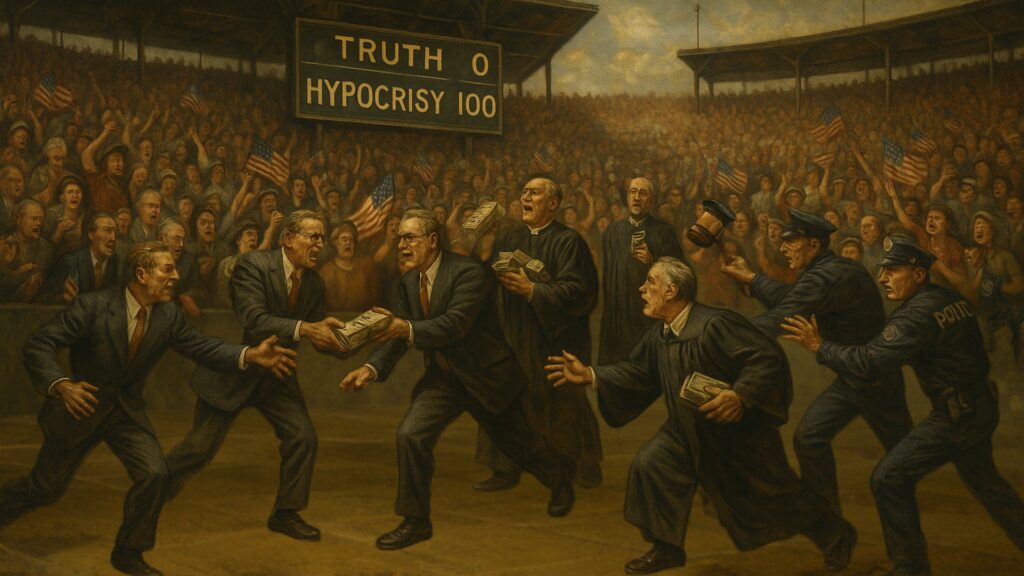
During the depths of the Great Depression, one of the most surprising acts of public charity came from an unlikely source: Al Capone, the notorious Chicago gangster whose name was synonymous with bootlegging, extortion, and organized crime. In 1930, as unemployment soared and breadlines stretched around city blocks, Capone opened a free soup kitchen at 935 South State Street. The sign above the door read simply, “Free Soup, Coffee, and Doughnuts for the Unemployed.” Each day, thousands of destitute Chicagoans — men, women, and children — lined up for a hot meal served under the protection of one of America’s most infamous criminals.
The timing of Capone’s soup kitchen was deliberate. In 1930, public opinion of him was shifting. The once-romanticized “Robin Hood” gangster image was fading as federal agents intensified efforts to dismantle his criminal empire. The St. Valentine’s Day Massacre of 1929 had destroyed any illusion of noble outlawry, leaving Capone’s reputation bloodstained. Yet by opening the soup kitchen, he managed to rebrand himself, at least temporarily, as a benefactor of the common man. Newspapers covered the story with fascination and a measure of irony: the man who had made millions through illegal liquor and violence was now feeding the hungry when legitimate businesses and city agencies could not.

The kitchen reportedly served three meals a day to more than 2,000 people. Its menu was plain but filling — beef stew, coffee, and doughnuts — and the meals were free, no questions asked. Many who stood in those lines were recently unemployed laborers and factory workers; others were homeless or transient. Photographs from the period show long rows of men in worn coats and hats, huddled in the Chicago winter, grateful for a warm plate of food. Some accounts even describe Capone himself visiting the kitchen to shake hands or observe the operation, though whether this was a calculated photo opportunity or genuine interest is impossible to say.

For Capone, the gesture served multiple purposes. It humanized him in the public eye, blurring the lines between criminal and philanthropist. It also reflected an instinctive grasp of public relations before the term was widely used. By feeding the poor when official relief systems were overwhelmed, Capone projected power — not just over his criminal network but over the city’s moral narrative. He could claim, with some justification, that while the government failed its citizens, he had stepped in to help.

The soup kitchen closed after about a year, once the city’s relief programs began to stabilize and Capone’s legal troubles mounted. By 1931, he was indicted for tax evasion and eventually sentenced to federal prison. Yet the image of “Al Capone’s soup kitchen” endured, a paradox preserved in history: a symbol of how desperation and image-making intersected in the Depression era. It remains one of the more striking examples of how even the most ruthless figures sought redemption — or at least the appearance of it — in times of collective crisis. In the bleak landscape of the 1930s, Capone’s act of charity was both genuine relief for the poor and a cunning exercise in self-preservation.

Hypocrisy as the National Sport

Hypocrisy isn’t a flaw in American life. It’s the bloodstream.

You can find it in politics, business, religion, culture — and the pattern never breaks. The slogans are loud. The behavior is opposite. And the remarkable part isn’t the dishonesty itself. It’s that no one pays a price. The players keep playing. The crowd keeps cheering.

Politics Without Shame

Start with Washington. Members of Congress give speeches about fiscal restraint, pound tables about the deficit, then vote through bloated spending bills larded with favors. A senator warns about socialism while securing subsidies for his state. A representative rails against “big government” while cashing in on federal contracts through family businesses. Everyone knows it. No one stops it. [continue reading…]

This is what Power looks like in Texas

I drove past the bay this morning, light bouncing off Trinity’s water, and thought about how little protection maps and slogans give when the ground is already shifting. Texas is being carved up again. The governor signed new political maps that lock in more safe seats for his party. It’s called redistricting, but it’s really entrenchment — a way to guarantee outcomes before a single vote is cast.


At the same time, lawmakers keep pushing laws that sound less like policy and more like punishment. One new law lets private citizens sue anyone who’s even suspected of helping someone get abortion medication, with payouts big enough to turn neighbors into bounty hunters. Another requires the Ten Commandments to hang in every public school classroom, erasing any line between religion and state. Another redefines gender on official documents, reducing people to biology on paper and stripping out anyone who doesn’t fit.<!–more–>

When a group of Democratic lawmakers fled the state to stop one of these sessions, leadership threatened to remove them from office entirely. State police were even called on to track them down. The point wasn’t just to win a vote; it was to make an example.

From Shoreacres, these fights can feel far away. The bay is still here. The sun still rises heavy over the water. But you see the effects close up: families checking receipts twice at the grocery store, teachers wondering what else will land on their classroom walls, neighbors watching leaders chase each other in circles while bills pile higher.

Texas has always lived with contradictions. Independence on one hand, heavy-handed control on the other. But right now, the contradictions aren’t quiet background noise. They’re the main event. Shoreacres isn’t insulated. Nobody is.

The long Texas summer hasn’t broken yet. Heat still presses down, storms still brew out in the Gulf, and classrooms are already filling under new rules and heavier costs. The surface rhythms remain familiar, but the politics underneath are not. The state government is turning inward on itself, pulling power tighter while daily life carries more strain. And people keep asking the same question: if this is what power looks like, who exactly is it serving?

Still Here, Still Wired

I’m 73. Fat. White. Southerner.
Sounds like the setup for a joke.

But I’ve been riding the digital wave longer than most people reading this. Back when spreadsheets meant Lotus 1-2-3, word processing was WordPerfect, and databases were dBase, I was already tinkering, learning, and pushing the tools. When the internet cracked open, I was an early adopter. By 2004, I was blogging while most folks were still asking what a blog even was.

And here I am today, running a lineup that includes ChatGPT, Sora, Canva, Grammarly, Grok — and whatever else I decide to plug in. I’m not just playing catch-up. I’ve been at this for decades, and I’m still moving forward.

It’s funny because people don’t expect it. They hear “73, Southerner” and picture someone still fiddling with the TV remote. Instead, I’m orchestrating multiple AI platforms, producing exposés, publishing at scale, and testing tools most “digital natives” haven’t touched.

The lesson? Digital doesn’t belong to the young, the thin, the coastal, or the credentialed. It belongs to whoever is willing to put in the work, learn the next thing, and use it for something that matters.

The punchline isn’t that I’m still here. The punchline is that I never left.


Epstein’s Eugenic Fantasy: The Old Lies Dressed in White Coats

Jeffrey Epstein liked to call himself a visionary. In reality, he was recycling one of the darkest strains of modern history: eugenics disguised as science. Reports and witness accounts reveal that Epstein spoke openly of his plan to “seed the human race” with his own DNA, a delusional ambition that reveals both narcissism and a chilling disregard for human dignity.
What’s striking is how familiar this sounds. The twentieth century is littered with examples of wealthy men cloaking their compulsions in pseudoscience. From Cold Spring Harbor to Nazi race hygiene institutes, eugenics always found patrons who believed their bloodlines were gifts to be multiplied. Epstein was not innovating—he was echoing. He took a grotesque idea, dressed it in futuristic labs and genetic diagrams, and used his wealth to make it seem credible.

The danger lies in how easily such delusions gain traction. Epstein’s network included scientists, some of them highly credentialed, who entertained his fantasies and accepted his funding. That willingness to look away—or worse, to collaborate—remains the real scandal. It wasn’t just one man’s hubris; it was a system that once again let money speak louder than ethics.

There’s an old playbook here: the manipulation of science to justify hierarchy, the seduction of prestige to mask exploitation. What Epstein tried to build was not a future—it was a rerun of history’s ugliest lies. And the fact that so many were willing to humor him is the most damning evidence of all.


A Nation That Turns on Its Own Permission Slip

The Trump administration has redrawn the map of immigration enforcement in a single announcement. What began as a system of entry rules has become an open-ended review of presence itself. The new directive throws 55 million visa holders—students, workers, and families who followed the law—into limbo. Their legal documents, once proof of compliance, are now subject to indefinite re-examination.

This is not a shift at the border. It is a shift inside communities. It means the science researcher who has been at a U.S. lab for a decade, the nurse filling a rural hospital’s staffing gap, the construction worker on a public project—all are told their standing is no longer secure. It is surveillance turned backward, targeting people who already cleared every hurdle required to be here.

The effect is not just fear. It is economic sabotage. When businesses and universities cannot trust that the people they depend on will be allowed to stay, they stall investments, cancel projects, and watch talent drain away. A nation that claims to defend its own workforce is at the same time undermining the infrastructure that workforce needs to thrive.

But the deeper fracture is democratic. If legal presence can be revoked retroactively, then compliance is meaningless. Law becomes less a framework for belonging than a pretext for exclusion, applied whenever politics demand it. That lesson does not stay confined to immigration. Once the precedent is set—that permission is provisional, that rules can be rewritten midstream—it spills into other arenas. Civil rights, environmental protections, labor guarantees: all become contingent, vulnerable to rollback.

That is why this moment matters beyond immigration policy. The question is not only who gets to stay. It is whether law in the United States remains something that binds power, or something power can discard when it chooses.