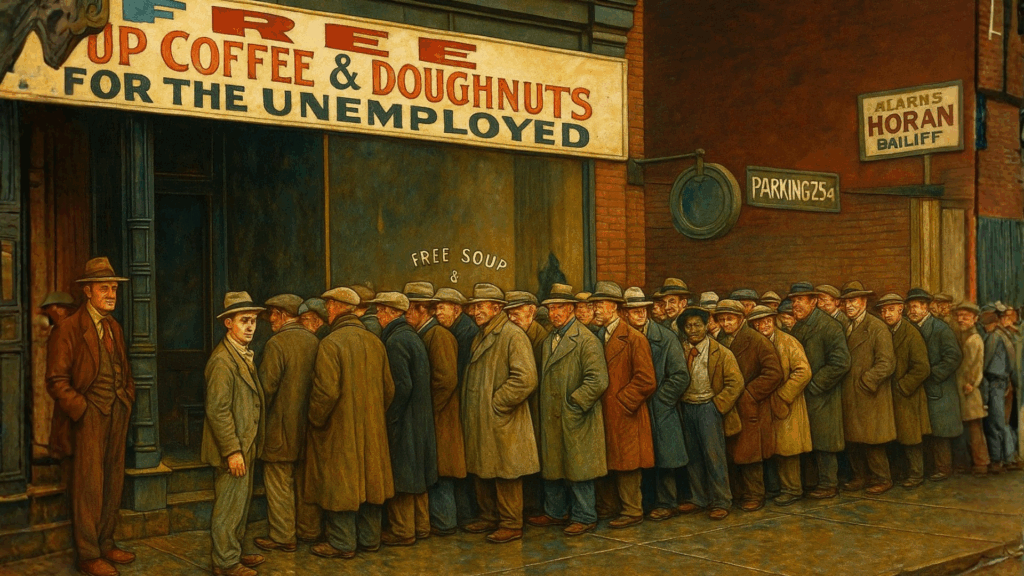
 During the depths of the Great Depression, one of the most surprising acts of public charity came from an unlikely source: Al Capone, the notorious Chicago gangster whose name was synonymous with bootlegging, extortion, and organized crime. In 1930, as unemployment soared and breadlines stretched around city blocks, Capone opened a free soup kitchen at 935 South State Street. The sign above the door read simply, “Free Soup, Coffee, and Doughnuts for the Unemployed.” Each day, thousands of destitute Chicagoans — men, women, and children — lined up for a hot meal served under the protection of one of America’s most infamous criminals.
The timing of Capone’s soup kitchen was deliberate. In 1930, public opinion of him was shifting. The once-romanticized “Robin Hood” gangster image was fading as federal agents intensified efforts to dismantle his criminal empire. The St. Valentine’s Day Massacre of 1929 had destroyed any illusion of noble outlawry, leaving Capone’s reputation bloodstained. Yet by opening the soup kitchen, he managed to rebrand himself, at least temporarily, as a benefactor of the common man. Newspapers covered the story with fascination and a measure of irony: the man who had made millions through illegal liquor and violence was now feeding the hungry when legitimate businesses and city agencies could not.
The kitchen reportedly served three meals a day to more than 2,000 people. Its menu was plain but filling — beef stew, coffee, and doughnuts — and the meals were free, no questions asked. Many who stood in those lines were recently unemployed laborers and factory workers; others were homeless or transient. Photographs from the period show long rows of men in worn coats and hats, huddled in the Chicago winter, grateful for a warm plate of food. Some accounts even describe Capone himself visiting the kitchen to shake hands or observe the operation, though whether this was a calculated photo opportunity or genuine interest is impossible to say.
For Capone, the gesture served multiple purposes. It humanized him in the public eye, blurring the lines between criminal and philanthropist. It also reflected an instinctive grasp of public relations before the term was widely used. By feeding the poor when official relief systems were overwhelmed, Capone projected power — not just over his criminal network but over the city’s moral narrative. He could claim, with some justification, that while the government failed its citizens, he had stepped in to help.
The soup kitchen closed after about a year, once the city’s relief programs began to stabilize and Capone’s legal troubles mounted. By 1931, he was indicted for tax evasion and eventually sentenced to federal prison. Yet the image of “Al Capone’s soup kitchen” endured, a paradox preserved in history: a symbol of how desperation and image-making intersected in the Depression era. It remains one of the more striking examples of how even the most ruthless figures sought redemption — or at least the appearance of it — in times of collective crisis. In the bleak landscape of the 1930s, Capone’s act of charity was both genuine relief for the poor and a cunning exercise in self-preservation.