July 8, 2025 — Ontario, California

It was an ordinary Tuesday morning at the Ontario Advanced Surgery Center—until a landscaper fleeing federal agents ran through the clinic doors and everything changed.

Denis Guillen-Solis, a 30-year-old Honduran national, was working outside the facility when U.S. Immigration and Customs Enforcement (ICE) agents moved in. According to witnesses, Guillen-Solis sprinted into the clinic seeking refuge as agents closed in. What followed was a dramatic confrontation that played out in real time, captured on cell phones and security cameras, and now reverberates across the state.

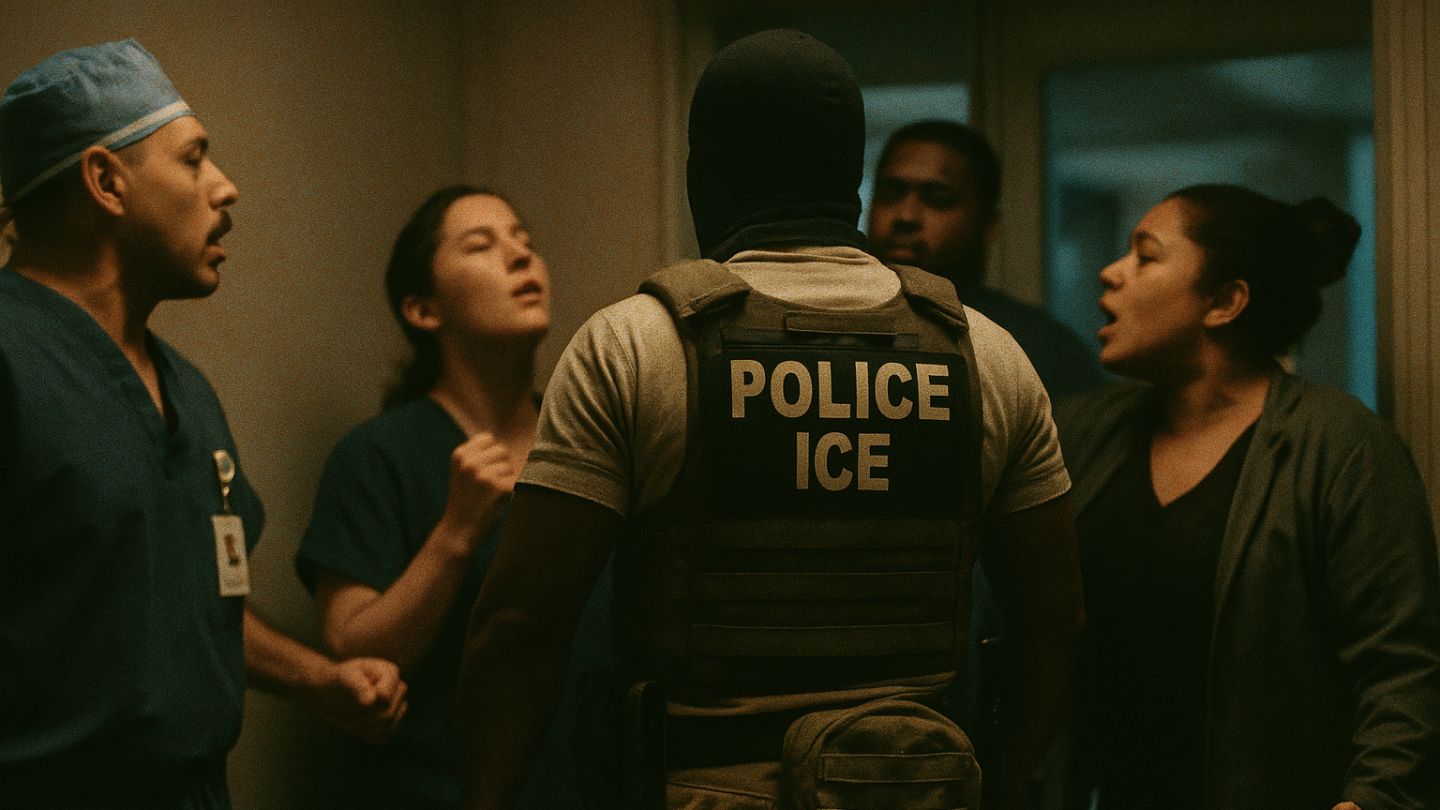
Inside the clinic, staff in scrubs moved instinctively. They formed a barrier between the agents and the frightened man who, by several accounts, was clinging to a doorframe and begging for help.

“You don’t even have a warrant!” one nurse shouted as masked agents in tactical gear tried to force their way past her. “Get your hands off of him!”

Staff members demanded identification and legal documentation, locking doors and trying to shield Guillen-Solis from being removed. Tensions rose quickly. At one point, clinic employees reportedly called 911 themselves, stating that federal agents were attempting to take someone without proper authority.

The standoff escalated as the agents pushed through. According to Department of Homeland Security (DHS) officials, Guillen-Solis was the target of a lawful, targeted arrest operation. They claim he had previously entered the U.S. without inspection and had defied a final deportation order.

But to the staff on duty, it didn’t look like law enforcement—it looked like an ambush.

“We asked for a warrant. They had none,” said one clinic employee, who requested anonymity for fear of retaliation. “They had no right to enter this building. We don’t even let pharmaceutical reps in without checking ID.”

ICE later accused staff of obstructing the arrest and claimed one officer was physically assaulted during the encounter. DHS released a statement condemning what it described as “vigilante interference” with federal operations.

The incident raises fresh questions about the use of force in immigration enforcement, especially in sensitive locations like healthcare facilities. California has long designated medical centers as “sensitive spaces,” where enforcement actions are discouraged unless absolutely necessary.

Immigrant rights groups see the raid as part of a disturbing pattern under the Trump administration’s second term: a renewed willingness to disregard local protections in favor of show-of-force tactics.

“This was not just about one man,” said a spokesperson for the Inland Coalition for Immigrant Justice. “This was about intimidation. About making an example. But they didn’t count on a team of nurses standing in the way.”

Guillen-Solis, who reportedly supports his chronically ill mother and has no criminal record, was taken into custody. His current location has not been disclosed. Advocates say he was allowed only one brief phone call before being transferred.

The clinic staff, now hailed by some as heroes, have received an outpouring of support on social media, while others worry about potential legal consequences for interfering in a federal operation.

State lawmakers have begun making inquiries, and civil liberties attorneys are monitoring the situation closely. The California Attorney General’s Office has not yet commented.

For now, the entrance to the Ontario Advanced Surgery Center is quiet again. But for those who witnessed the arrest, the image of federal agents dragging a weeping man from a medical clinic remains seared in memory.

“It felt like we were watching something from a different country,” one staffer said. “Not America. Not here.”


Note: Image was generated by Sora AI from other available images and presented here under fair use copyright provisions.
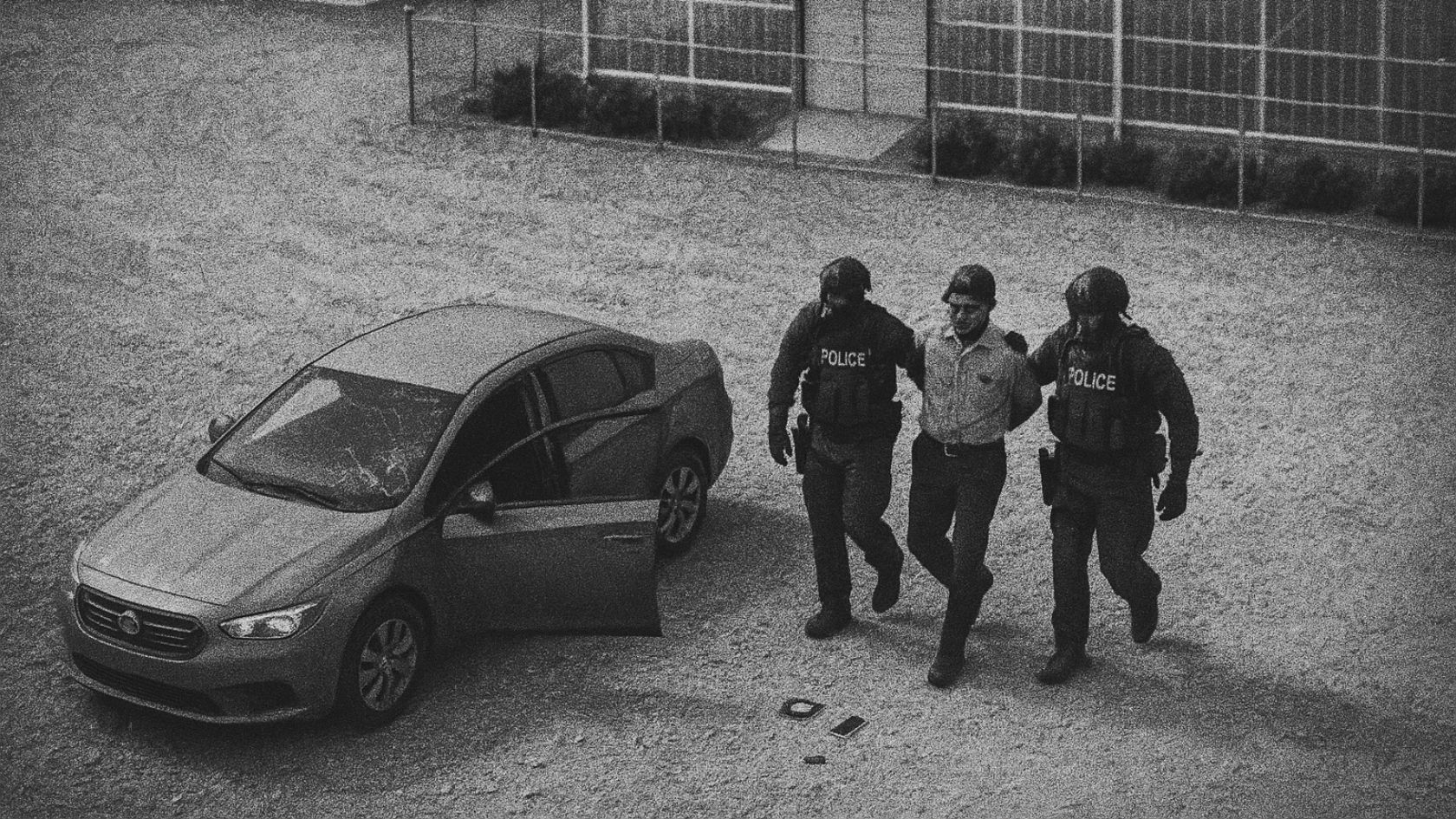

A security guard was among those arrested in the California raid.

The Camarillo operation resulted in the disappearance of George Retes, a disabled U.S. Army veteran and U.S. citizen, after being confronted by heavily armed ICE agents.

Family members and local residents report that ICE failed to provide a location for Retes, leaving loved ones in legal limbo and emotional distress. Activist groups are mobilizing in response, citing a pattern of U.S. citizens being targeted under immigration pretexts, including those with military service.

The incident is part of a broader crackdown that saw one farm worker critically injured and numerous others detained across multiple sites. Rights advocates are calling for transparency and accountability—insisting that federal law does not grant ICE the authority to detain citizens without due process.

The detention of Retes during a federal immigration enforcement operation raises serious constitutional concerns. Eyewitness accounts describe federal agents forcibly removing him from his vehicle—shattering glass, deploying chemical spray, and physically subduing him.

Under applicable civil rights statutes, any federal agent who deprives a person of constitutional protections under the color of law may face legal consequences. If Retes was indeed mistaken for a non-citizen or otherwise unlawfully detained, it would constitute a direct violation of due process.

Legal observers note that ICE violated basic procedural norms by failing to notify family or counsel of Retes’s status or location. Civil litigation may follow, potentially targeting both the individual agents and the command structures that enabled the action.


Note: The image used in this post was rendered by Sora AI, which referenced photos from the raid.

The Middle Is Not the Problem—It’s the Answer

Mainstream narratives often portray the country as hopelessly divided. Yet beyond the noise of ideological extremes lies a broad consensus rooted in basic dignity, shared values, and a desire for a better future. This is not a fringe group. It is the majority.

These Americans do not demand perfection. They ask for fairness, honesty, and a government that works as hard as they do. They expect leaders to protect opportunity, not power; to serve citizens, not party platforms. They reject both chaos and complacency.

The middle does not seek to erase differences. It seeks to bridge them. Its strength lies in balancing conviction with cooperation. It values both innovation and tradition, both enterprise and equity.

Dismissed as moderate or meek, this group is anything but. It is strong enough to resist despair and clear-eyed enough to resist manipulation. The future depends on this grounded, principled center. It is not indecision—it is discipline.

Trump and Epstein

It sure seems to be a sensitive subject these days.

Donald seems pissed that it’s even a topic these days. He says that they were once friends, but that stopped over 20 years ago.

Now, he tries to be dismissive, saying that it’s ancient history and no one cares.

No, Donald. The Epstein files (and lists) are a big deal because of you… and, among others, many in your base care.

When asked if you would release the files, you hesitated and then said that you would.

Then you didn’t.

Your Justice Department says there isn’t any list.

And you have only released heavily redacted files.

Your base wanted the files (and list) released.

Your base isn’t very happy, Donald.

Not happy at all.

https://www.facebook.com/share/p/16xMyrNYij/

When the Center Holds, the Country Functions

The most important voices in the country today are not the loudest. They are the ones making things work without recognition. These are the people balancing childcare and night shifts, fixing trucks and tutoring kids, showing up at community meetings and food banks. They are not waiting for a revolution—they are doing the daily work of holding the country together.

This majority is neither extreme nor apathetic. They remain skeptical of systems that have failed them, yet still believe in the possibility of improvement. They support fair borders and fair wages, accountable government and accessible healthcare, personal responsibility and social safety nets.

While political theater dominates the headlines, this majority remains underrepresented and undervalued. They are not passive. They are persistent. The center, often dismissed as indecisive, is in fact the country’s most stabilizing force.

A functioning democracy depends on their resilience. When the center holds, the nation does not fall.

The Quiet Strength That Still Believes

There remains, in the background of this country’s chaos, a quiet strength that refuses to give up. It doesn’t shout. It doesn’t seek power. It stands firm in its belief that democracy is a commitment, not a slogan.

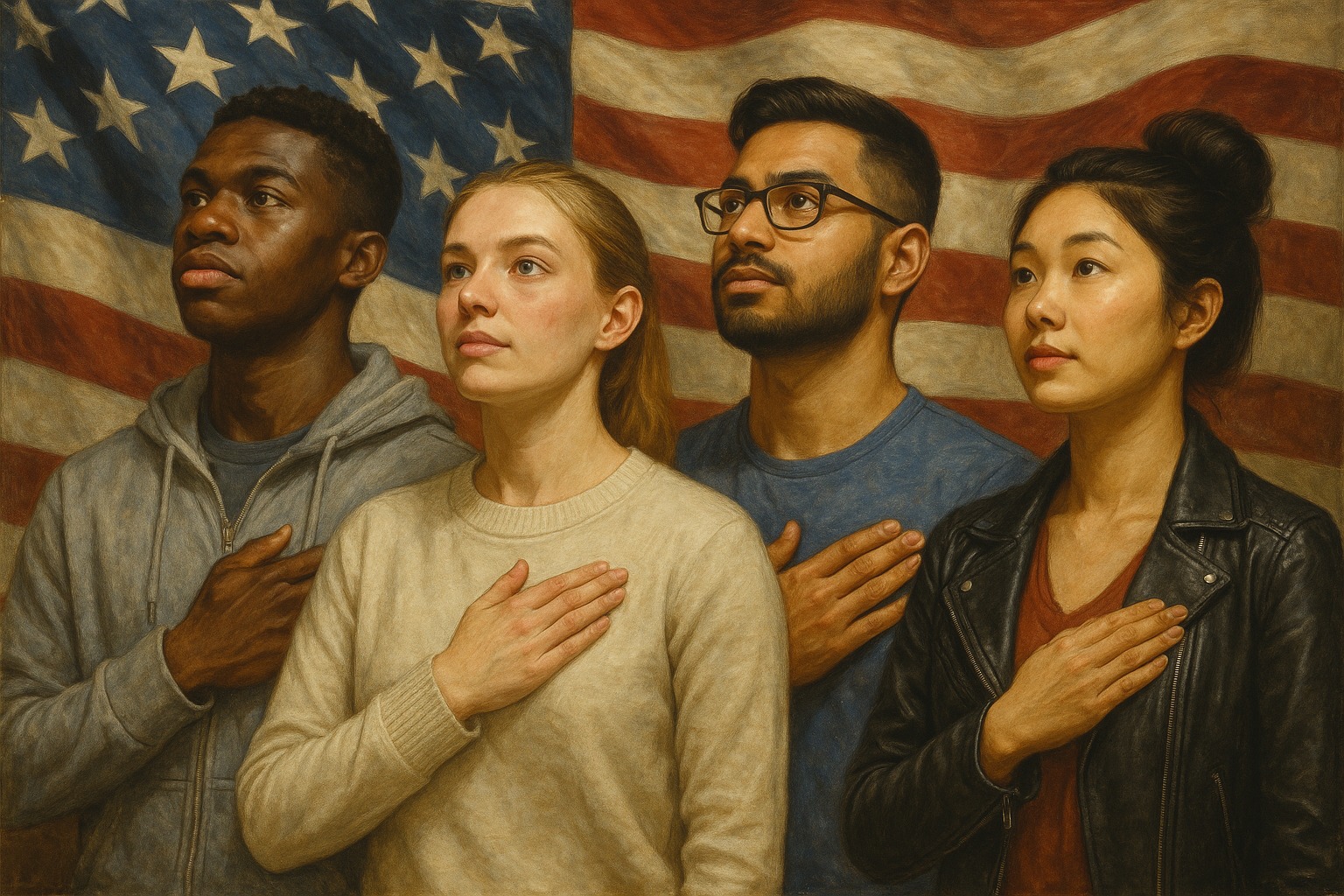
This strength lives in millions who still recite the pledge and mean every word. Not out of blind loyalty, but out of stubborn hope. Hope that this country can live up to its promises—not just for some, but for all.

These Americans know the nation’s history is flawed. They don’t flinch from it. But they also know that progress doesn’t come from tearing each other down—it comes from showing up, standing up, and staying in the fight long after the cameras move on.

They represent no party and every community. They carry no single ideology, only the shared conviction that justice is possible, decency matters, and unity is worth striving for.

In times like these, it is easy to lose faith. But that’s exactly when faith matters most—not the loud kind, but the quiet kind that stands hand over heart, eyes forward, and says: we are not finished yet.

Lessons in Fear

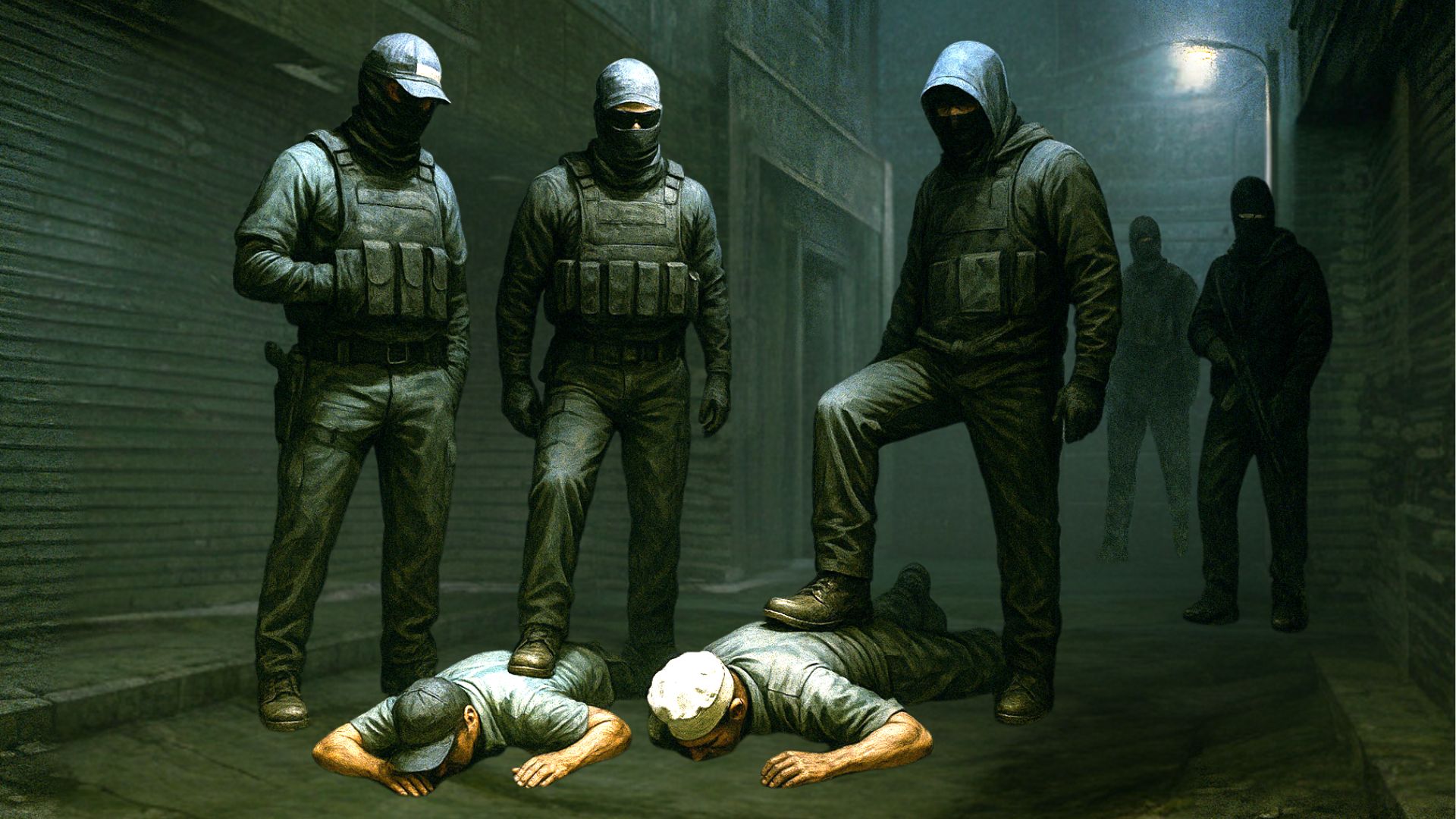
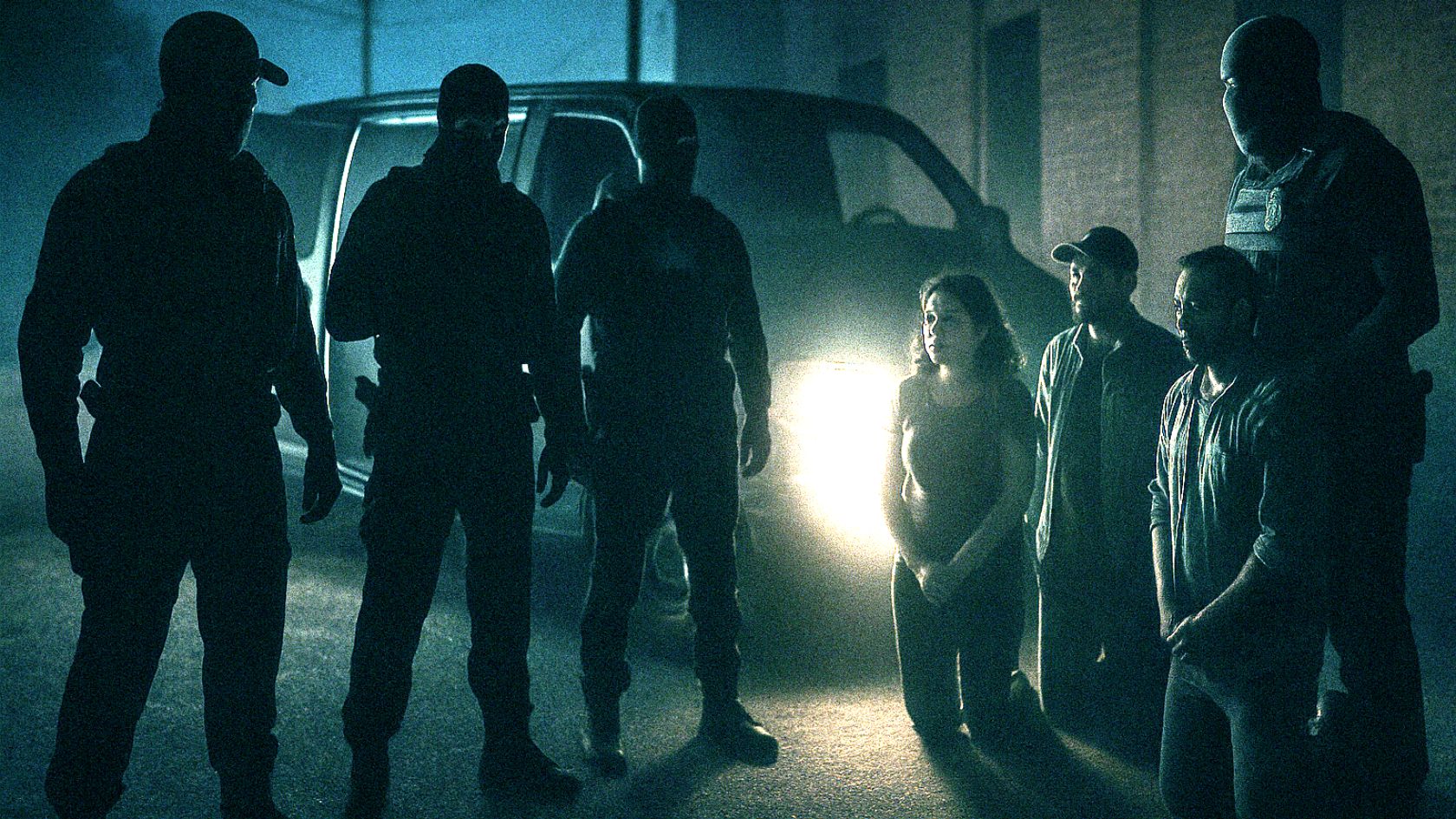
If I were designing a training module on how to instill mass compliance without firing a shot, I’d show this image.

A landscaper. A line cook. Both face-down under the boots of masked agents.
No badge. No warrant visible. Just dominance—faceless and final.

What lesson do communities learn here?

That legal gray zones are wide enough for black hoods.
That due process ends where “reasonable suspicion” begins.
That you should be afraid—not of breaking the law, but of existing.

We are teaching this now. Every unmarked raid is a civics class in authoritarianism.

And the syllabus is clear:
Forget your rights. Fear the mask.
Stay invisible. Stay silent. Or be taken.


Background: In July 2025, Congress passed H.R.1, allocating over $140 billion to expand immigration enforcement. The law funds mass detention, mass deportation, and masked federal raids, while deputizing local police as ICE agents. Officers are no longer required to identify themselves, and U.S. citizens have already been wrongly detained. This is the largest escalation of immigration enforcement in U.S. history.


When They Come Like Ghosts

The people they’re taking—line cooks, gardeners, janitors—they leave behind more than empty rooms. They leave fear. Silence. Fractures in the everyday fabric of life.

These agents come masked, unannounced—like ghosts with guns. No names. No badges. No accountability. Just power, used in the dark.

A covered face isn’t neutral when it comes with authority. It doesn’t protect. It erases. It sends a message: You don’t get to know who’s doing this to you.

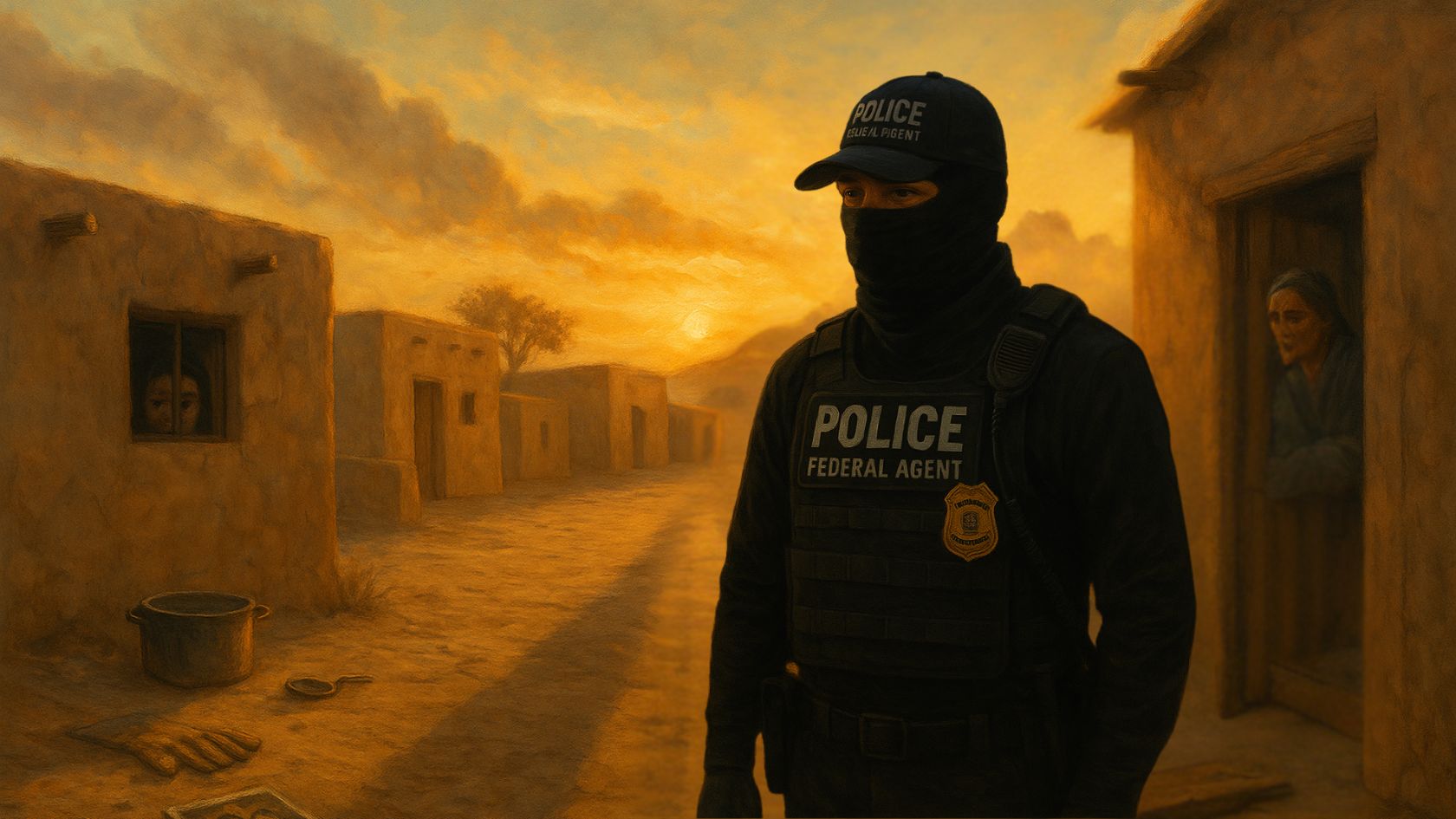
Kids duck behind curtains when the vans pull up. Elders lock doors at noon. This isn’t law and order. It’s fear and disappearance.

This isn’t just about legality. It’s moral corrosion. It hollows out what connects us. And if we let it stand, we’ll forget what decency looks like.

We can’t. And we won’t.


Background: In July 2025, Congress passed H.R.1, allocating over $140 billion to expand immigration enforcement. The law funds mass detention, mass deportation, and masked federal raids, while deputizing local police as ICE agents. Officers are no longer required to identify themselves, and U.S. citizens have already been wrongly detained. This is the largest escalation of immigration enforcement in U.S. history.


The Government That Hides Its Face

We’ve seen this before—just not here.

When a government hides the face of its authority, you better watch what else it’s hiding. Because a masked enforcer ain’t about justice. He’s about control.

They say it’s for “agent safety.” Fine. Then put ’em on desk duty. You don’t get to dress like the villain in a bad action movie and call it public service.

This isn’t immigration enforcement anymore. It’s intimidation.
You send in federal muscle with no name, no badge, and no accountability? That’s tyranny with a PR budget.

I don’t care what your politics are—if you think this won’t touch you, you’re dreaming.
Because once they normalize this, it’s only a matter of time before the mask knocks on your door too.


Background: In July 2025, Congress passed H.R.1, allocating over $140 billion to expand immigration enforcement. The law funds mass detention, mass deportation, and masked federal raids, while deputizing local police as ICE agents. Officers are no longer required to identify themselves, and U.S. citizens have already been wrongly detained. This is the largest escalation of immigration enforcement in U.S. history.

The Costume of Control

A mask is supposed to protect.
Now it’s used to erase.

Erase names. Erase accountability. Erase the line between law and threat.

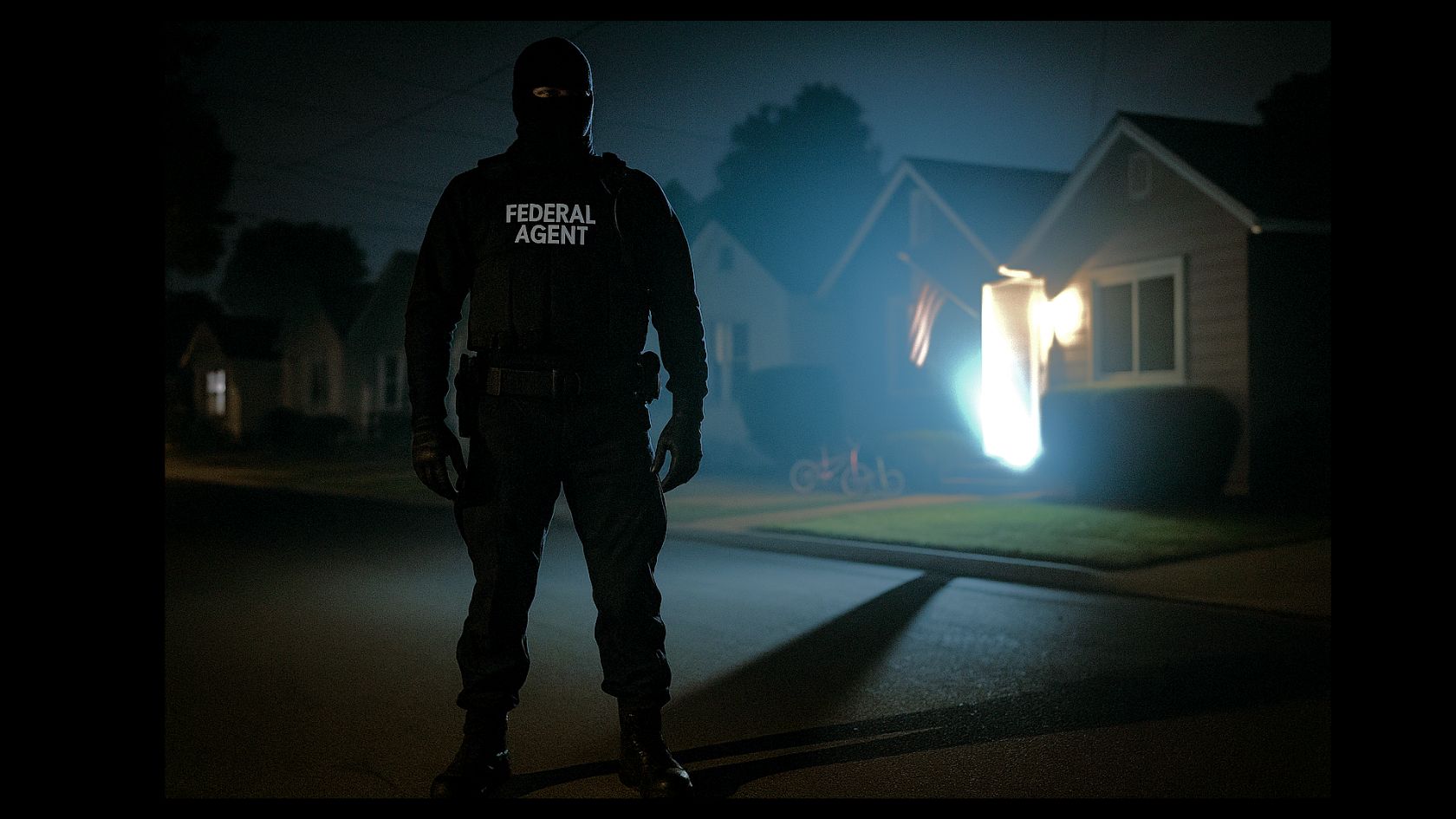
You don’t need a badge to terrify a neighborhood—you just need a face covered in black fabric and a van with no plates.

I see echoes of history in this image. Not the good kind.
The kind where men hid their faces to make people disappear.
The kind where authority didn’t ask—it just arrived, and demanded silence.

These aren’t arrests. They’re messages. Warnings painted in fear.
Don’t ask. Don’t speak. Don’t be visible.
Especially if you’re not white. Especially if you’re not “from here.”

They say they’re protecting us.
But who protects us from them?