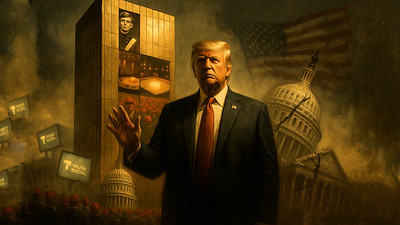
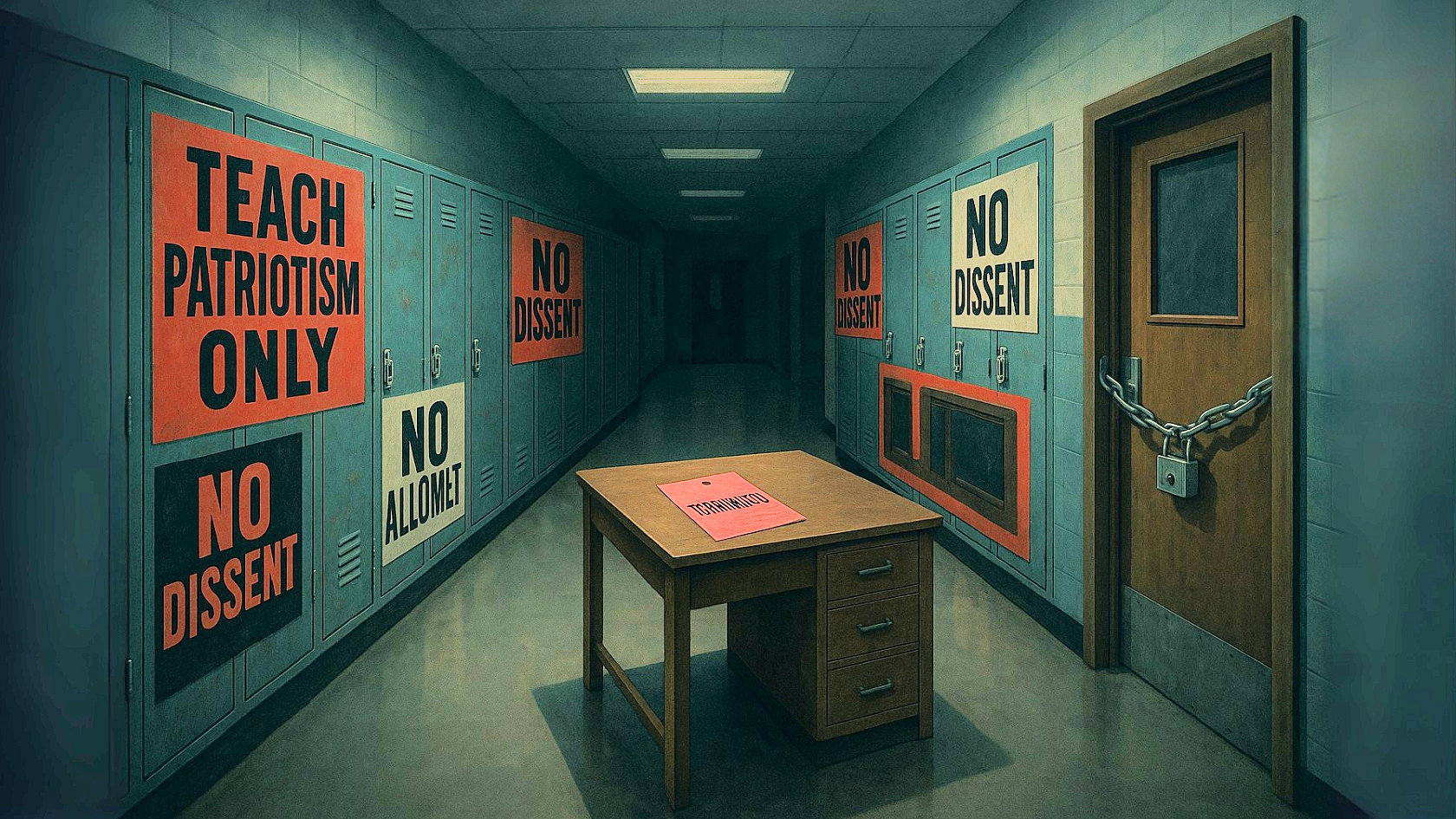
 One of the most consistent signs of authoritarian drift is the early targeting of educators.
Heather Cox Richardson’s August 2 and 4 updates highlight how deeply embedded that targeting has become under the Trump administration’s execution of Project 2025. The stated goals—“patriotic education,” “curriculum oversight,” “parental rights”—are not educational reforms. They are control mechanisms.
Across multiple states, school board resolutions and statehouse legislation now mandate ideological compliance in public education. History curricula are being rewritten to minimize systemic injustice. Literature lists are being purged. Science instruction is under review for “bias.” Some districts are monitoring teachers’ personal social media accounts. Others have enacted book bans that extend beyond libraries and into classrooms.
These efforts are not isolated. They’re synchronized—with language drawn directly from Project 2025’s recommendations. Schedule F, the directive empowering the president to fire tens of thousands of civil servants, is already being used to identify and remove staff across federal education agencies. Many of those removed held policy or civil rights oversight roles.
What’s unfolding is not a conflict over standards.
It’s a campaign to dismantle intellectual autonomy.
When teachers become targets, the intent is not just to silence individuals. It’s to reshape the pipeline of knowledge—who defines it, who transmits it, and who is allowed to challenge it.
This is already affecting districts:
– Some state departments of education now require “viewpoint neutrality” in teaching slavery, the Holocaust, and climate science.
– Funding is being redirected to private and charter networks that follow state-aligned curricula.
– Teacher certification boards are facing political intervention.
– University departments of education are being defunded or consolidated.
At the federal level, the Department of Education has undergone significant leadership turnover since February 2025. Several career officials have resigned or been removed. Advisory panels on equity, student mental health, and public higher education access have been disbanded. Rulemaking authority is being centralized within ideologically aligned leadership circles.
None of this is improving education outcomes.
It is, however, reducing capacity for dissent, for critical inquiry, and for evidence-based policy.
The rebranding of censorship as reform is central to this effort. Public statements emphasize “transparency,” “fairness,” and “accountability.” But in practice, these terms are being used to justify surveillance, purges, and the reengineering of school systems to align with political doctrine.
When teachers are threatened for teaching verifiable history, when librarians are removed for defending access to literature, when university professors are dismissed over social views—the civic cost is not theoretical.
A society cannot remain free if its educators are forced to lie, conceal, or defer.
Education policy under Project 2025 is not about improving outcomes. It’s about securing obedience.
And the targets are not just urban or elite. Rural and suburban districts are facing these pressures too—especially where political operatives have gained control of local boards.
This is a purge.
It is real.
And it is accelerating.
If the goal is to prevent the next generation from asking questions, then the suppression of teachers is not collateral damage. It is the plan.