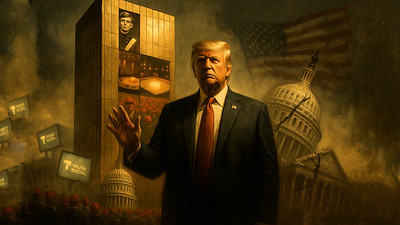
Yesterday’s protest in the streets of Washington, D.C., began within hours of the president’s announcement — too soon for any permitting process or detailed planning — and it grew fast. It was the city’s immediate response to a presidential order that crossed a civic red line.
On August 11, President Trump declared a “crime emergency” in the capital, invoking Section 740 of the D.C. Home Rule Act to seize control of the Metropolitan Police Department and deploy 800 National Guard troops into the city. This happened despite the fact that violent crime here is near a 30-year low.¹ Attorney General Pam Bondi was placed in charge of the force, bypassing Mayor Bowser and stripping local officials of their authority.² Trump called it “Liberation Day.”³
For the people who filled the streets last night, it looked like something else entirely: the collapse of the line between civilian governance and federal military power.
The banners said “Be Brave: Freedom Not Fascism” because this wasn’t abstract politics. This was the sight of home rule—already limited—being overridden in a matter of hours. This was the arrival of troops in neighborhoods that had not asked for them, under orders from a president using the language of war to describe his own citizens.
History will note the legal maneuvers and the speeches. But it will also note the citizens who stood in front of armed authority and refused to be silent, reminding the rest of the country that democracy, once fenced in, has to be defended in the open.