While bombs fell abroad, rights vanished at home.
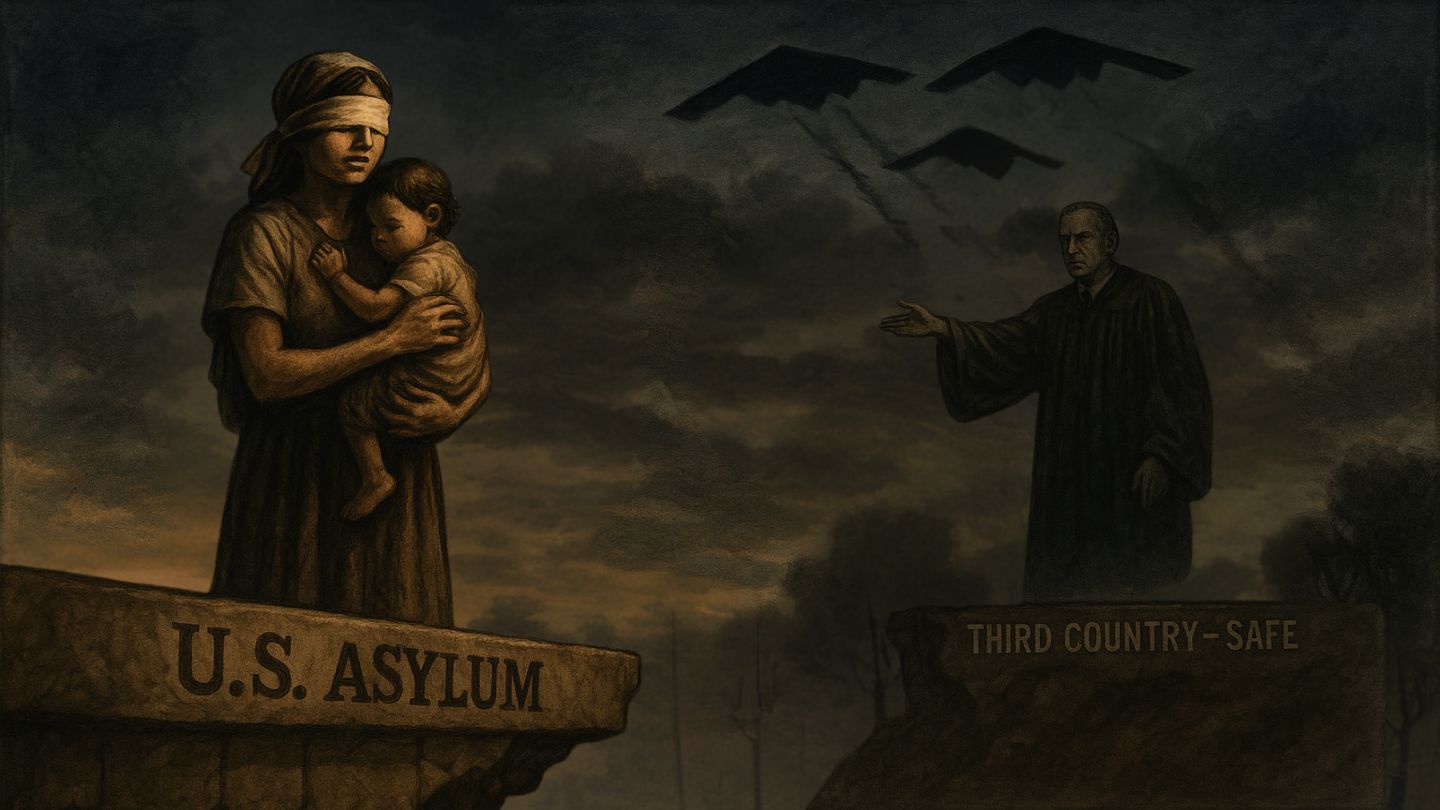 As missiles flew over the Middle East and headlines drowned in war optics, the Supreme Court quietly handed the Trump administration a tool it’s long coveted: the power to deport migrants to so-called ‘third countries’—without meaningful regard for their safety.
In a 6–3 decision that slid beneath the radar during the Iran escalation, the conservative majority ruled in favor of a Trump-aligned policy allowing migrants to be deported to countries they never came from—and may have never even entered—if the administration designates them as a “safe third country.”
Let’s break down what that means:
If you flee cartel violence in Honduras, escape extortion in Guatemala, or survive gang-rape in El Salvador, but pass through Nicaragua or Mexico to reach safety, the U.S. can now deport you to… any of those transit countries. No family, no network, no protection—and in many cases, no functioning asylum system.
The kicker? Those deported may be at even greater risk in these “third” countries than they were in their home nations. Human rights groups have documented countless cases of kidnapping, assault, and death following forced returns under these agreements. But the Court’s ruling doesn’t require the U.S. to verify that deportees will be safe. It only requires that the destination country say it’s safe.
This isn’t policy. It’s legal fiction.
Violence Abroad, Cruelty at Home
It’s no coincidence that this ruling landed as Trump basked in the glow of military escalation against Iran. Distraction breeds opportunity—and the Court, now stacked with ideologues who see immigration as a threat, seized its moment.
Just days after B-2 bombers dropped payloads over Iranian infrastructure, the legal infrastructure of U.S. asylum law was being gutted. These moves share more than timing—they share a worldview:
America’s power is preserved by making others expendable.
Whether that means foreign civilians in Tehran or asylum seekers in Tapachula, the logic is the same: certain lives are politically disposable. That’s the unifying ethos of Republican dominance today—military might abroad, and dehumanization at the border.
The Court as Quiet Collaborator
What’s especially chilling is how quietly this happened. No press conference. No Oval Office bragging. No campaign rally soundbite. Just six men in robes—five appointed by Republican presidents—redefining human rights with the stroke of a pen.
Legal scholars warned this was coming. The Trump movement’s grip on immigration policy didn’t end in January 2021—it burrowed deep into the judiciary. The Supreme Court is now the ultimate executor of that vision. They don’t need cages or border walls. They have precedent.
And that precedent is clear:
You don’t need to be safe. You just need to be gone.
Who’s Next?
This ruling doesn’t just endanger Central Americans. It opens the door to a global deportation regime that could affect climate refugees, LGBTQ+ asylum seekers, political dissidents, and survivors of gender-based violence.
If the U.S. deems a third country “safe,” even symbolically, your life story no longer matters.
Neither do your bruises.
Your testimony.
Or your terror.
It’s not about justice anymore—it’s about removal. Fast, final, and far away.
What Now?
This decision is already reshaping deportation cases. Immigration attorneys report judges referencing the ruling to justify removals with little inquiry. DHS has signaled enthusiasm for expanding third-country agreements with regimes that can barely protect their own citizens, let alone ours.
But resistance is still possible. Advocacy groups are mounting legal challenges. Faith coalitions are mobilizing sanctuary efforts. And in communities across the country, organizers are reminding neighbors that this isn’t just an immigration issue—it’s a human one.
Because if courts can decide whose life has value in silence, then the only answer is to make noise. Loud, sustained, human noise.
Conclusion
While the media watched bombs fall on Iran, the Supreme Court gave Trumpism a silent victory—one that may outlast the man himself. It didn’t come with shock and awe. It came with robes, rulings, and the routine language of legalese.
But make no mistake:
This is cruelty disguised as law.
This is abandonment repackaged as policy.
And unless it’s challenged, it won’t stop at the border.