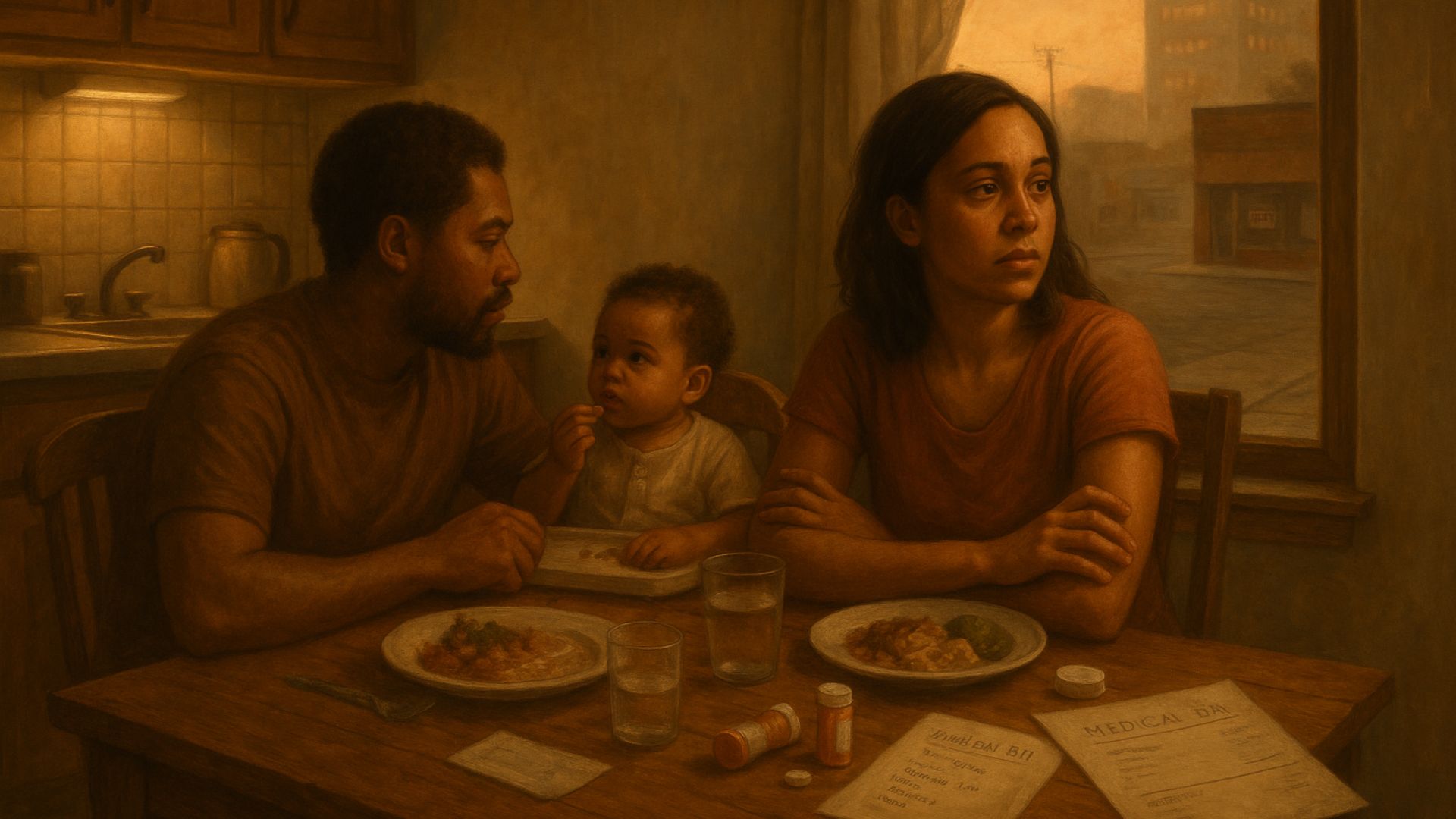
 Injustice doesn’t always announce itself. Often, it slips in through everyday absences.
The grocery store that closed and never returned. The school with no nurse. The clinic three towns away. The ballot that never arrived. These aren’t isolated inconveniences—they’re indicators of a system operating exactly as it was permitted to.
And lately, instead of addressing these gaps, policy is making them worse.
Equity programs are being dismantled. Curriculum is being sanitized. Legal protections are being rolled back or left to rot. What should be corrective action is being reframed as a threat, and the result is predictable: growing disparities in healthcare, housing, education, and access to basic services.
These are not natural outcomes. They are reinforced through budget cuts, ballot barriers, and rhetoric designed to vilify any attempt at fairness.
Disparity doesn’t need to be shouted to be effective. It functions quietly—through funding formulas, zoning rules, clinic closures, and school consolidations. It’s the quiet removal of infrastructure from communities deemed less valuable, less central, or simply less white.
What we’re seeing now is more than neglect—it’s backsliding. The tools that were beginning to close the gap are being stripped away, not because they failed, but because they worked.
If it’s always the same communities bearing the burden, then we’re not dealing with misfortune—we’re dealing with intent.
And the longer we allow this to be framed as a political argument instead of a measurable failure, the more comfortable the machinery becomes at leaving people behind.
This isn’t about feelings. It’s about patterns.
And the patterns say this: inequality in America isn’t just persisting—it’s being refined.