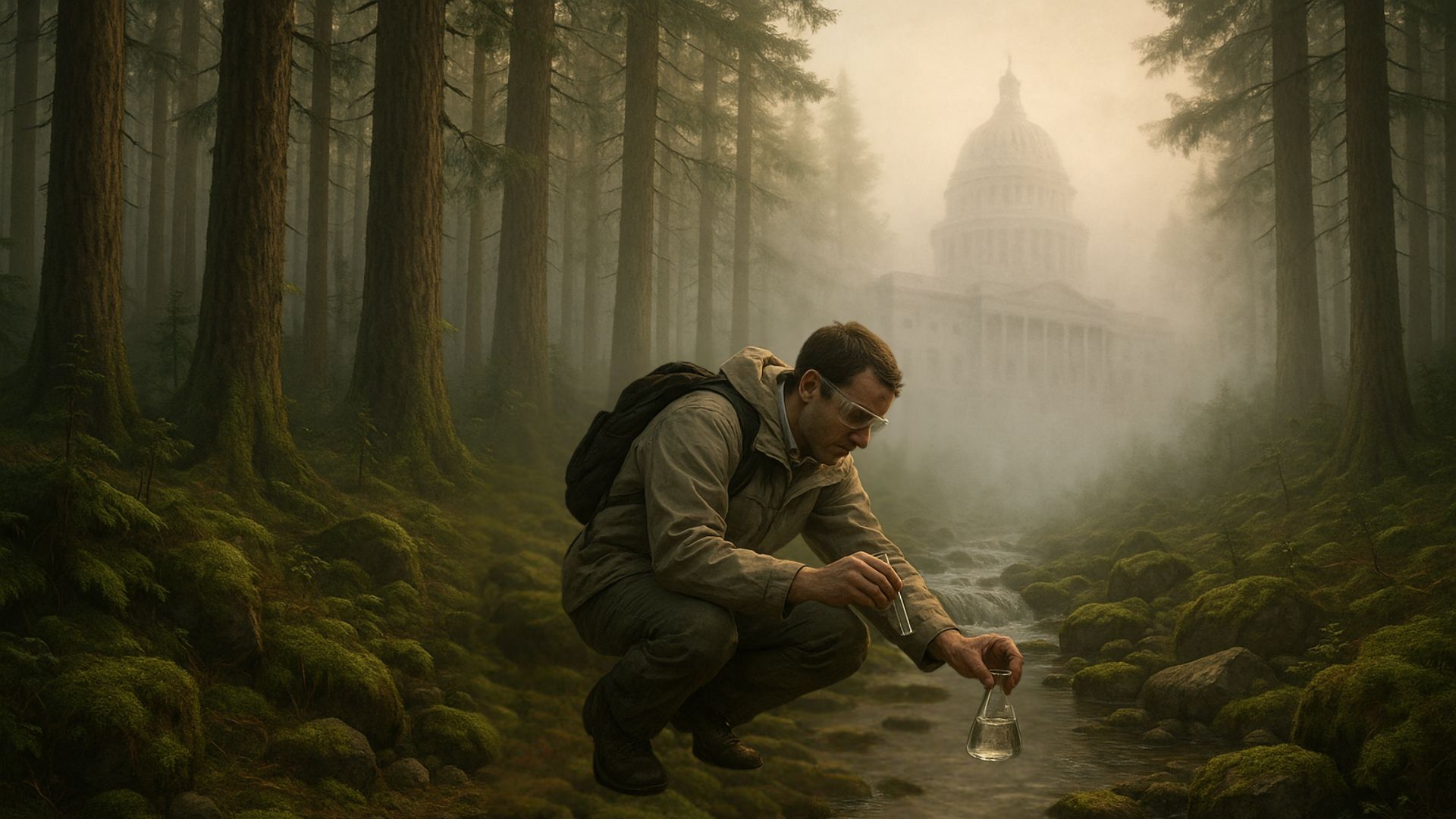
 Federal environmental reports come from scientists now in the crosshairs of Project 2025. Heather Cox Richardson’s recent briefings make the stakes plain:
- fire independent experts,
- dismantle reviews,
- strip agencies, and
- refill them with partisans.
What they fear isn’t inefficiency—it’s competence paired with honesty.
The arrogance is familiar: “We know better than the land.” It’s the same thinking that drained wetlands for parking lots and planted monocultures destined to fail. Now it’s sold as “efficiency” and “deregulation.”
Removing job protections for environmental scientists isn’t just cutting “red tape.” It silences the people who can still say:
– This air will kill you.
– This soil is poisoned.
– This flood wasn’t natural.
– This policy is a crime.
Once those voices go silent, no one is left to speak for rivers, forests, or aquifers. And without data, disasters vanish from the record.
Project 2025 is more than legal strategy—it’s an ideology that treats science as an obstacle and the earth as property. Climate models are politicized because they’re accurate. Park rangers are pressured to mislead about wildfire causes because the truth exposes donors. Biologists are reassigned when findings threaten land development plans.
This is governance where truth is a liability, ecosystems are branding tools, and species survival is weighed against private profit.
The land remembers. Burn it, and it holds the ash. Drain it, and it keeps the scar. Lie about it, and it still tells the truth—in rising floodwaters, collapsing bee colonies, shifting migration patterns.
Resisting this wave of manufactured ignorance starts with defending the soil, the water tables, the wildlife counts. These are the records that can’t be spun, and that’s why those in power are working to bury the people who keep them.
The forest doesn’t lie. But it can be silenced—unless we protect those who listen and tell its story.