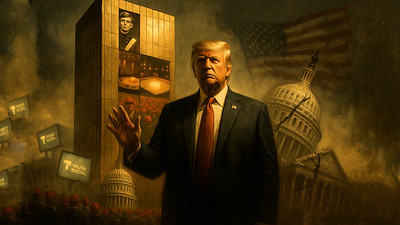
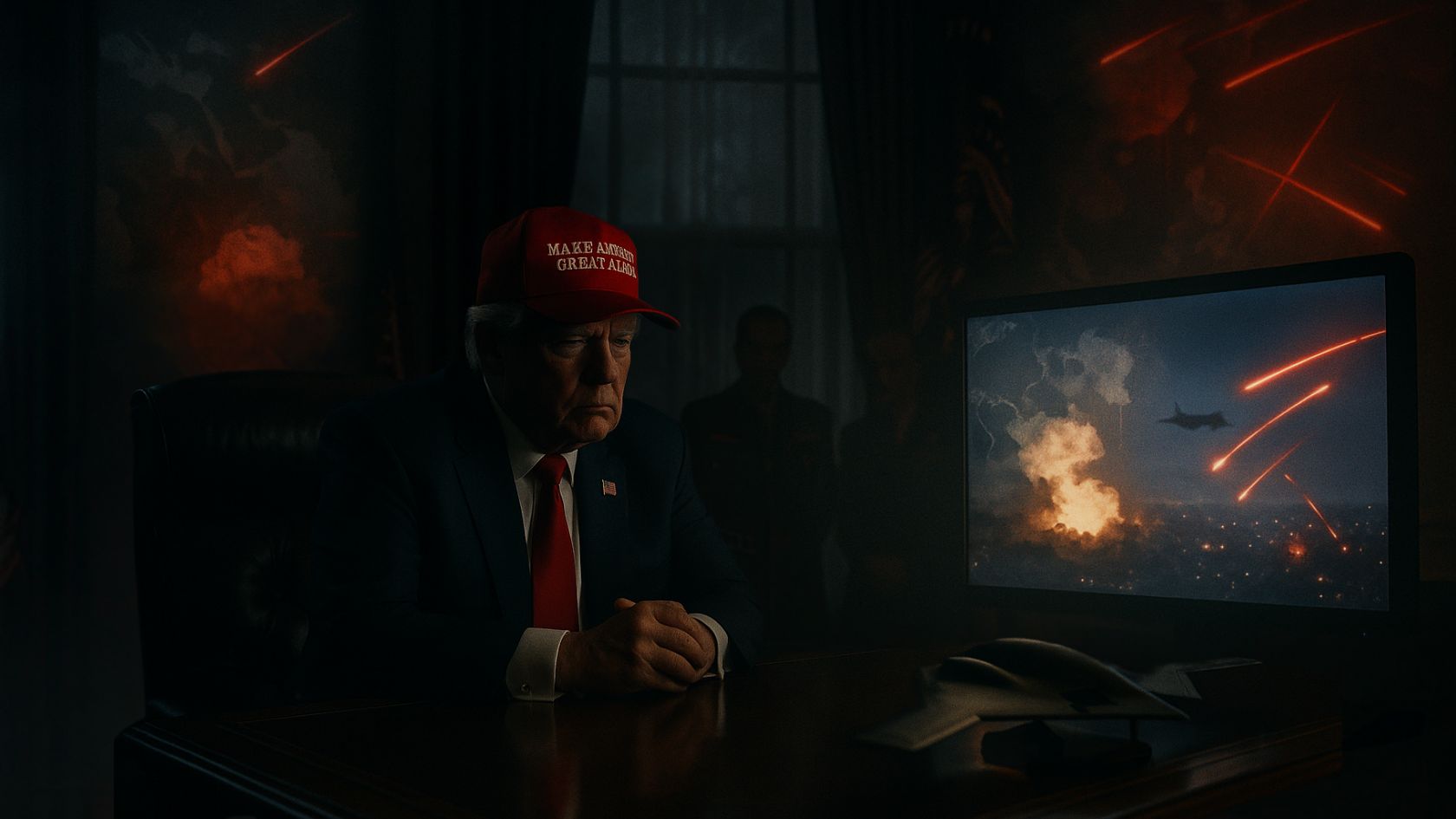
 On a Sunday night, Americans watched shock footage of missiles streaking across the Persian sky. But the real detonation had already happened—inside the echo chamber of Fox News, where presidential ego met a hunger for applause.
This wasn’t national defense. It was political theater wrapped in military packaging. The strike on Iran was not a response to imminent danger, nor a move born of calculated strategy. It was a televised performance crafted for a domestic audience—particularly the one with the remote.
The Optics of War
There was no build-up of national debate, no new intelligence revelations, no urgent diplomatic breakdown. Instead, there were leaks. Strategic hints planted in the press. Chatter on cable news. Then came the prime-time spectacle: American missiles launched before the world, wrapped in patriotic graphics and panel commentary.
Right-wing media didn’t just amplify the message—they authored the script. Applause was predictable, coordinated, and ultimately reciprocal. The presidency became a stage, and foreign policy a prop.
Intelligence Ignored
In the aftermath, reporting confirmed that national security experts had raised serious concerns. They warned of escalation. Civilian casualties. Diplomatic backlash. These weren’t hypotheticals—they were documented risks, listed in briefings that were overruled, ignored, or never fully considered.
The decision was fast, opaque, and insulated from dissent. Traditional advisory structures had been gutted, leaving only those who understood the real criteria: optics over outcomes.
What We Didn’t See
Despite the dramatic coverage, there were no verified images of the actual strike. No live feeds. No satellite confirmation. No footage from the bombers. The bulk of the assault reportedly came from B-2 Spirit stealth aircraft—platforms designed to strike from high altitude, silently and invisibly.
Instead, Americans were shown stock footage: missiles launching from unrelated conflicts, glowing red maps, dramatic music beds, and retired generals speculating in front of LED touchscreens. News anchors filled airtime with patriotic filler and unverified claims. There was no evidence—only ambiance.
The strike was real. But the imagery was simulated.
Unchecked Power
The president didn’t ask Congress. He didn’t need to. Decades of erosion—through vague Authorizations for Use of Military Force and a consistently sidelined War Powers Act—have made it possible for a single person to launch military action without real accountability.
And Congress, once again, blinked and looked away.
History Offers a Contrast
Other presidents faced similar pressure and chose another path. During the Cuban Missile Crisis, John F. Kennedy was advised to strike preemptively. He didn’t. Barack Obama was pushed to bomb Syria in response to chemical weapons. He paused, went to Congress, and reconsidered.
The lesson wasn’t that restraint was weakness. It was that leadership means absorbing pressure, not yielding to it. Especially when lives are on the line.
The Aftermath
Iran retaliated. The region edged closer to wider conflict. Markets trembled. Allies raised concerns. But domestically, the short-term goal was achieved: the headlines rolled, the base rallied, and the approval numbers inched upward.
Military analysts expressed concern about precedent. What happens when future decisions are modeled not on intelligence but on audience reaction? What happens when provocation is packaged for entertainment?
Conclusion
This wasn’t strategy. It was spectacle. And while no American caskets came home draped in flags this time, the cost to democratic process was real.
True damage often comes without smoke or sirens. It comes when laws are bent until they break. When accountability becomes optional. When the power to kill is used not as a last resort, but as a prime-time feature.
And in that moment, it wasn’t the generals who set the tone. It was the network.