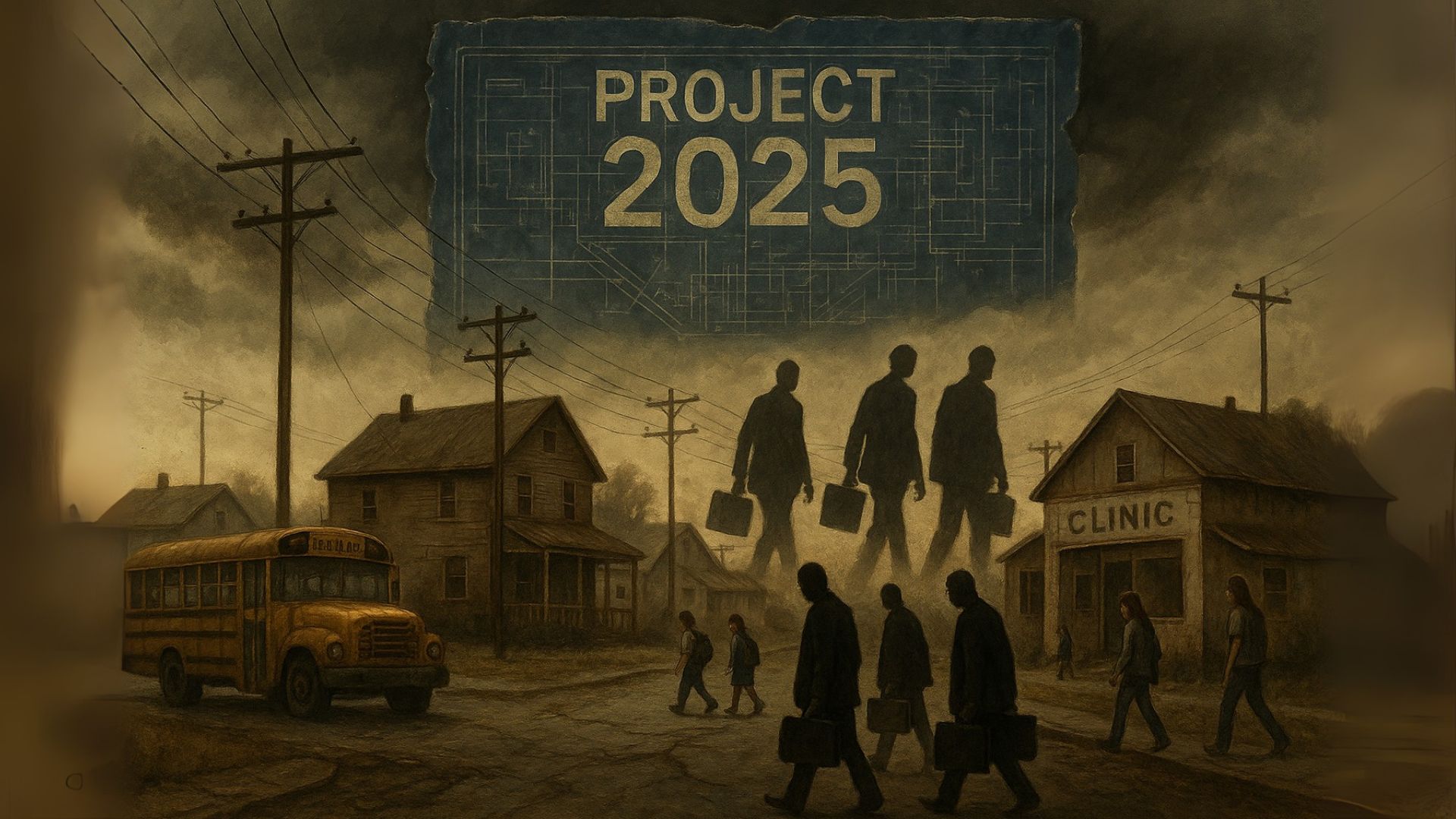
 Headlines sanitize what they name.
“Labor commissioner fired.”
“Schedule F revived.”
“Administrative purge underway.”
Cold language. Bureaucratic phrases. But the impact is not abstract.
Policy doesn’t just sit in white papers. It walks into neighborhoods. It decides what’s funded, what’s ignored, what’s protected, and who gets left behind. The choices made by distant hands land squarely in the middle of ordinary lives.
Heather Cox Richardson’s reporting this past week reveals a dangerous realignment of power—one where truth-telling becomes a liability, and professionalism a threat. A commissioner dismissed for reporting bad job numbers. Civil servants targeted for neutrality. A roadmap for replacing expertise with obedience.
This isn’t theory anymore.
This is Project 2025 in action.
What was once described as a radical blueprint is now being operationalized—executive order by executive order, agency by agency. Schedule F has returned. Purges have begun. Entire categories of federal workers are being reclassified, stripped of protection, or replaced.
This is not about draining a swamp. It’s about draining capacity.
And that reprogramming has a human cost.
Fire the labor commissioner for honest reporting, and you don’t just demote a bureaucrat—you chill every voice below. Reclassify civil service positions, and you don’t just shuffle org charts—you dismantle the firewall between public service and partisan loyalty.
We’re watching the purge unfold in real time. Not in secret. Not someday. Now.
And it lands hardest where it’s least visible.
– The USDA scientist who raises a crop failure warning? Removed.
– The EPA analyst who detects pollutants in a swing-state district? Marginalized.
– The DOJ investigator probing misuse of federal funds? Redirected.
– The FEMA planner who factors climate resilience into housing policy? Silenced.
You don’t have to ban facts. You just eliminate the people who understand them.
The system continues—but not as designed. It runs stripped of its safeguards. The gears turn faster, but without regulation.
What Richardson documents is not a proposal—it’s a process. And the goal isn’t efficiency. It’s control.
The shift won’t be measured on cable news. It’ll be visible in everyday failures:
The bus that doesn’t arrive.
The water that smells off.
The clinic that closes.
The benefits that don’t process.
Because numbers don’t bleed. But people do.
And the people most vulnerable to this restructuring aren’t the elites being invoked on right-wing airwaves. They’re the working-class families in flood zones, factory towns, agricultural belts. The ones who need functioning systems, not ideological spectacle.
Lose a hydrologist, and a floodplain goes unmonitored.
Lose a data analyst, and the wrong factory shuts down.
Lose a medical planner, and a rural clinic can’t adapt.
This isn’t a war on corruption. It’s a war on competence.
And the consequences will land hardest on those furthest from power.
There’s no middle left to wait this out. This isn’t the pendulum swinging. It’s the frame being taken apart while people watch.
So the question becomes: what now?
– Speak plainly.
– Make the stakes human.
– Refuse euphemisms for political sabotage.
– Tell the truth before it becomes unspeakable.
No slogans. Just this:
Stop mistaking vengeance for representation.
The architects of this purge are not building a government for the governed.
They’re constructing a machine to rule from above, uninterrupted and unaccountable.
And if there’s to be resistance, it won’t begin with fists.
It will begin with clarity.
It will grow with solidarity.
And it will stand with voices too stubborn to be erased.