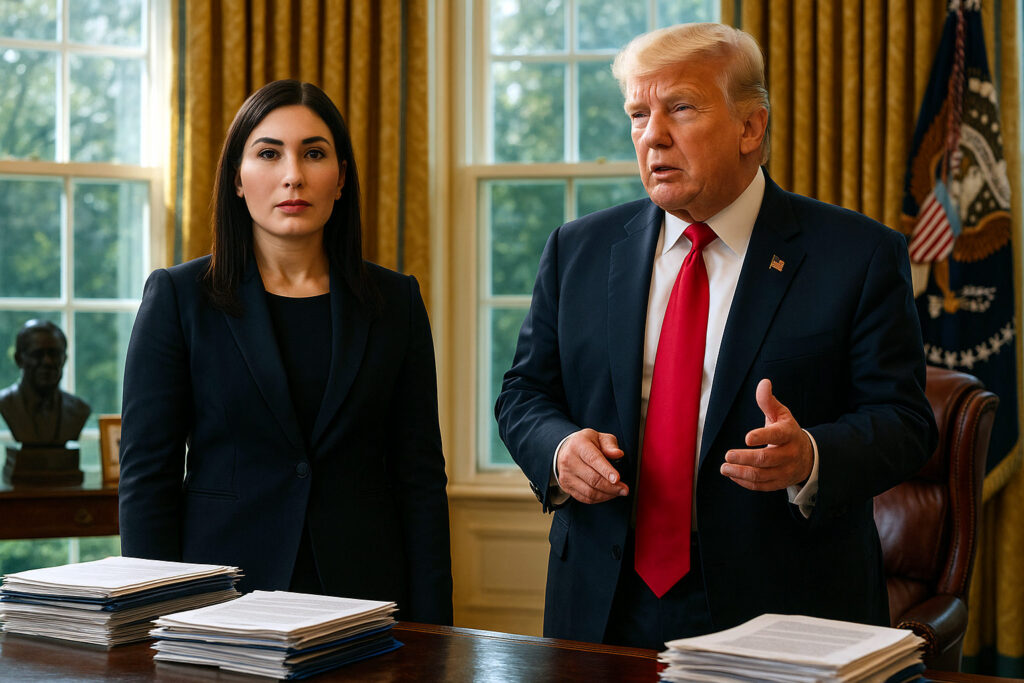
 It’s May 2025, and Laura Loomer has gone from being a provocateur on the political margins to a force shaping the inner workings of the Trump administration. Once dismissed as a fringe figure, Loomer now holds significant sway over personnel decisions and policy directions at the highest levels of government.
From Activist to Influencer-in-Chief
Loomer’s journey began with attention-grabbing stunts and controversial statements. However, her unwavering support for Donald Trump and her aggressive promotion of loyalty within his ranks have elevated her status. Her influence became particularly evident in April 2025, when she presented President Trump with opposition research targeting several National Security Council staffers. Shortly thereafter, six officials were dismissed, including NSA Director Gen. Timothy Haugh and his deputy Wendy Noble. While Trump downplayed Loomer’s role, he acknowledged considering her input .
Shaping Health Policy
Loomer’s impact extends beyond national security. In May 2025, she publicly criticized Surgeon General nominee Dr. Janette Nesheiwat for alleged misrepresentations of her medical credentials and her pro-vaccine stance. Following Loomer’s campaign, Trump withdrew Nesheiwat’s nomination and instead selected Dr. Casey Means, a wellness influencer aligned with Health Secretary Robert F. Kennedy Jr.’s “Make America Healthy Again” initiative. Loomer, however, continued her attacks, accusing Means of promoting “Marxist” ideologies .
A Polarizing Presence
Loomer’s ascent has caused friction within conservative circles. Figures like Rep. Marjorie Taylor Greene have expressed concerns about her influence, warning that her rhetoric and actions could be detrimental to the movement’s image. Despite this, Trump has defended Loomer, referring to her as a “free spirit” and valuing her loyalty .
The Implications
Loomer’s rise underscores a shift in the dynamics of political power, where media-savvy activists can leverage their platforms to influence governance directly. Her trajectory from outsider to insider reflects the evolving nature of political influence in the digital age.
As we observe these developments, it’s essential to consider the broader implications for democratic institutions and the balance of power within the government. Loomer’s story is a testament to how unconventional paths can lead to significant influence in today’s political landscape.