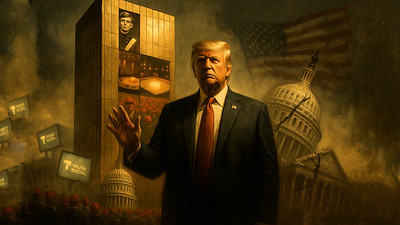
 Two hundred days into Trump’s second term, the changes underway are not corrections—they are calculated removals. Heather Cox Richardson’s August 2nd and 4th reports made it plain: this administration is not just hostile to dissent, but to documentation itself. When the labor commissioner was fired for releasing accurate but politically inconvenient job numbers, it wasn’t a dispute—it was a warning.
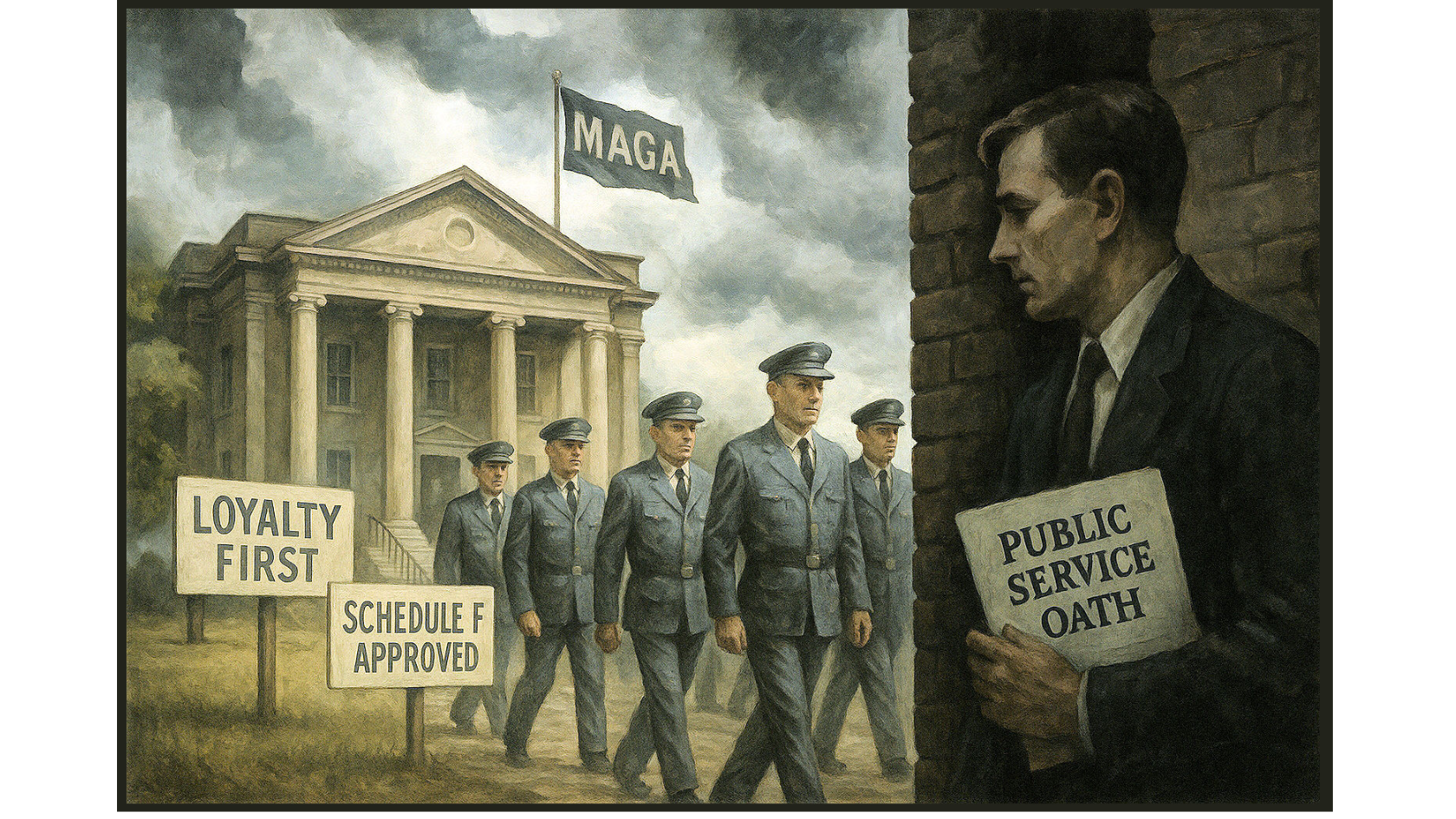
Project 2025 is now active policy. And its authors were clear in their intent: purge career civil servants, politicize agency leadership, and reengineer governance into a loyalty-based structure. This is no longer theory. Thousands have been removed from federal positions, many of them without cause beyond insufficient ideological alignment.
The South knows what these tactics look like. They’ve been applied at smaller scales before—through patronage, school board takeovers, and suppression of watchdog functions. But never with this level of coordination.
The pattern is old:
– Justify the purge with claims of efficiency
– Frame experts as saboteurs
– Replace qualified professionals with partisan loyalists
– Eliminate institutional memory
– Silence becomes policy
And it’s already hitting the people furthest from power.
Under Schedule F, environmental scientists at EPA regional offices are being replaced. USDA rural development analysts have been reassigned or terminated. Department of Justice staff tasked with civil rights enforcement are under review. Multiple federal advisory boards have been disbanded entirely.
None of this is cleaning house. It’s consolidating control.
Those cheering this effort will not be protected by it. You can fire the inspectors and shut down the regulators—but the floods will still come, the bridges will still fail, and the blackouts will still arrive. Political loyalty does not produce clean water or prevent plant shutdowns.
The deep appeal of this purge—the sense of payback against perceived elites—has been weaponized. But the aftermath doesn’t fall on elites. It falls on communities.
Local governments that rely on federal grants tied to needs assessments? Those assessments are delayed or gone.
Small towns hoping for broadband infrastructure? Program criteria have changed—without explanation.
Disaster planning agencies seeking FEMA coordination? Regional contacts have been rotated out or eliminated.
This isn’t a shrinking of government. It’s the hijacking of function.
Southern states are especially vulnerable. Many rely heavily on federal coordination in public health, transportation, energy resilience, and disaster relief. What’s happening now weakens those lifelines under the pretense of reform.
There is no constitutional basis for turning executive agencies into partisan tools. And yet that’s precisely what is being done—under cover of administrative restructuring, and with minimal resistance from a Congress increasingly shaped by ideological gerrymanders and executive pressure.
We’re in the middle of a governance shift that erases safeguards in favor of submission.
That’s not traditional conservatism.
It’s procedural autocracy.
What comes next will not be a return to American greatness. It will be diminished capacity, deteriorating infrastructure, and a public sector terrified to speak truth.
And if the truth cannot be spoken, it cannot be acted upon.
This is a purge.
The people doing it are proud of that.
And unless they are stopped, the damage won’t just be political. It will be operational.
Authoritarian systems don’t begin with tanks.
They begin with silence—forced, enforced, and normalized.