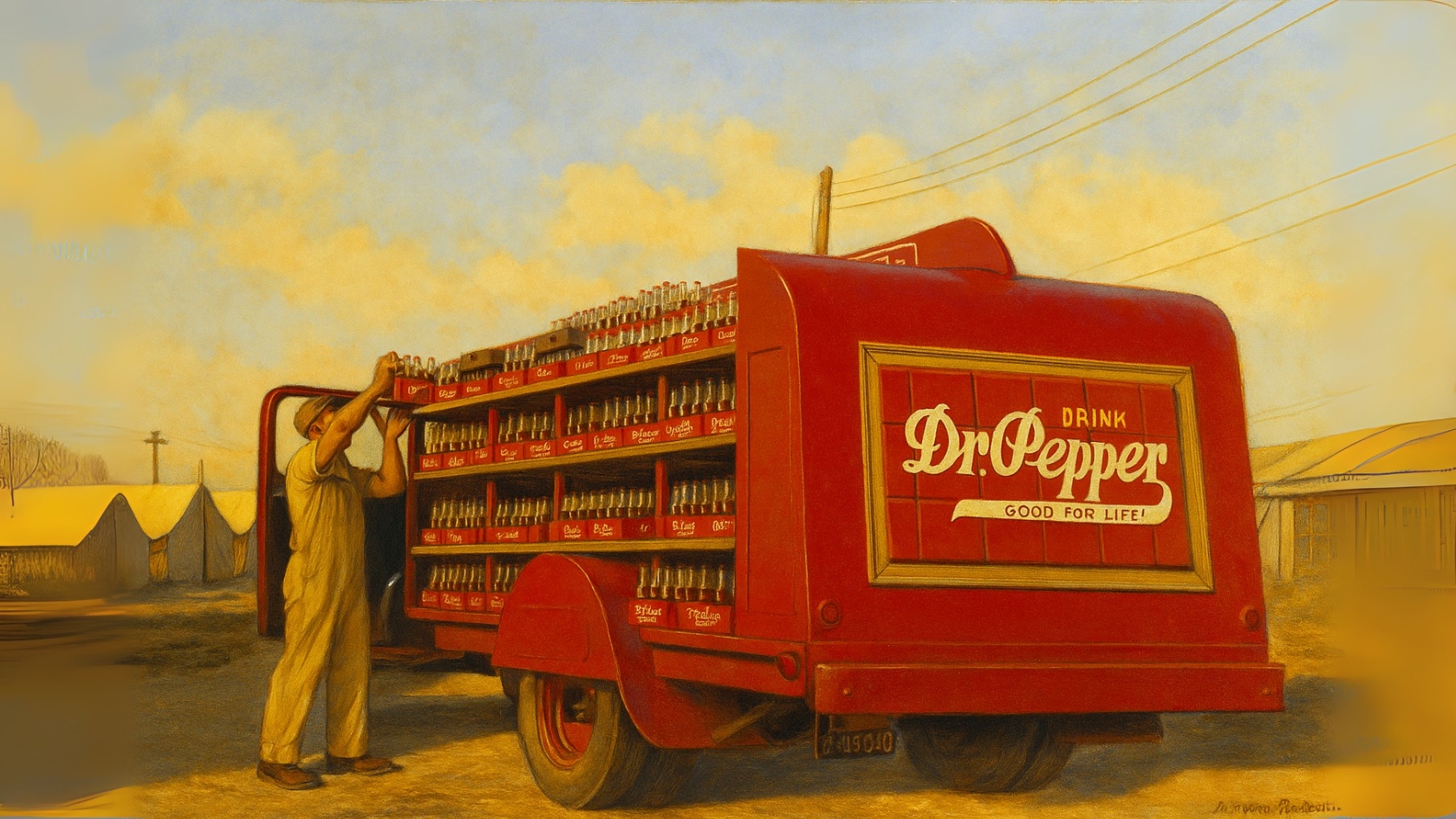
 In the summer of 1942, a Dr Pepper truck pulled into a government-run labor camp outside Nyssa, Oregon. The camp, operated by the Farm Security Administration, housed Japanese American families who had “volunteered” to hoe sugar beets instead of being locked behind barbed wire in a relocation center. The tents were government-issued. The movement was restricted. The freedom was conditional.
Russell Lee, a photographer working for the federal government, captured the scene. A man unloads crates of soda beside canvas tents. The image is quiet. No barbed wire. No soldiers. Just crates, dust, and a calm that masks the coercion behind it.
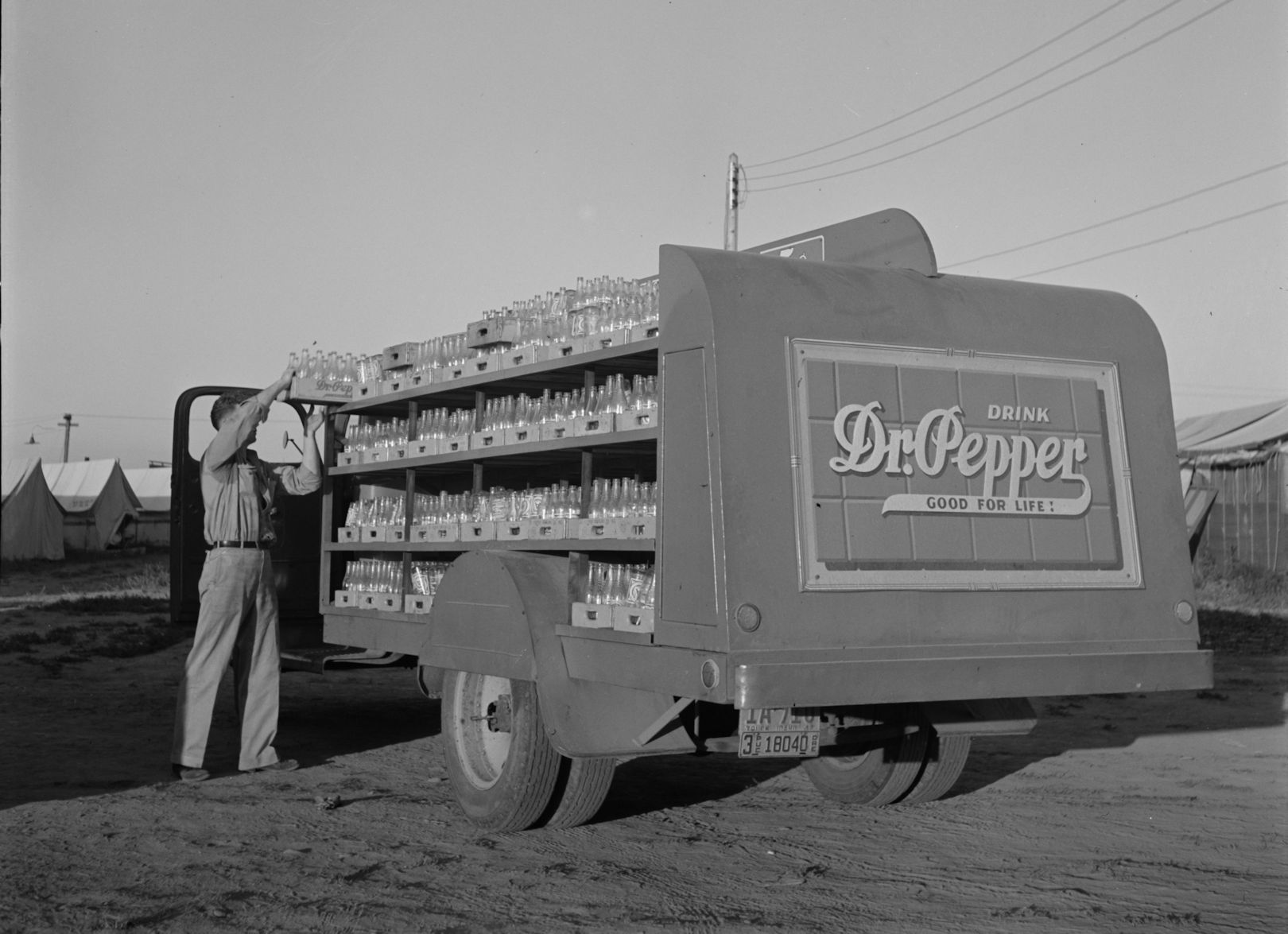
FSA/8c32000/8c325008c32512a.tif
A digitally colorized version of that same image now exists—rendered in the warm, nostalgic style of Norman Rockwell. Same truck. Same crates. Same tents. But in this version, the scene feels almost celebratory. The soft light, the idealized palette, the implied normalcy—all of it recasts a moment of displacement as a postcard of American grit.
And it lands differently now, because we are living through a new cycle of state-enforced removals. Immigrant families are being rounded up daily. Deportation quotas—3,000 per day, publicly walked back but quietly pursued—are reshaping lives in real time. New detention camps are opening under banners like the “One Big Beautiful Bill Act.” People are being arrested not for what they’ve done, but for who they are and where they happened to be born.
Once again, we’re watching ordinary scenes unfold at the edge of constitutional crisis. Vans roll down suburban streets. Government-contracted buses park behind schools and churches. Arrests take place at laundromats and grocery stores. The soda truck never stopped rolling—it’s just been rebranded.
What makes the 1942 photograph so powerful is that it didn’t try to editorialize. It let the contradiction speak for itself: consumer comfort parked beside government coercion. The reimagined version—the one drenched in nostalgic color—tells us something else: how quickly history can be repackaged into sentiment. How efficiently reality gets softened when it disrupts the national story we prefer to tell.
And yet that story is collapsing. Today’s raids, camps, and constitutional evasions don’t come with golden-hour lighting. They come with gag orders, sealed courtrooms, and silent complicity. Even now, many Americans believe they’re witnessing necessary policy, not creeping authoritarianism. But the structure is the same: a state with too much power deciding who gets to stay, who gets to leave, and who gets remembered in warm colors decades later.
What’s happening now isn’t new. It’s a reversion. And just like in 1942, most people will look away—until the photograph emerges, stripped of its urgency but dressed in myth.
The record exists. The question is whether we’ll see it before it’s colorized.
The Past, Reimagined Like Rockwell #17
Is This the “Again?” #11
About “Again”
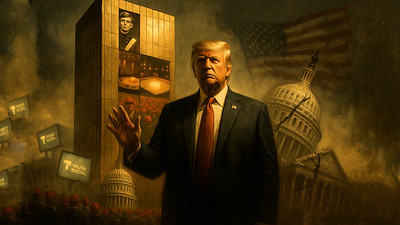
Each image in this series confronts the myth behind “Make America Great Again.” By adopting Norman Rockwell’s nostalgic style but inserting America’s excluded truths, the series asks: When was it great? For whom? It’s not just a reimagining — it’s a reckoning.