 Early Life and Business Background
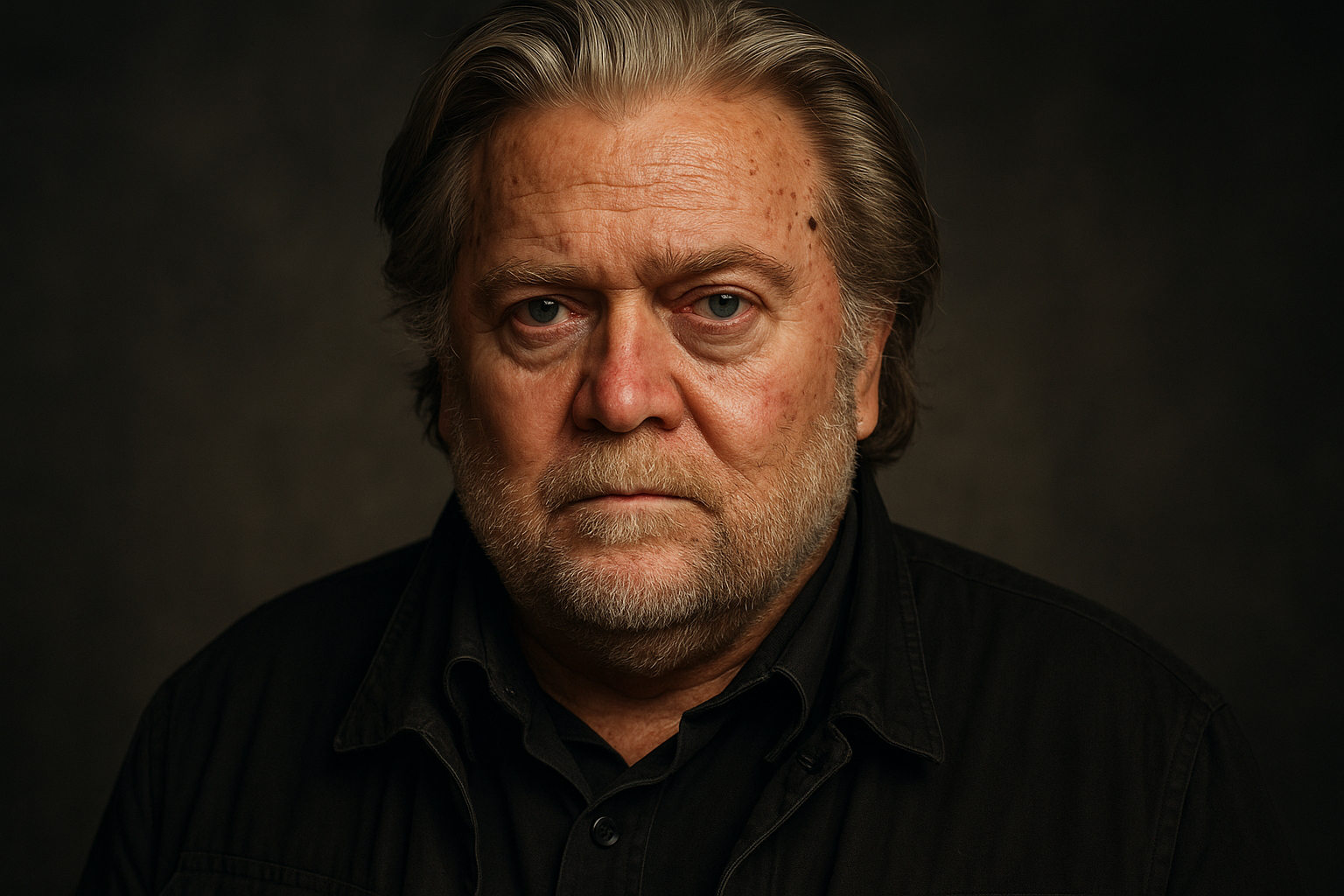
Steve Bannon’s life has been marked by constant reinvention – from naval officer to investment banker to Hollywood financier – before he ever entered the political fray. Born in 1953 to a working-class Irish Catholic family in Virginia, Bannon attended Virginia Tech (B.A., 1976) and served as a U.S. Navy officer from 1977-1983. While posted at the Pentagon, he earned a master’s in national security studies at Georgetown, then added a Harvard MBA in 1985. That elite education launched him into finance: Bannon joined Goldman Sachs in the mid-1980s, rising in its mergers-and-acquisitions ranks and specializing in media deals.
After three years at Goldman, Bannon struck out on his own. In 1990 he co-founded Bannon & Co., a boutique investment bank focused on entertainment. This is where Bannon’s shrewd deal-making first became evident. Notably, in 1993 he negotiated the sale of a TV production company (Castle Rock Entertainment) and accepted a share of syndication royalties as part of his fee – including a stake in a then-fledgling sitcom called Seinfeld. That savvy move paid off enormously: by 2016, Bannon’s cut from Seinfeld reruns was estimated at over $30 million. In other words, Bannon leveraged Wall Street acumen into a personal fortune – an ironic origin for a man who would later rail against coastal “elites.”
Rise to Power: Breitbart and the Trump Alliance
Bannon’s real entry to politics came via media. In 2012, he took over Breitbart News, a hard-right website, after its founder Andrew Breitbart died suddenly. As executive chairman, Bannon aggressively expanded Breitbart’s reach and sharpened its anti-establishment, nationalist tone. He has described himself as a “populist” and even called Breitbart “the platform for the alt-right,” giving a home to a loose coalition of far-right ultranationalists and provocateurs. Under Bannon, Breitbart ran incendiary pieces attacking immigration, multiculturalism, and the Republican establishment with equal vigor. Critics condemned the site as “racist, misogynist, and xenophobic” for headlines that trafficked in white grievance politics and conspiracy theories. Bannon, however, relished Breitbart’s role as a blunt instrument against the GOP old guard and liberal “globalists.” It was here that he honed the blend of outrage-driven messaging and populist anger that would become his trademark.
By 2015, Breitbart (funded in part by billionaire Robert Mercer’s family) became an enthusiastic booster of Donald Trump’s presidential campaign, drawn to Trump’s nativist rhetoric. Bannon forged an alliance with Trumpworld that would catapult him to national power. In August 2016, with Trump’s campaign floundering after successive shake-ups, Bannon was brought in as campaign CEO to right the ship. Unkempt and abrasive, Bannon was an unlikely fit with the glossy reality-TV mogul, but he offered Trump a clear strategy: double down on nationalist, anti-Hillary Clinton attacks and “let Trump be Trump.” He sharpened Trump’s populist talking points and amplified themes like economic nationalism and border security. Democrats warned that Trump had handed the reins to a “divisive, sometimes racist… sometimes anti-Semitic” propagandist. Indeed, Bannon’s reputation preceded him – a 2015 Bloomberg profile had already dubbed him “the most dangerous political operative in America.”
Bannon leaned into that “dangerous” image. He encouraged Trump’s scorched-earth style, turning the last months of the 2016 race into a bare-knuckle brawl. In Bannon’s view, “the new politics was not the art of compromise, but the art of conflict” – a philosophy Trump readily embraced. A disruptive candidate was a golden opportunity for Bannon, who understood how to flood the zone with controversy to dominate news cycles. (Bannon once famously described his media strategy as “flood the zone with shit” – overwhelm the press with misinformation and provocations.) The strategy worked. Trump’s rallies hit a fever-pitch of anti-Clinton fervor, and Trump himself began to credit Bannon’s grim instincts. In the campaign’s homestretch, Trump would often bark, “Where’s my Steve?!” when Bannon wasn’t nearby. After Trump’s stunning upset victory, many in Trump’s circle attributed the win in part to Bannon’s single-minded messaging.
Role in the 2016 Election and White House Tenure
Inside the West Wing, Bannon operated as a bomb-throwing strategist unafraid to clash with others. He quickly formed a power center with senior policy adviser Stephen Miller, advocating for hardline immigration and trade measures. Bannon cast himself as the voice of Trump’s base – the “economic nationalist” conscience of the administration – in tension with more establishment figures like Jared Kushner and Gary Cohn. He even wrangled a seat on the National Security Council’s Principals Committee, a move that alarmed many (Obama’s former NSA Susan Rice called it “stone-cold crazy”). Though Bannon’s NSC stint lasted only a few months before he was removed in April 2017 amid backlash, it showed his willingness to insert ideology into all facets of policy, including national security.
For a time, Bannon was seen as de facto co-CEO of “Trumpism” in the White House, shaping everything from the messaging on tax policy to which outside advisers got the president’s ear. He had Trump’s trust, but also Trump’s ear in a way that sometimes eclipsed formal channels – a fact that bred resentment. By the summer of 2017, reports of infighting were rampant. Bannon’s combative style and propensity to leak to the press put him at odds with then-Chief of Staff Reince Priebus and others. Meanwhile, his association with the alt-right cast a shadow: when white supremacists marched in Charlottesville in August 2017, critics noted that Bannon had once proudly called Breitbart “a platform for the alt-right.” After Charlottesville turned deadly and Trump equivocated on condemning neo-Nazis, Bannon’s presence became even more controversial.
Bannon’s exit from the White House came in August 2017, just seven months into the term. The White House spun his departure as a mutually agreed firing – “bye-bye Bannon,” as some headlines quipped – and Bannon himself said he was going back to Breitbart to wage war for Trump’s agenda from the outside. In truth, several factors converged to push him out. He had angered Trump by overshadowing him in the media, pricked the president’s ego one too many times, and even undercut Trump’s policy line. Days before his ouster, Bannon gave an impromptu interview to a liberal magazine in which he dismissed the idea of a U.S. military strike on North Korea – directly contradicting Trump’s “fire and fury” posture. That act of insubordination reportedly infuriated Trump. As one Bannon biographer noted, Trump could not abide any impression that “Bannon is the brains of the operation and Trump is an erratic charlatan.” In short, Bannon had made himself the story – a cardinal sin under a president who demands the spotlight.
Political and Ideological Influence Post-White House
Despite this dramatic fall from grace, Bannon did not disappear. In fact, the period after 2018 showed Bannon’s resilience and his determination to reshape American politics from the outside. Freed from official titles, he styled himself as a roving ideologue and “field marshal” of the populist right. He traveled to Europe, attempting (with little success) to spark a nationalist revival there by founding a coalition called “The Movement.” He also quietly sought to mend fences with Trump. By mid-2020, as Trump’s re-election campaign heated up, Bannon was back in Trump’s orbit (informally), cheerleading the President’s agenda in media appearances. The onetime estrangement was largely swept under the rug in service of the larger cause: galvanizing the MAGA base.
One of Bannon’s most consequential moves was launching a new media platform: the “War Room” podcast. Debuting in late 2019 as War Room: Impeachment, it was initially a daily broadcast defending Trump during his first impeachment saga. Co-hosting with allies, Bannon pumped out propaganda to discredit the impeachment process. After Trump survived impeachment, Bannon seamlessly rebranded the show in early 2020 as War Room: Pandemic, seizing on the COVID-19 crisis. He used the pandemic to peddle a mix of alarmism, nationalism, and conspiracies – blaming the Chinese Communist Party for the virus and accusing American elites of incompetence or worse. Eventually the podcast simply became “Bannon’s War Room,” a catch-all platform for whatever Bannon wanted to talk about on a given day. Unshackled by mainstream media norms, he turned War Room into an amplifier for the MAGA grassroots.
Bannon’s strategic use of media allowed him to stay relevant and influential even as he lost formal roles. He transformed his media presence into a political force, directing narratives and amplifying populist rhetoric across the American right. His commentary remains a driving influence in populist circles, reinforcing Trump’s messaging and advocating for a “deconstruction of the administrative state.”
Legal Troubles: Contempt, Fraud, and Fallout
Bannon’s brass-knuckles approach has not been without legal peril. By 2025, he had amassed a significant track record of legal battles—often of his own making—that shed light on his tactics and character. The two most high-profile cases involve his defiance of Congress during the Jan. 6 investigation and his role in a fraudulent fundraising scheme. These episodes show Bannon alternatively refusing to recognize the law’s authority and exploiting his own followers’ trust, all while spinning himself as a victim of political persecution.
Contempt of Congress (Jan. 6 Committee)
In 2021, the House of Representatives’ select committee on January 6 subpoenaed Bannon to testify about his knowledge of the Capitol attack. Bannon flatly refused to appear or produce documents, citing a dubious claim of executive privilege (even though he was not a White House official at the time of the riot). The Justice Department charged him with two counts of contempt of Congress. In July 2022, Bannon was tried and convicted on both counts by a jury. At his October 2022 sentencing, the judge noted Bannon showed no remorse and sentenced him to 4 months in federal prison, plus a fine. Bannon, true to form, remained defiant. He delayed serving the sentence by appealing, vowing to make his case “the misdemeanor from hell” for the Biden administration. His legal strategy largely involved bombastic claims and stalling tactics—a continuation of his “flood the zone” philosophy applied to the courtroom.
By mid-2024, however, Bannon’s appeals had run out. The D.C. Circuit upheld his conviction, and the Supreme Court refused to intervene, clearing the way for imprisonment. Bannon finally reported to a federal prison in late July 2024 and served his sentence through late October 2024. He was released just days before the 2024 election.
“We Build The Wall” Fraud Case
The other major legal saga for Bannon has been the We Build The Wall affair—a cautionary tale of alleged populist idealism turned grift. In 2018, as Trump struggled to get funding for his border wall, a group of Trump supporters launched a private fundraising campaign to “build the wall” themselves. Bannon joined the effort’s advisory board, lending his credibility as a high-profile nationalist. Publicly, the group promised donors that “100%” of funds would go to wall construction. Privately, as federal prosecutors later revealed, Bannon and others siphoned off large sums for personal use.
In August 2020, Bannon was indicted by federal prosecutors (SDNY) for fraud and money laundering, accused of skimming over $1 million in donor money to pay for luxury expenses. He pleaded not guilty and blasted the charges as politically motivated. But before the case could go to trial, President Trump threw Bannon a lifeline: in the final hours of Trump’s term (January 2021), he granted Bannon a full presidential pardon. This controversial pardon (one of Trump’s last acts) wiped out Bannon’s federal liability, but it did not end the matter.
In September 2022, the Manhattan District Attorney indicted Bannon on state fraud charges for the same We Build The Wall scheme, under New York law. In February 2025, Bannon accepted a plea deal, pleading guilty in New York State court to one count of scheming to defraud. Under the plea agreement, Bannon avoided additional jail time. Instead, he was sentenced to probation with conditions: he must “stay out of trouble” for three years and is barred from running any charities or nonprofit fundraising in New York during that period.
Bannon’s legal troubles illustrate the two sides of his persona. He is both a true believer willing to go to jail defying Congress for his “cause” and a grifter willing to fleece his own followers. He preaches law and order yet sneers at subpoenas and campaign finance laws. These contradictions haven’t dimmed his influence among the MAGA base—in fact, his run-ins with the law have burnished his legend as a renegade sticking it to the establishment.
Strategic Use of Media Platforms – The “War Room” and Beyond
At the heart of Bannon’s enduring influence is his mastery of media as a weapon. Above all stands his podcast-television hybrid “War Room,” which by 2025 has become a central node in the MAGA communication network. Through daily War Room broadcasts and a web of social media and alternative platforms, Bannon has managed to shape discourse on the American right in profound ways. His strategy is both simple and ruthless: use outrage and volume to dominate the conversation, and turn fringe ideas into GOP orthodoxy by sheer force of repetition.
Bannon’s media approach follows his own infamous dictum: “The real opposition is the media. And the way to deal with them is to flood the zone with shit.” In practice, this means pumping out constant content that bolsters his narrative and overwhelms fact-checkers. War Room epitomizes this approach. The show runs multiple episodes per day, live-streaming video and audio from a townhouse studio nicknamed the “Breitbart Embassy” in Washington. Bannon packs each hour with a rapid-fire rotation of guests – from election conspiracy peddlers and anti-vaccine activists to retired generals spouting deep-state plots. The tone is conversational but relentless; Bannon acts as ringmaster, interjecting his own takeaways (often laced with mockery or crude analogies) and driving the message that “we” (the MAGA populists) are under siege by “they” (the elites, the left, the “administrative state”).
Critically, Bannon has used War Room to coordinate activism in a way traditional media would never allow. For instance, during the 2022 election cycle, he spotlighted the effort to recruit poll watchers and local election board members, effectively turning his show into an organizing tool for the precinct strategy. He’s encouraged listeners to get involved in school board fights, protests, and party committee meetings. This interactive call-to-action aspect sets War Room apart from, say, Fox News monologues. Bannon cultivates the idea that his audience are “foot soldiers” in a grand battle. It’s talk radio meets political rally. And when things go wrong—say, violent rhetoric contributing to Jan 6—Bannon simply pivots and reframes the narrative (in that case, portraying the rioters as patriots or blaming provocateurs).
Bannon also exploits social media and alternative tech to spread War Room’s reach. Although banned on Twitter, YouTube, and Facebook for his excesses, he encourages followers to clip and share War Room content on those platforms (often via surrogates or secondary accounts). Meanwhile, he embraced platforms like Rumble, Gettr, and Telegram, which do not moderate content as strictly. By 2021, War Room was reportedly getting millions of streams despite de-platforming, aided by its continued listing on Apple Podcasts and viral shares in MAGA circles. Bannon has bragged about tens of millions of downloads and routinely ranks in the top political podcast charts. In other words, he found ways to route around Big Tech censorship and still “hack” the mainstream conversation—often topics broached on War Room later bubble up to Fox News or the lips of GOP lawmakers. In this way, Bannon uses War Room as a propaganda laboratory for the right-wing zeitgeist.
Strategically, Bannon’s media offensive has served two key purposes: sustain his personal influence and steer the Republican agenda. Even when exiled from formal roles, controlling a chunk of the media ecosystem allowed Bannon to remain a player whom others must reckon with. It’s a form of power independent of office – power that comes from commanding an army of listeners ready to act. This is why, for example, Bannon was able to inject the idea of contesting the 2020 election results into the GOP mainstream; he had built up months of narrative groundwork on War Room that made false claims of fraud sound plausible to millions. It’s also why Bannon’s calls for ousting “RINOs” or pushing Trump further right can’t be ignored by Republican politicians – they know Bannon can rally the base against them if he chooses.
Ongoing Influence and 2028 Election Strategy
Despite his legal troubles and estrangement from the Trump White House, Bannon has remained a potent force in right-wing politics, largely due to his deep connections with grassroots activists and his mastery of media strategy. As of 2025, Bannon’s influence extends into key planning and organizing efforts for Donald Trump’s anticipated 2028 campaign. His War Room podcast and media appearances have consistently hammered the message that Trump’s defeat in 2020 was illegitimate, a narrative that has taken root in much of the GOP base.
Bannon’s strategy going into 2028 revolves around a few core principles:
- Local Control of Elections – Bannon has doubled down on his precinct strategy, encouraging supporters to take over local election boards and precincts to influence voting regulations and certification processes. His War Room has been instrumental in pushing this narrative, urging listeners to seize control of local GOP mechanisms.
- Reinforcement of Election Mistrust – Throughout his broadcasts, Bannon has continued to promote distrust in federal election oversight. He advocates for ‘paper ballots only’ and tighter restrictions on mail-in voting, claiming that these measures are necessary to secure the vote.
- War on RINOs (Republicans In Name Only) – Bannon’s rhetoric has grown increasingly hostile toward moderate Republicans, whom he accuses of capitulating to Democratic interests. His War Room regularly targets sitting GOP members who refuse to endorse Trump’s false claims of a stolen election.
- Support for Anti-Establishment Candidates – Bannon remains deeply involved in primary challenges against GOP incumbents he considers disloyal to Trump. His endorsements and War Room appearances have proven effective in rallying populist support behind anti-establishment challengers.
- Amplification of Populist Grievances – Bannon has sharpened his focus on issues like border security, economic nationalism, and anti-globalism, framing them as existential battles for American sovereignty.
While Bannon does not hold a formal role in Trump’s 2028 campaign apparatus as of May 2025, his media presence and grassroots influence effectively make him a kingmaker on the populist right. He is widely seen as a key architect of Trump’s second comeback attempt, a role he embraces openly on War Room. His media platform continues to provide a forum for Trump loyalists and election deniers to coordinate strategies and share grievances, ensuring that Bannon’s influence remains a cornerstone of right-wing populism heading into the next election cycle.
Key Career Milestones (Summary Table)
| Year | Event | Details |
|---|---|---|
| 1953 | Born | Norfolk, Virginia, to a working-class Irish Catholic family |
| 1977–1983 | Naval Officer | Served as a U.S. Navy officer, later posted at the Pentagon |
| 1985 | Harvard MBA | Earned MBA from Harvard Business School |
| 1990 | Co-founded Bannon & Co. | Specialized in media and entertainment investments |
| 1993 | Castle Rock Entertainment Deal | Negotiated sale, took syndication royalties, including Seinfeld profits |
| 2012 | Executive Chairman of Breitbart | Transformed Breitbart into an alt-right media powerhouse |
| 2016 | Trump Campaign CEO | Led messaging strategy for Trump’s successful presidential campaign |
| 2017 | White House Chief Strategist | Instrumental in executive orders like the travel ban |
| 2018 | Returns to Breitbart, then ousted | Fell out of favor with Trump, removed from Breitbart |
| 2019 | Launched War Room podcast | Became a central platform for MAGA messaging and mobilization |
| 2020 | Indicted for We Build The Wall fraud | Charged with defrauding donors; pardoned by Trump |
| 2022 | Convicted of Contempt of Congress | Sentenced to four months for defying January 6 subpoenas |
| 2024 | Imprisoned for Contempt of Congress | Served time from July to October 2024 |
| 2025 | Guilty plea in New York fraud case | Three-year conditional discharge, barred from nonprofit fundraising |
Major Legal Actions and Outcomes
| Case | Year | Charges | Outcome |
| Contempt of Congress | 2022 | Refusing to comply with Jan. 6 Committee | Convicted, 4 months in federal prison, served in 2024 |
| We Build The Wall Fraud | 2020 | Money laundering, fraud | Pardoned by Trump on federal charges; convicted in NY state court in 2025, received conditional discharge |
| New York State Fraud Case | 2025 | Scheming to defraud | Pleaded guilty; sentenced to three-year conditional discharge, barred from fundraising in New York |
Bannon’s legal troubles reflect his combative style and willingness to challenge institutions, even at significant personal cost. His refusal to comply with the Jan. 6 Committee’s subpoena and his involvement in the fraudulent We Build The Wall campaign underscore his approach of fighting legal battles on ideological grounds while rallying public support through his media empire. His conviction for contempt of Congress, followed by a guilty plea in New York State, showcases both his defiance and occasional pragmatism. Even so, Bannon’s legal battles have only bolstered his reputation among his base as a warrior against establishment control, a badge of honor in his War Room rhetoric.