Investigative Report by Grok
Key Points
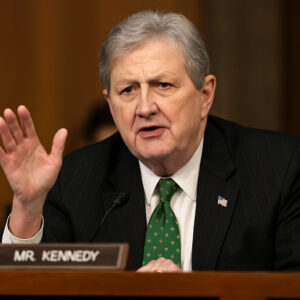
- Senator John Neely Kennedy, a Republican, has served as Louisiana’s junior U.S. senator since 2017, following a long tenure as state treasurer.
- Born in 1951 in Mississippi and raised in Louisiana, he holds degrees from Vanderbilt, University of Virginia, and Oxford, reflecting a strong academic background.
- Known for his conservative policies and colorful, folksy rhetoric, Kennedy has gai
 ned attention for both his legislative work and controversial statements.
 - He serves on key Senate committees, including Appropriations, Banking, Budget, and Judiciary, influencing federal spending and policy.
- Controversies include accusations of racist remarks, notably against Mexicans and an Arab American witness, sparking significant criticism.
- His legislative efforts focus on fiscal conservatism, disaster relief, and financial transparency, with notable bills passed during his first term.
- Recent activities include securing hurricane relief funds and introducing resolutions, maintaining his conservative stance.
Overview
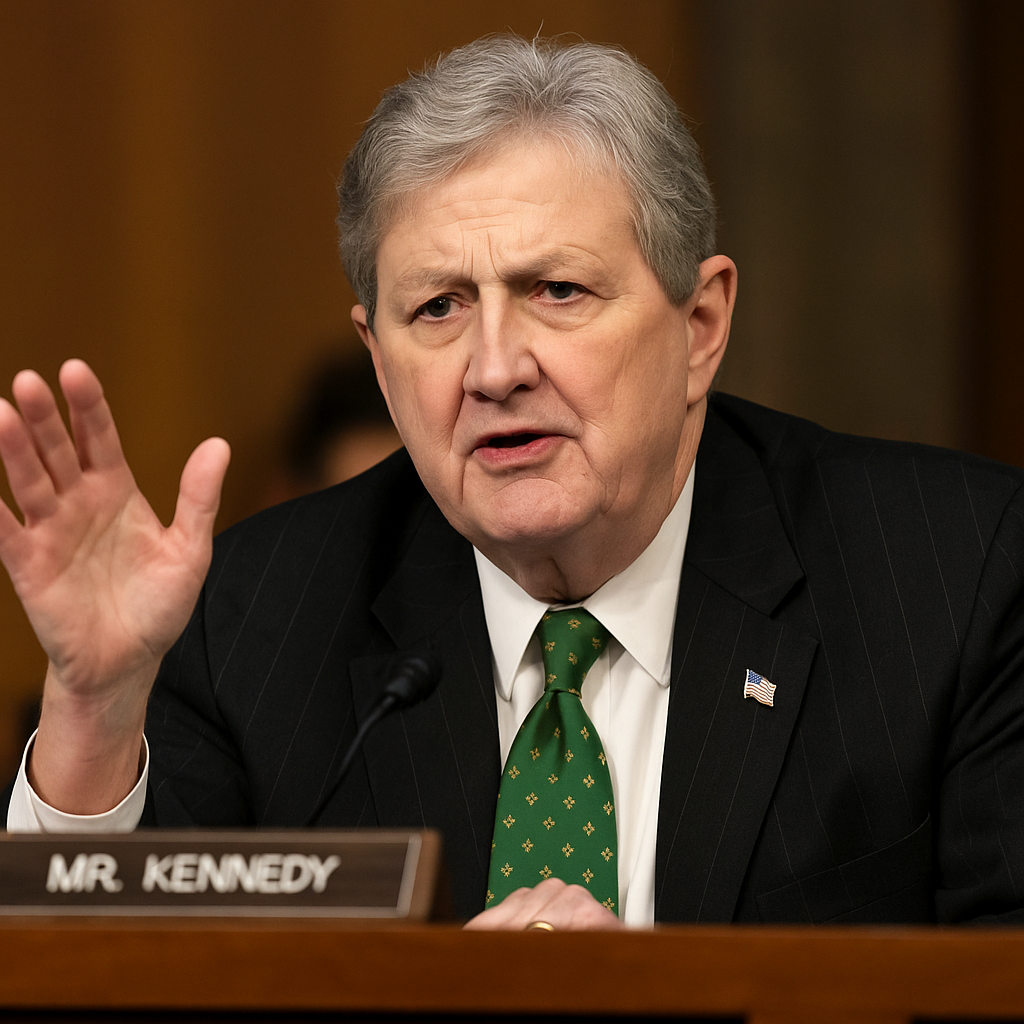
Senator John Neely Kennedy, a prominent figure in Louisiana politics, has served as the state’s junior U.S. senator since 2017. His career spans decades in public service, including a 17-year tenure as Louisiana State Treasurer. Kennedy’s conservative policies and distinctive rhetorical style have made him a notable figure in the Senate, though his statements have sometimes drawn accusations of insensitivity or racism, complicating his public image.
Legislative Role
Kennedy’s influence in the Senate stems from his roles on the Appropriations, Banking, Budget, and Judiciary Committees. His leadership as the top Republican on subcommittees for Energy and Water Development and Economic Policy allows him to shape policies critical to Louisiana, such as energy production and flood insurance. His legislative record includes bills aimed at protecting financial markets and supporting small businesses, though some critics argue his focus remains narrowly conservative.
Controversial Statements
Kennedy’s outspoken nature has led to controversies, particularly remarks perceived as racially insensitive. Critics have pointed to his comments about Mexicans and his questioning of an Arab American witness as examples of divisive rhetoric. These incidents have sparked debates about his approach, with supporters viewing his style as authentic and detractors calling it inflammatory.
Recent Activities
In 2025, Kennedy has focused on securing aid for Louisiana communities affected by past hurricanes and advocating for conservative causes, such as designating June as “Life Month.” His recent statements, including critiques of federal policies and media, continue to reflect his conservative ideology and direct communication style.
—
Background
John Neely Kennedy was born on November 21, 1951, in Centreville, Mississippi, and raised in Zachary, Louisiana. He graduated as co-valedictorian from Zachary High School in 1969. Kennedy pursued higher education at Vanderbilt University, earning a bachelor’s degree in political science, philosophy, and economics in 1973, graduating magna cum laude. He was elected to Phi Beta Kappa and served as president of his senior class (Kennedy Biography).
Kennedy continued his education at the University of Virginia School of Law, where he earned a Juris Doctor in 1977. He served as an executive editor of the Virginia Law Review and was elected to the Order of the Coif, a prestigious legal honor society. In 1979, he earned a Bachelor of Civil Law with first-class honors from Oxford University’s Magdalen College, studying under renowned scholars Sir Rupert Cross and Sir John H. C. Morris (Kennedy Biography).
After completing his education, Kennedy worked as an attorney and partner at Chaffe McCall, a law firm in Baton Rouge and New Orleans, from 1985 to 1987 and again from 1992 to 1996. His political career began in 1988 when he was appointed special legal counsel to Louisiana Governor Buddy Roemer. In 1990, he became Secretary to the Governor’s Cabinet, serving until 1992. Kennedy ran unsuccessfully for Louisiana State Attorney General as a Democrat in 1991, placing third with 288,382 votes (Wikipedia).
In 1996, Governor Mike Foster appointed Kennedy as Secretary of the Louisiana Department of Revenue, a role he held until 1999. That year, he was elected Louisiana State Treasurer, defeating Ken Duncan with 621,796 votes (55.6%). He served five terms, overseeing state finances, bond issues, and unclaimed property returns, and was reelected in 2003, 2007, 2011, and 2015 (Ballotpedia). During this time, he also taught as an adjunct professor at Louisiana State University’s Paul M. Hebert Law Center from 2002 to 2016 and volunteered as a substitute teacher in public schools (Kennedy Biography).
Kennedy ran for the U.S. Senate as a Democrat in 2004, losing to David Vitter, and as a Republican in 2008, losing to Mary Landrieu. He switched to the Republican Party in 2007. His third Senate bid in 2016 was successful, defeating Foster Campbell in a runoff with 61% of the vote. He was reelected in 2022 with 62% of the vote (Wikipedia).
Timeline
| Year | Event |
|---|---|
| 1951 | Born in Centreville, Mississippi |
| 1969 | Graduated from Zachary High School as co-valedictorian |
| 1973 | Graduated magna cum laude from Vanderbilt University |
| 1977 | Received Juris Doctor from University of Virginia School of Law |
| 1979 | Earned Bachelor of Civil Law from Oxford University |
| 1988 | Appointed special counsel to Governor Buddy Roemer |
| 1990 | Appointed Secretary to the Governor’s Cabinet |
| 1991 | Ran unsuccessfully for Louisiana State Attorney General |
| 1996 | Appointed Secretary of the Louisiana Department of Revenue |
| 1999 | Elected Louisiana State Treasurer |
| 2004 | Ran for U.S. Senate as a Democrat, lost to David Vitter |
| 2007 | Switched to Republican Party |
| 2008 | Ran for U.S. Senate as a Republican, lost to Mary Landrieu |
| 2016 | Elected to U.S. Senate |
| 2022 | Reelected to U.S. Senate |
Political Influence
Senator Kennedy’s influence in the U.S. Senate is amplified by his roles on the Appropriations, Banking, Housing, and Urban Affairs, Budget, and Judiciary Committees. As the top Republican on the Appropriations Subcommittee on Energy and Water Development, he shapes policies critical to Louisiana’s energy sector and water management, vital for a state prone to natural disasters. His position on the Banking Subcommittee on Economic Policy allows him to influence financial regulations, advocating for reduced government oversight to support business growth (Kennedy Biography).
Kennedy’s tenure as Louisiana State Treasurer equipped him with expertise in fiscal management, which he applies to his Senate work. He has been a vocal advocate for reducing federal spending and regulations, aligning with his conservative ideology. His legislative efforts include bills to protect the stock market from foreign corruption, extend flood insurance for Louisiana homeowners, regulate lobbyists, and support small businesses through disaster relief programs. His first term saw him pass more bills than any other Louisiana senator in their initial term, highlighting his legislative influence (Kennedy Biography).
Kennedy’s rhetorical style, characterized by witty and folksy expressions, has made him a sought-after figure in media and political circles. A 2018 CNN article noted his ability to deliver memorable one-liners, enhancing his visibility and influence. However, this style has also contributed to controversies, as discussed below.
Controversies
Senator Kennedy has faced significant criticism for statements perceived as racially insensitive or inflammatory, drawing attention from both supporters and detractors.
Comments on Mexicans
In May 2023, during a Senate hearing on the FBI and DEA budget, Kennedy made remarks about Mexico, stating that without U.S. support, Mexicans “would be eating cat food out of a can and living in a tent behind an Outback.” These comments, reported by NOLA.com, were condemned by Mexican officials and U.S. critics as racist and derogatory, straining diplomatic relations. The remarks were seen as exploiting stereotypes to criticize Mexico’s handling of drug cartels.
Questioning of Arab American Witness
In September 2024, during a Senate Judiciary Committee hearing on hate crimes, Kennedy accused Maya Berry, executive director of the Arab American Institute, of supporting Hamas and Hezbollah, both designated terrorist organizations. His questioning, reported by The New Republic, was criticized as racist and unfounded, with Berry responding that such accusations perpetuated the hate she was addressing. The incident drew condemnation from groups like Foreign Policy for America (FP4A).
Gun Violence Remarks
In December 2023, Kennedy faced backlash during a Senate Judiciary Committee hearing on gun violence. When Dr. Megan Ranney highlighted Louisiana’s high firearms death rate (28.42 per 100,000 in 2022, per the Violence Policy Center), Kennedy dismissed her response as “word salad.” A Newsweek article reported that his home state newspaper called him an “embarrassment” for evading the issue, given Louisiana’s significant gun violence problem.
Other Notable Incidents
Kennedy’s comments on critical race theory in 2021, where he called it “cynical, ahistorical, sophomoric, insipid and dumb as a bag of hair” (Kennedy Press Release), also sparked debate. Critics argued his rhetoric oversimplified a complex issue, while supporters praised his directness. Additionally, his questioning of a Cornell law professor in a Senate hearing, insinuating she was a communist by saying, “I don’t know whether to call you professor or comrade” (The Guardian), was criticized as inappropriate.
Policy Impact
Kennedy’s legislative efforts reflect his conservative priorities, focusing on fiscal responsibility, disaster relief, and financial transparency. Key legislative achievements include:
Stock Market Protection
Kennedy sponsored bills to enhance transparency for foreign entities listed on U.S. stock exchanges, such as S.1089 in 2025, which addresses disclosures by directors and officers of foreign private issuers (Congress.gov). These measures aim to protect investors from foreign corruption.
Flood Insurance Extension
Given Louisiana’s susceptibility to flooding, Kennedy has prioritized extending the National Flood Insurance Program. His legislation ensures affordable coverage for homeowners, a critical issue for his constituents (Kennedy Biography).
Lobbyist Regulation
Kennedy has pushed for stricter oversight of lobbyists to curb corruption. His bills aim to increase transparency in lobbying activities, addressing concerns about undue influence in government (Kennedy Biography).
Disaster Relief for Small Businesses
Kennedy’s legislation has preserved and expanded disaster relief programs for small businesses, particularly in Louisiana, which frequently faces hurricanes. These efforts support economic recovery post-disaster (Kennedy Biography).
Voting Record
Kennedy’s voting record aligns with conservative principles. He voted to overturn the FCC’s repeal of net neutrality in 2018, one of three Republicans to do so, reflecting a rare bipartisan stance (Wikipedia). He has opposed over $13 trillion in what he considers wasteful spending and supports policies to enhance American energy independence (Kennedy Campaign). His 94% score on the Heritage Action Scorecard for the 117th Congress indicates strong conservative alignment (Heritage Action).
Recent Developments
As of June 2025, Kennedy has remained active in both legislative and public spheres:
- Hurricane Relief: On June 4, 2025, Kennedy announced $6.8 million in aid for Houma schools affected by Hurricane Ida, demonstrating his commitment to Louisiana’s recovery (Kennedy Press Releases).
- Life Month Resolution: On June 4, 2025, Kennedy, with Senator Ted Cruz, introduced a resolution to designate June as “Life Month,” reflecting his conservative social stance (Kennedy Press Releases).
- Los Angeles Anti-ICE Riots: On June 10, 2025, Kennedy commented on federal intervention in Los Angeles anti-ICE riots, telling Democrats to “pop a Zoloft,” a remark that drew mixed reactions for its flippancy (NY Post).
- Mental Health Legislation: Kennedy introduced S.1924, the Improving Mental Health Access for Students Act, in 2025, addressing student mental health needs (Congress.gov).
- Media Criticism: In June 2025, Kennedy criticized the media, stating they “wouldn’t have to defend freedom of the press” if they didn’t undermine it, continuing his pattern of provocative rhetoric (Facebook).
Key Citations
- U.S. Senator John Kennedy Official Biography
- John Kennedy (Louisiana politician) – Wikipedia
- Ballotpedia – John Neely Kennedy Profile
- Congress.gov – John Kennedy Legislative Record
- Republican Sen. John Kennedy Unleashes Racist Broadside Against Mexicans
- GOP Senator John Kennedy’s Racist Attack on Arab American Witness
- Senator John Kennedy Rebuked in Home State Newspaper Column
- FP4A Condemns Senator Kennedy’s Racism at Senate Hearing
- Kennedy Condemns Critical Race Theory in Fox Interview
- Republican John Kennedy: Southern Plain-Talk or Foghorn Leghorn Shtick?
- John Kennedy, Louisiana Senator, Charms DC with Quotes, Wit
- Heritage Action Scorecard for Senator John Kennedy
- John Kennedy for Senate – Issues
- U.S. Senator John Kennedy Press Releases
- Sen. Kennedy Tells Democrats to Pop a Zoloft Over Trump’s Handling of LA Anti-ICE Riots
- Kennedy: Media Undermines Freedom of the Press